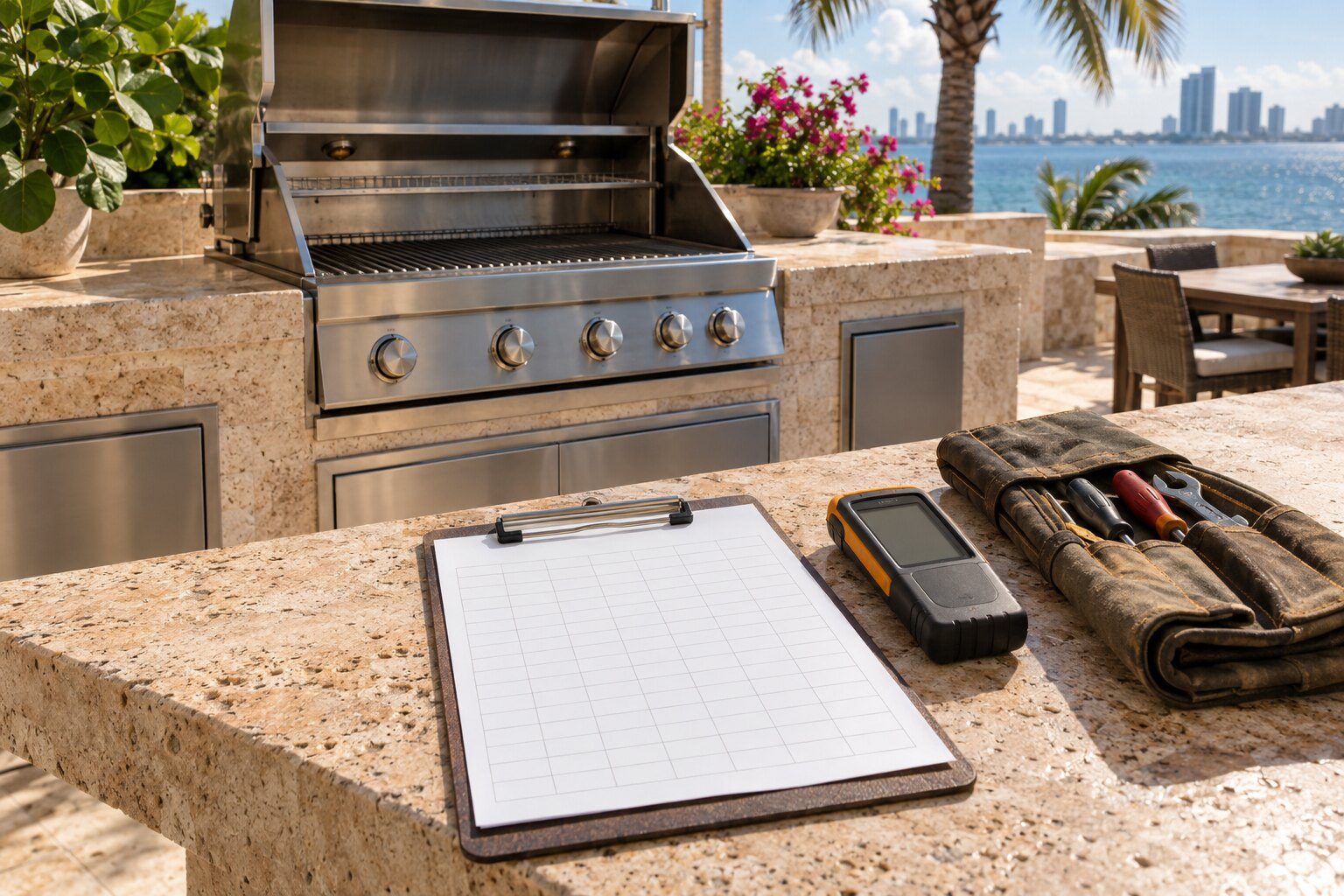
Cost Expectations
What an Appliance Service Call Costs in South Florida, and What It Buys
A diagnostic fee is the most misunderstood number in this trade, and the misunderstanding is reasonable: it looks like a charge for turning up. What it actually buys is a finding — what has failed, and whether the machine or the conditions it is being given are responsible — delivered in writing with a figure beside it before anything is opened. On this badge that second half matters more than on any other we work, because a real share of outdoor call-outs are not the appliance at all. An undercounter refrigerator in a sealed stone island cannot reject heat and no part changes that. An induction cooktop reporting a voltage code is objecting to the building's supply. A grill that has never been given a full preheat is not underperforming. In each case the honest finding costs us a parts sale, and it is the reason the same customers call again. The fee comes off the repair when you go ahead. Where the answer is that the machine is not worth mending, you have paid for the answer and not for a part.
The full guide
Almost everybody reads a diagnostic fee as a charge for arriving. It is a charge for the answer, and the distinction shows up most clearly in the cases where the answer is not what anybody expected.
Cost for appliance service call: what actually happens in the hour
The machine is identified — model, configuration, gas type if it is outdoors. The complaint is reproduced in front of us rather than taken on trust, because a machine that fails from cold and one that fails after twenty minutes are usually two different parts.
Then instruments on whatever could produce it. Pressure at the manifold under load. Current through an ignitor. Temperature across a cavity over a full cycle rather than at its peak.
And then a figure, in writing, before anything is dismantled.
The half that costs us money
On this badge a real share of what we are called to is not the appliance.
The island. An undercounter refrigerator in a sealed stone enclosure, a yard from a grill, in August. It runs continuously and never wins. No part we fit changes that, and the correct answer is ventilation.
The building. An induction cooktop showing a voltage code is reporting on the electricity it is being given and declining to run on it. The right next call is an electrician's.
The cylinder. A flow limiter that tripped when somebody opened a valve briskly. The grill lights, runs gently, and will not sear. The reset takes a minute and costs nothing.
Each of those findings loses us a repair. Saying them is the reason people call us about the next thing.
Why the fee is credited rather than waived
A waived fee sounds generous and produces a worse service, because it makes the diagnosis free only if you buy something. That is a quiet incentive to find something.
Credited against the work is different: the answer is paid for either way, and it costs you nothing extra when the answer leads to a repair. It also means we can afford to tell you the machine is not worth mending, which is the most valuable sentence we say all week.
What decides the number once there is a repair
Two things, on this badge, before any part is named.
What the machine is set into. A unit on a cart is reached in minutes. One dropped into stone is held on three sides by something a mason built, and the order things come out in was decided then.
How long the salt has been working. Fixings that have seized turn a twenty-minute part change into an afternoon, and four blocks from the water is a different machine from four miles inland.
Both are quoted as their own lines rather than folded into a part price and discovered halfway through.
Several machines at once
If the island has a grill, a side burner, a warming drawer and a refrigerator, have them all looked at in one visit. The journey and the gas shutdown are paid for once, and the leak test at the end covers everything that was opened.
It is the single easiest way to reduce what this equipment costs to own.
If it turns out to be a repair
What this leads to, and what it costs
Every job on this site is priced the same way: an on-site diagnostic first, the figure agreed in writing before anybody starts.
-
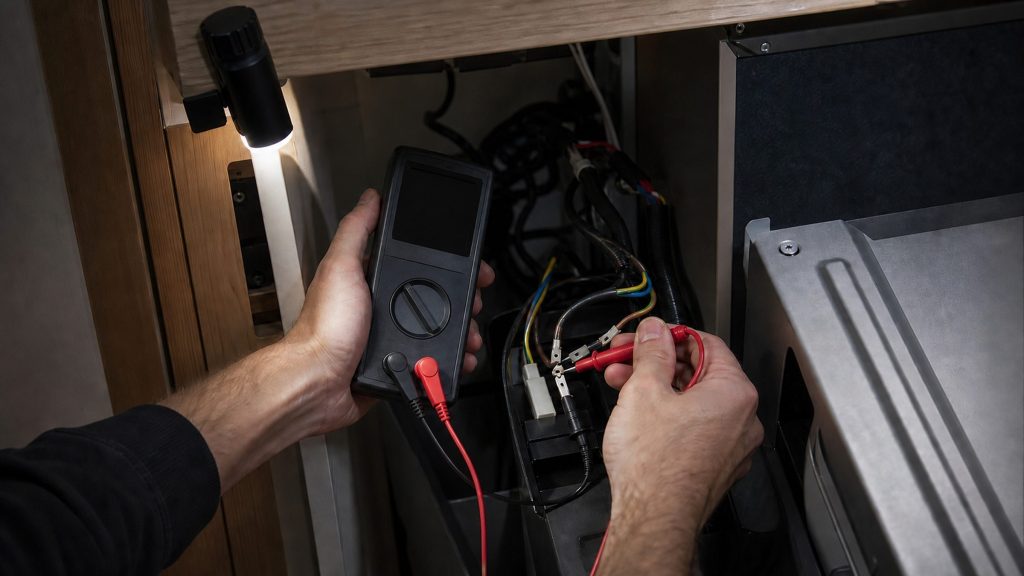
from $95 Diagnostic visit cost
What diagnostic visit costs on a DCS in South Florida, from $95, and what moves that figure up or down. No final price is published anywhere on this site: the exact cost is confirmed on site after the diagnostic and agreed in writing before anything is opened.
- from $95, and the three things that move it
- Masonry and distance from the water are quoted separately — both change the hour
- Confirmed on site in writing, and we say when a repair is not worth doing
-
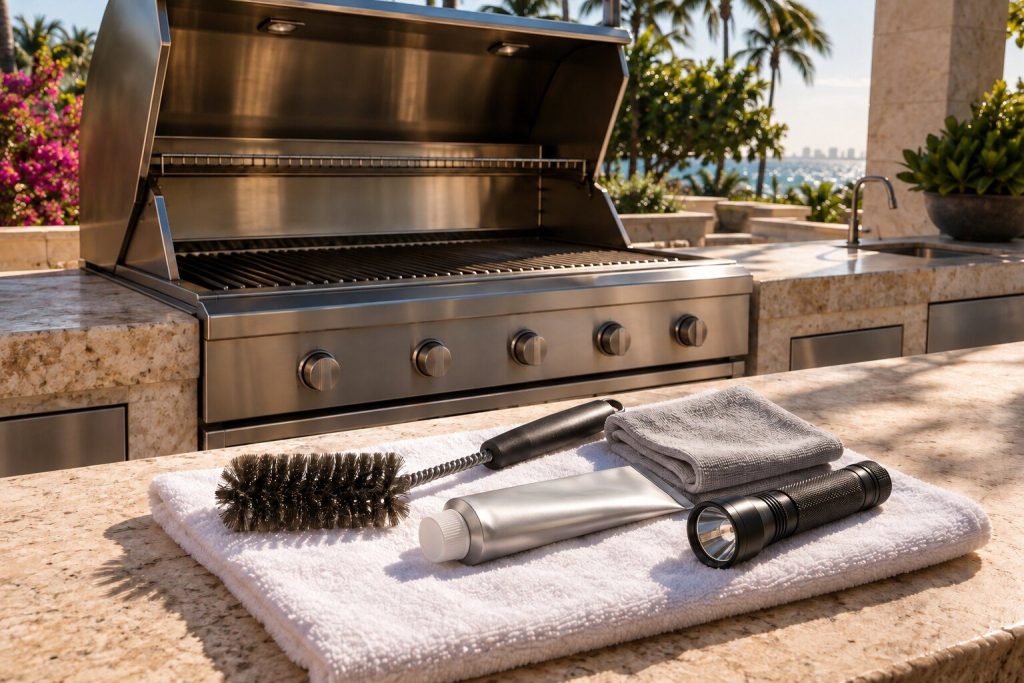
from $175 Appliance maintenance cost
What appliance maintenance costs on a DCS in South Florida, from $175, and what moves that figure up or down. No final price is published anywhere on this site: the exact cost is confirmed on site after the diagnostic and agreed in writing before anything is opened.
- from $175, and the three things that move it
- Masonry and distance from the water are quoted separately — both change the hour
- Confirmed on site in writing, and we say when a repair is not worth doing
-
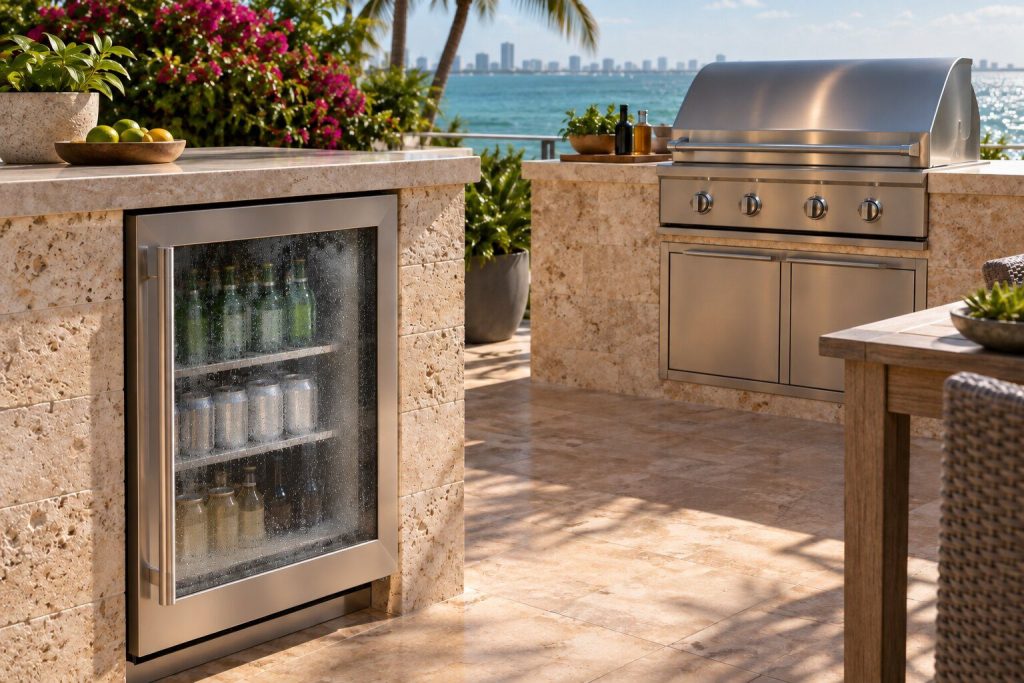
Running constantly and still warm in summer Beverage center not getting cold
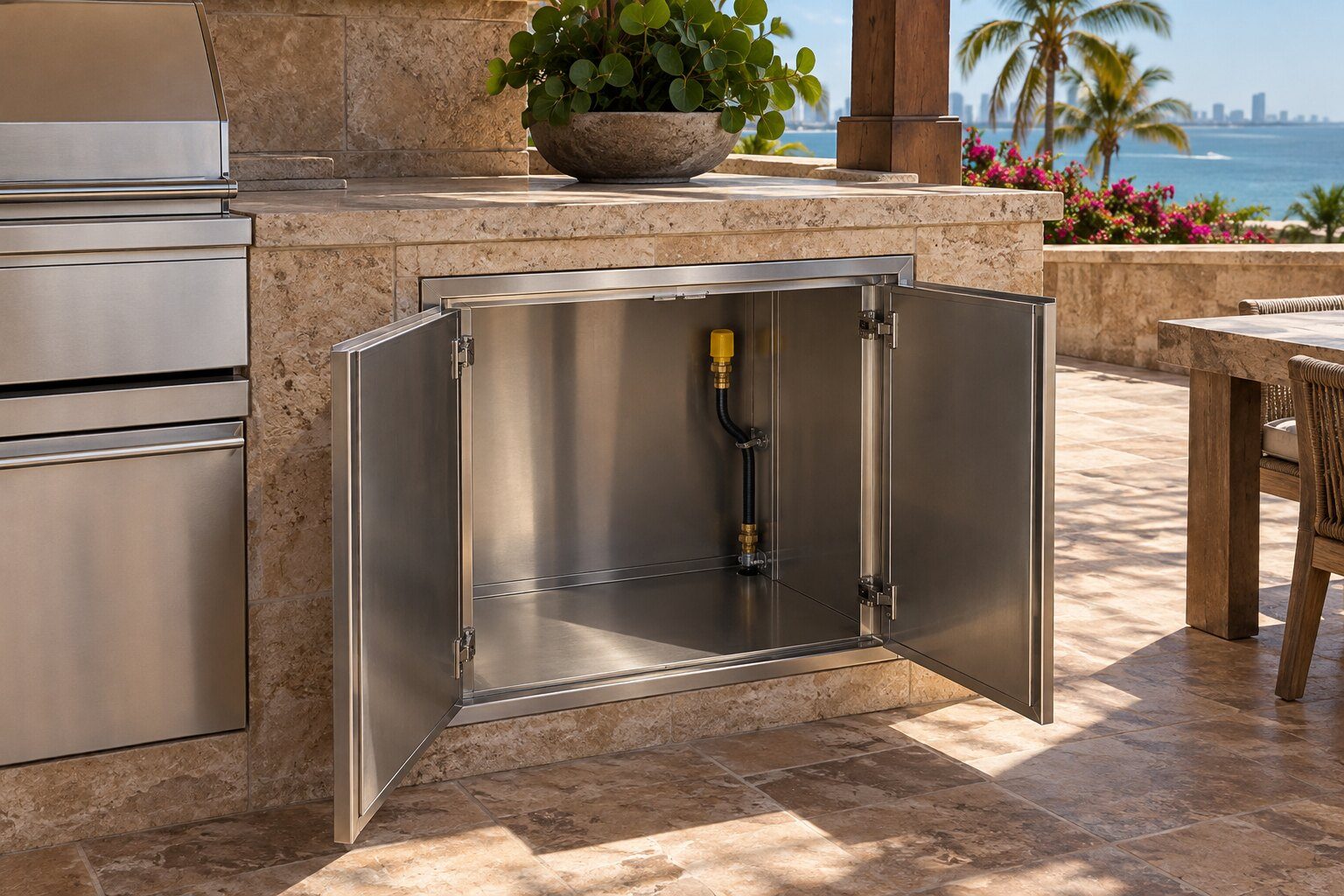
DCS beverage center not cooling. The first question is not about the machine. An undercounter cabinet in a closed stone island, a meter from a grill, in a Miami August, is being asked to reject heat into air that is already hot — and where the ventilation path was built tight or has since been blocked, nothing we fit will change that. Where the ventilation is genuinely adequate, the ordinary refrigeration list applies, and on this coast a condenser packed with salt and dust is near the top of it.
- Running constantly in August is not automatically a defect
- A condenser in an island loads with salt far faster than any indoor cabinet
- Ventilation is a repair — and no part substitutes for it
Questions people ask about this
Why will you not quote over the telephone?
Because the same job is not the same work on two machines. Outdoors there are two large variables before a part is even named — what the machine is set into, and how long the salt has been at it — and a seized fixing can add more to a visit than the component being replaced. A telephone number would be a guess with a price on it.
What if you cannot fix it on the first visit?
That is common on equipment no longer sold here and it does not change the fee. What you get on the first visit is the diagnosis and the parts answer, which includes an honest statement of availability. The work itself is scheduled once you have agreed the figure.
Is it cheaper to have several machines looked at together?
Considerably, and on an island it is worth arranging. The journey, the shutdown and the leak test at the end are paid for once. Four machines in one visit costs far less than four visits, and everything after the first is priced accordingly.
Cost Expectations
More guides like this one
-
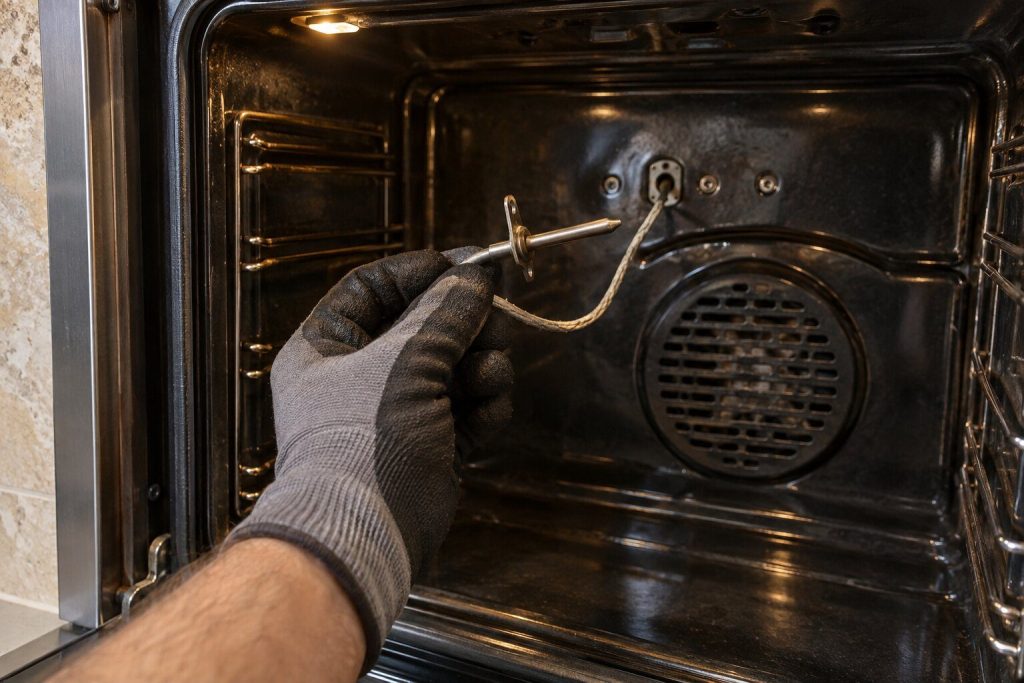
Gas Oven Thermostat Replacement Cost, and the Part People Mean Instead
Three quite different components get called the thermostat, they cost different amounts, and the one owners usually mean is the cheapest of them.
Read more -
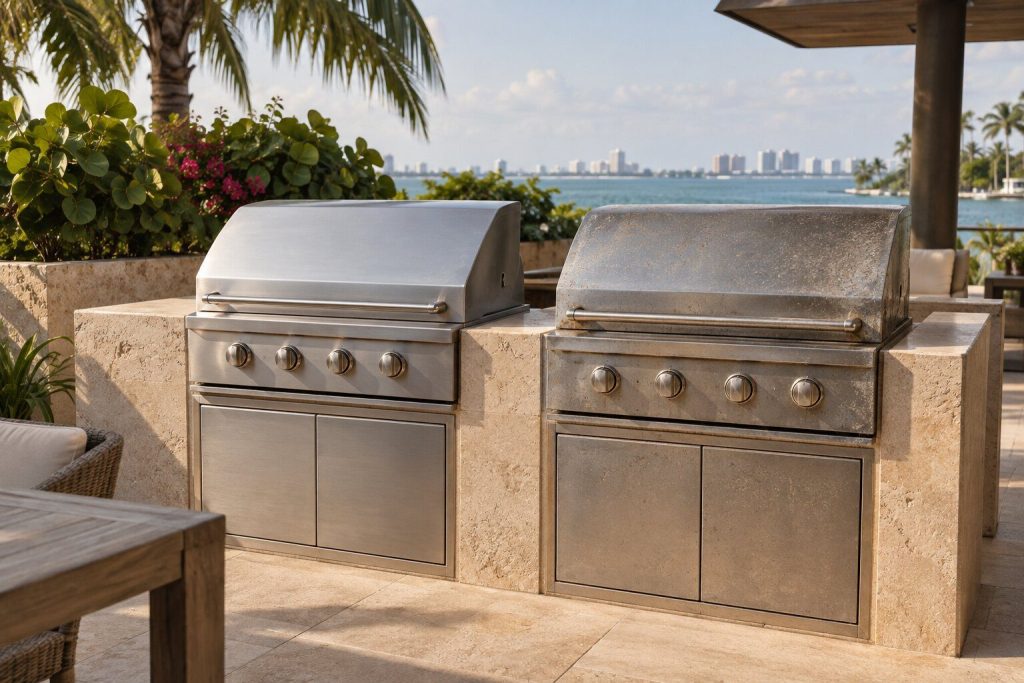
How Long a DCS Grill Lasts Here, and When Repair Stops Paying
The expensive part of the machine is the part that lasts. Fireboxes and gas trains outlive burners, ignitions and fixings by a long way — which is why repair usually wins, until it does not.
Read more -
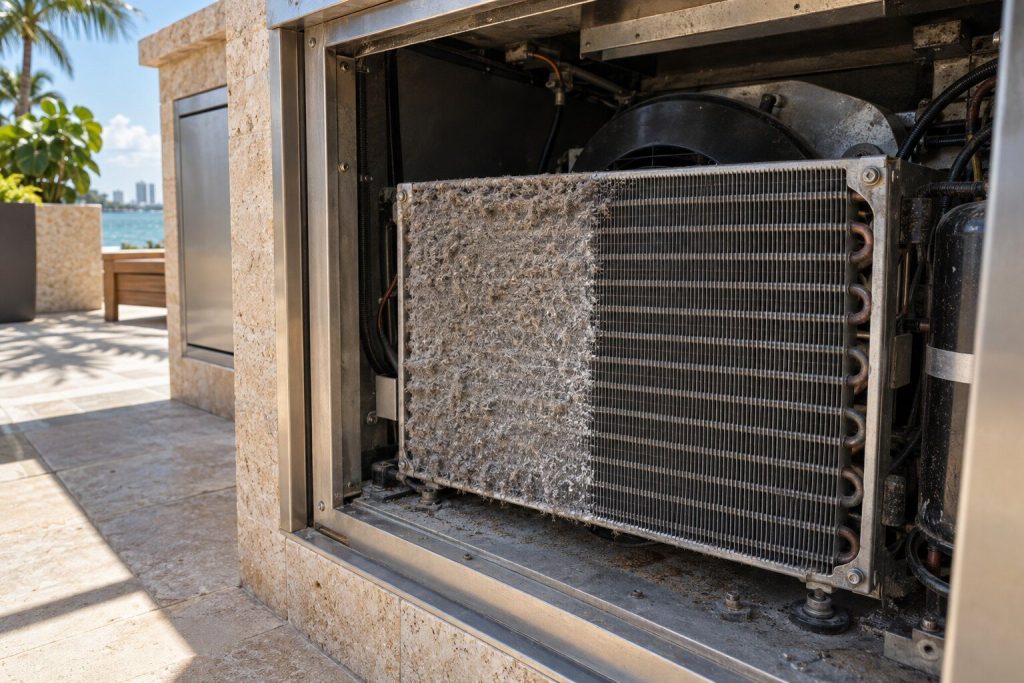
What Outdoor Ice Machine Maintenance Costs, and What Skipping It Costs
The one appliance on an island where deferring maintenance has a compounding price. Scale builds, the machine works longer for less, and the part that eventually fails costs more than the service would have.
Read more
Tell us the model number and what it is doing.
This article is based on:
- Official manufacturer documentation
- Internal repair procedures
- Technician repair history
- Company quality standards