Appliance
DCS beverage centers
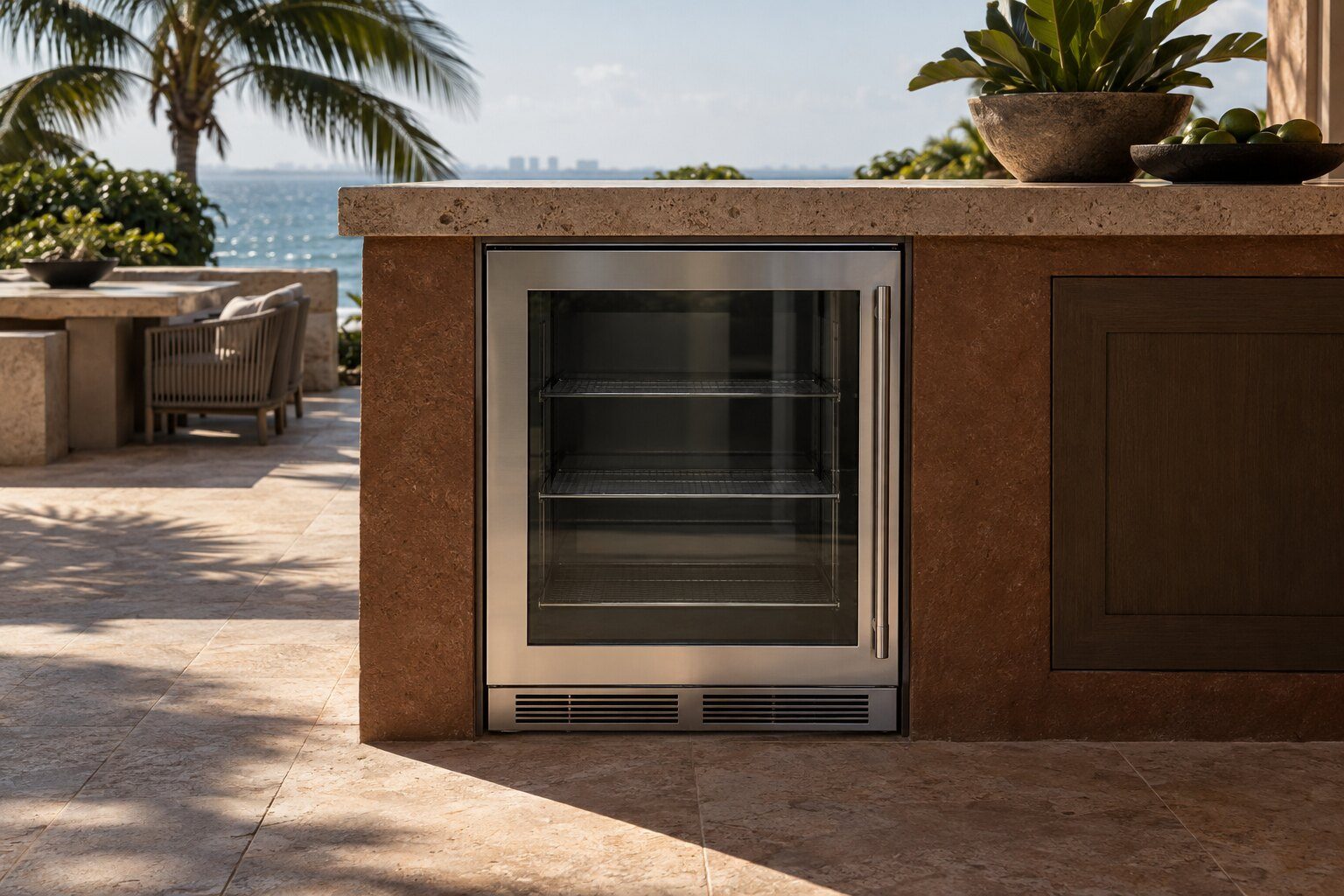
The one cold machine on a hot brand, and it earns its place by living outside. An outdoor-rated beverage center sits under the counter of the island, a meter from a grill, in ambient temperatures the indoor version of the same cabinet is not built for. That changes what fails and how it presents: a unit running constantly and never reaching temperature in August is often doing everything right in conditions it cannot win, and the fix is ventilation or shade rather than a compressor. The genuine problems are the ordinary refrigeration ones — a seal, a fan, a drain, a condenser packed with dust and salt — plus one this climate adds, which is condensation where an indoor machine would have had none.
- 3 symptoms we are called out to
- From $95 diagnostic, credited to the repair
- 59 cities and neighborhoods covered
- OEM parts available on order
The short version
What this equipment is, for a repair
Configurations
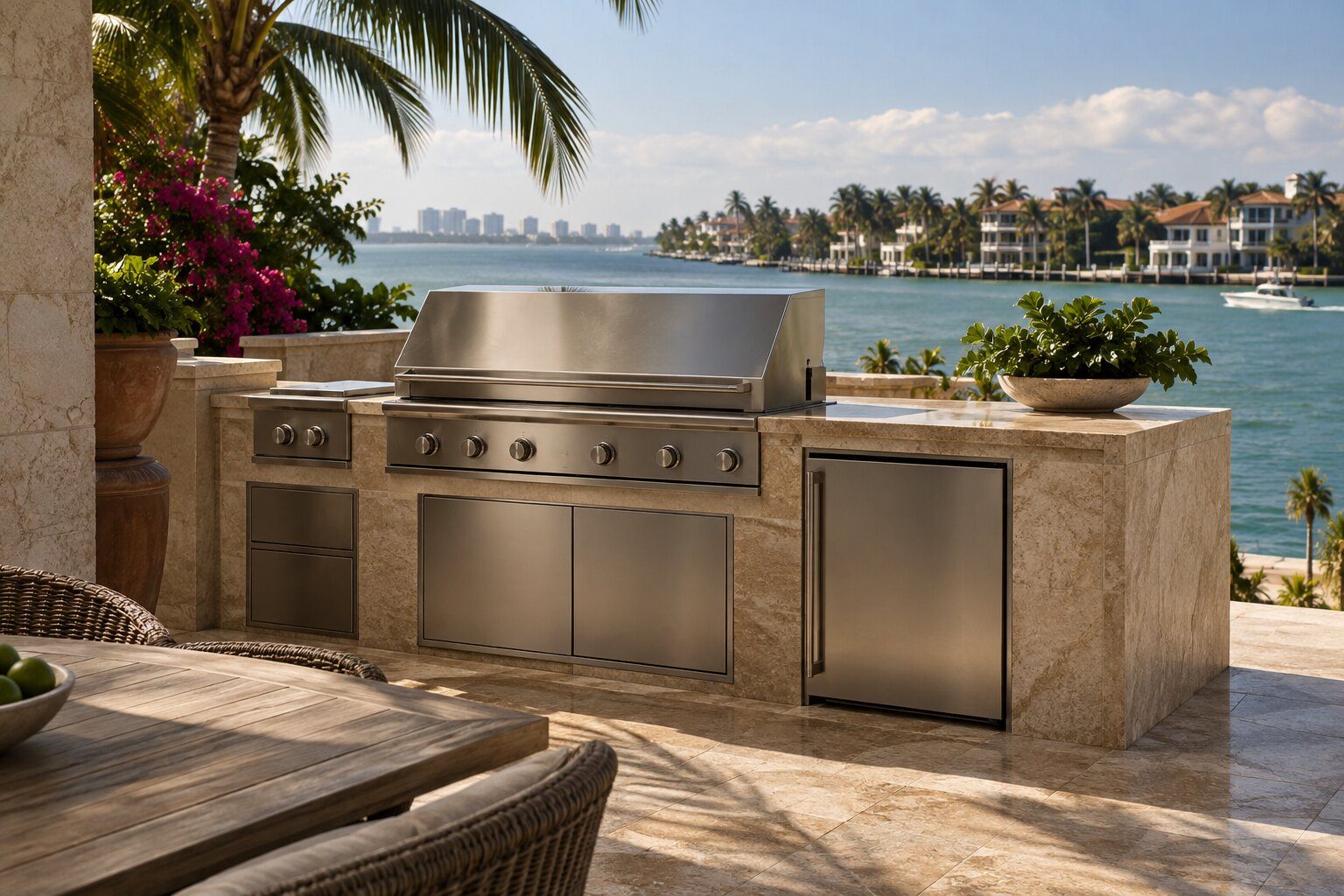
Outdoor-rated, under the counter of the island
Access
Planned before the visit, not discovered on arrival
Parts
OEM, available on order
Diagnostic
From $95, credited to the repair
What goes wrong with it
Symptoms we are called out to on DCS beverage centers
Each one covers the likely causes in the order they are worth checking, and what to do in five minutes before booking anything.
-
Running constantly and still warm in summer Beverage center not getting cold
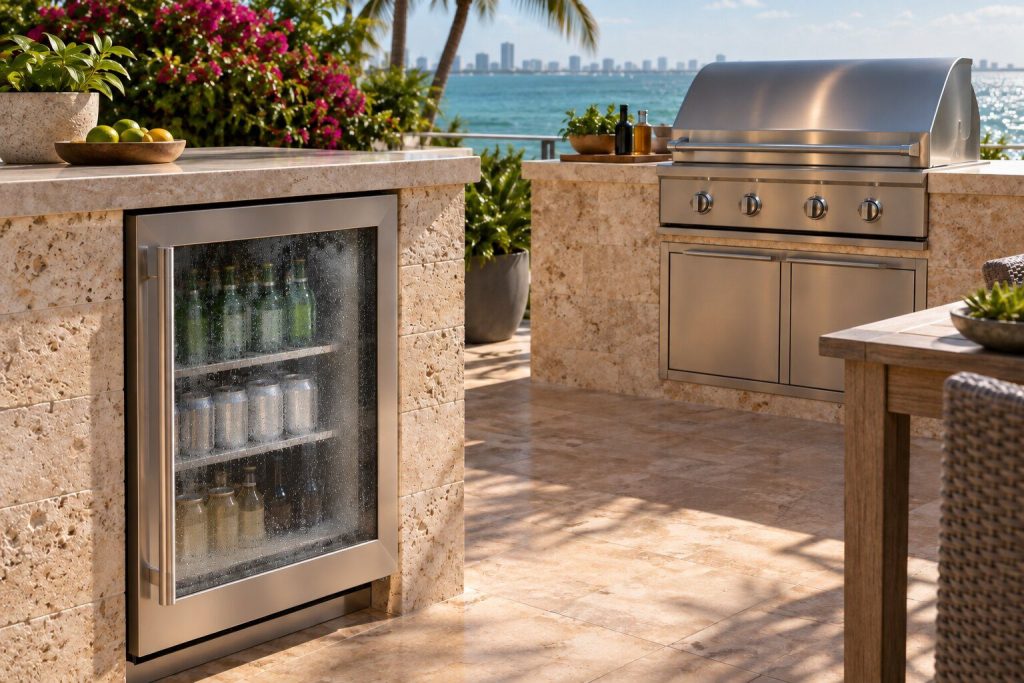
DCS beverage center not cooling. The first question is not about the machine. An undercounter cabinet in a closed stone island, a meter from a grill, in a Miami August, is being asked to reject heat into air that is already hot — and where the ventilation path was built tight or has since been blocked, nothing we fit will change that. Where the ventilation is genuinely adequate, the ordinary refrigeration list applies, and on this coast a condenser packed with salt and dust is near the top of it.
- Running constantly in August is not automatically a defect
- A condenser in an island loads with salt far faster than any indoor cabinet
- Ventilation is a repair — and no part substitutes for it
-
A pool in the base, or under the cabinet Water inside the beverage center
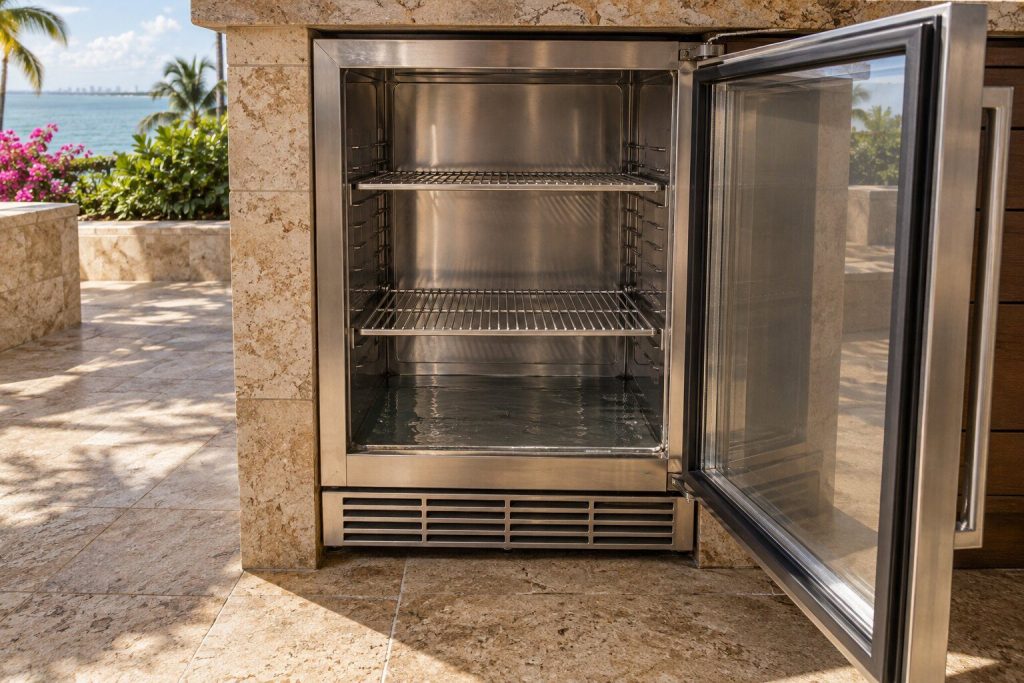
Water inside a DCS beverage center. It is almost never a refrigerant leak — refrigerant is a gas and it does not puddle. Every cold cabinet makes water and has a planned route for it, and when that route blocks the water finds its own. Outdoors there is a second source an indoor unit never has: humid air arriving past a tired door seal, condensing on everything cold, in quantities that genuinely surprise people. The two causes look identical on the floor and feed each other.
- Water inside is a drain or a seal, not the refrigeration
- Humid outdoor air past a tired gasket makes more water than a drain expects
- Treating the drain and leaving the seal means the puddle comes back
-
Brown speckling on doors, handles and fixings Outdoor stainless is pitting and rusting
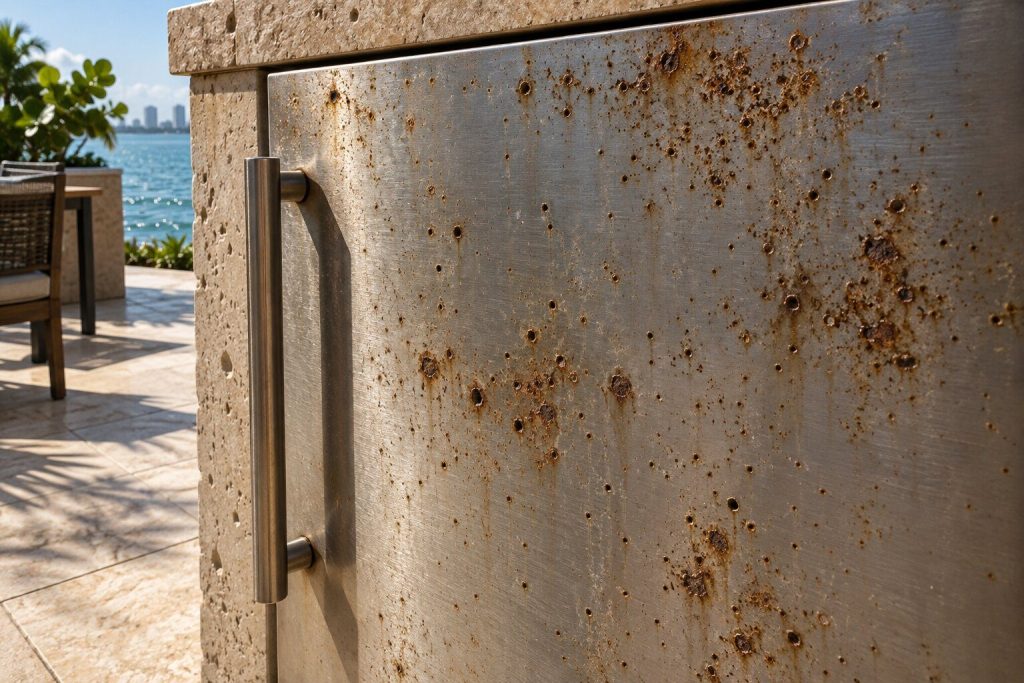
DCS outdoor stainless rusting. Outdoor-rated stainless resists salt; it does not ignore it. Brown speckling on a door or a handle is cosmetic and is slowed a great deal by rinsing with fresh water and drying, and there is no shame in a waterfront grill showing it. What is not cosmetic is corrosion around the vents, the hinges, the mounts and the fixings — those are the parts holding cabinets square and seals true, and they are the ones worth acting on.
- Speckling on a face is cosmetic; corrosion at a fixing is structural
- Fresh water and drying does more than any polish
- Distance from the water is the real interval — four blocks is not four miles
What we do on it
Repairs we carry out on DCS beverage centers
Starting figures for this equipment in South Florida. The exact cost is confirmed after an on-site diagnostic — and this is not the whole list of what can go wrong, so call if your problem is not here.
-
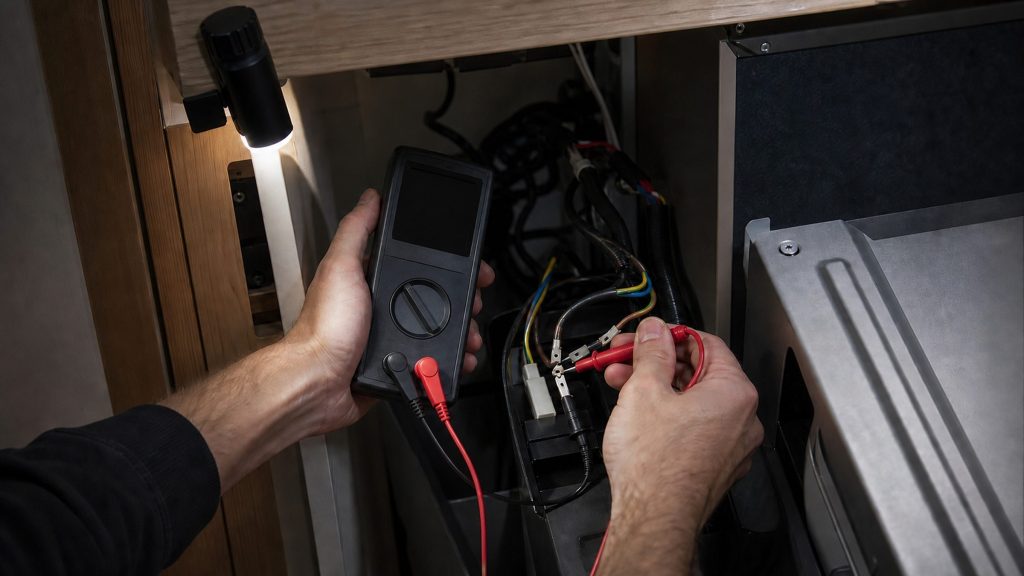
from $95 Diagnostic visit
Establishing the problem itself, with nothing quoted until it is established. Two questions come before the symptom on this badge. Is the machine indoors or outdoors — because the indoor line answers in a decoded code and the outdoor line has no codes whatsoever, so the whole method changes. And what is it sitting in — masonry, joinery or a cart — because that, not the problem, sets the length of the visit. Whatever we find is written down with a figure beside it before a spanner is picked up. The charge comes off the repair when you go ahead; when our recommendation is to stop spending money on the machine, you get that recommendation and pay the same.
- Indoors or outdoors decides the method: a code to decode, or flame and smell to read
- Nothing quoted until the problem is established, and the charge comes off the repair
- Told plainly when the machine has stopped being worth the money
-
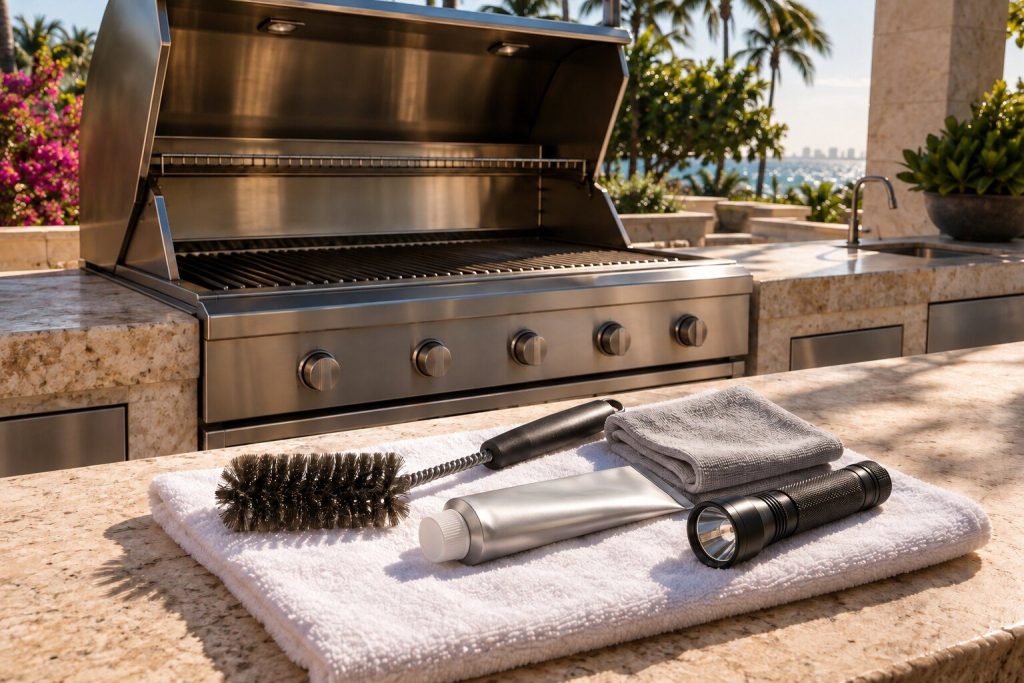
from $175 Appliance maintenance
The visit that is booked rather than called in. Outdoor cooking equipment in this market does not fail on a schedule set by hours of use — it fails on one set by salt, rain and the months it spends under a cover with humidity trapped underneath. A maintenance visit is where burners come out and get looked at before they are the reason dinner stopped, where the grease path is cleared before it is a fire, where drawer runners are treated before they pit, and where an undercounter refrigerator's condenser is cleaned before August asks it for everything. Indoors it is the ordinary and useful work: seals, hinges, sensor accuracy, filters, and the parts of a high-output range that quietly drift.
- Built around salt and season rather than around hours of use
- The grease path is treated as a fire question, because that is what it is
- Findings written down, so next year's visit starts from evidence
-
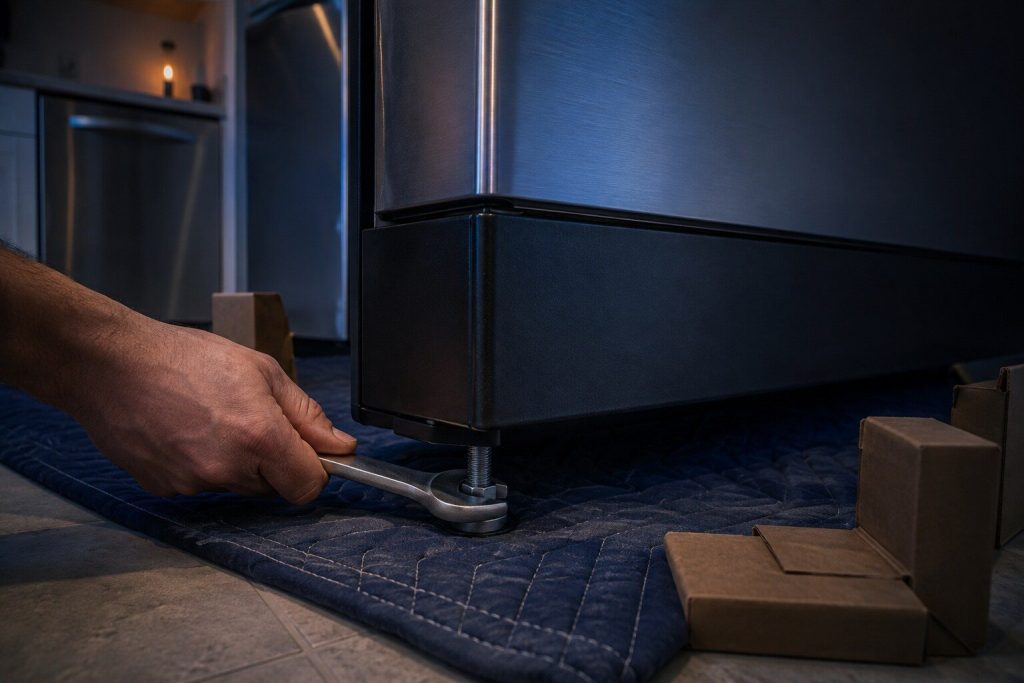
from $245 Appliance installation
Putting a machine into a space somebody else built. On this brand that is rarely a delivery and usually a fit: a grill head into a masonry cutout, a beverage center into an island with a ventilation path that has to actually work, a wall oven into a tall run, a cooktop into stone that does not forgive a second attempt. The measuring happens before anything is ordered, not after it arrives. Where an existing cutout is wrong for the machine that is meant to go into it, we say so while it is still a drawing — that conversation is cheap and the alternative is a slab with a hole in the wrong place.
- Measured against the cutout that exists, not the one in the brochure
- Ventilation and clearance treated as part of the install, because they decide whether it works
- Gas connection and leak check done properly and documented
-
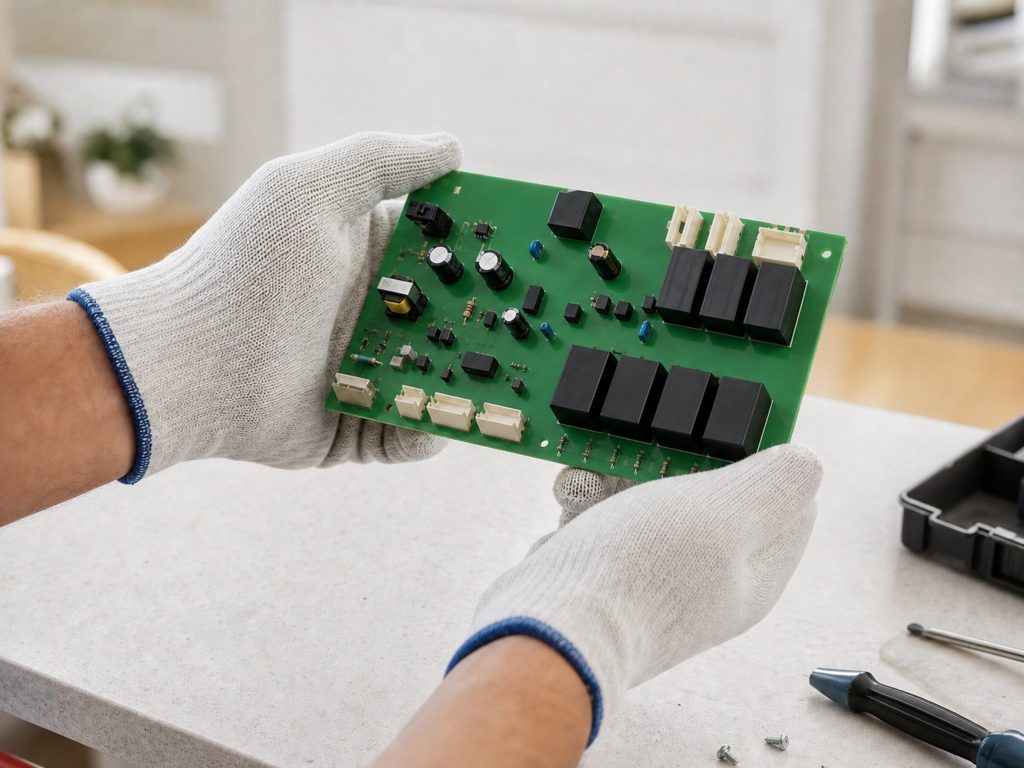
from $295 Control board repair
When the electronics rather than the mechanics are the problem. Indoors this brand publishes an error table that names board errors directly — a missing master or slave power board, a software error, a communication failure between boards, and one code that fires when the control does not recognize which model it is fitted to. That last one is the interesting one: it usually appears after a part has been replaced with the wrong variant, and no amount of further replacing will settle it until the model identity matches. We diagnose before we order, because a board is the most expensive thing on most of these machines and the second most commonly replaced without need.
- The published sub-error separates board, software and communication errors
- A code that means the control does not recognize the model is a fitting problem, not a dead board
- We prove the board is the problem before one is ordered
-
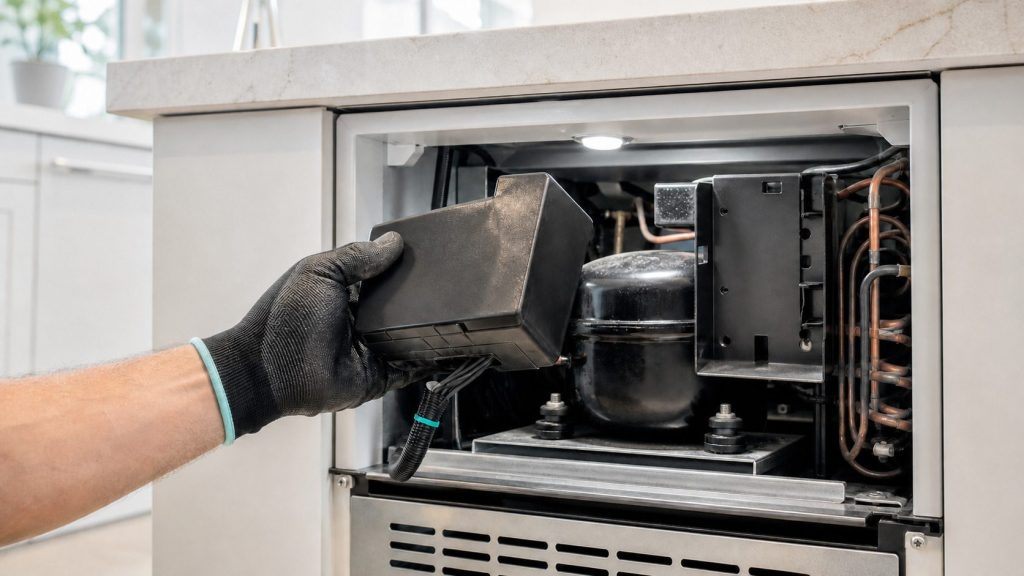
from $185 Beverage center not cooling
An outdoor undercounter cabinet that will not reach or hold its temperature, most often reported in the hottest weeks of the year. The first question is not about the machine: an undercounter unit in a closed stone island, next to a grill, is being asked to reject heat into air that is already hot, and where the ventilation path was built tight or has been blocked, no part will fix it. Where the ventilation is genuinely adequate, the ordinary refrigeration list applies — door seal, evaporator or condenser fan, a condenser packed with salt and dust, then the sealed system. In that order, because that is the order of both likelihood and cost.
- Ventilation first — in a sealed island no part will fix this
- A condenser in an island loads with salt far faster than any indoor cabinet
- Running constantly in August is not automatically a defect
-
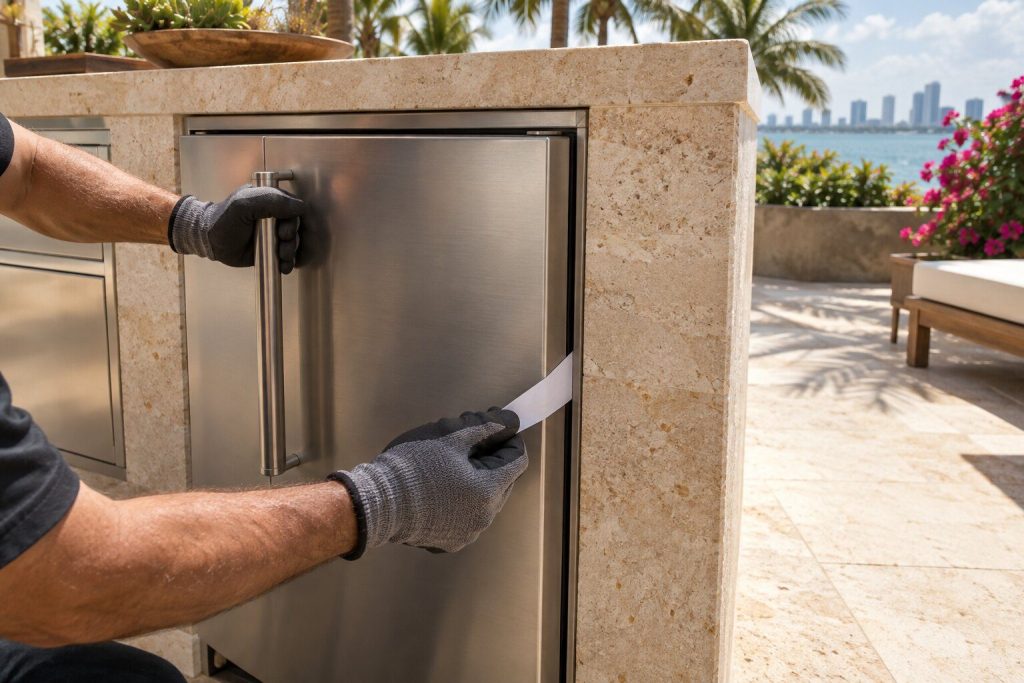
from $145 Beverage center door and seal service
A door that no longer seals on an outdoor cabinet does something an indoor one never has to deal with: it lets humid Florida air onto cold surfaces, and the result is water in quantities that surprise people. The seal can look perfect and still have lost its set — the test is whether it grips, not whether it is intact. Hinges matter as much as the gasket, because a door that has dropped even slightly will hold at the top and stand open at the bottom, and on an undercounter unit that is exactly where nobody looks.
- A gasket that looks new can still have lost its grip
- Humid air on cold surfaces is where the water is coming from
- Undercounter doors fail at the bottom, where nobody looks
-
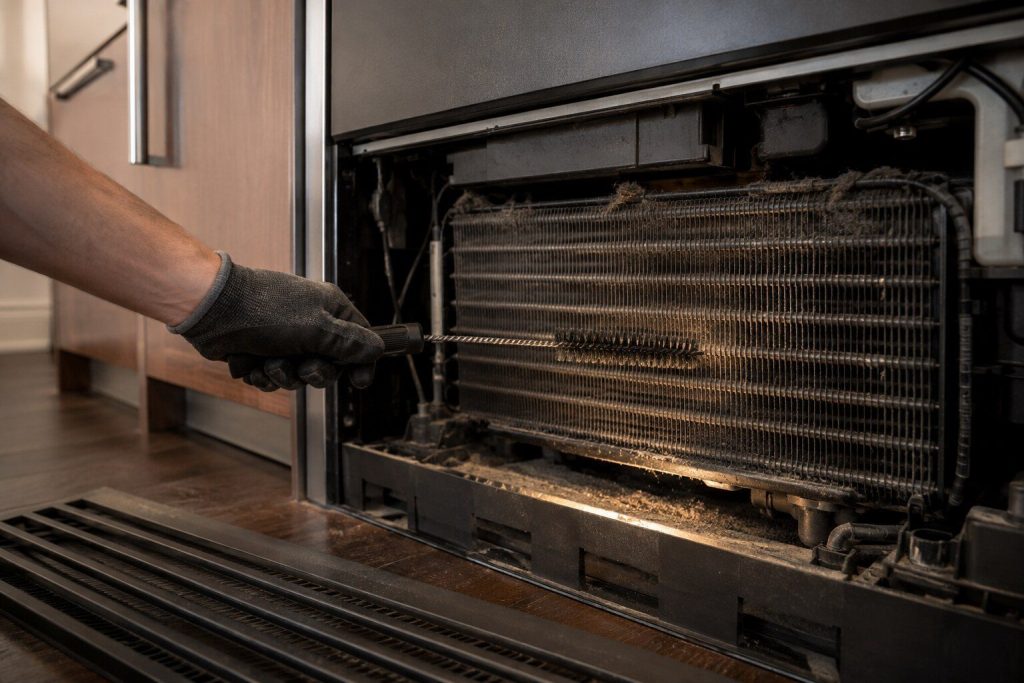
from $135 Outdoor refrigeration condenser service
The highest-yield maintenance on the one cold machine this brand builds. A condenser rejects heat by moving air across a coil, and in an outdoor island that air carries salt, dust, pollen and whatever the landscaping is doing. The coil loads, the temperature the cabinet can reach rises, the compressor runs longer, and the owner hears about it as 'it never turns off any more'. Cleaning it is inexpensive, takes an hour, and buys back performance that people assume is gone for good. On the coast this is a yearly job, not a five-yearly one.
- 'It never turns off' is the symptom this service answers
- Yearly on the coast, and the coil shows why
- An hour of work that returns performance people had written off
-
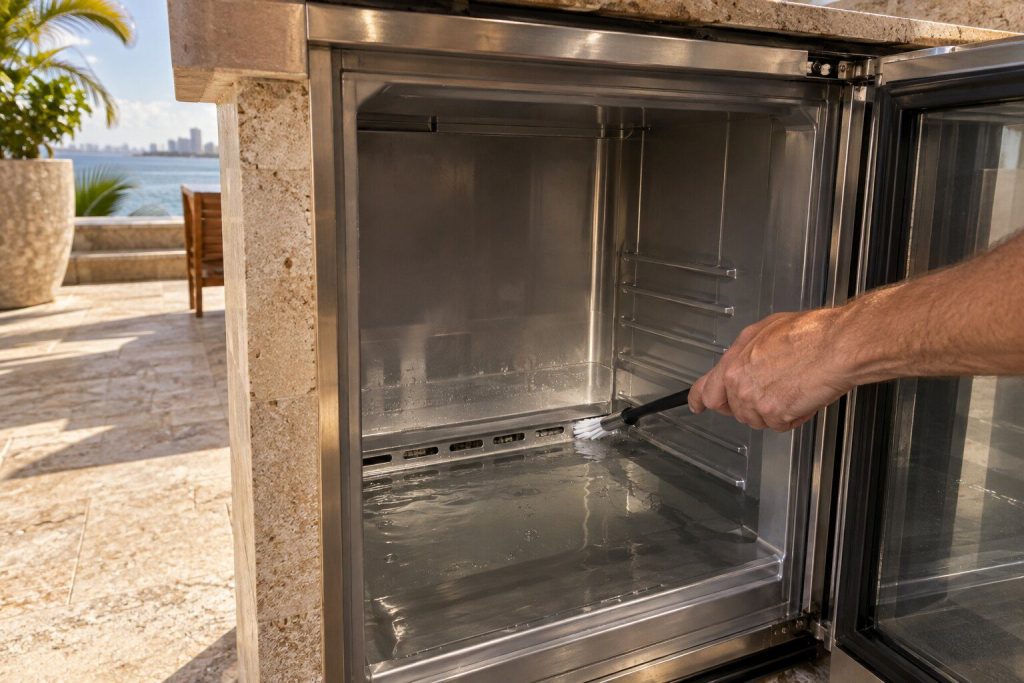
from $125 Drain and condensation service
Water inside a cold cabinet, or under it, and neither is usually a leak in the refrigeration. Every cold machine makes water and has a planned route for it; when the route blocks, the water finds its own, and outdoors there is a second source that indoor cabinets never have — humid air arriving past a tired seal and condensing on everything cold. The two causes look identical on the floor and are completely different to fix. We deal with the drain and the seal together, because fixing one and leaving the other means somebody sees the same puddle next month.
- Water inside is almost never a refrigerant leak
- Outdoors, a tired seal makes water the drain then has to deal with
- Drain and seal are one job — treating either alone brings it back
-
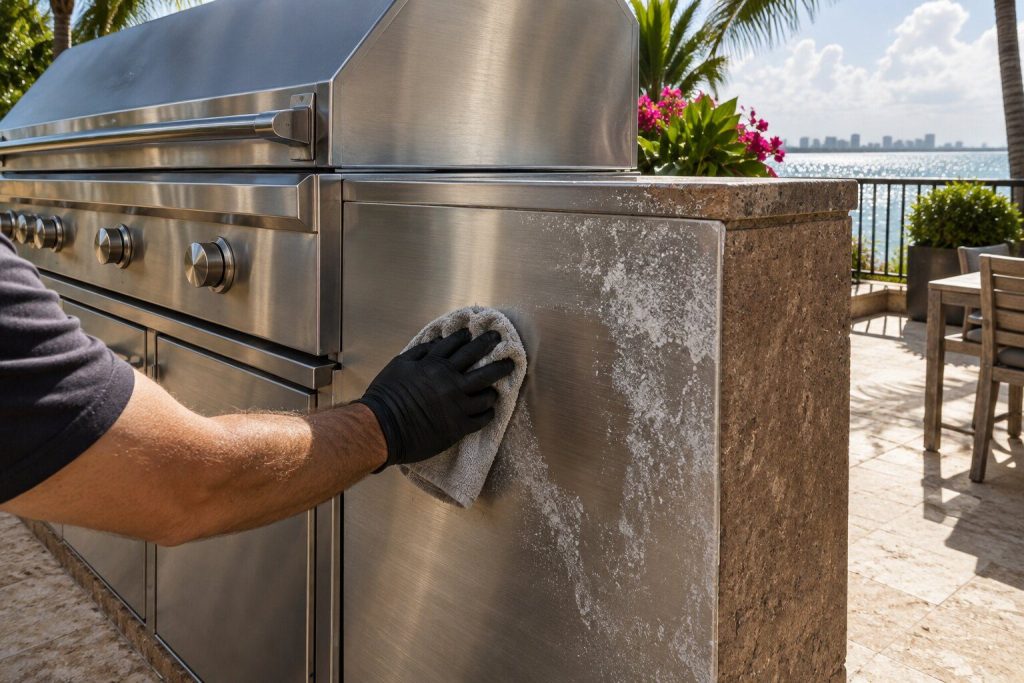
from $195 Salt air protection service
A visit that exists because of where this equipment lives. Four of the seven machines on this site stand outdoors in air that carries salt, and the difference between a kitchen four blocks from the water and one four miles inland is measured in years of service life. This is the planned, unglamorous work that changes that number: stainless cleaned and protected in the right direction, fixings inspected and replaced with the right grade before they seize, ignition components and electrical housings treated and re-sealed, hardware caught while it is stiff rather than after it is stuck. It is not a cosmetic service, although the kitchen does look better afterwards.
- Distance from the water is the real service interval on this coast
- Fixings replaced with the right grade before they seize, not after
- Not a polish — the point is the fixings, the housings and the hardware
In more detail
About DCS beverage centers
The only cold machine on a hot brand
Everything else on this badge makes heat. The beverage center removes it, outdoors, a meter from something that makes a great deal of it. That single sentence explains most of what we find: the machine is usually fine and the conditions it has been given are usually the story.
Ventilation is a repair
An undercounter refrigerator in a sealed stone island cannot reject heat, and no part we fit will change that. Where the vent path is the problem, saying so costs us a parts sale and saves the customer a second identical visit in the next hot month.
Outdoor-rated is not decorative
The rating covers ambient range, sealing and the grade of the stainless. An indoor cabinet fitted into an outdoor island will run for a while and then fail in a way nobody wants to pay to repair. We check which one is in the island before we quote anything, and we say what we find.
This article is based on:
- Official manufacturer documentation
- Internal repair procedures
- Technician repair history
- Company quality standards
Before you book
Questions about DCS beverage centers
It never gets cold enough in summer.
First we ask where it is and what is around it. An undercounter cabinet in a closed stone island with a grill beside it is being asked to reject heat into air that is already hot, and if the vent path was built tight or has been blocked by a shelf or a bag of charcoal, it cannot. That is not a compressor failure and replacing parts will not fix it. Where the ventilation is genuinely adequate and it still will not hold, then we are looking at the seal, the fan, the condenser or the sealed system — in that order, because that is the order of likelihood and cost.
There is water inside, or under it.
Almost always the drain or the seal rather than a leak in the system. Every cold cabinet makes water and has a route planned for it; when the route blocks, the water finds its own. Outdoors there is a second source an indoor unit never has — humid air getting past a tired door seal condenses on everything cold, and on a bad day that is a surprising amount of water. A seal that looks perfect can still have lost its set. We check the drain path and the seal together.
The stainless is pitting and rusting. Is the machine failing?
Not necessarily, but it is telling you something. Outdoor-rated stainless resists salt; it does not ignore it. Pitting on the door and the handle is cosmetic and slowed a great deal by rinsing and drying with fresh water; corrosion around the vent, the hinges or the base is structural and worth looking at, because those are the parts that hold the cabinet square and the seal true. What we do not do is tell you the cabinet is finished because the front looks tired.
Can an indoor undercounter unit be used outside?
No, and it is worth being blunt about it because we find it often. An indoor cabinet outdoors runs in ambient temperatures outside its rating, takes rain and salt on electrics that were never sealed for it, and loses its warranty on the first day. It usually works for a season or two and then fails in a way that is not economically repairable. If somebody fitted one into your island, we will tell you plainly rather than repairing it twice.
Where we do it
Across Miami-Dade, Broward, and Palm Beach
Same terms everywhere we go: an on-site diagnostic first, the price agreed in writing, and the exact figure confirmed once we have seen the unit.
Neighborhoods people ask for by name