
Appliance
DCS cooktops
Two quite separate machines share this page because they share a cutout. A gas cooktop is the range's top without the oven under it, and it fails the way that top fails — ignition, seating, a blocked port, a switch. An induction cooktop is an electronics problem wearing a glass lid, and it announces itself in code: this make publishes a short, decoded list, and one of those codes is a voltage complaint rather than a problem in the machine at all. What is in the stone decides the whole visit — down to whether the person who finally solves it works for us or for the power company.
- 4 symptoms we are called out to
- From $95 diagnostic, credited to the repair
- 59 cities and neighborhoods covered
- OEM parts available on order
The short version
What this equipment is, for a repair
Configurations
Gas and induction · drop-in, with the range top's burners
Access
Planned before the visit, not discovered on arrival
Parts
OEM, available on order
Diagnostic
From $95, credited to the repair
What goes wrong with it
Symptoms we are called out to on DCS cooktops
Each one covers the likely causes in the order they are worth checking, and what to do in five minutes before booking anything.
-
Sparking away on one ring with no flame Range burner clicks and will not light
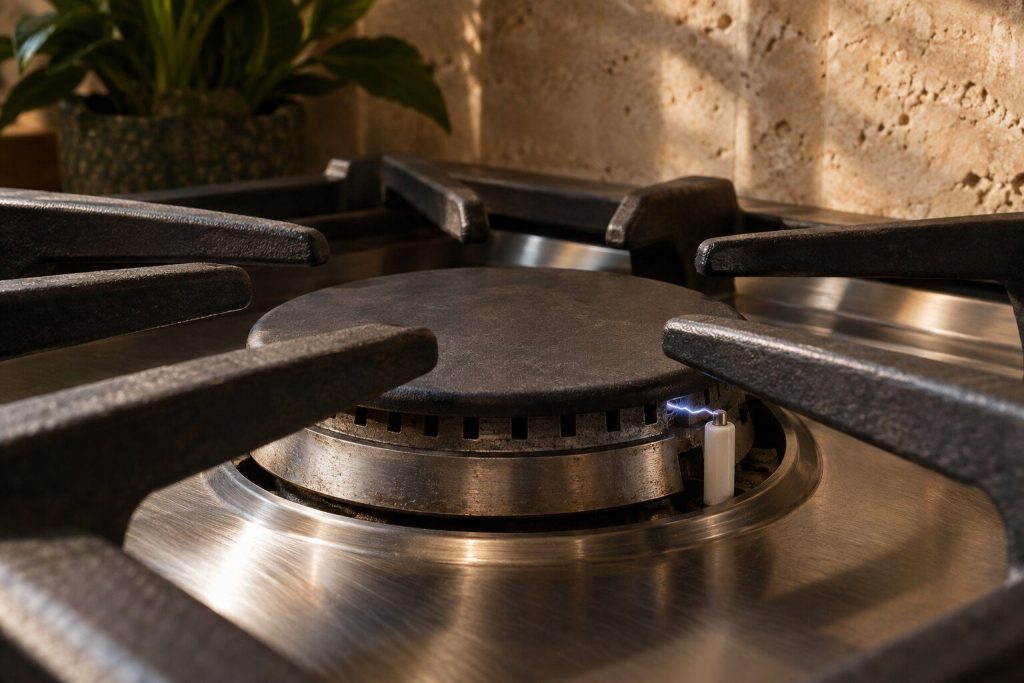
DCS range burner clicking and not lighting. On a sealed burner the list of causes is short and the first one is free: a cap set down rotated, or resting on a crumb, will spark all day and never light. After that it is a wet or cracked electrode, a port blocked by a boil-over, or the switch behind the dial. One detail separates two of those immediately — clicking that stops once the flame catches is normal, and clicking that continues afterwards is a switch.
- Lift and reseat the cap before calling anyone — it costs nothing and often ends it
- Clicking after the flame catches is a switch, not the ignition
- If it started after a clean or a boil-over, that is usually the whole story
-
One zone dead while the others are fine Induction zone not working
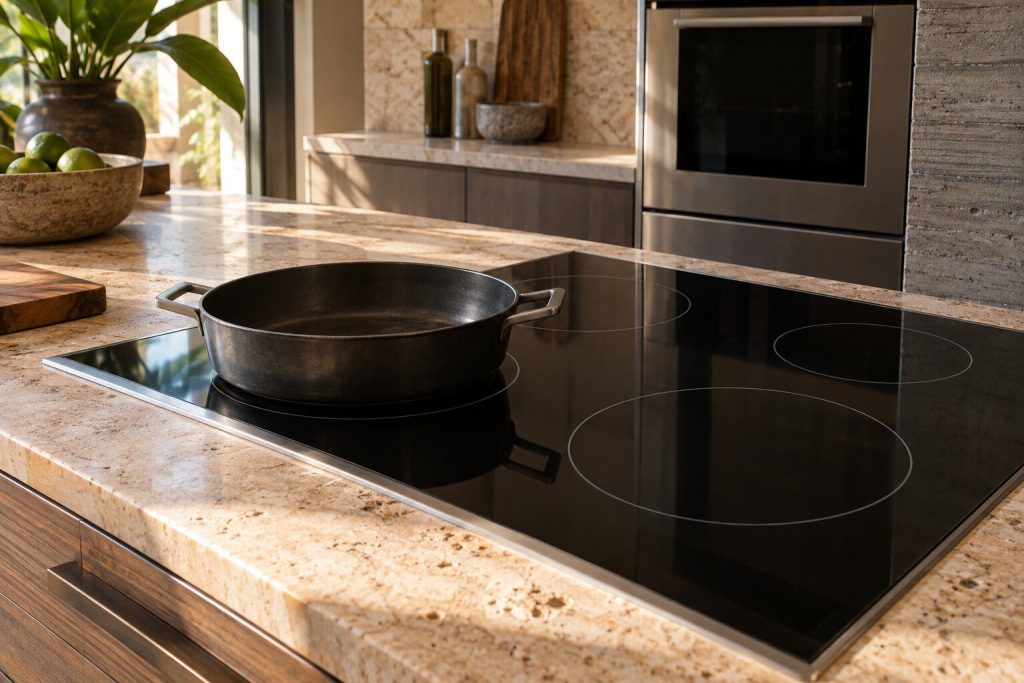
DCS induction zone not working. One zone dead with the rest perfect is the useful version of this problem — it takes the supply and the main control mostly out of the picture and puts that zone's own chain in front of us. But there is a free check first, and it catches a real share of these calls: a pan whose base is not magnetic, or has warped so it no longer sits flat, will fail on any zone and fail most obviously on the smallest one.
- Test with a pan you know works before booking anything — a magnet settles it
- Connections and sensing fail far more often than coils do
- A zone that only drops out when others are running is a cooling problem
-
It stops, sometimes with a code, and cools before it will restart Induction cooktop shuts off mid-cook
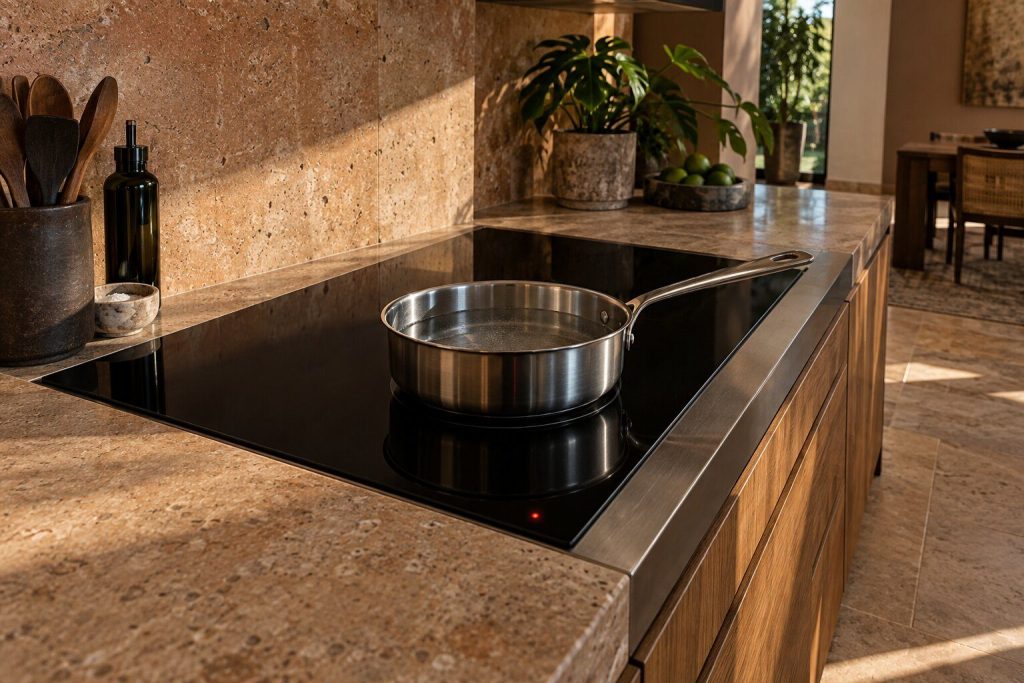
DCS induction cooktop turning itself off. The machine is protecting itself and the published code list says from what: a key held down, a supply outside what it will run on, a short or an interruption in the key reading, an internal communication error, or a temperature condition. Two of those clear themselves and cost nothing, and one of them is not about the cooktop at all — the voltage entry means the machine is reporting on the electricity it is being given, and in older buildings it appears for real reasons.
- Write the code down before it clears — the list separates five quite different things
- One published code is about the building's supply, not the cooktop
- Shutting down at the end of a long hard cook is the machine working correctly
-
Strong on one side of the ring, weak on the other Gas cooktop flame is uneven
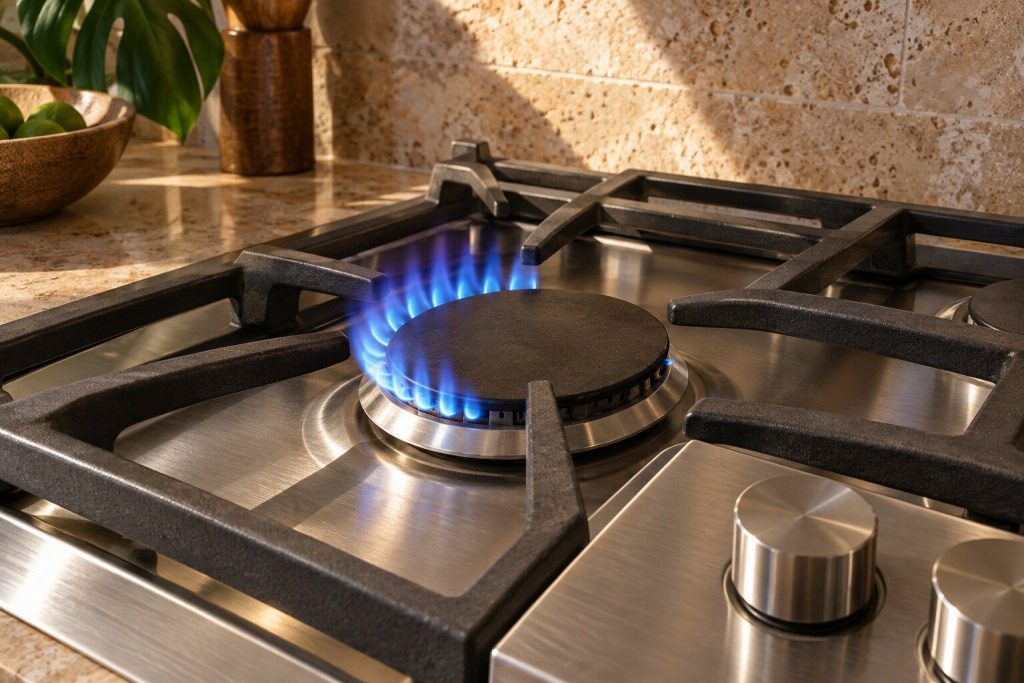
DCS gas cooktop uneven flame. A ring that burns hard on one side and feebly on the other is nearly always the cap or the ports rather than the burner, and both are owner-fixable with everything cold. The important distinction is how many burners are doing it: one ring is mechanical and local, every ring at once is the supply or the regulator and no amount of cleaning will change it. There is also a second symptom worth mentioning in the same call — a burner that lights well and will not hold a low flame has a different problem, and it only shows at the bottom of the range.
- One ring uneven is the cap or the ports; every ring is the supply
- Burner caps through a dishwasher come back permanently changed
- A burner that will not simmer has a problem that only appears at minimum
What we do on it
Repairs we carry out on DCS cooktops
Starting figures for this equipment in South Florida. The exact cost is confirmed after an on-site diagnostic — and this is not the whole list of what can go wrong, so call if your problem is not here.
-
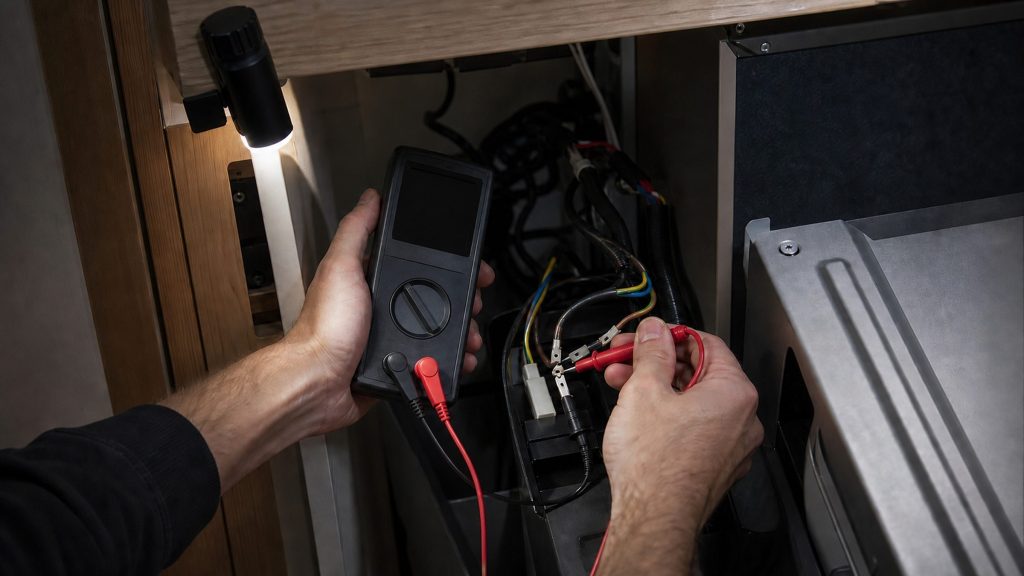
from $95 Diagnostic visit
Establishing the problem itself, with nothing quoted until it is established. Two questions come before the symptom on this badge. Is the machine indoors or outdoors — because the indoor line answers in a decoded code and the outdoor line has no codes whatsoever, so the whole method changes. And what is it sitting in — masonry, joinery or a cart — because that, not the problem, sets the length of the visit. Whatever we find is written down with a figure beside it before a spanner is picked up. The charge comes off the repair when you go ahead; when our recommendation is to stop spending money on the machine, you get that recommendation and pay the same.
- Indoors or outdoors decides the method: a code to decode, or flame and smell to read
- Nothing quoted until the problem is established, and the charge comes off the repair
- Told plainly when the machine has stopped being worth the money
-
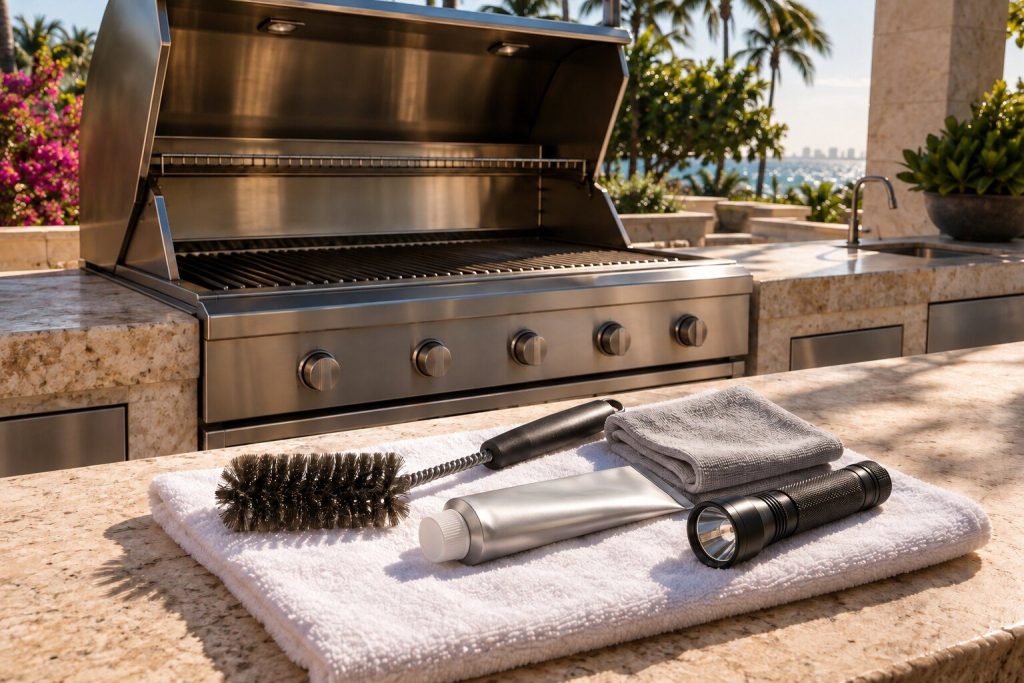
from $175 Appliance maintenance
The visit that is booked rather than called in. Outdoor cooking equipment in this market does not fail on a schedule set by hours of use — it fails on one set by salt, rain and the months it spends under a cover with humidity trapped underneath. A maintenance visit is where burners come out and get looked at before they are the reason dinner stopped, where the grease path is cleared before it is a fire, where drawer runners are treated before they pit, and where an undercounter refrigerator's condenser is cleaned before August asks it for everything. Indoors it is the ordinary and useful work: seals, hinges, sensor accuracy, filters, and the parts of a high-output range that quietly drift.
- Built around salt and season rather than around hours of use
- The grease path is treated as a fire question, because that is what it is
- Findings written down, so next year's visit starts from evidence
-
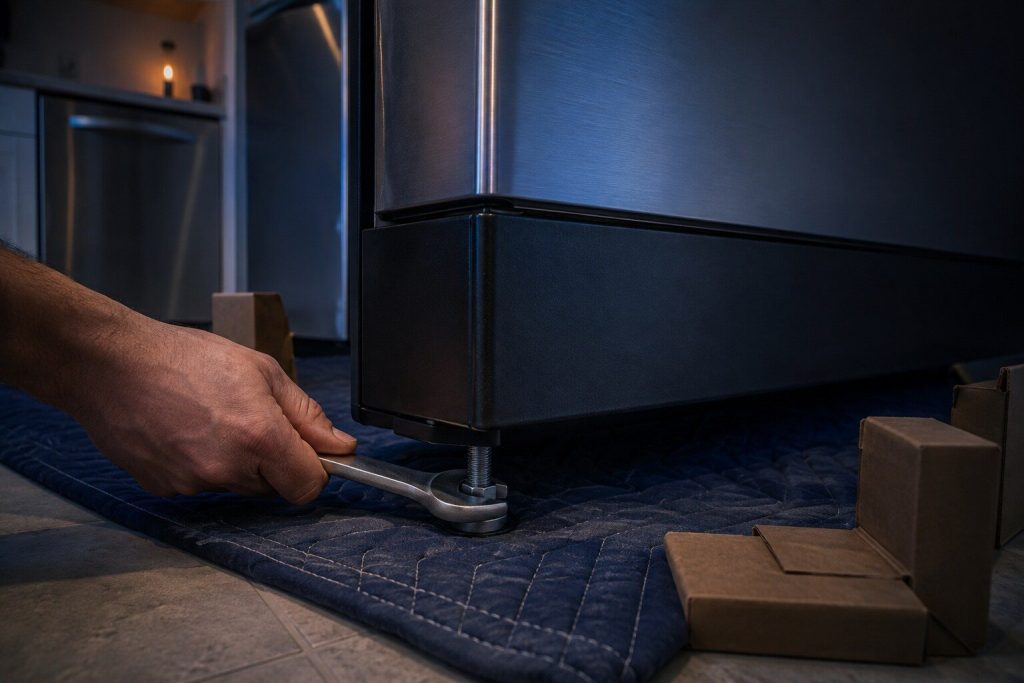
from $245 Appliance installation
Putting a machine into a space somebody else built. On this brand that is rarely a delivery and usually a fit: a grill head into a masonry cutout, a beverage center into an island with a ventilation path that has to actually work, a wall oven into a tall run, a cooktop into stone that does not forgive a second attempt. The measuring happens before anything is ordered, not after it arrives. Where an existing cutout is wrong for the machine that is meant to go into it, we say so while it is still a drawing — that conversation is cheap and the alternative is a slab with a hole in the wrong place.
- Measured against the cutout that exists, not the one in the brochure
- Ventilation and clearance treated as part of the install, because they decide whether it works
- Gas connection and leak check done properly and documented
-
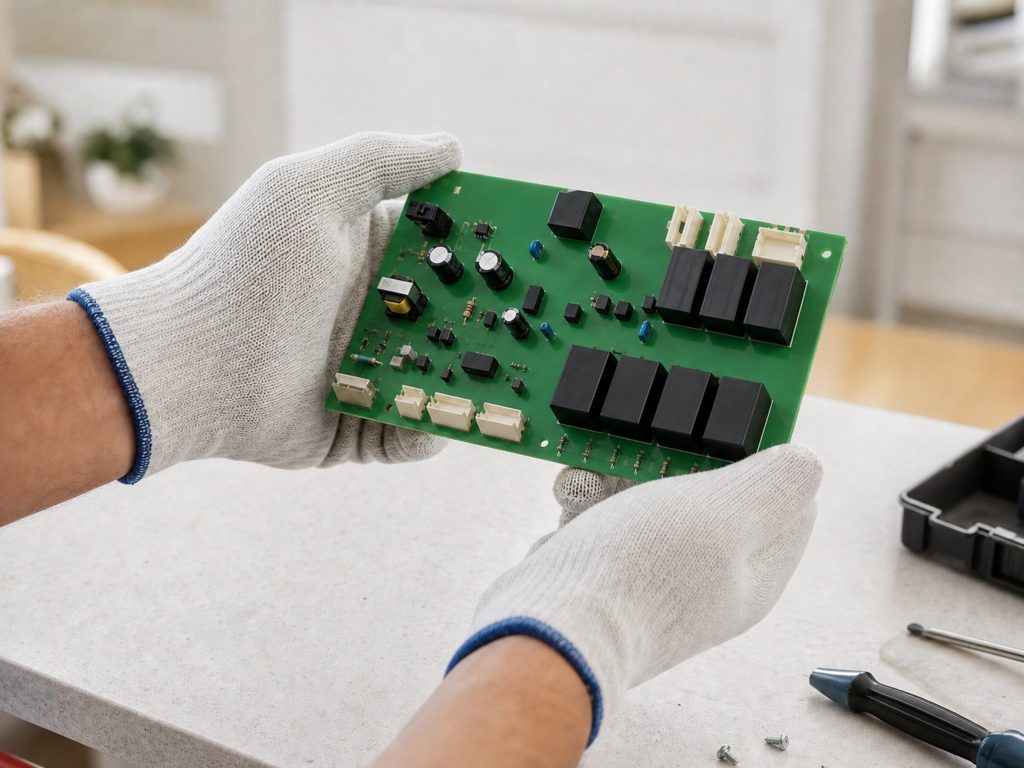
from $295 Control board repair
When the electronics rather than the mechanics are the problem. Indoors this brand publishes an error table that names board errors directly — a missing master or slave power board, a software error, a communication failure between boards, and one code that fires when the control does not recognize which model it is fitted to. That last one is the interesting one: it usually appears after a part has been replaced with the wrong variant, and no amount of further replacing will settle it until the model identity matches. We diagnose before we order, because a board is the most expensive thing on most of these machines and the second most commonly replaced without need.
- The published sub-error separates board, software and communication errors
- A code that means the control does not recognize the model is a fitting problem, not a dead board
- We prove the board is the problem before one is ordered
-
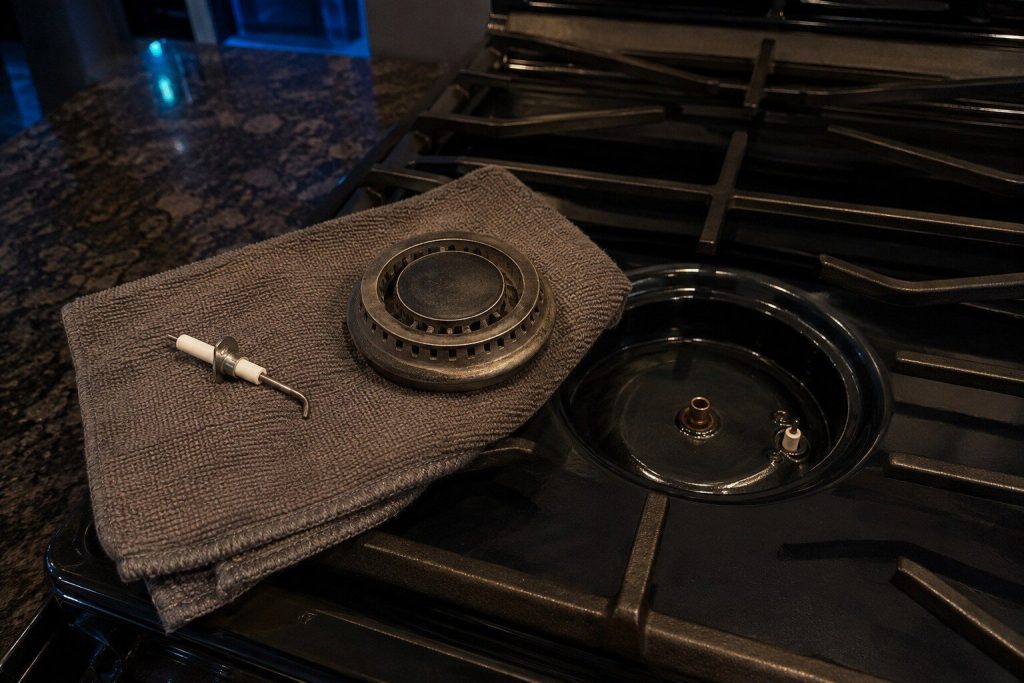
from $145 Range burner ignition repair
Clicking without lighting, lighting on the second attempt, or one burner that has given up while the others are perfect. On a sealed burner the causes sit in a short list and one of them is free: a cap set down rotated or on a crumb will spark all day and never light. After that it is a wet or cracked electrode, a port blocked by a boil-over, or the switch behind the dial. Clicking that continues after the burner has lit is a different problem from clicking that never lights, and telling us which one you have saves a step.
- Lift and re-seat the cap first: it costs nothing and settles a good share of these
- Clicking after lighting is a switch; clicking without lighting is the path
- Started after a clean or a boil-over? That is usually the whole diagnosis
-
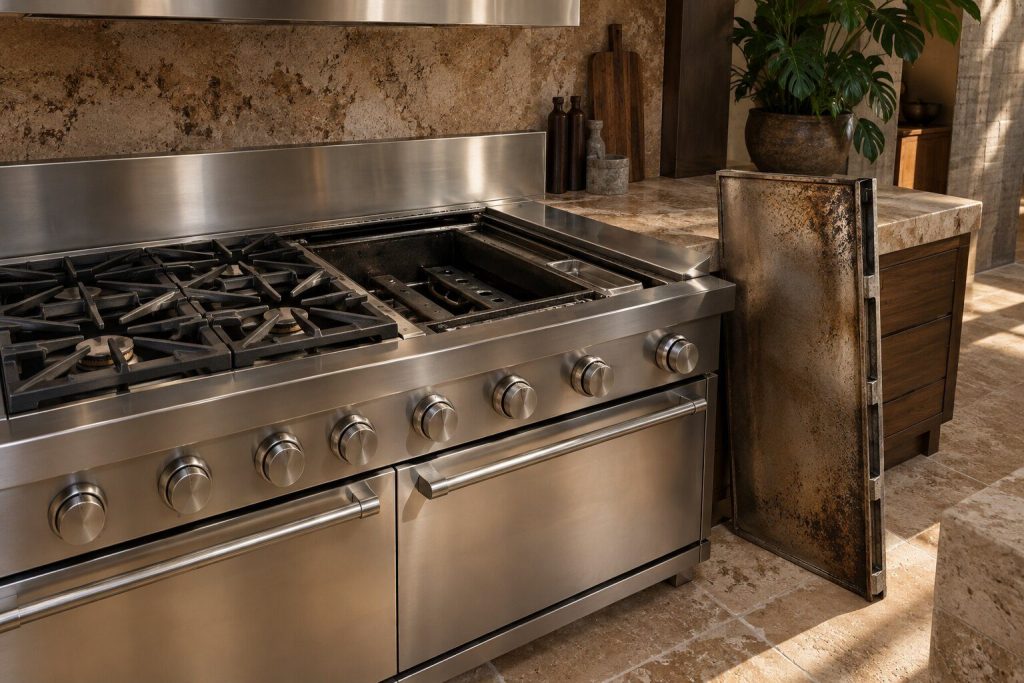
from $165 Griddle and grill section service
The part of the range top that is not burners. A griddle or an indoor grill section is asked to hold an even temperature across a plate rather than to put heat into a pot, and it fails in ways burners do not: a plate that has warped so that fat pools at one end, a thermostat that no longer reads the plate it is bolted to, a grease path under the section that has filled because nobody knew it was there. Owners usually describe this as 'it does not cook evenly any more', which is accurate and covers three different causes.
- Uneven cooking on a plate is warp, sensor or grease — and they feel identical
- The drain path under the section is the part nobody is told about
- A warped plate is sometimes worth living with and we will say when
-
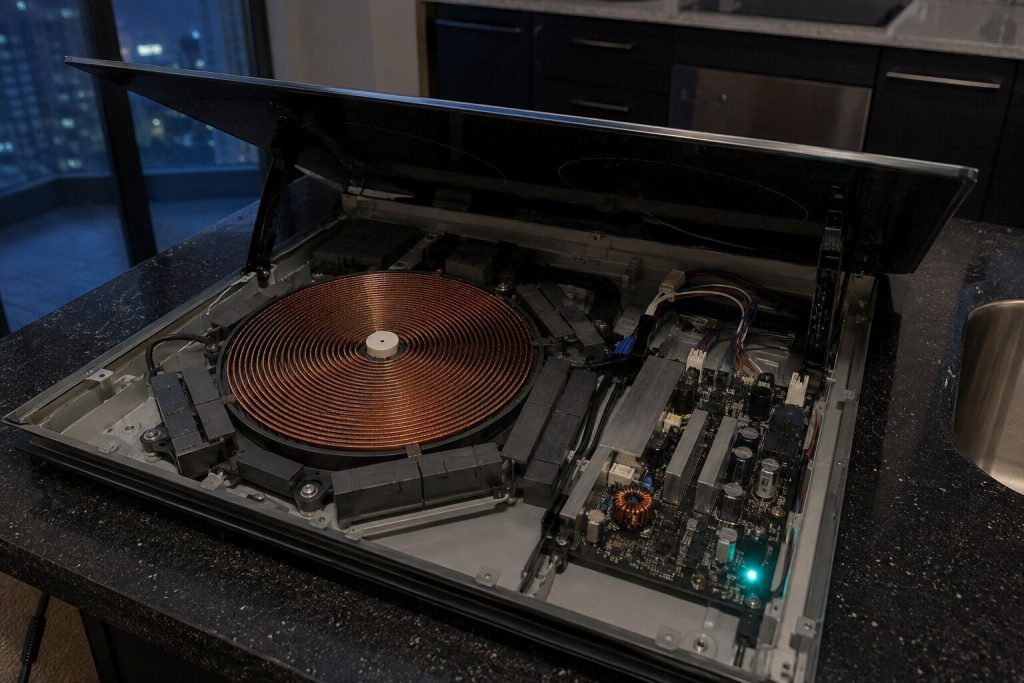
from $195 Induction cooktop repair
A power-electronics machine wearing a glass lid, and the only part of this brand that announces its problems in a short, published, decoded list. That list is worth knowing because one entry on it is not about the cooktop at all: a voltage complaint means the machine is reporting the supply it is being given. In older buildings, and particularly where a kitchen was rewired around a new island, that appears for a real reason and the right next call may be an electrician's rather than ours. The rest of the list separates a key stuck under a spill from a short in the key evaluation from a communication error inside the machine from a temperature condition.
- One published code is about the building's supply, not the cooktop
- Continual key activation is often a cloth or a boil-over and costs nothing
- Take the code down before it clears — it is the difference between two visits
-
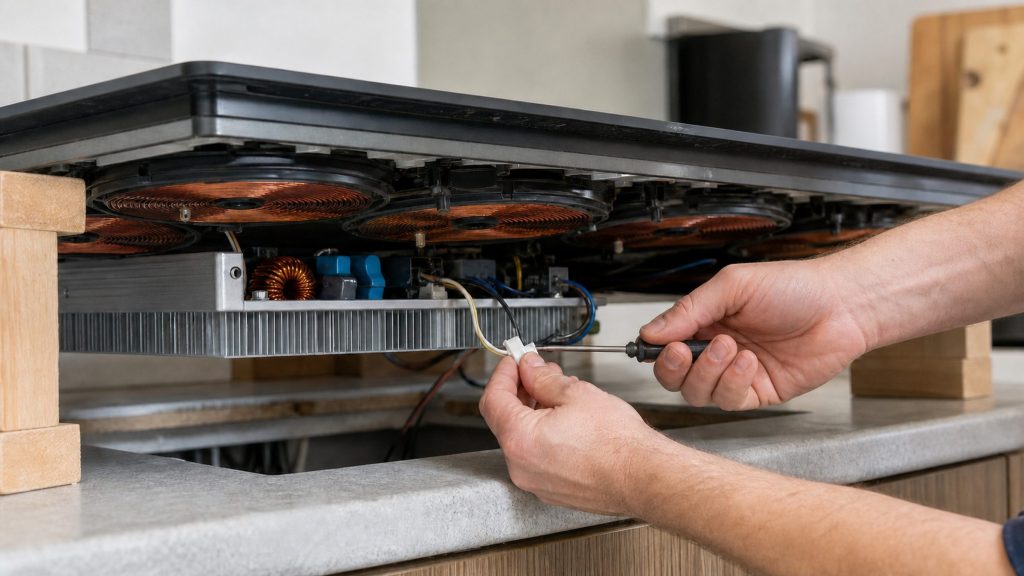
from $215 Induction zone and coil repair
One zone dead while the others work perfectly. That is the useful version of an induction problem, because it takes the supply and the main board mostly out of the picture and puts the zone's own coil, its power stage and its cooling in front of us. Before any of that is opened there is a free check worth doing: a pan whose base is not magnetic, or has warped so it no longer sits flat, will fail on any zone and fail most obviously on the smallest. If every pan fails on one zone and all of them work on the others, that is the zone, and that is this page.
- One zone dead, the rest fine — the problem is in that zone's own chain
- Test with a pan you know works before an appointment is booked
- Cooling failures present as zone failures and are cheaper to fix
-
from $175 Cooktop touch control repair
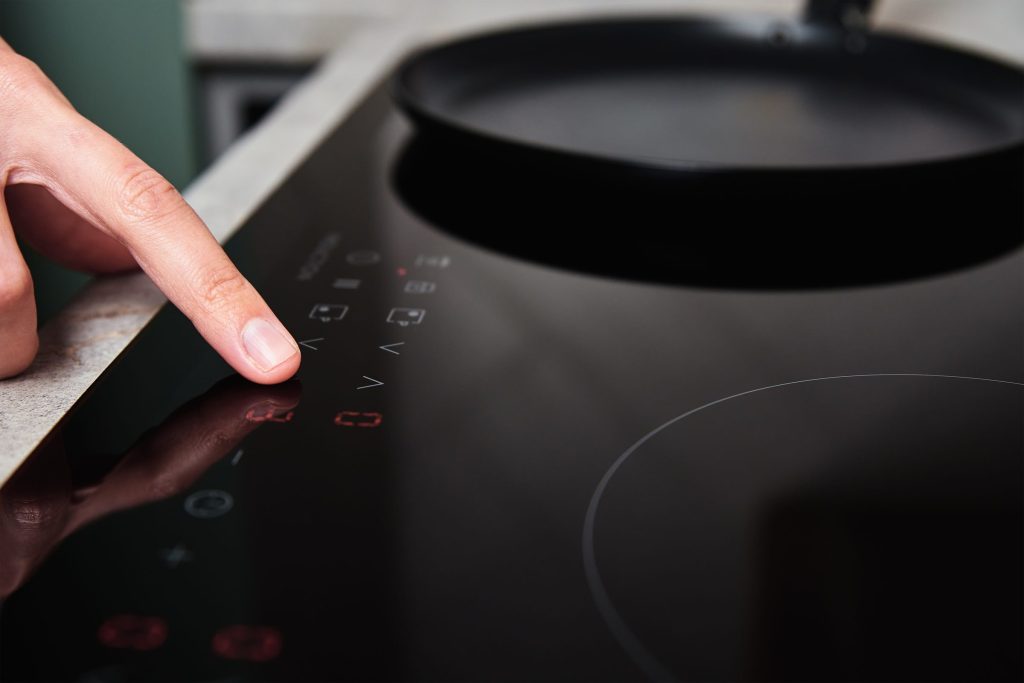
For the top that lights up and will not listen, or listens when nobody has touched it. On a glass top the control surface is also the cooking surface, and everything that gets spilled, wiped or rested on it is part of the story: the published code list includes continual key activation precisely because a cloth left over the controls is a routine cause. Where it is not that, it is usually moisture that has got under the glass at an edge, a connection to the control board, or the board itself. The order matters, because the last of those is the expensive one and the first two are not.
- A cloth over the controls is a published code, not a joke
- Moisture under the glass edge imitates a failed panel exactly
- The board is the last suspect, not the first
-
from $135 Gas cooktop burner service
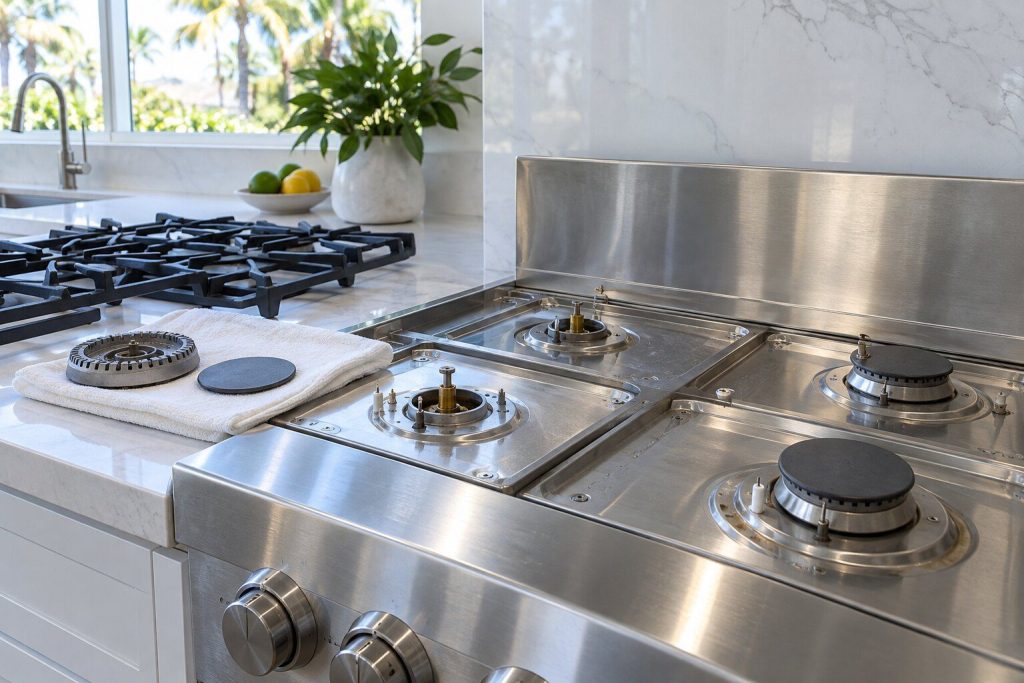
For flames that are uneven, lazy, or wrong on one burner out of five. On a drop-in gas top the diagnosis is the same as on the range top and the access is easier, which makes this one of the few genuinely quick visits on this site. Uneven around a single ring is nearly always the cap or the ports; uneven on every burner at once is the supply or the regulator and belongs to a different page. Burners that have been through a dishwasher — which is common and rarely helpful — get their own look, because a cap that has been stripped of its coating never behaves the same again.
- One ring wrong is the burner; every ring wrong is the supply
- Caps through a dishwasher are a recognisable and permanent change
- The quickest visit on this site when it is what it looks like
In more detail
About DCS cooktops
Gas and induction are not variations of one machine
They share a cutout and nothing else. One is a gas appliance whose problems are mechanical and visible; the other is a power-electronics appliance whose problems are announced in code and are sometimes not the appliance's doing at all. Which of the two sits in the stone is the one fact worth volunteering when you ring.
A code that blames the building
The induction list on this make includes a voltage complaint. When that appears, the cooktop is reporting the conditions it is being given rather than a failure inside itself — and in older South Florida buildings, particularly where a kitchen was rewired around a new island, it appears for a real reason. Where that is the finding, we hand it over rather than sell around it.
The worktop is part of the appliance
On a drop-in machine the cutout, the clearance and the material around it decide what can be removed and what a replacement can be. Stone does not forgive a second attempt. Everything on this type is measured before anything is lifted.
This article is based on:
- Official manufacturer documentation
- Internal repair procedures
- Technician repair history
- Company quality standards
Before you book
Questions about DCS cooktops
The induction top shuts itself off mid-cook.
Take the code down before it clears, because it is the difference between two visits. This make's induction list separates a continual key activation — something resting on or spilled over the controls — from a voltage complaint, from a short or an interruption in key evaluation, from a communication error inside the machine, from a temperature condition. A cloth or a spill over the controls clears itself once the glass is dry; the voltage entry usually belongs to the building, and in that case we are the wrong trade. Better said while you are still on the telephone.
Induction works with one pan and not another.
That is the technology, not a problem, and it is worth ruling out before an appointment. A base that is not magnetic, or one that has warped so it no longer sits flat, will not couple properly; a pan much smaller than the zone may not be detected at all. A magnet on the base settles it in ten seconds. Where it matters is diagnosis: if every pan fails on one zone and all of them work on the others, that is the zone, and that is a different conversation.
The gas cooktop lights but the flame is uneven around the ring.
Usually the cap or the ports rather than the burner. A cap that has been put back rotated or is sitting on a crumb will burn hard on one side and weakly on the other; ports blocked by a boil-over do the same thing in a fixed pattern. Both are owner-fixable with the burner cold and everything off. What is not owner work is an uneven flame that persists across every burner — that is the supply or the regulator, and it needs somebody with a manometer rather than a brush.
Can a cooktop be replaced without redoing the worktop?
Often, and it depends on a cutout somebody else cut. Widths and depths are near-standard within a generation but the corner radius and the required clearance are not, and a stone worktop cannot be enlarged in place without risk. We measure before we promise. Where a like-for-like replacement does not fit, saying so before the old machine comes out is the whole difference between an inconvenience and a kitchen without a cooktop for a fortnight.
Where we do it
Across Miami-Dade, Broward, and Palm Beach
Same terms everywhere we go: an on-site diagnostic first, the price agreed in writing, and the exact figure confirmed once we have seen the unit.
Neighborhoods people ask for by name