DCSRepair Miami

Miami-Dade · Broward · Palm Beach

DCS repair in Miami, and most of it is outside the house.

Four of the seven machines on this badge stand on a terrace, a dock or a roof deck. That decides everything before the symptom does: salt and rain are the service history rather than the weather, gas runs under masonry somebody sealed years ago, and out there the equipment has no display and no error table at all. Indoors it is commercial-style cooking that can describe its own problem in a decoded code. Two halves, two methods, one badge.

  • 7 machines we take on
  • 35 jobs with a published figure
  • 20 behaviors described in plain words
  • from $95 diagnostic, credited to the repair

Start from the machine

What we repair

7 machines, and each card says what the work on that one really is here. There is no laundry on this badge, no dishwasher and no indoor refrigeration — the make builds none for this market — and the one cold machine it does build lives outdoors under the counter of an island.

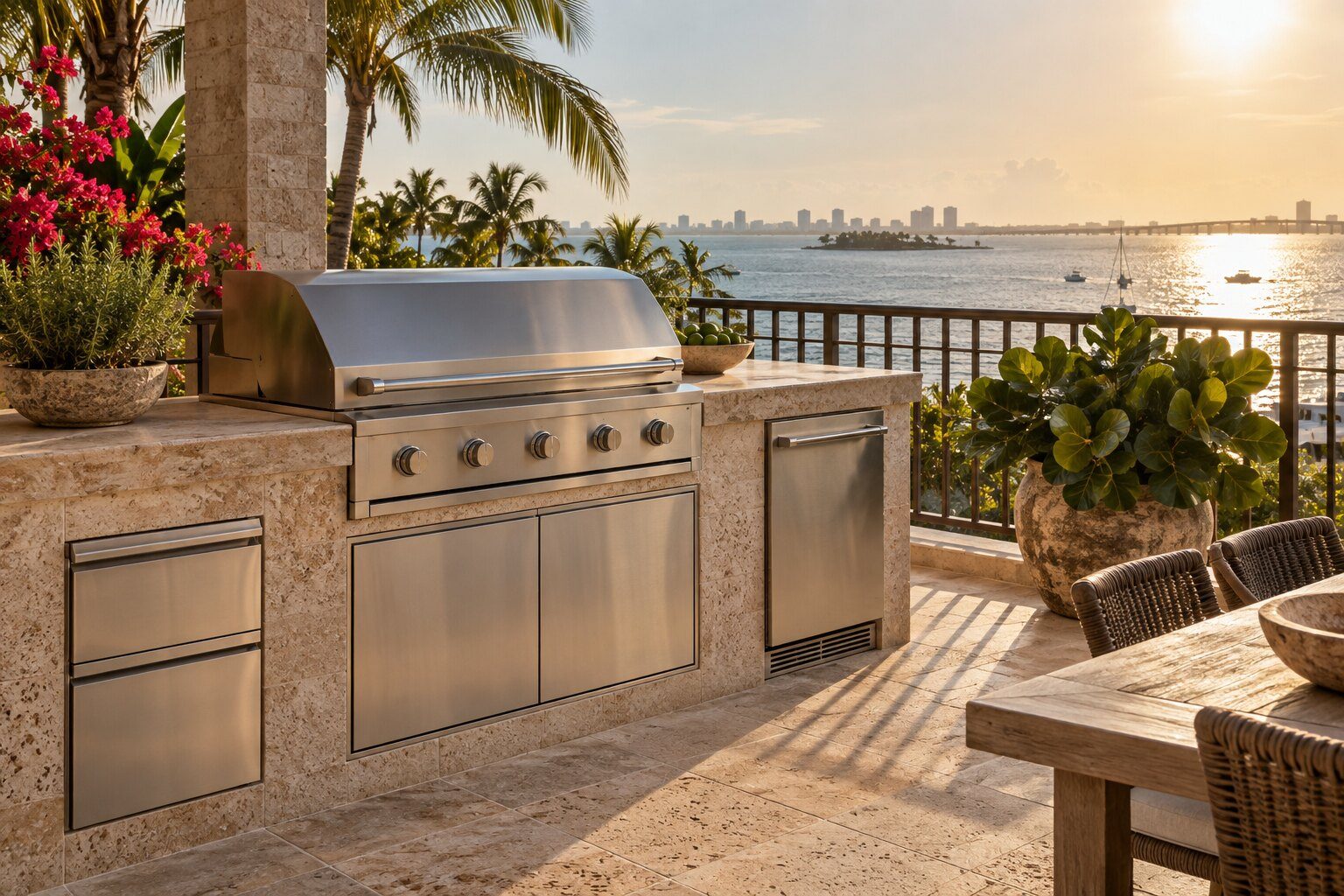
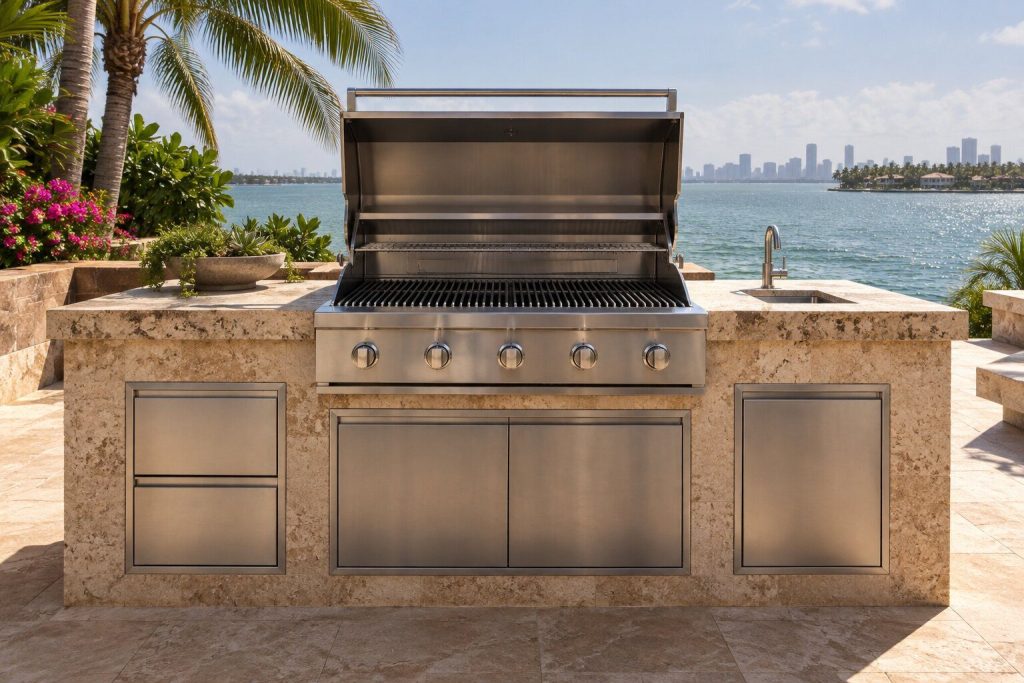
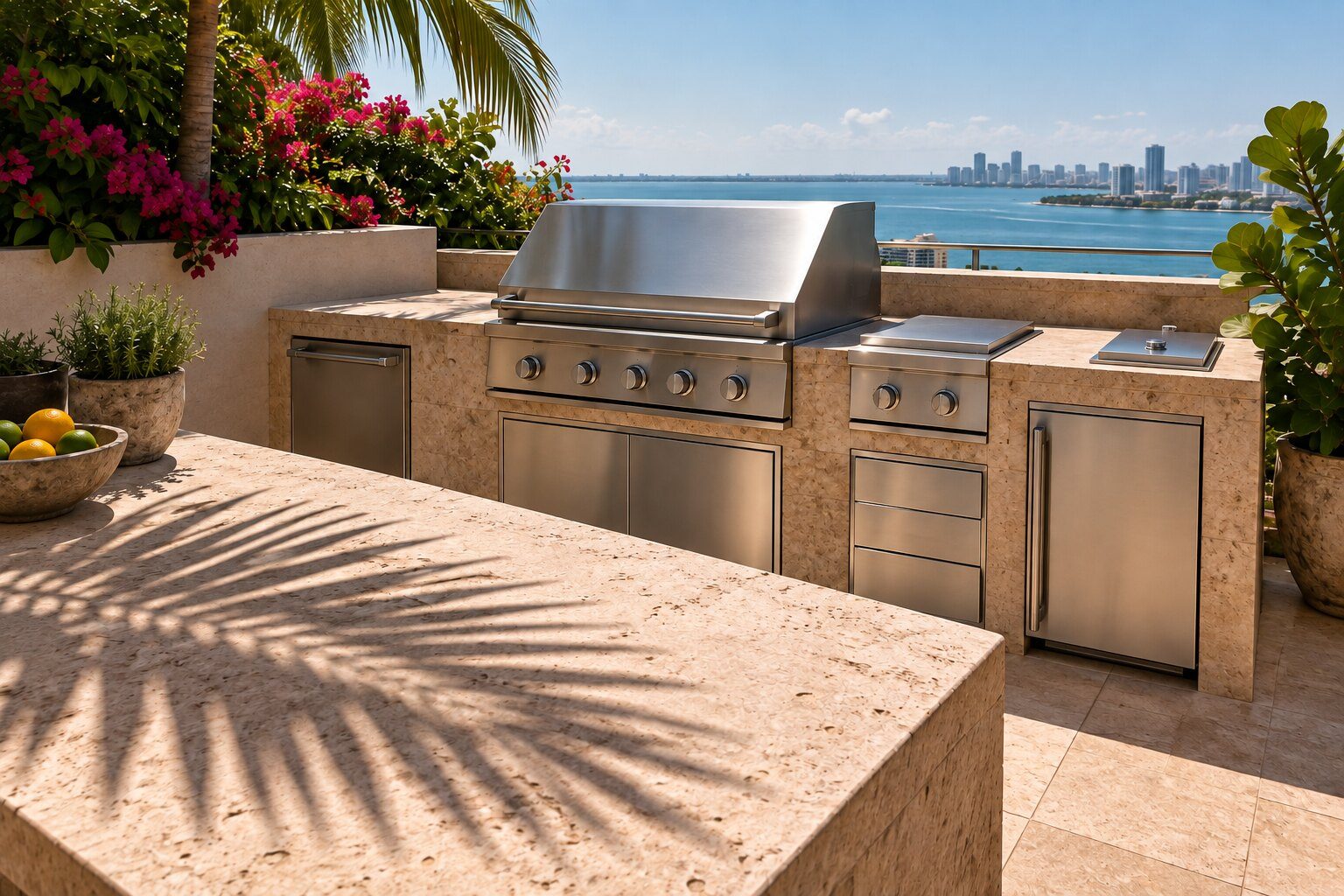
  • A wide stainless built-in grill set into a coral stone island on a terrace above the water, its hood open over empty cast grates.
    Built into the island, or on a cart · Series 7 and Series 9

    Grills

    This is the machine most people mean when they say DCS, and in South Florida it is the one that ages fastest. A grill dropped into a stone island is plumbed to gas, wired for its lights and rotisserie, and then left to face salt air for eleven months of the year with a cover on it. What fails is rarely the thing the owner expects: burners and ignitors are consumables here, the radiant trays and grease tray are part of the fire risk rather than part of the cleaning, and half the calls we take turn out to be a supply problem at the cylinder or the manifold rather than anything inside the hood. The ones built into an island are the slower visits — the surround decides what can come out and in which order.

    • Built-in and cart versions of the same cooking platform — the surround decides the visit
    • No error codes anywhere on this half of the brand: the grill tells you in flame, smell and sound
    • Salt air is the second owner of every outdoor stainless part in this market
    Grill repair
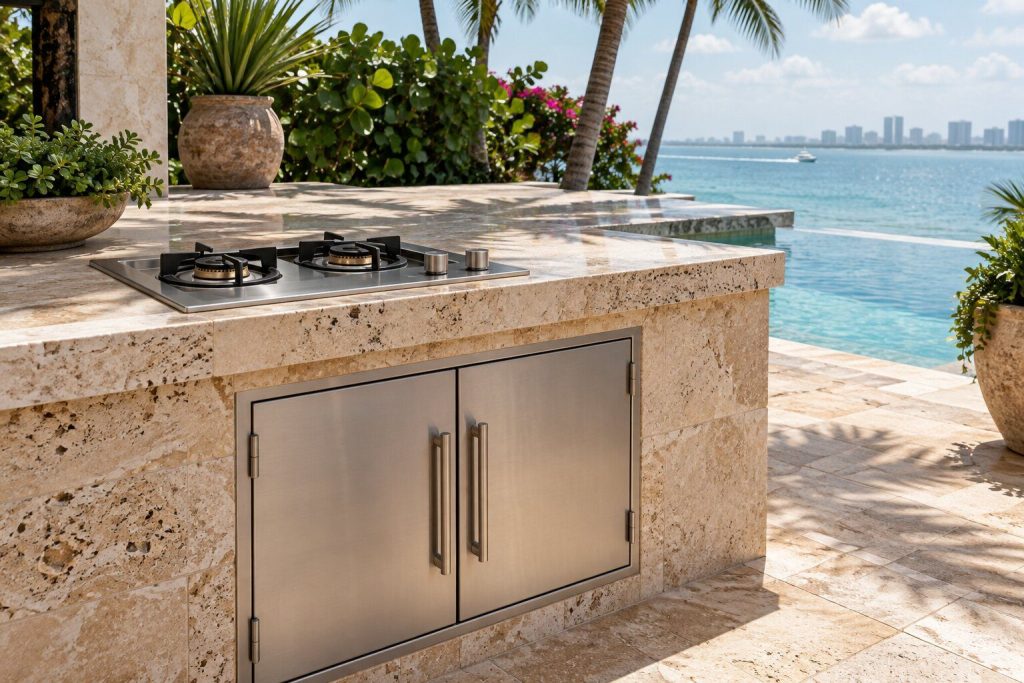
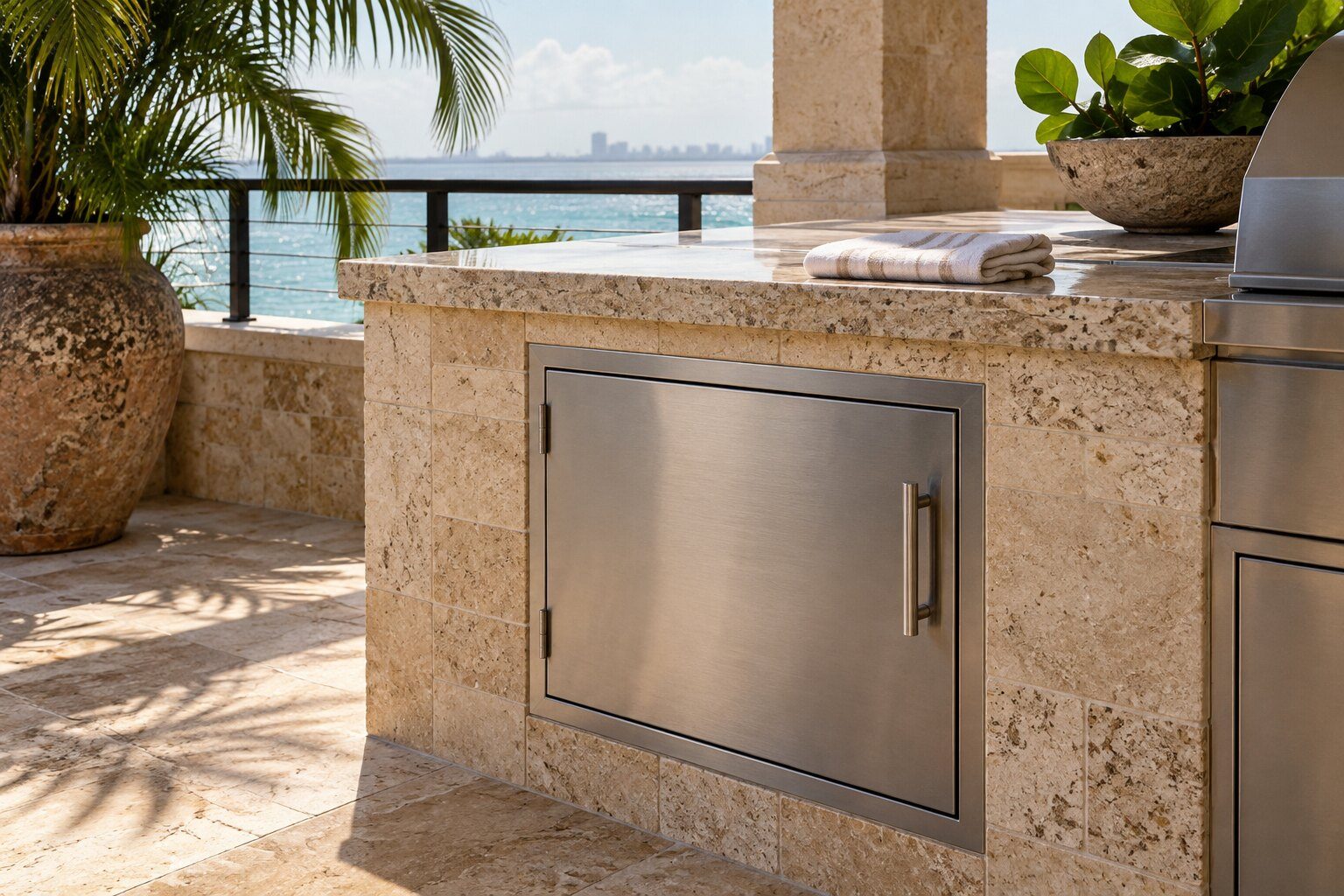
  • An outdoor kitchen run built into travertine with a double side burner at one end and two stainless access doors below the counter, the terrace opening to a pool beyond.
    Side and power burners, warming drawers, doors and drawers

    Outdoor kitchens

    The grill is the part people photograph; the rest of the island is the part that generates the calls. A DCS outdoor kitchen is a run of separate machines sharing one gas manifold and one stone surround — side burners and power burners for a pot, a warming drawer, access doors and drawer stacks, sometimes a vent hood over the whole thing. Each has its own failure and its own access, and they fail in an order the climate sets rather than one the catalog does. Doors and drawers seize long before anything gas-fired stops working, because the hardware is what the rain and the salt reach first.

    • Several machines, one manifold and one surround — a supply problem shows up on all of them at once
    • Drawer runners, hinges and latches are the first casualties of an outdoor install
    • The stone is the constraint: what can be removed was decided when the island was built
    Outdoor kitchen repair
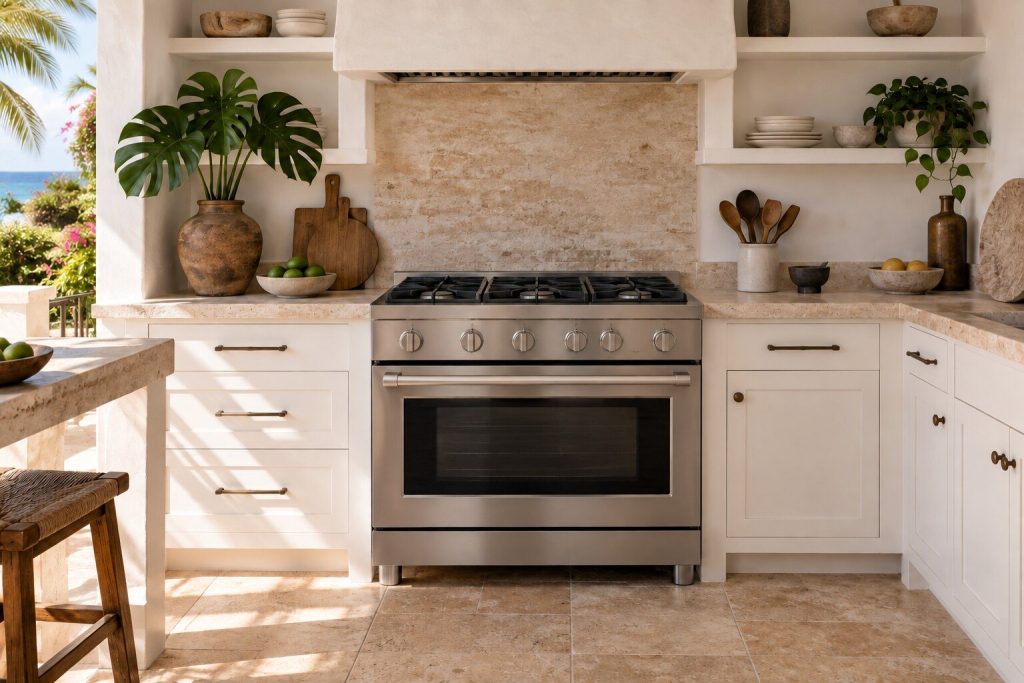
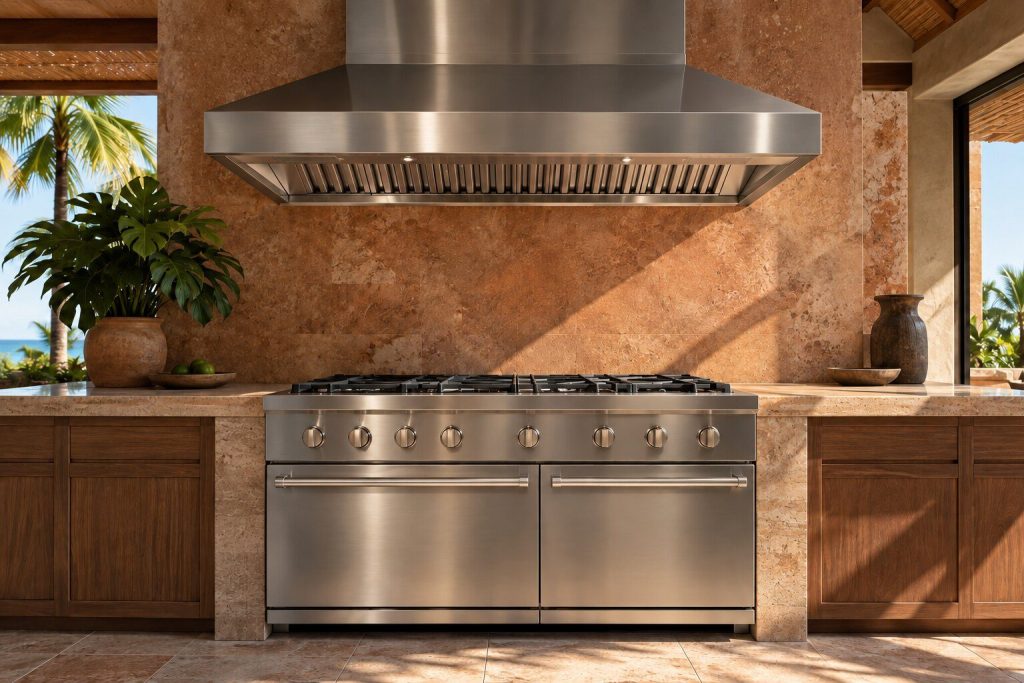
  • A professional stainless range standing INSIDE a bright white indoor kitchen under open shelving, six sealed burners on the top and the oven door closed.
    Commercial-style, dual fuel and all gas

    Ranges

    Indoors the badge means a commercial-looking range: heavy grates, high-output sealed burners, a single deep oven or a pair, and often a griddle or a grill section in place of two burners. It is built to be cooked on hard, and the calls reflect that — ignition on one burner, an oven that will not hold the temperature it is set to, a door that has stopped sealing, a fan that has become loud. Dual fuel and all-gas versions fail in different places, so the first thing we establish is which one is in the kitchen. Unlike the outdoor half of this brand, a range can tell us what is wrong: the indoor line publishes decoded error tables, and an F-code with its sub-error narrows the visit before we arrive.

    • Dual fuel and all gas — the same cabinet, two different service stories
    • A griddle or grill section instead of burners changes what the top is asked to do
    • This half of the brand does publish codes, and they are decoded rather than numbered
    Range repair
  • A black glass induction cooktop set flush into a pale stone worktop INSIDE a bright indoor kitchen, with nothing standing on it and fitted cabinetry around it.
    Gas and induction · drop-in, with the range top's burners

    Cooktops

    Two quite separate machines share this page because they share a cutout. A gas cooktop is the range's top without the oven under it, and it fails the way that top fails — ignition, seating, a blocked port, a switch. An induction cooktop is an electronics problem wearing a glass lid, and it announces itself in code: this make publishes a short, decoded list, and one of those codes is a voltage complaint rather than a problem in the machine at all. What is in the stone decides the whole visit — down to whether the person who finally solves it works for us or for the power company.

    • Gas: ignition, caps, ports and switches — the same story as the range top
    • Induction: a decoded code list, and one entry is about the supply rather than the cooktop
    • The cutout and the worktop decide whether anything can come out at all
    Cooktop repair
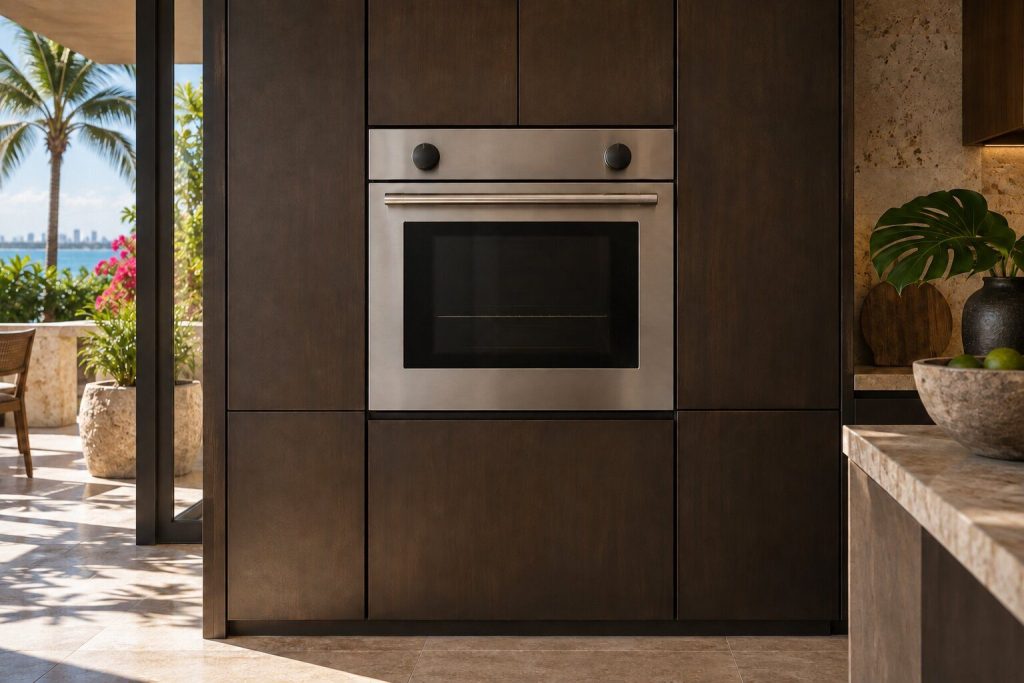
  • A stainless wall oven built into a tall dark cabinet run at chest height INSIDE a kitchen, its door closed and its frame flush with the joinery.
    Single and double, built into a tall run

    Wall ovens

    A wall oven is a cavity in a cabinet, and everything about the repair follows from that. It is heavy, it is screwed to the joinery, it sits above waist height, and behind it is a space somebody sized once and nobody has looked at since. The problems are the ordinary ones — heat that is not what the dial says, a door that has lost its seal or its hinge tension, a fan that has become loud, a control that has stopped responding — but the access is not ordinary, which is why we ask about the cabinet before the symptom. This make's wall ovens publish a decoded error table, and the sub-error after the F is where the real information is.

    • Built in above waist height — the cabinet decides the visit before the problem does
    • The published table decodes F1 into separate board, software and communication errors
    • A double oven is two cavities and frequently one control — which one is wrong matters
    Wall oven repair
  • A wide stainless professional hood canopy over an empty stainless range INSIDE a bright indoor kitchen, its underside and baffle filters visible from below.
    Over the range indoors, over the grill outside

    Range hoods

    A hood is the machine nobody thinks about until the kitchen stops clearing, and on this badge there are two of them living quite different lives. Indoors it sits over a high-output range and is asked to move a great deal of air quietly; outdoors it sits over a grill in the weather and is asked to survive. The problems divide the same way — indoor hoods bring blowers, speed controls, lights and baffle filters that nobody has washed; outdoor hoods bring corrosion, water where the electrics are, and a duct that has become a home for something. Whether the hood actually vents outside or recirculates through a filter is the first thing we establish, because half the complaints we hear about smoke are a hood doing exactly what it was installed to do.

    • Indoor and outdoor hoods on one badge, and they fail for opposite reasons
    • Vented or recirculating decides whether the complaint is a problem at all
    • Baffle filters are the maintenance nobody was told about
    Range hood repair
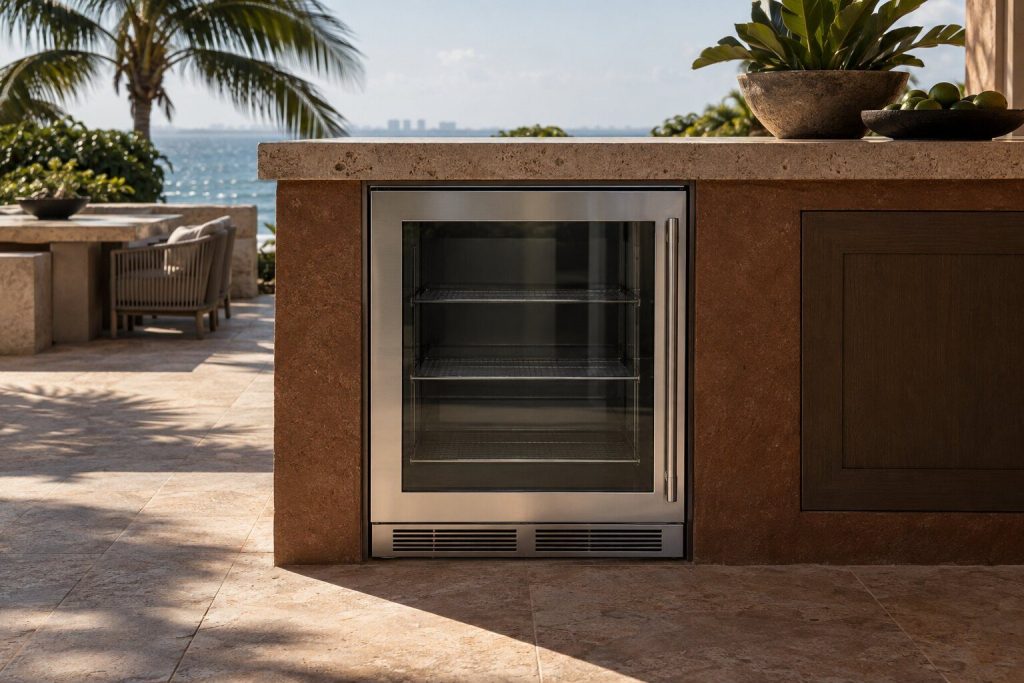
  • A stainless outdoor beverage center set under a coral stone counter in a terrace island, its glass door closed and the shelves inside empty.
    Outdoor-rated, under the counter of the island

    Beverage centers

    The one cold machine on a hot brand, and it earns its place by living outside. An outdoor-rated beverage center sits under the counter of the island, a meter from a grill, in ambient temperatures the indoor version of the same cabinet is not built for. That changes what fails and how it presents: a unit running constantly and never reaching temperature in August is often doing everything right in conditions it cannot win, and the fix is ventilation or shade rather than a compressor. The genuine problems are the ordinary refrigeration ones — a seal, a fan, a drain, a condenser packed with dust and salt — plus one this climate adds, which is condensation where an indoor machine would have had none.

    • Outdoor-rated, and the rating is the whole story in a Miami August
    • A condenser in an island collects salt and dust faster than any indoor cabinet
    • Running constantly is not automatically a problem — the ambient may be the answer
    Beverage center repair

South Florida

Four of these machines live outdoors, so the climate is not weather here — it is the room.

  • Distance from the water is a better predictor than the age on the plate Salt travels inland as an aerosol and it settles on everything, where it holds moisture against metal long after the surface looks dry. A grill four blocks from the ocean and the same grill four miles inland are different ages of machine after five years. It shows first where nobody looks — ignition ceramics, the fixings holding a canopy up, the runners at the back of a drawer's travel — and by the time it is visible on a door front it has been working on the hardware for a season or two already.
  • The wet months are when unused equipment is at most risk A grill run every weekend is dried by its own heat and cleared by its own flame. One covered in June and uncovered in November has spent five months as a still, dark, humid cavity, which is an excellent place for an insect to build in a venturi tube and for a burner to corrode from underneath. Nearly every yellow flame we see in the first weeks of the season came from the months before it, and a cover put over a warm or wet machine makes the problem rather than preventing it.
  • An island is a sealed box asked to reject heat in August The undercounter refrigerator in an outdoor kitchen is trying to move heat into air that is already hot, in a stone enclosure a yard from something designed to produce more of it. Where the ventilation path was built tight, or has since been closed off by a shelf or a bag of charcoal, the machine runs continuously and never wins. That is not a failing compressor and no part corrects it, which is why we look at the island before we look at the cabinet.
  • Afternoon rain finds its way into cabinets that were built to shed it An outdoor island is designed to let water out rather than to keep it out, and the difference matters. When a weep blocks with sand and leaf litter, or a hinge drops far enough that a door no longer closes square, the base of the cabinet becomes a tray — and what is standing in it is the gas connection, the flexible hose and the wiring. None of that was built to be immersed, and the first symptom is usually a light that has stopped working months later.
  • Storms leave controls in states their designers did not plan for The indoor half of this badge is electronics behind a panel, and a brownout or a cut in the middle of a cycle can leave a control somewhere it cannot get out of. Most of the time a full minute with the power off at the breaker clears it and it never returns. That matters practically: in a market with a storm most summer afternoons, knowing which of these is weather and which is a component saves a visit several times a year.

When the machine does say something

One half publishes decoded tables. The other publishes nothing.

The indoor cooking equipment reports in codes the maker has already decoded for you — not a bare number to look up, but which board, which link, which kind of error. The grills and the outdoor kitchen have no display and no table anywhere: their own manual writes the whole troubleshooting section as questions about flame, smell and ignition. This site keeps the two apart rather than averaging them.

One string, and the part of it that carries the message

Photograph the display before you reach for the breaker, digits included. On the outdoor half there is nothing to photograph, and what the flame is doing is the evidence instead.

Three shapes this make reports in, and one silence

  • A letter and two digits on the wall ovens — an F followed by a sub-error that names a missing board, a software error, a communication failure or a model mismatch.
  • Short strings on the induction cooktops — Er03, U400, Er20, Er22, Er31, Er47 and EA — of which one is a complaint about the building's electricity rather than the machine.
  • An illuminated icon and a beep when the door is opened, which is the indoor panel asking to be read rather than a specific failure.
  • And nothing whatsoever on the grills, the island, the outdoor hood and the beverage center. Not a blank display — no display, and no table behind it in any documentation.

Five we are called about most, and what each is actually saying

F1 06 The two boards disagree about which oven they are in. Almost always the residue of an earlier repair — a part fitted from the wrong variant, or fitted without its model identity set — and it is cured by configuration rather than by another board.
U400 An induction cooktop reporting that the supply voltage is outside what it will run on, and shutting down rather than running on it. In older buildings, and where a kitchen was rewired around a new island, this appears for real reasons and the right trade to call is an electrician.
Er03 Continual key activation: something is resting on the controls. A cloth, a pan pushed forward, a boil-over that has pooled on the glass. The cheapest condition on this site and one that clears itself once the surface is bare and dry.
EA A temperature condition under the glass. After an hour with several zones at full it is the machine protecting itself and means nothing; early in a cook it points at cooling — a stopped fan or an airway blocked by the cabinet — which is far cheaper than the coils it gets mistaken for.
Yellow flame Not a code, because outdoors there are none. A burner whose air and gas have stopped mixing properly, usually an obstructed venturi — and in this climate that obstruction is very often a nest built over a covered season.

Each has its own page under the machine and the platform it belongs to. The outdoor entries are signals rather than codes: documented symptoms from the maker's own guide, with nothing to look up because nothing is published.

Photograph the panel first and reset second. A code that clears and stays clear was a condition rather than a failure; one that returns has a part behind it, and repeated resetting only hides how often it is happening.

All 21 conditions

Nothing is listed for the grills, the outdoor kitchen modules, the hoods or the beverage center, because this make publishes no table for any of them anywhere — and each of those absences was read in the documentation rather than concluded from a blank display. On those the symptom pages carry the diagnosis. Two articles for wall oven generations we have not read are named in the archive rather than quietly left out.

How a visit goes

Measured, priced, then agreed — in that order

  1. 01

    You tell us where it is and what it is built into

    Indoors or out is the first question and it changes the method entirely. After that, what the machine is set into: a cart, a run of joinery, or a stone island a mason closed up around it. On anything built in, a photograph of the surround is worth more than a description — what comes out first was decided when the island was built, not by the manufacturer.

  2. 02

    The free checks come before the van does

    A cylinder valve opened briskly trips the limiter inside it, and the grill then lights feebly and will not sear. An induction top showing a voltage code is objecting to the building rather than failing. An undercounter refrigerator in a sealed island cannot reject heat and no part will change that. None of the three is a repair, and we would rather say so on the telephone.

  3. 03

    The figure comes before anything is opened

    Parts, availability and labor, in writing — and on this badge two things quoted as their own lines rather than folded into a part: reaching a machine set into masonry, and whatever the salt has already done to the fixings holding it there. Nothing is ordered until you have said yes, and the diagnostic comes off the bill when you do.

  4. 04

    And on gas, every joint we disturb is tested

    Leak-checked and the result written down, because on an outdoor island the run was made, proved and then sealed inside stone where nobody has looked at it since. Where the work needed lies further upstream than the appliance and its connection, we say so and tell you who to call rather than improvising on somebody else's supply.

What it costs

Every figure is a floor, and every floor has a page

35 jobs with a published starting figure and a page behind each saying what moves it. Nothing here is a quote and no final price appears anywhere on this site: the number is measured at your equipment and agreed in writing first.

Diagnostic visit

from $95

One visit, one written answer, and the fee comes off the work when you go ahead. On this badge it buys two findings rather than one: what has failed, and whether the machine or the conditions it is being given are responsible. The second costs us parts sales and saves you a second identical visit.

Grease management service

from $165

Sold elsewhere as cleaning and really fire safety. The radiants, the tray and the channel are a system for keeping rendered fat off open burners, and when it stops working the grill starts setting about the food. The cheapest work on an outdoor kitchen and the one with the highest consequence.

Gas supply and regulator service

from $155

Everything upstream of the burner, which is where a surprising share of outdoor problems actually live. A supply that holds perfectly at rest and collapses with three burners running is both common out here and invisible without a gauge under load.

Outdoor refrigeration condenser service

from $135

The highest-yield hour on the one cold machine this badge builds. A coil in an island loads with salt, dust and whatever the landscaping is doing, and the owner hears about it as a cabinet that never switches off any more. On this coast it is a yearly job.

Wall oven not heating

from $185

An ordinary list of causes behind an extraordinary access problem: heavy, fixed to joinery at chest height, with a space behind it sized once and never revisited. The published sub-error frequently answers before anybody arrives whether it has to leave the run.

Salt air protection service

from $195

The visit that exists because of where this equipment stands. Fixings replaced with the right grade before they seize rather than after, housings resealed, hardware caught while it is still stiff. It is not a polish, though the kitchen does look better afterwards.

Every figure here is a starting point and a researched market band for South Florida, never a quote and never an invoice. The exact cost is confirmed after an on-site diagnostic and agreed in writing before anything is opened.

Every figure and what moves it

Where we work

Miami-Dade, Broward and Palm Beach, end to end

59 cities and neighborhoods, each with a page saying what we actually see there. Tell us where you are when you book — and on this badge, tell us how close to the water, because it is the best predictor we have of what we will find.

Coverage is Miami-Dade, Broward and Palm Beach counties — the pages below are the places people search for by name, not the edge of where we drive.

The machine, whether it is indoors or out, and what it is built into.

If there is a display, photograph it before anybody cuts the power — digits included, because on this make the digits are the message and there is no way to ask again. If it is outdoors there will be nothing to photograph, so tell us instead how many burners are affected, what the flame looks like, and whether anything changed at the cylinder. And if you can smell gas, shut the supply and call rather than typing.

This article is based on:

  • Official manufacturer documentation
  • Internal repair procedures
  • Technician repair history
  • Company quality standards

Before you call

The questions we are asked most

My grill shows no code at all. Is the display broken?

There is no display. The outdoor equipment on this badge has no control panel to show a code on and no table behind it — its own user guide writes the entire troubleshooting section as questions about flame color, smell and ignition. So the useful things to tell us are how many burners are affected, whether a match lights what the ignitor will not, and what changed in the week before. On that half of the brand, those sentences are the diagnosis.

Is it worth repairing, or should we replace it?

Outdoors the arithmetic usually favors repair, because the expensive part of the machine is the part that lasts. A firebox, a gas train and a stainless body outlive their ignition components, their burners and their fixings by a long way, so what is generally being replaced is consumable. Against that sits reaching a unit set into masonry, and a salt-seized fixing that can add more to a visit than the part. We work both sides honestly and say when it stops paying.

Do you work on DCS equipment that is no longer sold here?

Yes, and it is a good deal of what we open. The current United States catalog is outdoor equipment only — grilling, specialty cooking, outdoor refrigeration, a patio heater, carts and storage. The ranges, the wall ovens, the cooktops and the indoor hoods are in South Florida kitchens and are not on sale here, which changes the parts conversation rather than ending it. We establish that before quoting rather than afterwards.

The cooktop keeps shutting itself off.

Write the code down before it clears, because the published list separates five quite different things and two of them cost nothing. Something resting on the glass is one. A supply the machine has declined to run on is another, and in that case the right trade is an electrician rather than us. A temperature condition at the end of a long hard cook is the machine working correctly. Early in a cook it is cooling, which is cheap.

How often does an outdoor kitchen actually need servicing?

Annually for most islands here, and twice a year within a few blocks of the water. That is not a sales interval — it is what the coil, the fixings and the ignition ceramics look like when we open them. Distance from the ocean is a better predictor of service life on this equipment than the age on the plate, and the gap between a waterfront terrace and one four miles inland is visible immediately.

Are you connected to DCS?

No. We are an independent repair company working in Miami, not affiliated with, authorized by or endorsed by any manufacturer, and we warrant our own workmanship rather than anybody else's. What we do have is 21 documented conditions read in the maker's own documentation, 20 symptom pages for the machines that publish nothing at all, and 35 jobs with a published starting figure.

Call (305) 526-4714