Miami-Dade · South Florida
DCS repair in Bay Harbor Islands
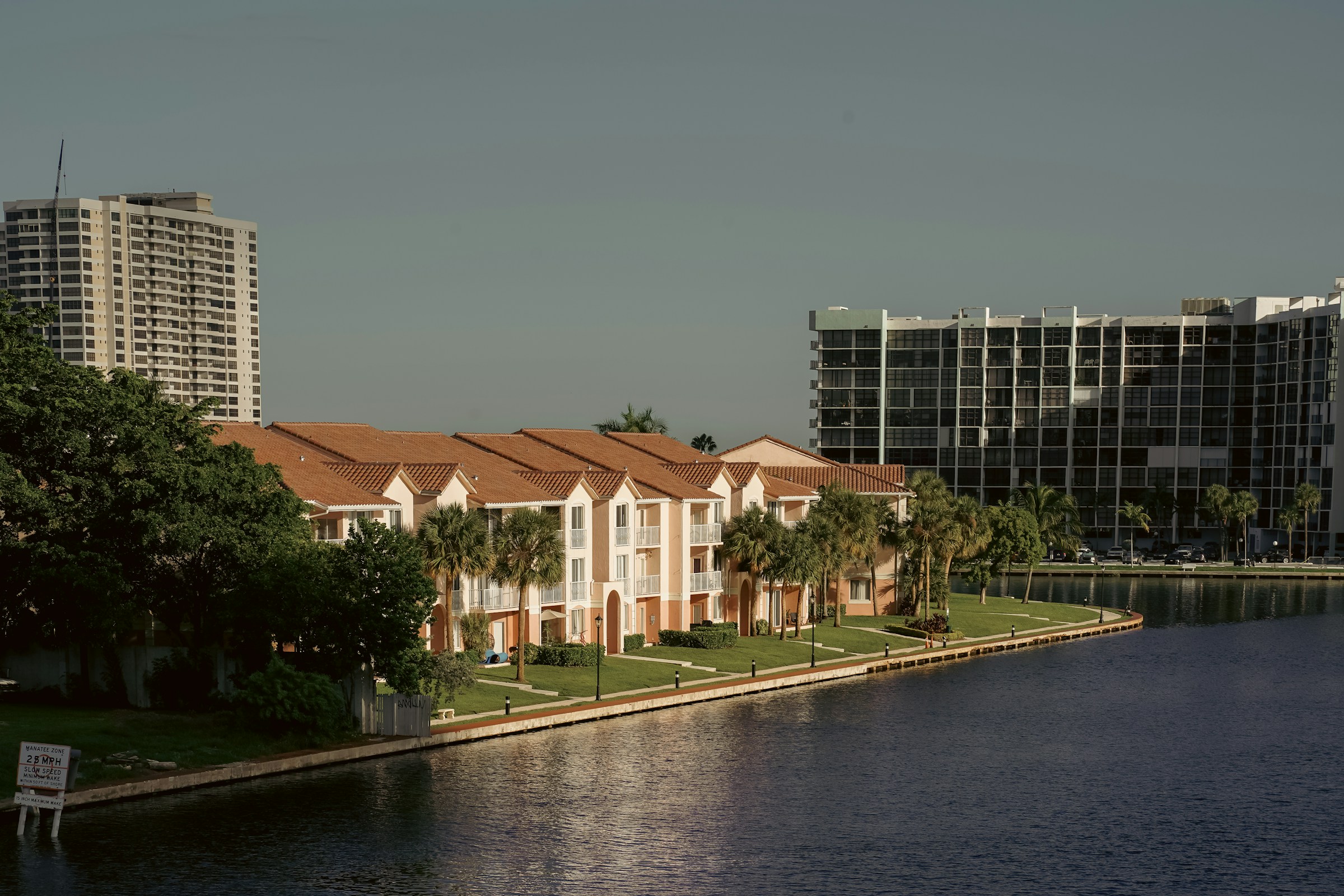
Two small islands of low-rise buildings, many of them from the 1960s and 70s with kitchens remodeled around the original openings. Built-in units squeezed into those openings need the access planned rather than discovered.
We cover Bay Harbor Islands and the rest of Miami-Dade: an on-site diagnostic first, the price agreed in writing before anything is opened, and the exact figure confirmed once we have seen the unit.
By unit
What we repair in Bay Harbor Islands, by DCS unit
Start with whichever matches yours. How an appliance is installed shapes the visit as much as the repair does, which is why we ask about it when you book.
-
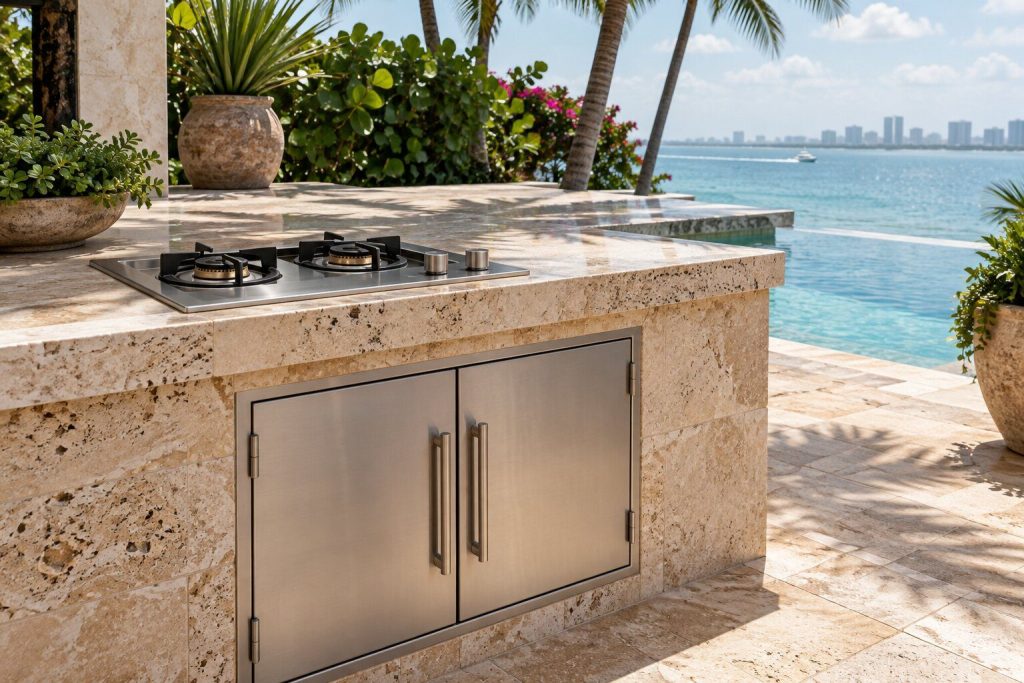
Side and power burners, warming drawers, doors and drawers DCS outdoor kitchen appliance repair in Bay Harbor Islands
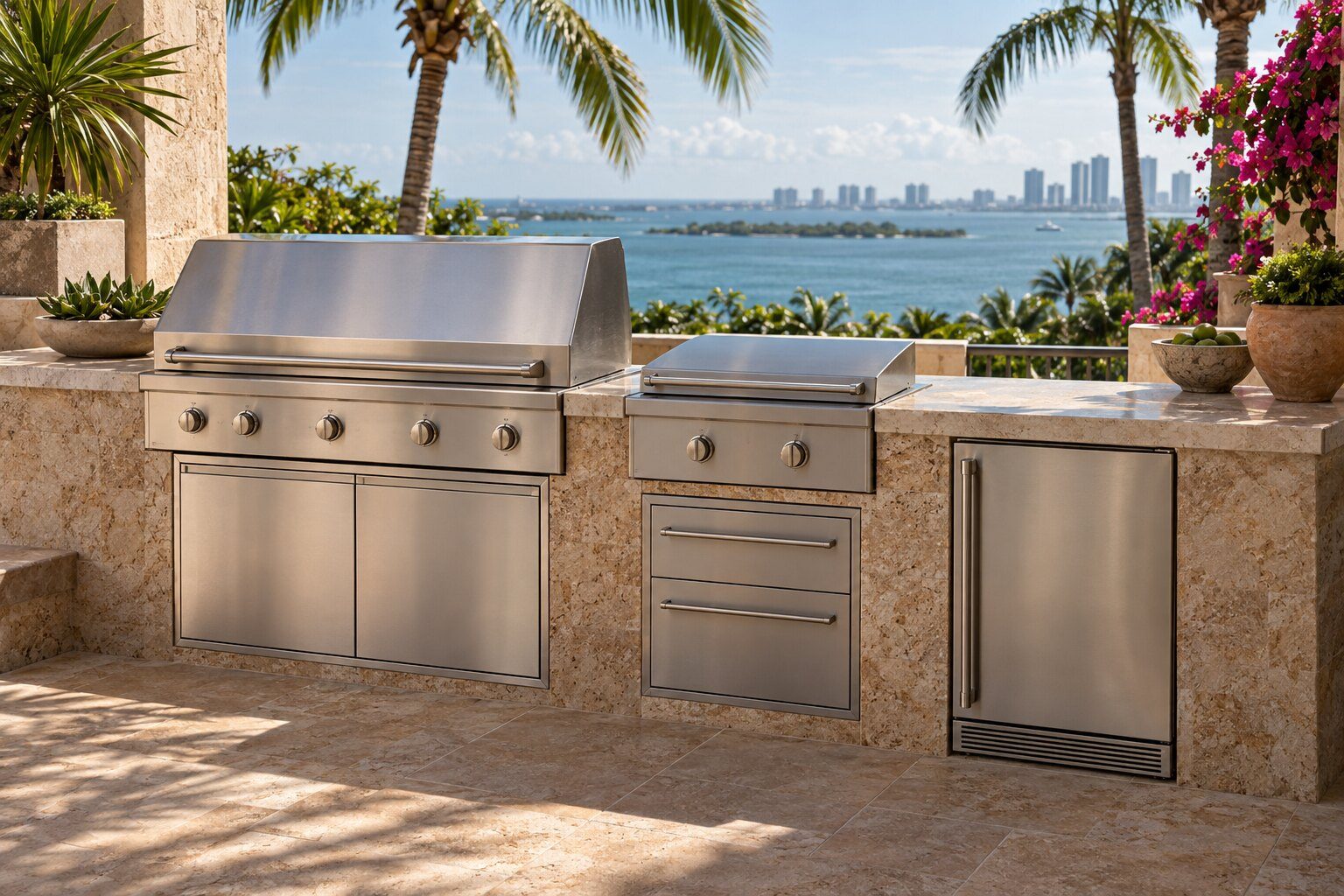
The grill is the part people photograph; the rest of the island is the part that generates the calls. A DCS outdoor kitchen is a run of separate machines sharing one gas manifold and one stone surround — side burners and power burners for a pot, a warming drawer, access doors and drawer stacks, sometimes a vent hood over the whole thing. Each has its own failure and its own access, and they fail in an order the climate sets rather than one the catalog does. Doors and drawers seize long before anything gas-fired stops working, because the hardware is what the rain and the salt reach first.
- Several machines, one manifold and one surround — a supply problem shows up on all of them at once
- Drawer runners, hinges and latches are the first casualties of an outdoor install
- The stone is the constraint: what can be removed was decided when the island was built
-
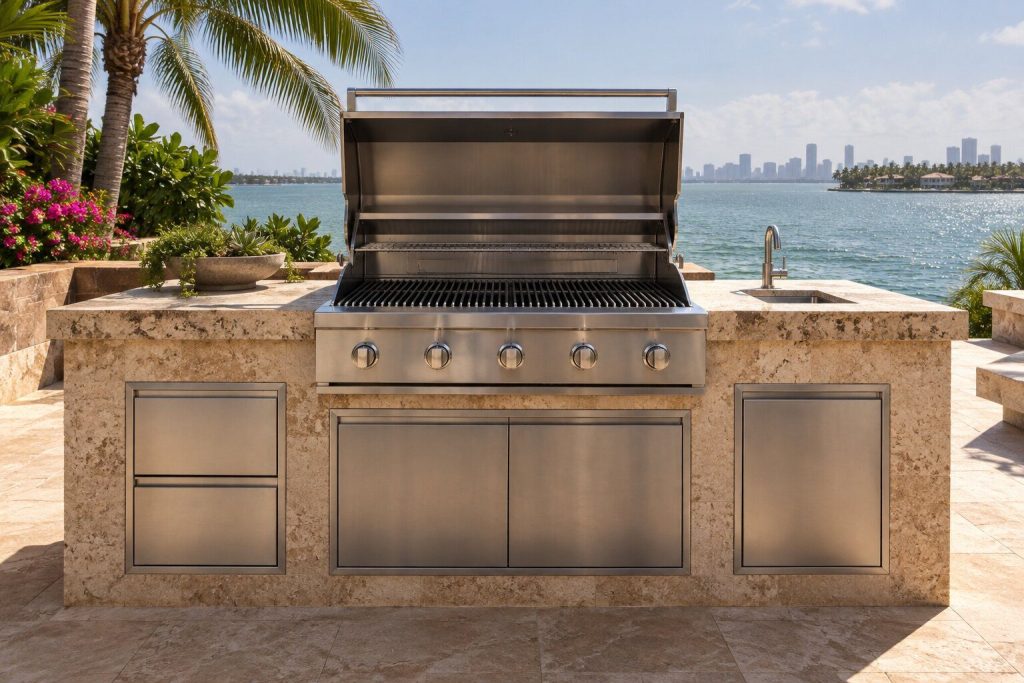
Built into the island, or on a cart · Series 7 and Series 9 DCS grill repair in Bay Harbor Islands
This is the machine most people mean when they say DCS, and in South Florida it is the one that ages fastest. A grill dropped into a stone island is plumbed to gas, wired for its lights and rotisserie, and then left to face salt air for eleven months of the year with a cover on it. What fails is rarely the thing the owner expects: burners and ignitors are consumables here, the radiant trays and grease tray are part of the fire risk rather than part of the cleaning, and half the calls we take turn out to be a supply problem at the cylinder or the manifold rather than anything inside the hood. The ones built into an island are the slower visits — the surround decides what can come out and in which order.
- Built-in and cart versions of the same cooking platform — the surround decides the visit
- No error codes anywhere on this half of the brand: the grill tells you in flame, smell and sound
- Salt air is the second owner of every outdoor stainless part in this market
-
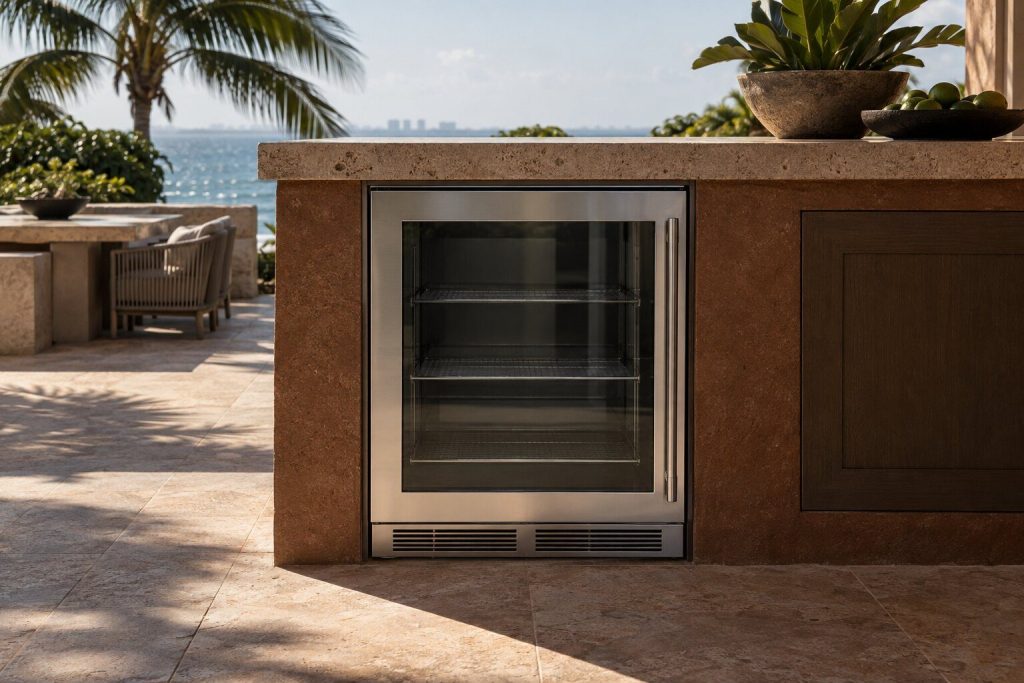
Outdoor-rated, under the counter of the island DCS beverage center repair in Bay Harbor Islands
The one cold machine on a hot brand, and it earns its place by living outside. An outdoor-rated beverage center sits under the counter of the island, a meter from a grill, in ambient temperatures the indoor version of the same cabinet is not built for. That changes what fails and how it presents: a unit running constantly and never reaching temperature in August is often doing everything right in conditions it cannot win, and the fix is ventilation or shade rather than a compressor. The genuine problems are the ordinary refrigeration ones — a seal, a fan, a drain, a condenser packed with dust and salt — plus one this climate adds, which is condensation where an indoor machine would have had none.
- Outdoor-rated, and the rating is the whole story in a Miami August
- A condenser in an island collects salt and dust faster than any indoor cabinet
- Running constantly is not automatically a problem — the ambient may be the answer
-
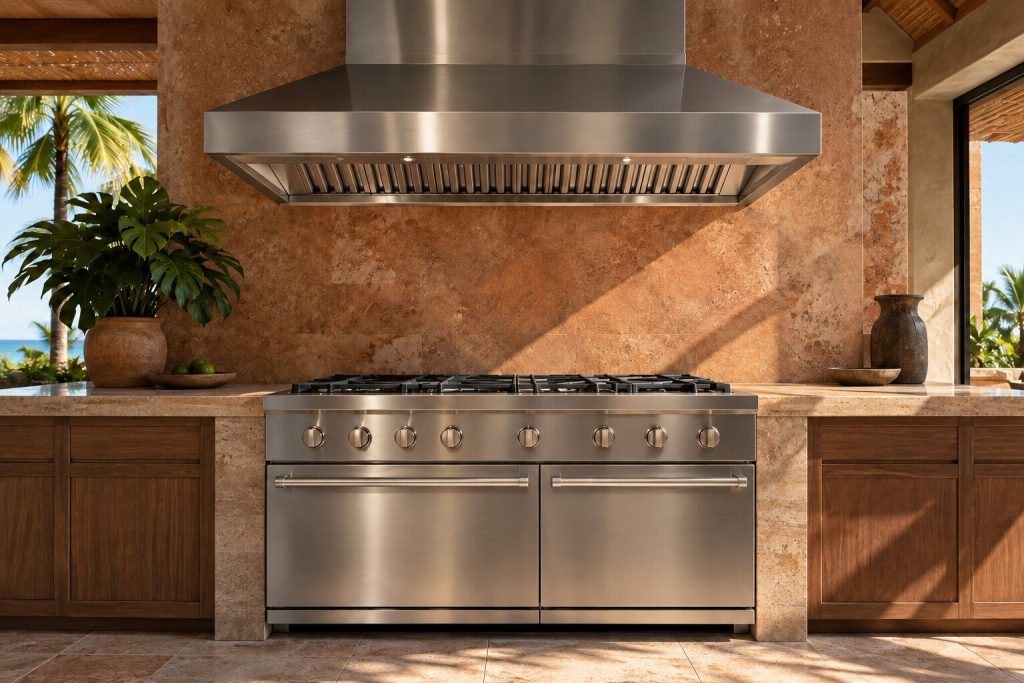
Over the range indoors, over the grill outside DCS range hood repair in Bay Harbor Islands
A hood is the machine nobody thinks about until the kitchen stops clearing, and on this badge there are two of them living quite different lives. Indoors it sits over a high-output range and is asked to move a great deal of air quietly; outdoors it sits over a grill in the weather and is asked to survive. The problems divide the same way — indoor hoods bring blowers, speed controls, lights and baffle filters that nobody has washed; outdoor hoods bring corrosion, water where the electrics are, and a duct that has become a home for something. Whether the hood actually vents outside or recirculates through a filter is the first thing we establish, because half the complaints we hear about smoke are a hood doing exactly what it was installed to do.
- Indoor and outdoor hoods on one badge, and they fail for opposite reasons
- Vented or recirculating decides whether the complaint is a problem at all
- Baffle filters are the maintenance nobody was told about
-
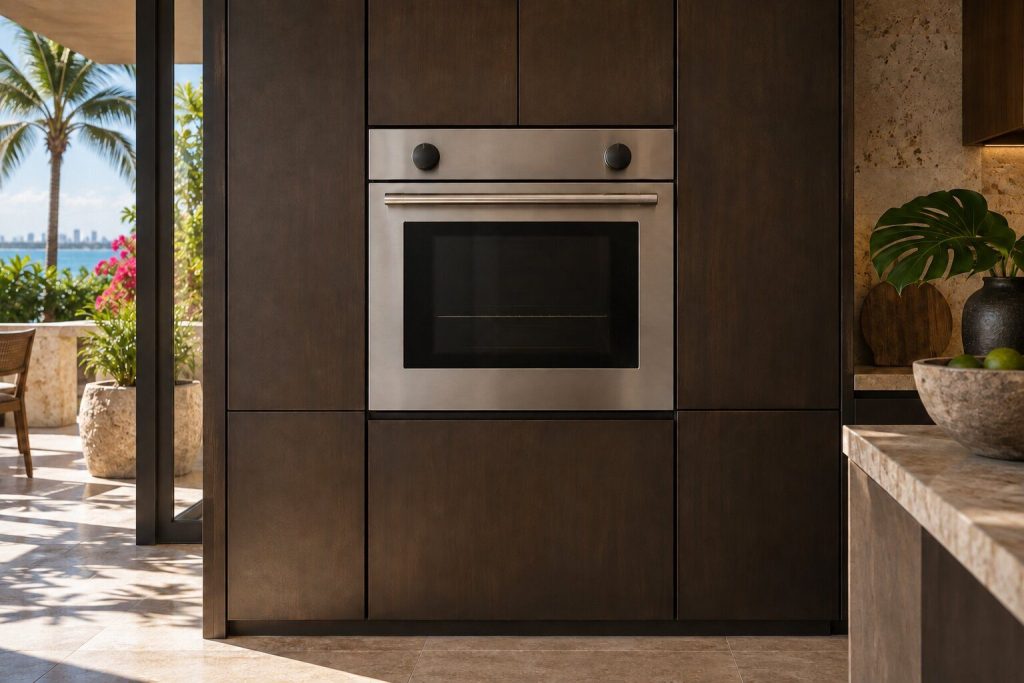
Single and double, built into a tall run DCS wall oven repair in Bay Harbor Islands
A wall oven is a cavity in a cabinet, and everything about the repair follows from that. It is heavy, it is screwed to the joinery, it sits above waist height, and behind it is a space somebody sized once and nobody has looked at since. The problems are the ordinary ones — heat that is not what the dial says, a door that has lost its seal or its hinge tension, a fan that has become loud, a control that has stopped responding — but the access is not ordinary, which is why we ask about the cabinet before the symptom. This make's wall ovens publish a decoded error table, and the sub-error after the F is where the real information is.
- Built in above waist height — the cabinet decides the visit before the problem does
- The published table decodes F1 into separate board, software and communication errors
- A double oven is two cavities and frequently one control — which one is wrong matters
-
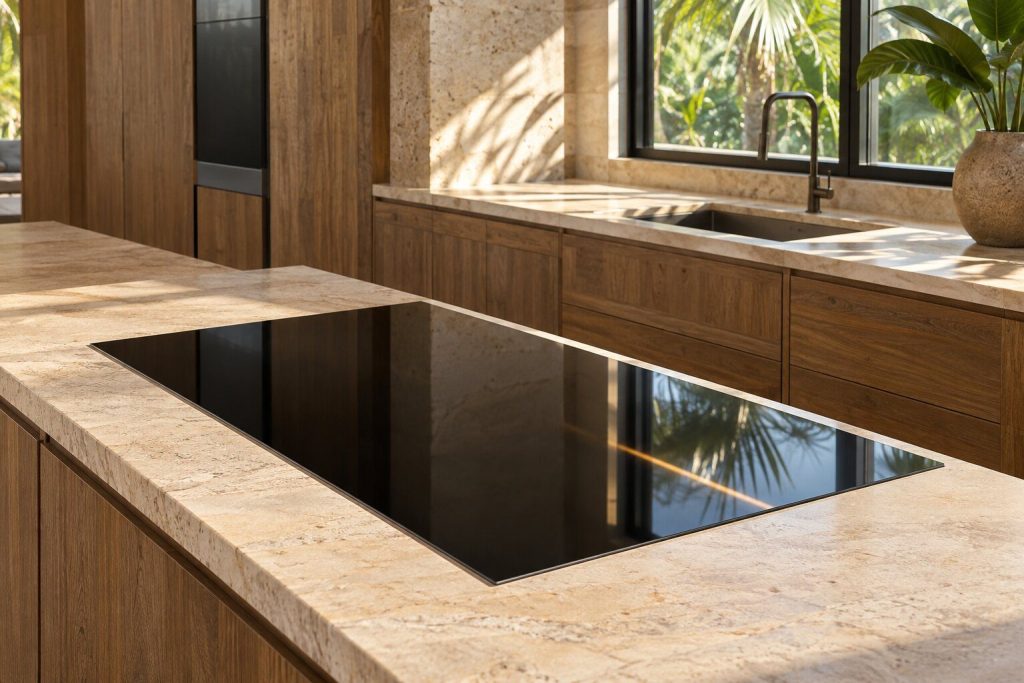
Gas and induction · drop-in, with the range top's burners DCS cooktop repair in Bay Harbor Islands
Two quite separate machines share this page because they share a cutout. A gas cooktop is the range's top without the oven under it, and it fails the way that top fails — ignition, seating, a blocked port, a switch. An induction cooktop is an electronics problem wearing a glass lid, and it announces itself in code: this make publishes a short, decoded list, and one of those codes is a voltage complaint rather than a problem in the machine at all. What is in the stone decides the whole visit — down to whether the person who finally solves it works for us or for the power company.
- Gas: ignition, caps, ports and switches — the same story as the range top
- Induction: a decoded code list, and one entry is about the supply rather than the cooktop
- The cutout and the worktop decide whether anything can come out at all
By job
The repairs we are called out for in Bay Harbor Islands
Starting figures for this equipment in South Florida. What moves them is the model, the access and the part — the exact cost is confirmed after the on-site diagnostic.
-
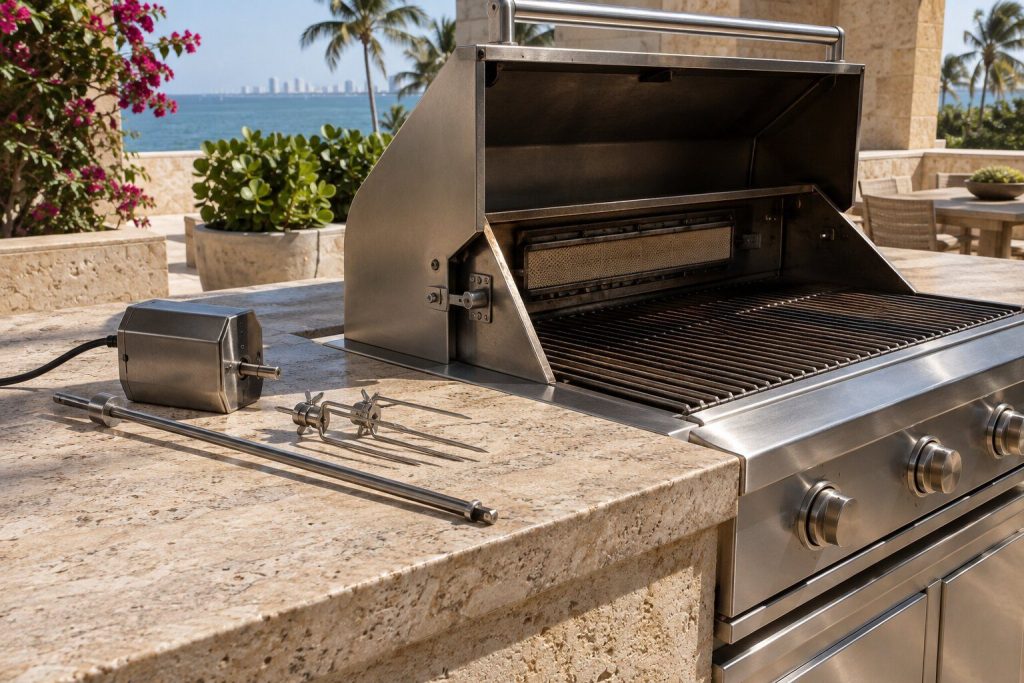
from $145 Rotisserie repair
Two separate things are called the rotisserie and they fail separately. There is the motor and spit that turn, and there is the rear burner that does the cooking, and a complaint of 'the rotisserie does not work' is worth splitting on the phone. A motor that hums and does not turn, a spit that binds in its bracket, a burner that will not stay lit when the safety valve button is released — these are three different visits. The last one is the one people live with longest and is usually the flame-supervision device rather than the burner.
- Motor and rear burner are two machines with one name
- Will not stay lit once the button is released points at flame supervision
- A binding spit ruins a motor that was fine until it did
-
from $145 Wall oven door seal replacement
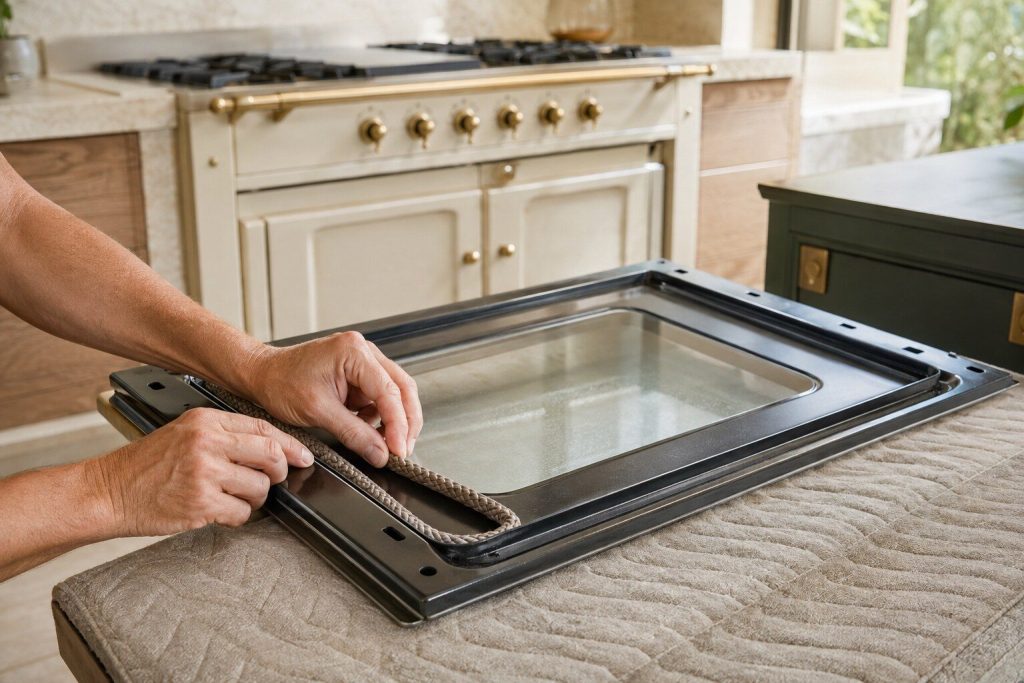
A seal that has hardened, shrunk or come away at a corner costs more than heat — it changes how the whole cavity behaves and it hides behind other symptoms. Owners describe uneven baking, a long preheat, a cool corner, or a kitchen that gets warm when the oven is on, and any of those can be a seal. It is also the classic casualty of the self-clean cycle: the hottest hours the seal will ever see, taken once a year, and it is the year after one of them that it fails. We check the hinges at the same time, because a door that no longer pulls square will destroy a new seal as quickly as it did the last one.
- Long preheats and a warm kitchen are seal symptoms people rarely connect
- Self-clean is the cycle that finishes a tired seal
- Fitted without checking the hinges, a new seal fails the same way
-
from $185 Grill burner replacement
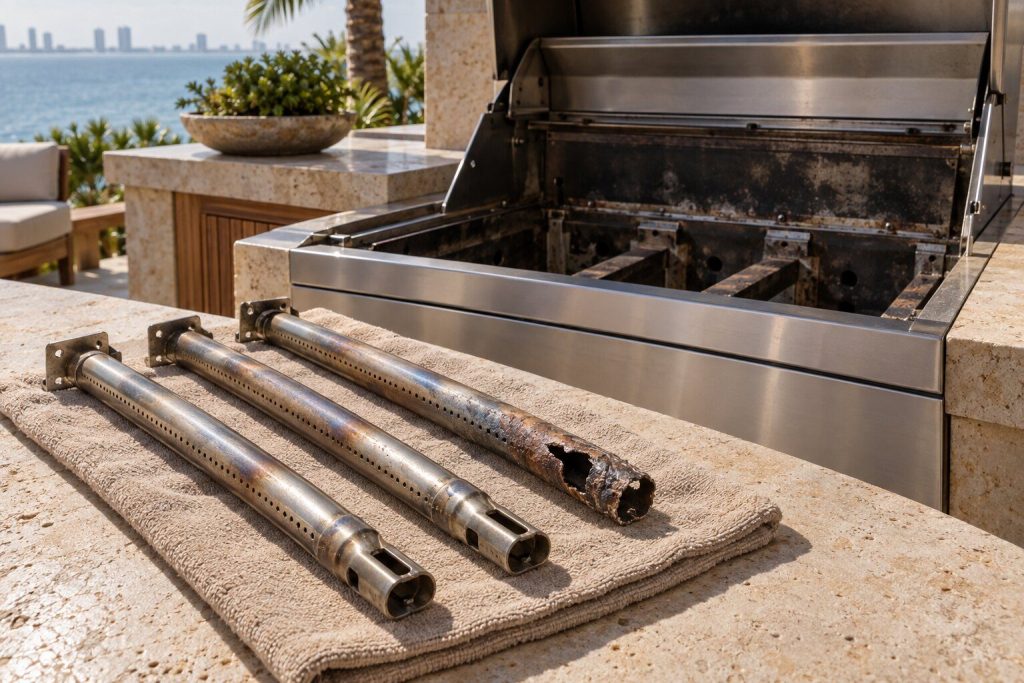
Burners are consumables on an outdoor grill in South Florida, and the question is rarely whether one has gone but whether it has gone far enough to matter. A burner that has burned through at the ends puts flame where the design did not intend it, cooks unevenly down its length, and eventually damages the radiants and the firebox around it. We would rather replace a set at the point where the first one has failed than come back three times, and we will say when a burner still has a season in it rather than selling a set on principle.
- Burn-through at the ends is the failure to look for, not the obvious hole
- Replaced as a set when the set is the same age, one at a time when it is not
- The radiants above them are checked at the same time, because they fail together
-
from $175 Cooktop touch control repair
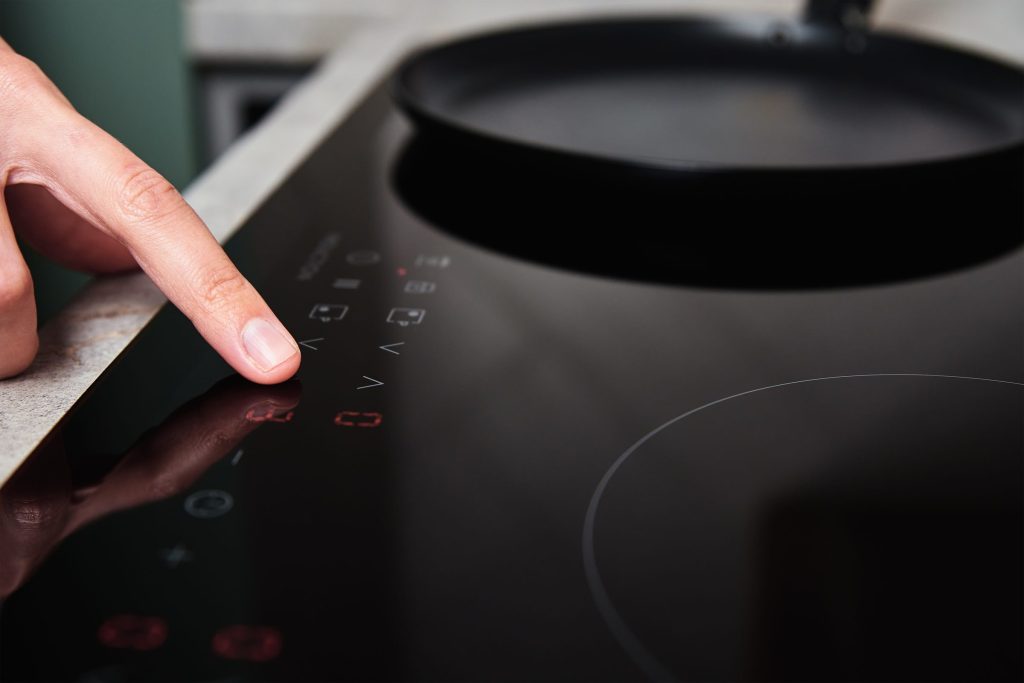
For the top that lights up and will not listen, or listens when nobody has touched it. On a glass top the control surface is also the cooking surface, and everything that gets spilled, wiped or rested on it is part of the story: the published code list includes continual key activation precisely because a cloth left over the controls is a routine cause. Where it is not that, it is usually moisture that has got under the glass at an edge, a connection to the control board, or the board itself. The order matters, because the last of those is the expensive one and the first two are not.
- A cloth over the controls is a published code, not a joke
- Moisture under the glass edge imitates a failed panel exactly
- The board is the last suspect, not the first
-
from $245 Appliance installation
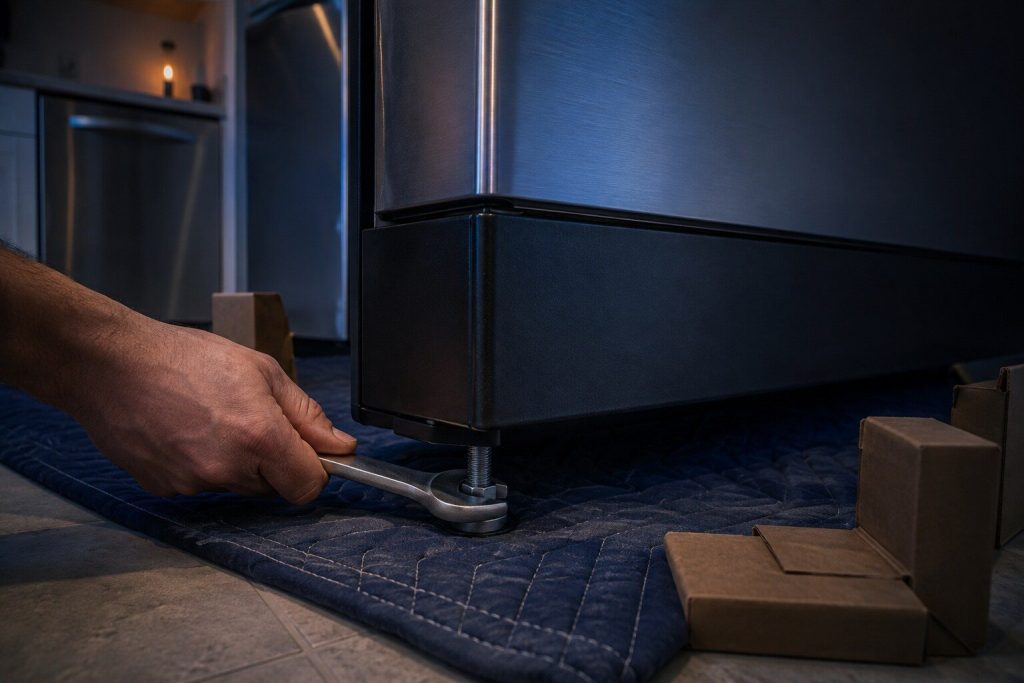
Putting a machine into a space somebody else built. On this brand that is rarely a delivery and usually a fit: a grill head into a masonry cutout, a beverage center into an island with a ventilation path that has to actually work, a wall oven into a tall run, a cooktop into stone that does not forgive a second attempt. The measuring happens before anything is ordered, not after it arrives. Where an existing cutout is wrong for the machine that is meant to go into it, we say so while it is still a drawing — that conversation is cheap and the alternative is a slab with a hole in the wrong place.
- Measured against the cutout that exists, not the one in the brochure
- Ventilation and clearance treated as part of the install, because they decide whether it works
- Gas connection and leak check done properly and documented
-
from $165 Griddle and grill section service
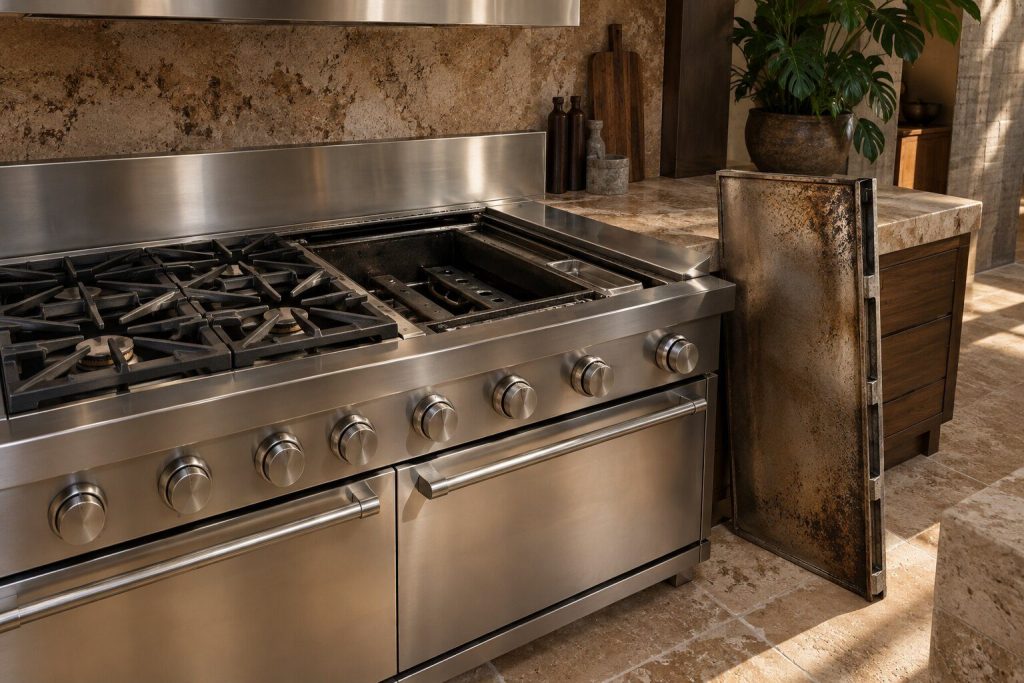
The part of the range top that is not burners. A griddle or an indoor grill section is asked to hold an even temperature across a plate rather than to put heat into a pot, and it fails in ways burners do not: a plate that has warped so that fat pools at one end, a thermostat that no longer reads the plate it is bolted to, a grease path under the section that has filled because nobody knew it was there. Owners usually describe this as 'it does not cook evenly any more', which is accurate and covers three different causes.
- Uneven cooking on a plate is warp, sensor or grease — and they feel identical
- The drain path under the section is the part nobody is told about
- A warped plate is sometimes worth living with and we will say when
Nearby
Where else we work near Bay Harbor Islands
Every place below has its own page, with what the equipment and the access are like there.
Elsewhere in Miami-Dade
In more detail
DCS repair in Bay Harbor Islands, in more detail
What DCS equipment is like in Bay Harbor Islands
Two small islands of low-rise buildings, many of them from the 1960s and 70s with kitchens remodeled around the original openings. Built-in units squeezed into those openings need the access planned rather than discovered.
Bay Harbor Islands sits in Miami-Dade County, and the equipment here follows the housing: older kitchens with appliances fitted into openings that were cut for something else, and newer ones where they were specified with the cabinetry. Both are DCS work — bbq-grill, beverage centers, cooktop — and both are diagnosed on site before anything is priced.
Salt, heat and storms — what they do to a kitchen full of appliances
Close to the water everything ages from the outside in. Salt corrodes the condenser coils and fan motors on the cold side and reaches burner caps, grates and igniters on the hot side, and both fail in the same way: a part that still works, slowly, until the day it does not. In Bay Harbor Islands that turns a cleaning interval into a seasonal job rather than an annual one, on both halves of the kitchen.
What that means for the appliances in Bay Harbor Islands
- Cooktops — Induction is common in these buildings because a gas line often is not, and an induction top under a counter needs the ventilation gap the instructions specify — which a full drawer removes without anybody noticing.
- Range hoods — Almost nothing in a tower vents outside, so the hood recirculates and lives entirely on a charcoal filter — a consumable most owners have never been told about, and the reason a healthy-sounding hood can move nothing at all.
- Wall ovens — A wall oven fitted into original joinery has a fixed opening and a circuit that may be older than the appliance. Both get checked before anything is quoted.
- Induction cooktop shuts off mid-cook
- Oven will not hold its temperature
- Outdoor drawers and doors seized
- Smell of gas at the grill
- Grill flame is yellow or orange
How a visit in Bay Harbor Islands is arranged
We ask for the model number from the plate inside the door and a line about what the appliance is doing. That decides which parts ride in the van, and it is the difference between one appointment and two.
- In a building: the service elevator window, the loading bay and the hours contractors are allowed to work
- Behind a gate: how visitors are cleared, arranged before the appointment rather than at it
- Whether the doors are paneled to match the cabinetry, which changes how they come off and go back
- The diagnosis first, then the scope and the price in writing, and your approval before anything is opened
What it costs, and what moves the figure
Prices in Bay Harbor Islands are the same as everywhere else we cover: a diagnostic from $95 that is credited toward the repair, and starting figures per job rather than one number for "a repair". What moves it is the model, how the appliance is built into the cabinetry, which part it needs and how quickly that part can be sourced — none of which can be judged over the phone. The repairs we carry out lists what each job involves and the figure it starts at, and the unit pages covers what tends to go wrong on each type.
The exact cost is confirmed after the on-site diagnostic and agreed with you before any work begins. We are an independent repair company — not affiliated with, authorized by, or endorsed by any manufacturer — and our warranty covers the labor we performed.
Before you book
Questions about a visit in Bay Harbor Islands
Do you cover Bay Harbor Islands?
Yes. Bay Harbor Islands is in Miami-Dade County and inside the area we work every week. Give us the address when you book, and say how the DCS is installed — what has to come apart to reach it matters as much as where it is.
How soon can you get to Bay Harbor Islands?
We will tell you the earliest slot we can genuinely keep rather than the earliest one that sounds good. Tell us the model number and what the unit is doing when you book: whether we can finish the same day depends on the part far more than on the drive.
Does it cost more because the job is in Bay Harbor Islands?
No. The diagnostic and the work are priced the same across Miami-Dade, Broward and Palm Beach. What moves the figure is the model, how the unit is built in and which part it needs — never the address. Where access takes longer, we say so before anything is agreed rather than after.
My building has rules about service calls. What do you need?
The building name when you book, and anything it requires — a service elevator window, a loading bay slot, approved hours or a certificate of insurance. We arrange those in advance; found out on the day, they cost the appointment.
Booking a visit in Bay Harbor Islands
Tell us the model number and what the unit is doing. We will bring the parts that problem usually needs, and you will have a firm price before we start.
This article is based on:
- Official manufacturer documentation
- Internal repair procedures
- Technician repair history
- Company quality standards