Service
DCS appliance maintenance
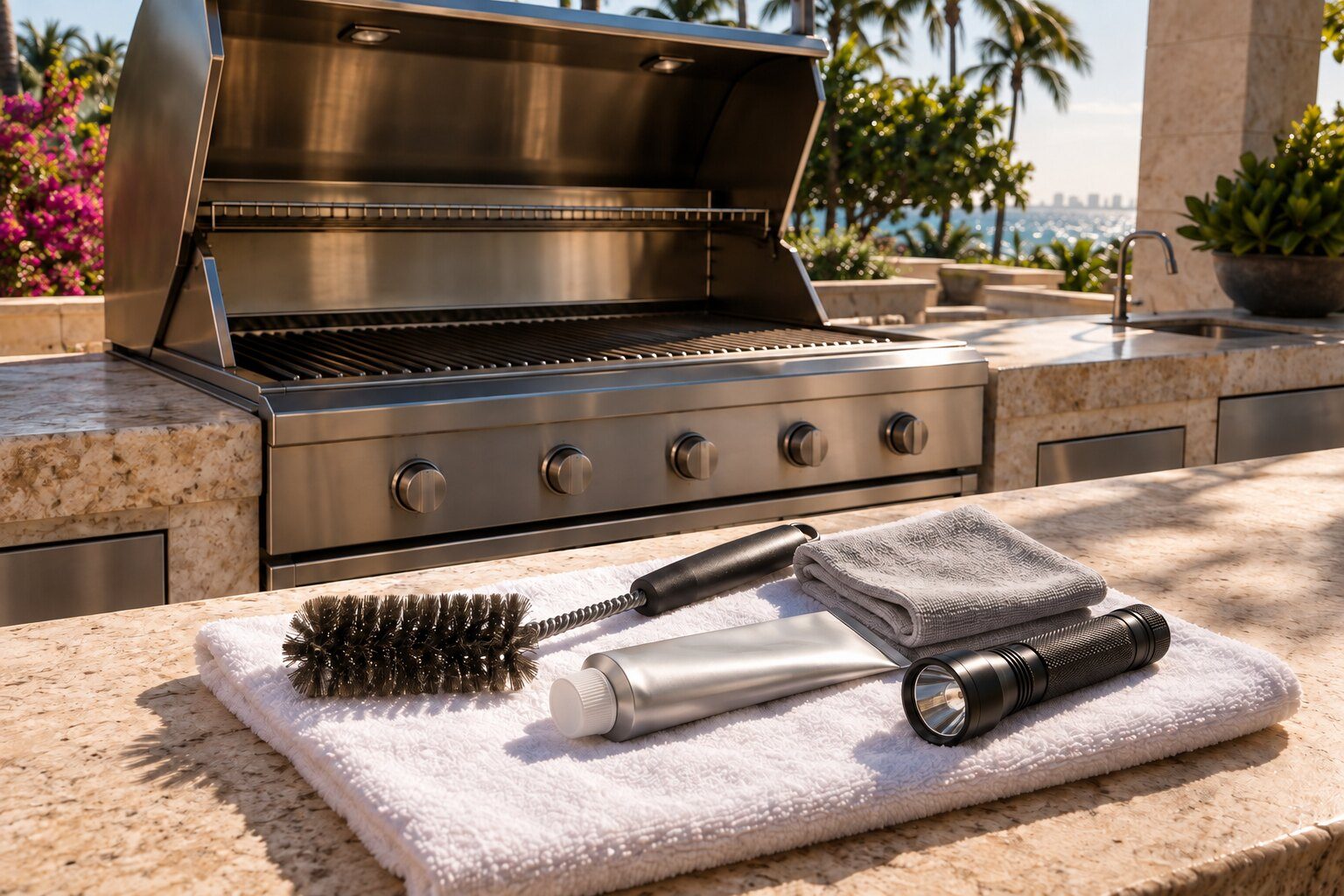
The visit that is booked rather than called in. Outdoor cooking equipment in this market does not fail on a schedule set by hours of use — it fails on one set by salt, rain and the months it spends under a cover with humidity trapped underneath. A maintenance visit is where burners come out and get looked at before they are the reason dinner stopped, where the grease path is cleared before it is a fire, where drawer runners are treated before they pit, and where an undercounter refrigerator's condenser is cleaned before August asks it for everything. Indoors it is the ordinary and useful work: seals, hinges, sensor accuracy, filters, and the parts of a high-output range that quietly drift.
- From $95 diagnostic, credited to the repair
- 59 cities and neighborhoods covered
- OEM parts available on order
- In writing the price, before anything is opened
Before you read on
What this job costs and how it is agreed
A starting figure, not a quote. What moves it is the model, how the unit is built in and which part it needs — settled after the on-site diagnostic.
Starts at
from $175
After a diagnostic from $95, which comes off the bill when you go ahead.
or call (305) 526-4714
Diagnostic
From $95, credited to the repair
The price
In writing, before anything is opened
Warranty
On the labor we performed
On the visit
How this visit actually goes
The same order every time, so nothing is opened and nothing is charged before you have seen the figure and said yes.
-
01
Everything gas-fired comes apart far enough to be seen
Burners out, ports and venturi tubes checked for the nests and grease that build up here every season, ignitors and electrodes inspected rather than tested once and passed. This is the half of the visit that prevents a yellow flame six weeks later.
-
02
The grease path, end to end
Radiant trays, the tray beneath them, the channel it drains to and the cup at the end of it. Loaded, misfitted or missing, they put rendered fat directly onto flame. We clear the whole path and show you what was in it, because nothing else on an outdoor kitchen carries this much risk for this little money.
-
03
Hardware and the cold machine
Runners, hinges, latches and fixings cleaned and treated before pitting starts, and the beverage center's condenser, drain path and door seal dealt with together. On the coast the hardware is what fails first and the condenser is what fails hardest.
-
04
A written list of what we found and what can wait
Not everything found needs doing today, and a maintenance visit that turns into a quote for everything is a sales call. You get the list split into what we did, what should be done this season and what is simply worth watching.
Applies to
The DCS units we carry this work out on
-
Built into the island, or on a cart · Series 7 and Series 9 DCS grill repair in Miami
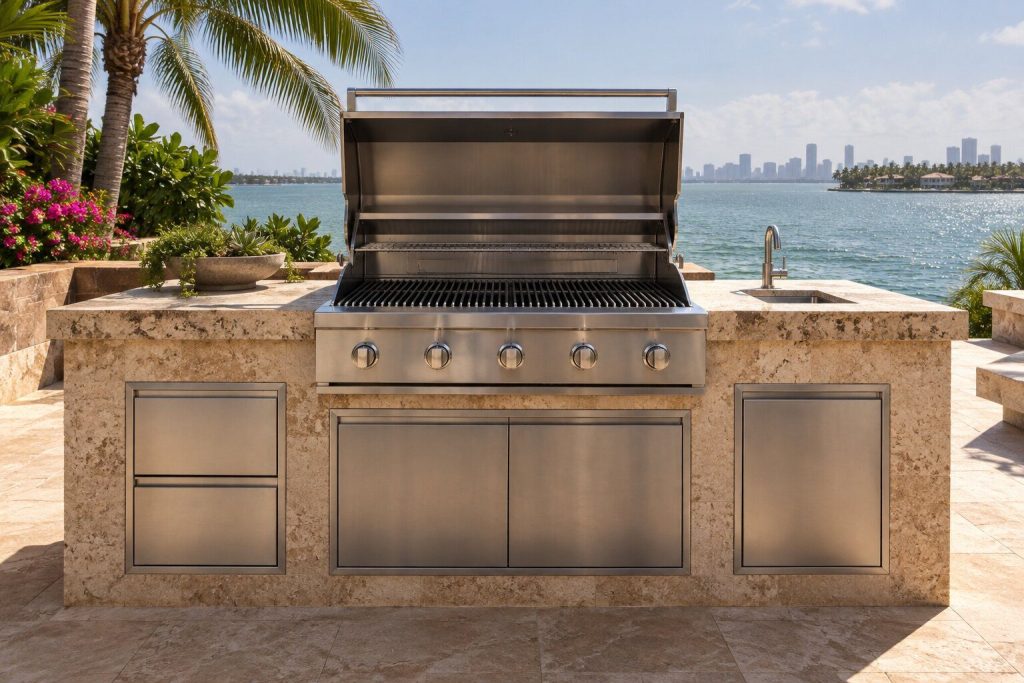
This is the machine most people mean when they say DCS, and in South Florida it is the one that ages fastest. A grill dropped into a stone island is plumbed to gas, wired for its lights and rotisserie, and then left to face salt air for eleven months of the year with a cover on it. What fails is rarely the thing the owner expects: burners and ignitors are consumables here, the radiant trays and grease tray are part of the fire risk rather than part of the cleaning, and half the calls we take turn out to be a supply problem at the cylinder or the manifold rather than anything inside the hood. The ones built into an island are the slower visits — the surround decides what can come out and in which order.
- Built-in and cart versions of the same cooking platform — the surround decides the visit
- No error codes anywhere on this half of the brand: the grill tells you in flame, smell and sound
- Salt air is the second owner of every outdoor stainless part in this market
-

Side and power burners, warming drawers, doors and drawers DCS outdoor kitchen appliance repair in Miami
The grill is the part people photograph; the rest of the island is the part that generates the calls. A DCS outdoor kitchen is a run of separate machines sharing one gas manifold and one stone surround — side burners and power burners for a pot, a warming drawer, access doors and drawer stacks, sometimes a vent hood over the whole thing. Each has its own failure and its own access, and they fail in an order the climate sets rather than one the catalog does. Doors and drawers seize long before anything gas-fired stops working, because the hardware is what the rain and the salt reach first.
- Several machines, one manifold and one surround — a supply problem shows up on all of them at once
- Drawer runners, hinges and latches are the first casualties of an outdoor install
- The stone is the constraint: what can be removed was decided when the island was built
-

Commercial-style, dual fuel and all gas DCS range repair in Miami
Indoors the badge means a commercial-looking range: heavy grates, high-output sealed burners, a single deep oven or a pair, and often a griddle or a grill section in place of two burners. It is built to be cooked on hard, and the calls reflect that — ignition on one burner, an oven that will not hold the temperature it is set to, a door that has stopped sealing, a fan that has become loud. Dual fuel and all-gas versions fail in different places, so the first thing we establish is which one is in the kitchen. Unlike the outdoor half of this brand, a range can tell us what is wrong: the indoor line publishes decoded error tables, and an F-code with its sub-error narrows the visit before we arrive.
- Dual fuel and all gas — the same cabinet, two different service stories
- A griddle or grill section instead of burners changes what the top is asked to do
- This half of the brand does publish codes, and they are decoded rather than numbered
-

Gas and induction · drop-in, with the range top's burners DCS cooktop repair in Miami
Two quite separate machines share this page because they share a cutout. A gas cooktop is the range's top without the oven under it, and it fails the way that top fails — ignition, seating, a blocked port, a switch. An induction cooktop is an electronics problem wearing a glass lid, and it announces itself in code: this make publishes a short, decoded list, and one of those codes is a voltage complaint rather than a problem in the machine at all. What is in the stone decides the whole visit — down to whether the person who finally solves it works for us or for the power company.
- Gas: ignition, caps, ports and switches — the same story as the range top
- Induction: a decoded code list, and one entry is about the supply rather than the cooktop
- The cutout and the worktop decide whether anything can come out at all
-

Single and double, built into a tall run DCS wall oven repair in Miami
A wall oven is a cavity in a cabinet, and everything about the repair follows from that. It is heavy, it is screwed to the joinery, it sits above waist height, and behind it is a space somebody sized once and nobody has looked at since. The problems are the ordinary ones — heat that is not what the dial says, a door that has lost its seal or its hinge tension, a fan that has become loud, a control that has stopped responding — but the access is not ordinary, which is why we ask about the cabinet before the symptom. This make's wall ovens publish a decoded error table, and the sub-error after the F is where the real information is.
- Built in above waist height — the cabinet decides the visit before the problem does
- The published table decodes F1 into separate board, software and communication errors
- A double oven is two cavities and frequently one control — which one is wrong matters
-
Over the range indoors, over the grill outside DCS range hood repair in Miami
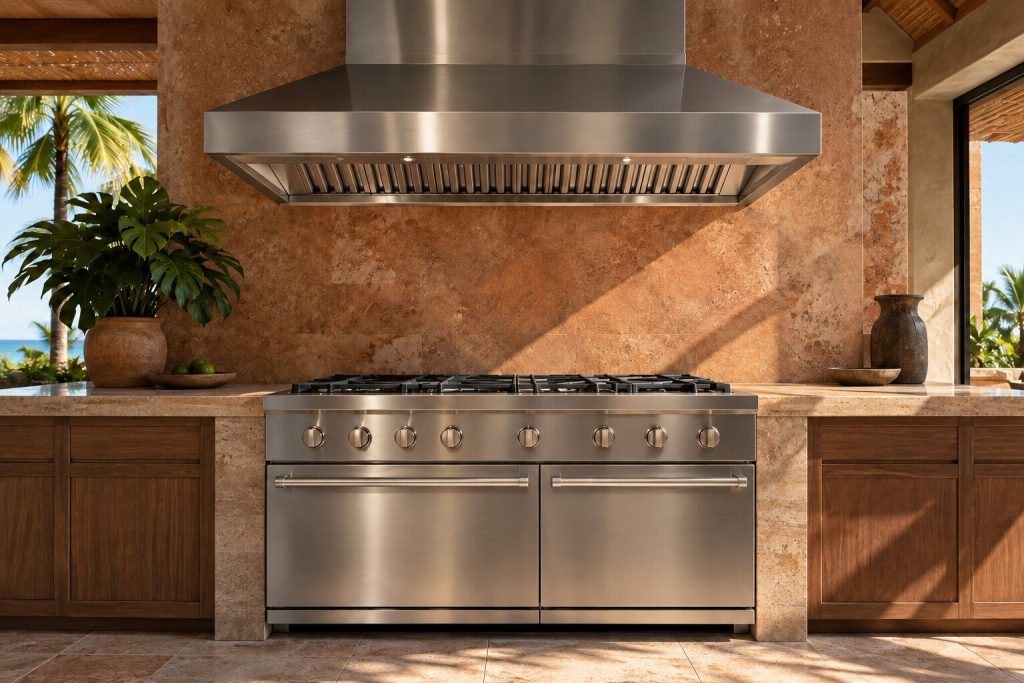
A hood is the machine nobody thinks about until the kitchen stops clearing, and on this badge there are two of them living quite different lives. Indoors it sits over a high-output range and is asked to move a great deal of air quietly; outdoors it sits over a grill in the weather and is asked to survive. The problems divide the same way — indoor hoods bring blowers, speed controls, lights and baffle filters that nobody has washed; outdoor hoods bring corrosion, water where the electrics are, and a duct that has become a home for something. Whether the hood actually vents outside or recirculates through a filter is the first thing we establish, because half the complaints we hear about smoke are a hood doing exactly what it was installed to do.
- Indoor and outdoor hoods on one badge, and they fail for opposite reasons
- Vented or recirculating decides whether the complaint is a problem at all
- Baffle filters are the maintenance nobody was told about
-
Outdoor-rated, under the counter of the island DCS beverage center repair in Miami
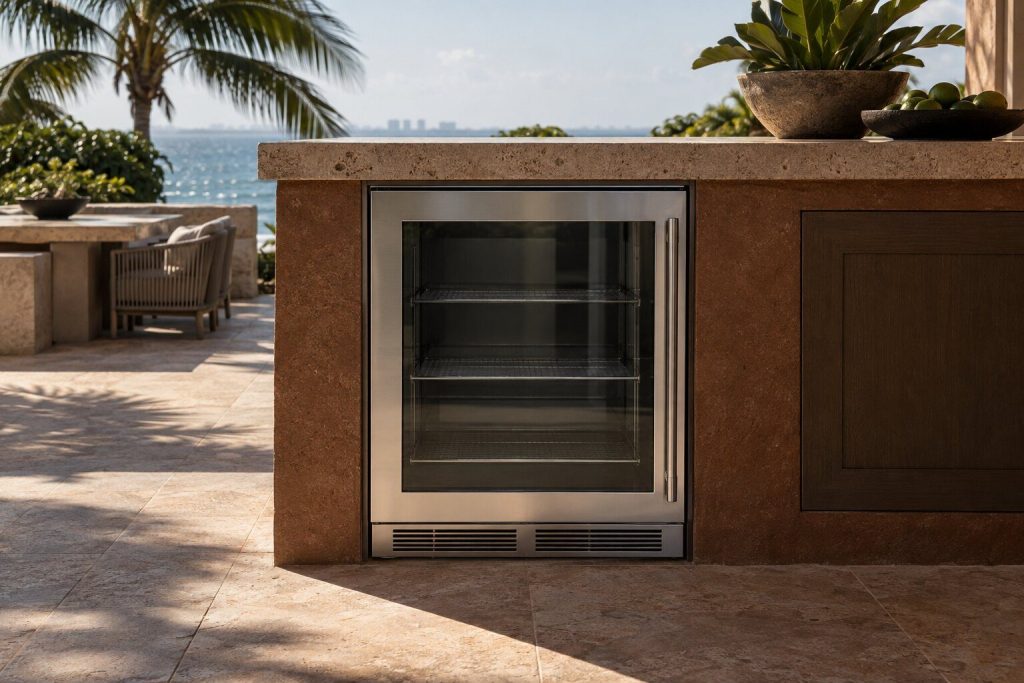
The one cold machine on a hot brand, and it earns its place by living outside. An outdoor-rated beverage center sits under the counter of the island, a meter from a grill, in ambient temperatures the indoor version of the same cabinet is not built for. That changes what fails and how it presents: a unit running constantly and never reaching temperature in August is often doing everything right in conditions it cannot win, and the fix is ventilation or shade rather than a compressor. The genuine problems are the ordinary refrigeration ones — a seal, a fan, a drain, a condenser packed with dust and salt — plus one this climate adds, which is condensation where an indoor machine would have had none.
- Outdoor-rated, and the rating is the whole story in a Miami August
- A condenser in an island collects salt and dust faster than any indoor cabinet
- Running constantly is not automatically a problem — the ambient may be the answer
In more detail
About DCS appliance maintenance
Built around salt and season, not around hours of use
Indoor equipment fails on a schedule set by how much it is used. Outdoor equipment in this market does not: it fails on one set by salt, by rain, and by the months it spends under a cover with humidity trapped underneath. So the visit is arranged around that rather than around a service interval from a manual. Burners come out and are looked at before they are the reason dinner stopped. The grease path is cleared before it is a fire rather than after. Runners and hinges are treated while they are still stiff, because once a runner has pitted nothing brings it back. And the condenser on the cold cabinet is cleaned before August asks it for everything it has.
This article is based on:
- Official manufacturer documentation
- Internal repair procedures
- Technician repair history
- Company quality standards

Before you book
Questions about DCS appliance maintenance
How often is realistic here?
Annually for most islands, and twice a year within a few blocks of the water. That is not a sales interval — it is what the coil, the fixings and the ignition ceramics actually look like when we open them, and the difference between a waterfront terrace and one four miles inland is visible immediately.
Is it worth doing on equipment we barely use?
Frequently more worth it, which surprises people. A burner used every weekend is dried by its own heat and cleared by its own flame; one used twice a summer sits cold and open in humid, salty air, and that is where the nests and the corrosion come from.
Where we do it
Across Miami-Dade, Broward, and Palm Beach
Same terms everywhere we go: an on-site diagnostic first, the price agreed in writing, and the exact figure confirmed once we have seen the unit.
Neighborhoods people ask for by name