Service
DCS range burner ignition repair
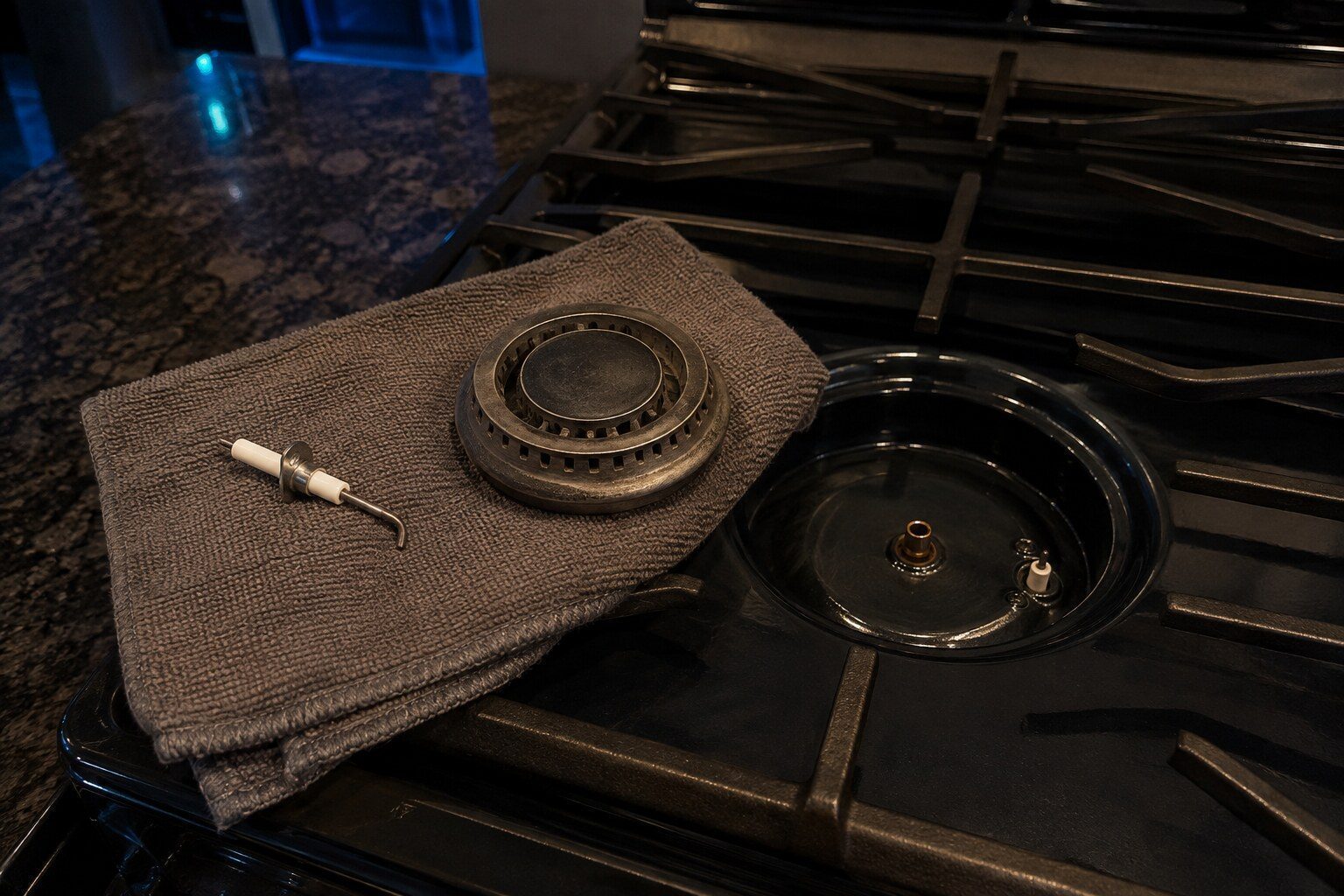
Clicking without lighting, lighting on the second attempt, or one burner that has given up while the others are perfect. On a sealed burner the causes sit in a short list and one of them is free: a cap set down rotated or on a crumb will spark all day and never light. After that it is a wet or cracked electrode, a port blocked by a boil-over, or the switch behind the dial. Clicking that continues after the burner has lit is a different problem from clicking that never lights, and telling us which one you have saves a step.
- From $95 diagnostic, credited to the repair
- 59 cities and neighborhoods covered
- OEM parts available on order
- In writing the price, before anything is opened
Before you read on
What this job costs and how it is agreed
A starting figure, not a quote. What moves it is the model, how the unit is built in and which part it needs — settled after the on-site diagnostic.
Starts at
from $145
After a diagnostic from $95, which comes off the bill when you go ahead.
or call (305) 526-4714
Diagnostic
From $95, credited to the repair
The price
In writing, before anything is opened
Warranty
On the labor we performed
On the visit
How this visit actually goes
The same order every time, so nothing is opened and nothing is charged before you have seen the figure and said yes.
-
01
Start with the cap and the ports
Sitting flat, ports open, nothing trapped underneath. No part, no charge, and a fair number of these end right here.
-
02
The ignition path
Electrode, ceramic, wire and switch. Moisture in an electrode after a clean is the single most common version of this on an indoor range and it often dries out — which is why we test rather than replacing on sight.
-
03
Light every burner from cold, twice
Intermittent ignition is only proved by repetition. Every burner, from cold, more than once, before the visit is called finished.
Applies to
The DCS units we carry this work out on
-
Commercial-style, dual fuel and all gas DCS range repair in Miami
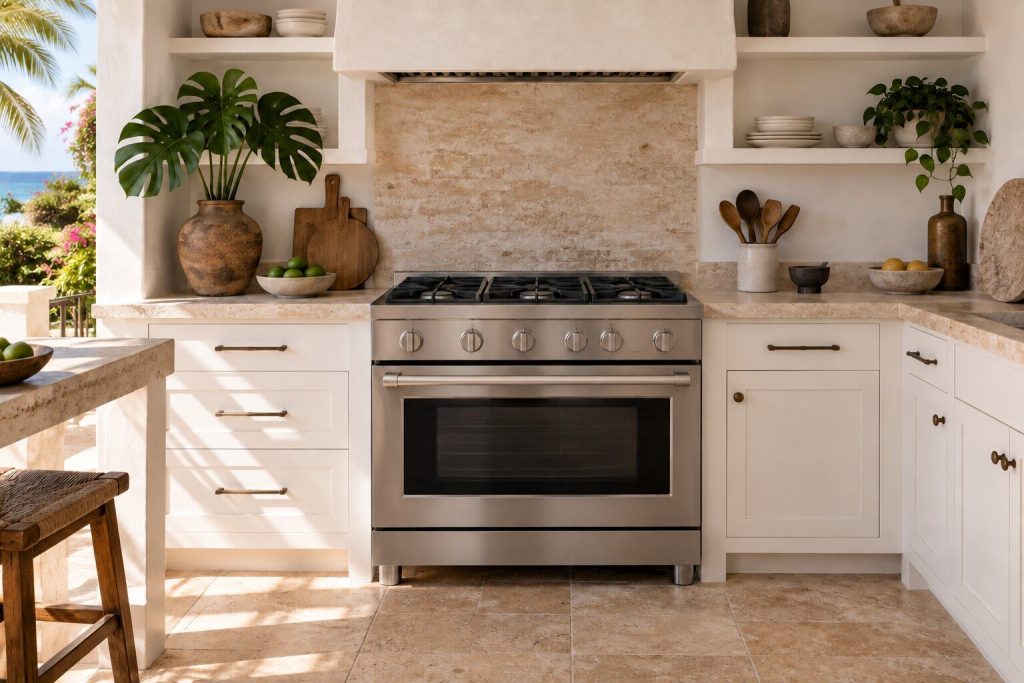
Indoors the badge means a commercial-looking range: heavy grates, high-output sealed burners, a single deep oven or a pair, and often a griddle or a grill section in place of two burners. It is built to be cooked on hard, and the calls reflect that — ignition on one burner, an oven that will not hold the temperature it is set to, a door that has stopped sealing, a fan that has become loud. Dual fuel and all-gas versions fail in different places, so the first thing we establish is which one is in the kitchen. Unlike the outdoor half of this brand, a range can tell us what is wrong: the indoor line publishes decoded error tables, and an F-code with its sub-error narrows the visit before we arrive.
- Dual fuel and all gas — the same cabinet, two different service stories
- A griddle or grill section instead of burners changes what the top is asked to do
- This half of the brand does publish codes, and they are decoded rather than numbered
-
Gas and induction · drop-in, with the range top's burners DCS cooktop repair in Miami
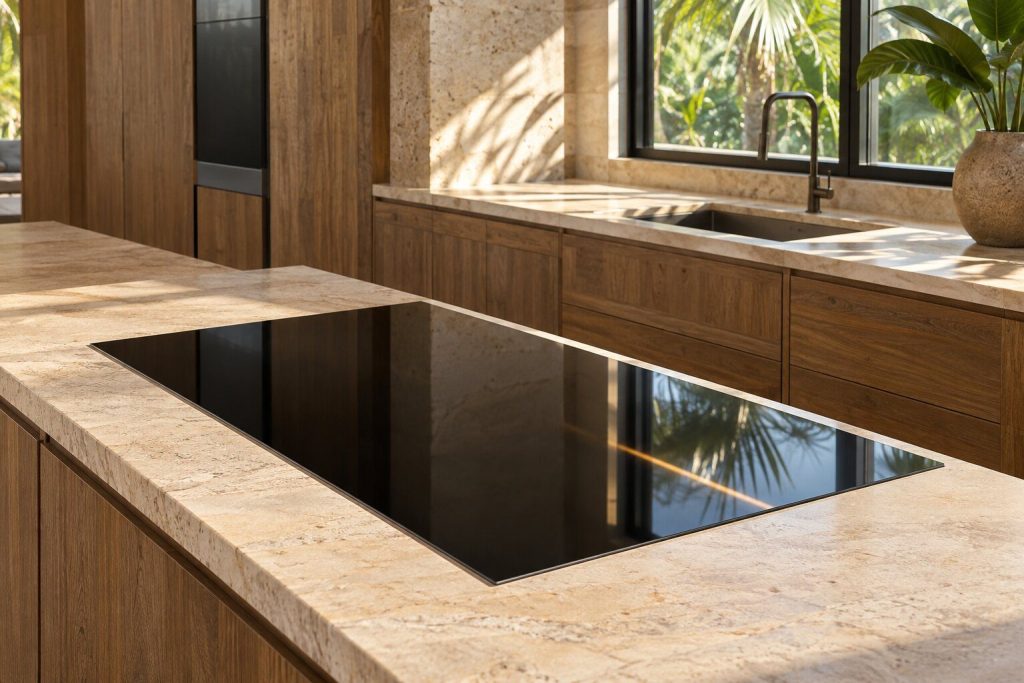
Two quite separate machines share this page because they share a cutout. A gas cooktop is the range's top without the oven under it, and it fails the way that top fails — ignition, seating, a blocked port, a switch. An induction cooktop is an electronics problem wearing a glass lid, and it announces itself in code: this make publishes a short, decoded list, and one of those codes is a voltage complaint rather than a problem in the machine at all. What is in the stone decides the whole visit — down to whether the person who finally solves it works for us or for the power company.
- Gas: ignition, caps, ports and switches — the same story as the range top
- Induction: a decoded code list, and one entry is about the supply rather than the cooktop
- The cutout and the worktop decide whether anything can come out at all
In more detail
About DCS range burner ignition repair
One free check before anybody is called
On a sealed burner the causes sit in a short list and the first of them costs nothing: a cap put back rotated, or resting on a crumb, will spark all day and never light. After that it is a wet or crazed electrode, a port blocked by a boil-over, or the switch behind the dial. One observation separates two of those immediately — clicking that stops when the flame catches is the ignition doing its job, while clicking that carries on afterwards is a switch that has lost track of the dial. And moisture in an electrode after a thorough clean is temporary rather than terminal, which is why we test before replacing.
This article is based on:
- Official manufacturer documentation
- Internal repair procedures
- Technician repair history
- Company quality standards
Before you book
Questions about DCS range burner ignition repair
It started right after we cleaned the hob.
Then it is very likely moisture rather than damage, and it often dries out on its own in a warm kitchen over a day. We mention it because it is a call we are glad not to charge for, and because replacing a sound electrode teaches nobody anything.
Every burner clicks, even with the dials off.
That is different and worth acting on. Usually moisture across the switch bank or a switch that has stuck, and it means the ignition module is running continuously. Turn it off at the breaker and have it looked at rather than living with the noise.
Where we do it
Across Miami-Dade, Broward, and Palm Beach
Same terms everywhere we go: an on-site diagnostic first, the price agreed in writing, and the exact figure confirmed once we have seen the unit.
Neighborhoods people ask for by name