Service
DCS oven temperature calibration
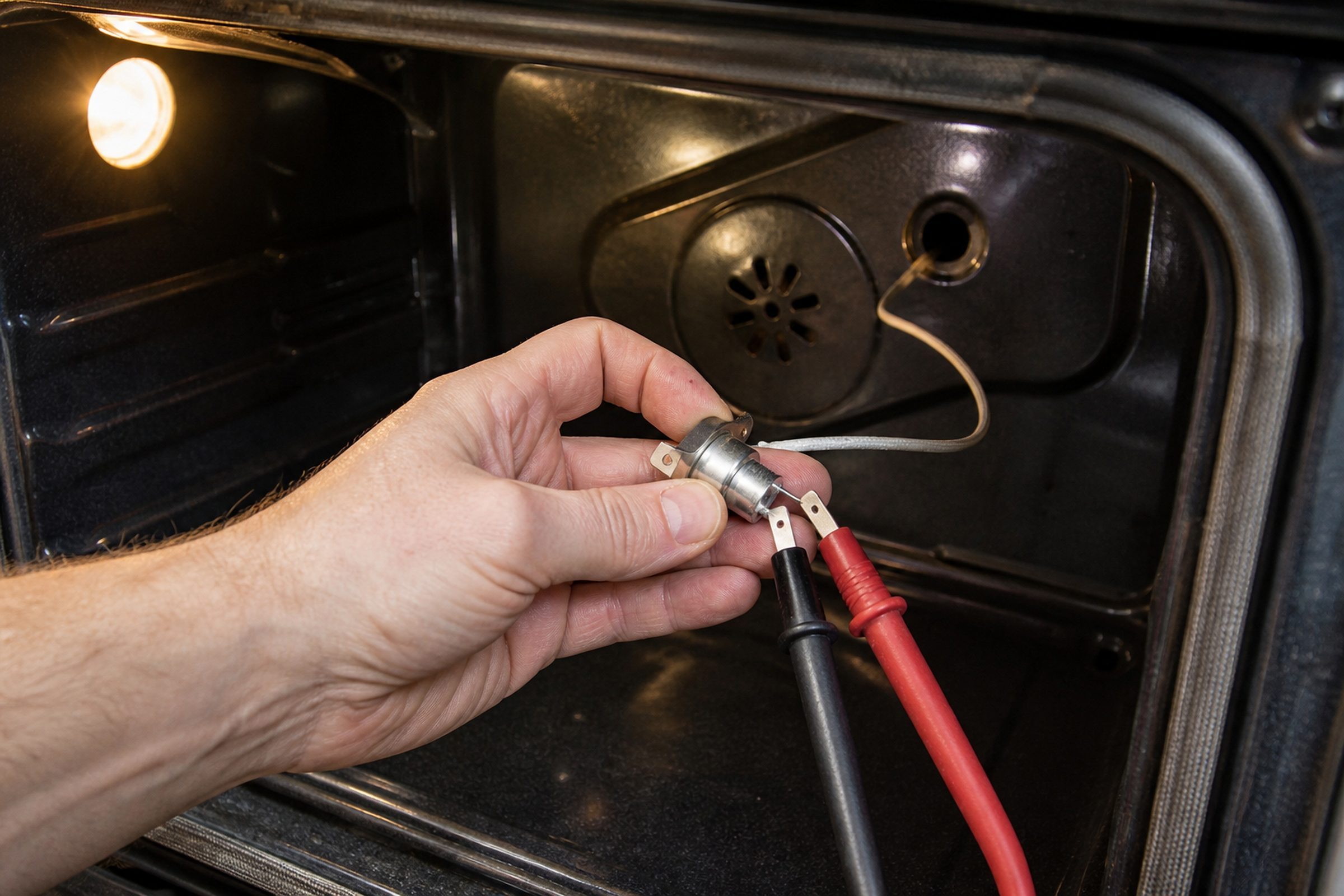
For the oven that works but lies. A cavity that runs twenty degrees hot bakes acceptably until it does not, and on a heavy range the mass hides the drift until something that used to be reliable comes out wrong. Calibration is measurement first: we log what the cavity actually does across a cycle at temperature rather than taking one reading at the peak, because the shape of the curve separates a drifted sensor from a door problem from a control that is cycling badly. Then we correct it, and re-measure rather than trusting the adjustment.
- From $95 diagnostic, credited to the repair
- 59 cities and neighborhoods covered
- OEM parts available on order
- In writing the price, before anything is opened
Before you read on
What this job costs and how it is agreed
A starting figure, not a quote. What moves it is the model, how the unit is built in and which part it needs — settled after the on-site diagnostic.
Starts at
from $135
After a diagnostic from $95, which comes off the bill when you go ahead.
or call (305) 526-4714
Diagnostic
From $95, credited to the repair
The price
In writing, before anything is opened
Warranty
On the labor we performed
On the visit
How this visit actually goes
The same order every time, so nothing is opened and nothing is charged before you have seen the figure and said yes.
-
01
Log a full cycle at temperature
Rise, overshoot, recovery and hold. One reading tells you almost nothing about an oven with this much thermal mass.
-
02
Separate the sensor from the geometry
A door that leaks, a hinge that has lost tension or a seal that has hardened produce a different curve from a sensor that has drifted. Correcting the wrong one is how an oven gets 'calibrated' twice.
-
03
Adjust, then prove it
The offset is set and the cycle logged again. We leave you the numbers, because the next person to look at this oven should not have to start from scratch.
Applies to
The DCS units we carry this work out on
-
Commercial-style, dual fuel and all gas DCS range repair in Miami
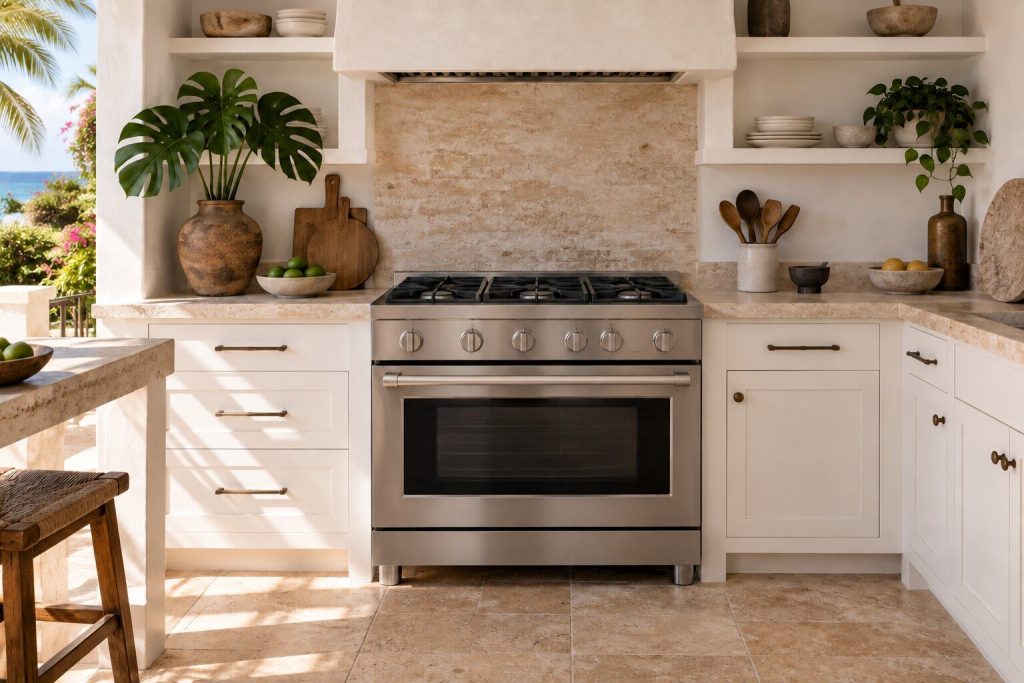
Indoors the badge means a commercial-looking range: heavy grates, high-output sealed burners, a single deep oven or a pair, and often a griddle or a grill section in place of two burners. It is built to be cooked on hard, and the calls reflect that — ignition on one burner, an oven that will not hold the temperature it is set to, a door that has stopped sealing, a fan that has become loud. Dual fuel and all-gas versions fail in different places, so the first thing we establish is which one is in the kitchen. Unlike the outdoor half of this brand, a range can tell us what is wrong: the indoor line publishes decoded error tables, and an F-code with its sub-error narrows the visit before we arrive.
- Dual fuel and all gas — the same cabinet, two different service stories
- A griddle or grill section instead of burners changes what the top is asked to do
- This half of the brand does publish codes, and they are decoded rather than numbered
-
Single and double, built into a tall run DCS wall oven repair in Miami
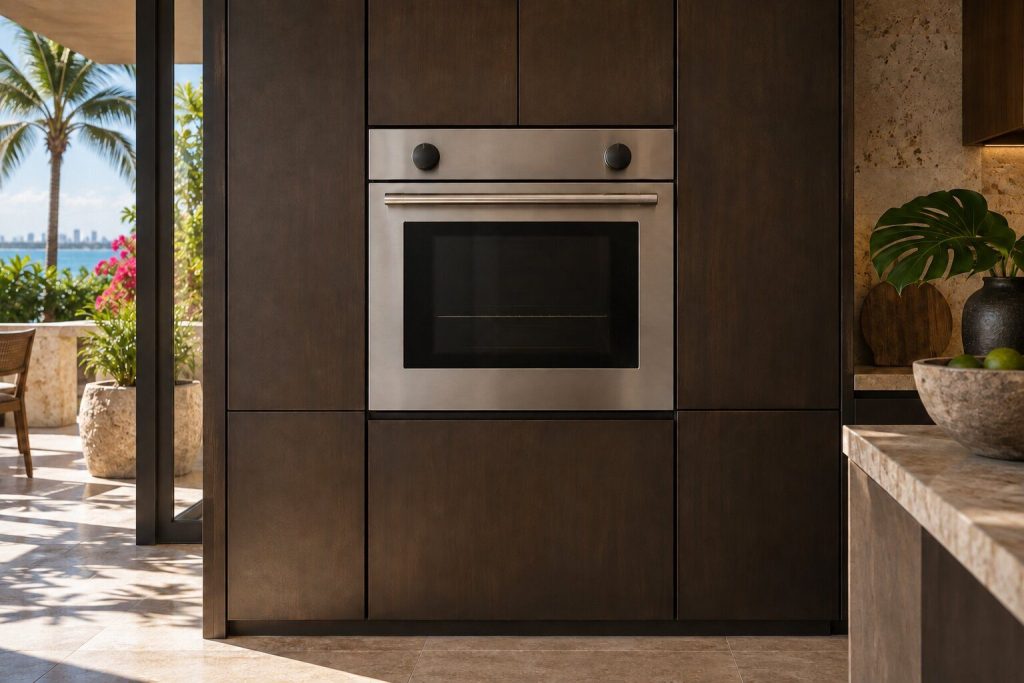
A wall oven is a cavity in a cabinet, and everything about the repair follows from that. It is heavy, it is screwed to the joinery, it sits above waist height, and behind it is a space somebody sized once and nobody has looked at since. The problems are the ordinary ones — heat that is not what the dial says, a door that has lost its seal or its hinge tension, a fan that has become loud, a control that has stopped responding — but the access is not ordinary, which is why we ask about the cabinet before the symptom. This make's wall ovens publish a decoded error table, and the sub-error after the F is where the real information is.
- Built in above waist height — the cabinet decides the visit before the problem does
- The published table decodes F1 into separate board, software and communication errors
- A double oven is two cavities and frequently one control — which one is wrong matters
In more detail
About DCS oven temperature calibration
Measured across a cycle, because one reading proves nothing
A heavy cavity spends the first twenty minutes of any cycle moving heat into its own metal, so a reading taken at the peak describes the climb rather than where the oven settles. We log a full cycle at temperature instead — rise, overshoot, recovery and hold — because the shape of that curve separates a drifted sensor from a leaking door from a control that is cycling badly. Those are three different repairs producing one complaint, and correcting the wrong one is how an oven gets calibrated twice in a year. After the adjustment we log it again, and leave you the numbers so the next person does not start from nothing.
This article is based on:
- Official manufacturer documentation
- Internal repair procedures
- Technician repair history
- Company quality standards
Before you book
Questions about DCS oven temperature calibration
Can I not just set it higher and carry on?
People do, for years, and it works until a recipe is temperature-sensitive or somebody else uses the oven. It also conceals a drift that is usually still moving. Correcting it properly is not an expensive visit and it stops the guessing.
Why does the test take half an hour?
Because you are measuring the cavity rather than the air near the element. On a range this heavy, a reading before the metal has caught up tells you about the heating rather than about the temperature it will hold.
Where we do it
Across Miami-Dade, Broward, and Palm Beach
Same terms everywhere we go: an on-site diagnostic first, the price agreed in writing, and the exact figure confirmed once we have seen the unit.
Neighborhoods people ask for by name