Service
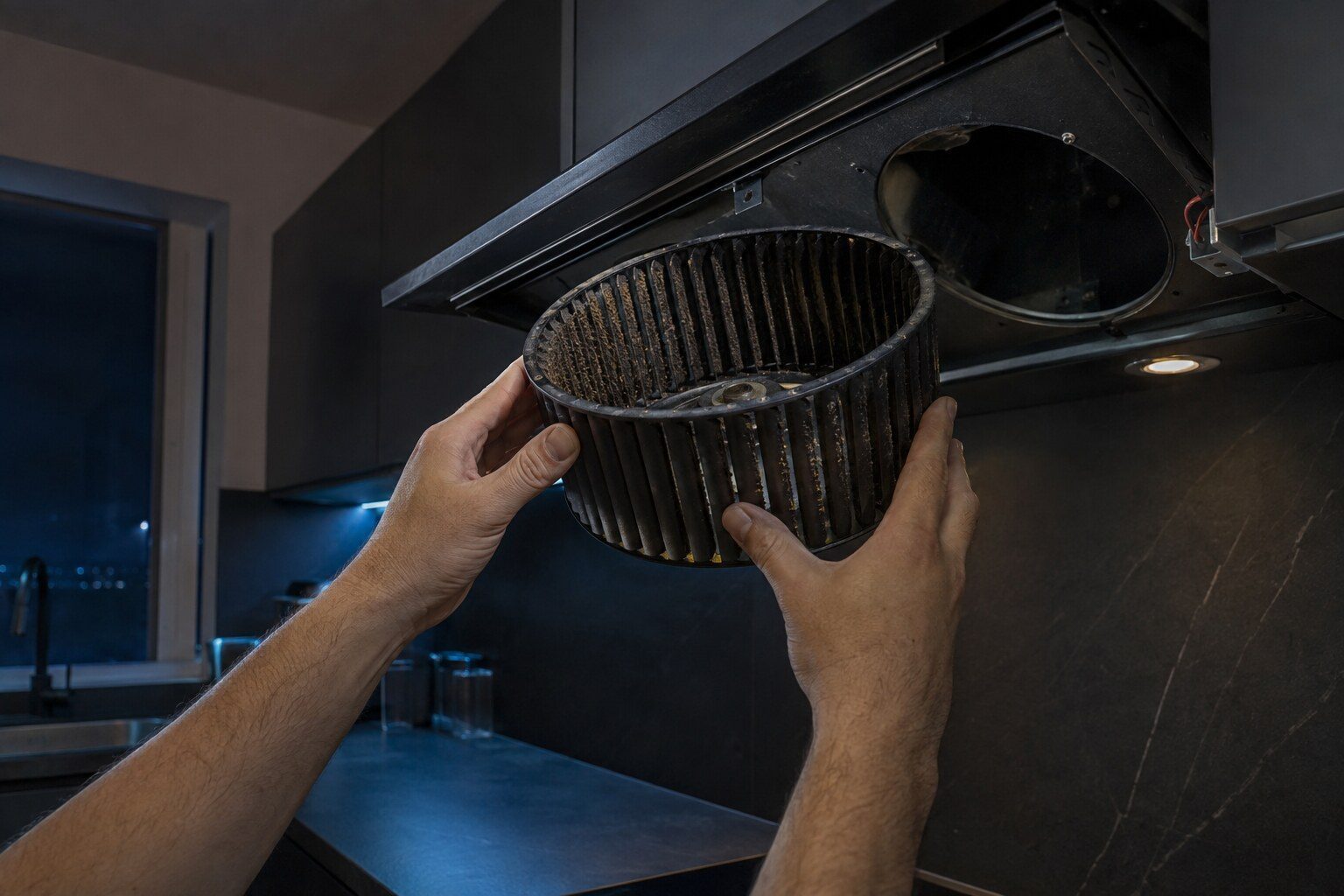
DCS range hood blower repair
For a hood that has become loud, slow or silent. Gradual noise is bearings or an impeller loaded unevenly with grease; sudden noise is something loose, something in the impeller, or a mount that has let go. Silence with the lights still working is usually the blower's own circuit rather than the supply. Outdoors, add corrosion to every one of those: a mount that has rusted changes the sound long before it changes anything else, and a blower over a grill has a much harder life than one over a hob.
- From $95 diagnostic, credited to the repair
- 59 cities and neighborhoods covered
- OEM parts available on order
- In writing the price, before anything is opened
Before you read on
What this job costs and how it is agreed
A starting figure, not a quote. What moves it is the model, how the unit is built in and which part it needs — settled after the on-site diagnostic.
Starts at
from $175
After a diagnostic from $95, which comes off the bill when you go ahead.
or call (305) 526-4714
Diagnostic
From $95, credited to the repair
The price
In writing, before anything is opened
Warranty
On the labor we performed
On the visit
How this visit actually goes
The same order every time, so nothing is opened and nothing is charged before you have seen the figure and said yes.
-
01
Characterise the noise and the airflow together
Measured at the hood rather than judged by ear alone. A blower can be loud and moving plenty of air, or quiet and moving almost none.
-
02
Take the assembly out and inspect the impeller and mounts
Grease loading is uneven by nature and unbalances the wheel. On outdoor units the mounts are inspected as structure, not as fixings.
-
03
Refit and prove it against the duct
Airflow re-checked with the ducting connected, because a blower that performs on the bench and not in the kitchen is telling you about the duct.
Applies to
The DCS units we carry this work out on
-
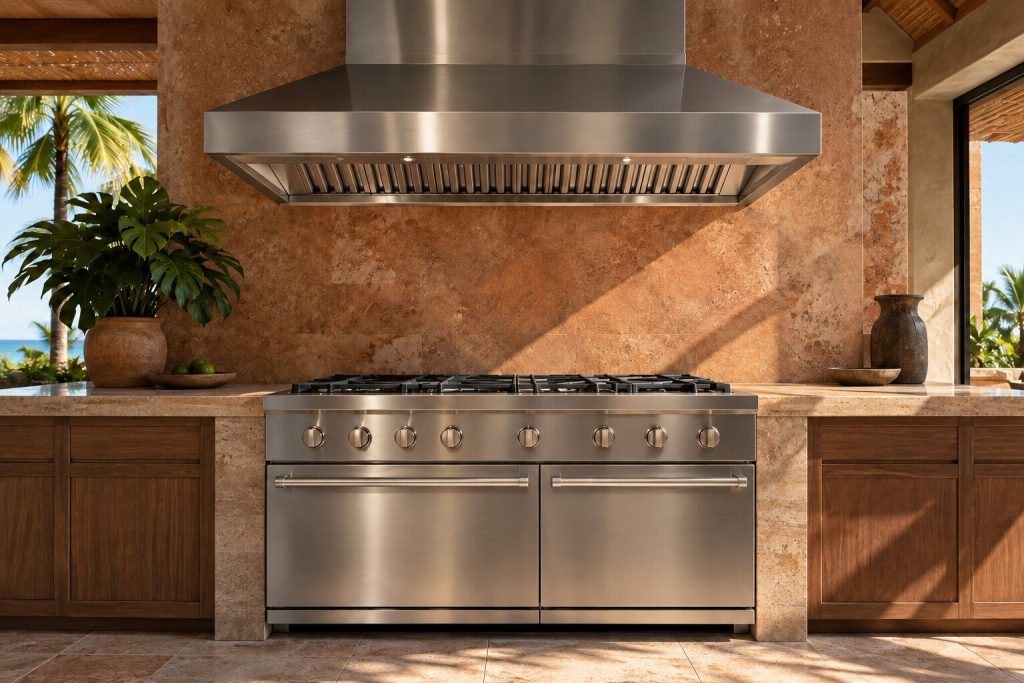
Over the range indoors, over the grill outside DCS range hood repair in Miami
A hood is the machine nobody thinks about until the kitchen stops clearing, and on this badge there are two of them living quite different lives. Indoors it sits over a high-output range and is asked to move a great deal of air quietly; outdoors it sits over a grill in the weather and is asked to survive. The problems divide the same way — indoor hoods bring blowers, speed controls, lights and baffle filters that nobody has washed; outdoor hoods bring corrosion, water where the electrics are, and a duct that has become a home for something. Whether the hood actually vents outside or recirculates through a filter is the first thing we establish, because half the complaints we hear about smoke are a hood doing exactly what it was installed to do.
- Indoor and outdoor hoods on one badge, and they fail for opposite reasons
- Vented or recirculating decides whether the complaint is a problem at all
- Baffle filters are the maintenance nobody was told about
In more detail
About DCS range hood blower repair
Indoors it is grease and bearings; outdoors it is the mounts
A blower over a high-output range lives a harder life than one over a domestic hob, and a blower over an outdoor grill lives a harder life again. The ordinary failures are familiar — bearings going, an impeller loaded unevenly so the wheel runs out of balance, a control stuck on one speed — and outdoors there is one that indoors never has: corroded mounts. That matters beyond the noise, because on an outdoor canopy the mounts are structure rather than fixings, and a rattle that has appeared over a grill is worth looking at promptly for reasons that have nothing to do with airflow.
This article is based on:
- Official manufacturer documentation
- Internal repair procedures
- Technician repair history
- Company quality standards
Before you book
Questions about DCS range hood blower repair
It is loud but it still seems to work.
Loud and moving air are not the same measurement, and a wheel can be noisy while shifting plenty or quiet while shifting almost none. We measure airflow rather than judging by ear, and the answer frequently surprises people in both directions.
Should we replace or repair?
It depends on whether the housing has been damaged. A motor caught while the noise is new is a repair; one that has been running out of balance for a year has usually scored the housing, and that changes the arithmetic.
Where we do it
Across Miami-Dade, Broward, and Palm Beach
Same terms everywhere we go: an on-site diagnostic first, the price agreed in writing, and the exact figure confirmed once we have seen the unit.
Neighborhoods people ask for by name