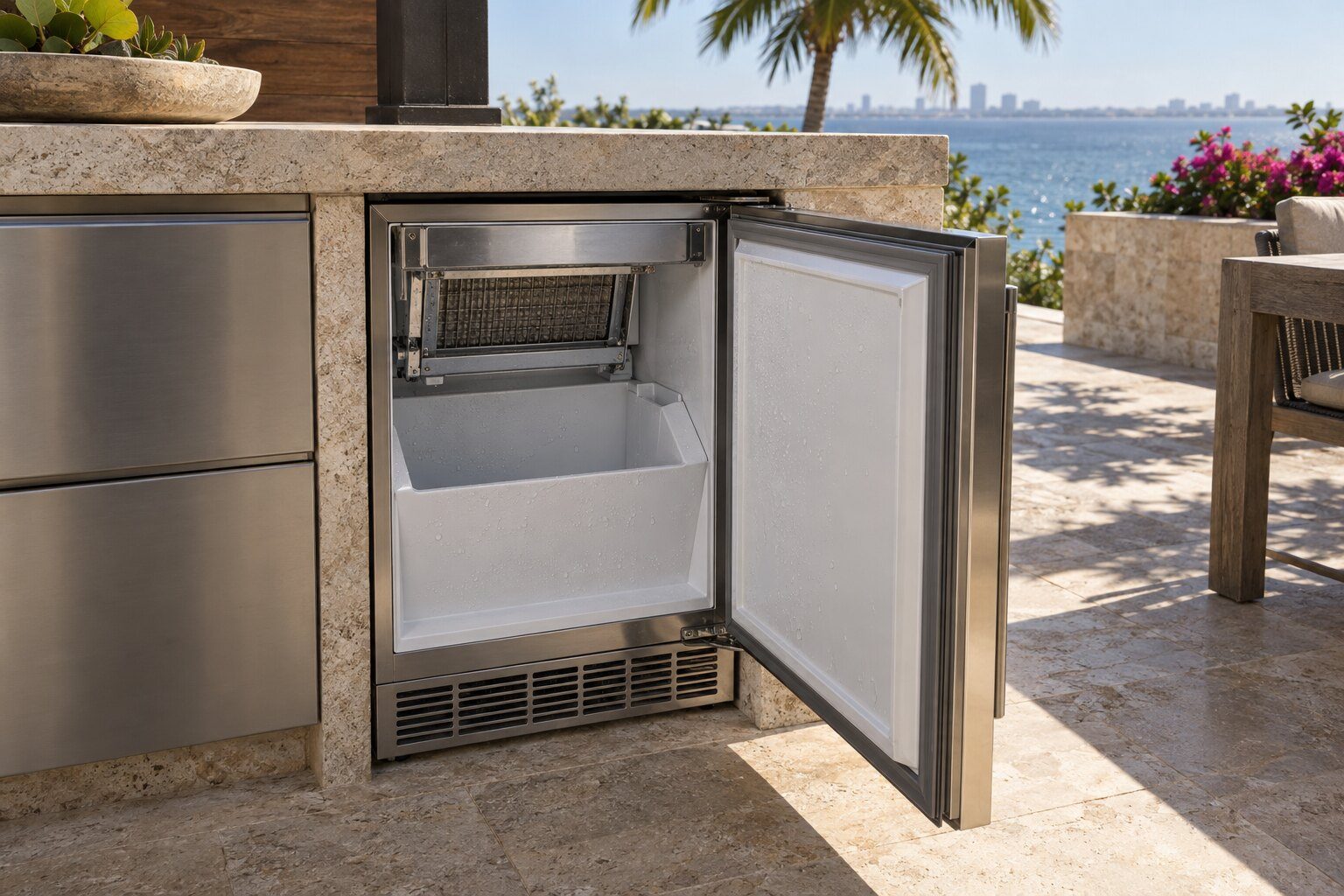
Common Problems
A DCS Outdoor Ice Machine That Has Stopped Making Ice
An outdoor ice machine that has stopped producing has failed at one of three things, and separating them before anybody opens it saves both a visit and an argument. Water is not arriving: a supply valve somebody closed, a filter nobody has changed, or a line that froze or kinked behind the cabinet. Water is not leaving: a drain that has blocked with the biofilm every ice machine grows, so the machine sits in what it has already made. Or heat is not leaving: a condenser loaded with the salt, dust and pollen an island collects, or an enclosure with no ventilation path, in a month when the air around it is already at body temperature. Only the last of those is usually an appliance repair, and even then the finding is often the island rather than the machine. Ice production is continuous work rather than holding work, so an ice machine reveals all three faster than the refrigerator beside it.
The full guide
An ice machine is the hardest-working cold appliance on a property, and in an outdoor island it is doing that work in the worst conditions it will ever see.
DCS ice maker not working: why it fails before the refrigerator does
The refrigerator beside it is holding a temperature. It reaches it, coasts, and its compressor rests. An ice machine never reaches anything: it freezes a batch, harvests it, and starts again, all day, for as long as the bin is not full.
So every weakness shows up here first. A condenser that is loading gradually costs a refrigerator a little efficiency and costs an ice machine its output. Ambient temperature that a refrigerator can absorb is a wall the ice machine runs into.
The three questions, in the order that costs least
Is water arriving? Check the supply valve — genuinely, because they get closed during other work and nobody remembers. Then the filter, which has an interval nobody keeps. A machine that fills and does not freeze is a different problem from one that never fills, and you can hear which you have.
Is water leaving? Every ice machine grows biofilm in its drain, and an outdoor one grows it faster. A blocked drain means the machine is standing in its own melt, which stops production and smells before it does.
Is heat leaving? The condenser, and the island around it. This is where most of our findings are on this coast, and half of them are not the machine.
What a loaded condenser actually does
It does not stop the machine. It slows it, in a way that is invisible until somebody measures: longer freeze cycles, smaller harvests, a compressor running for hours it was designed to rest through.
Owners describe it as making less ice, or as never keeping up at a party. Both are accurate and neither sounds like a defect, which is why it goes years.
Cleaning it means reaching it, and in an island that usually means drawing the cabinet forward. Whatever a brush reaches through the vent grille is not what is choking it.
When the island is the answer
An undercounter machine in a sealed stone enclosure, next to a grill, in August, is trying to reject heat into air that is already hot. If the ventilation path was built tight, or has since been blocked by a shelf, a bag of charcoal or a box of accessories, there is nothing we can fit that will fix it.
We would rather say that than sell a part, because the part does not help and the same call comes back next July.
The interval, honestly
Yearly on this coast. Twice a year if the island is within a few blocks of the water or under something that sheds pollen.
That is not a maintenance plan being sold — it is what the coil looks like when we open it, and the difference between a machine cleaned annually and one cleaned when it stops is measured in years of compressor life.
If it turns out to be a repair
What this leads to, and what it costs
Every job on this site is priced the same way: an on-site diagnostic first, the figure agreed in writing before anybody starts.
-

Running constantly and still warm in summer Beverage center not getting cold
DCS beverage center not cooling. The first question is not about the machine. An undercounter cabinet in a closed stone island, a meter from a grill, in a Miami August, is being asked to reject heat into air that is already hot — and where the ventilation path was built tight or has since been blocked, nothing we fit will change that. Where the ventilation is genuinely adequate, the ordinary refrigeration list applies, and on this coast a condenser packed with salt and dust is near the top of it.
- Running constantly in August is not automatically a defect
- A condenser in an island loads with salt far faster than any indoor cabinet
- Ventilation is a repair — and no part substitutes for it
-
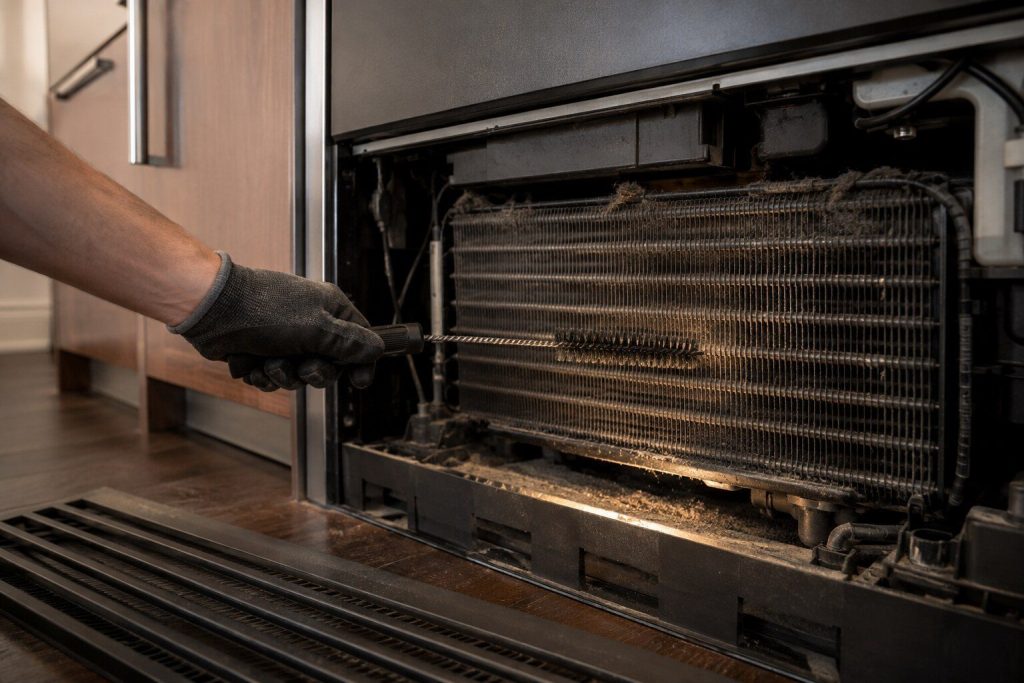
from $135 Outdoor refrigeration condenser service
The highest-yield maintenance on the one cold machine this brand builds. A condenser rejects heat by moving air across a coil, and in an outdoor island that air carries salt, dust, pollen and whatever the landscaping is doing. The coil loads, the temperature the cabinet can reach rises, the compressor runs longer, and the owner hears about it as 'it never turns off any more'. Cleaning it is inexpensive, takes an hour, and buys back performance that people assume is gone for good. On the coast this is a yearly job, not a five-yearly one.
- 'It never turns off' is the symptom this service answers
- Yearly on the coast, and the coil shows why
- An hour of work that returns performance people had written off
-
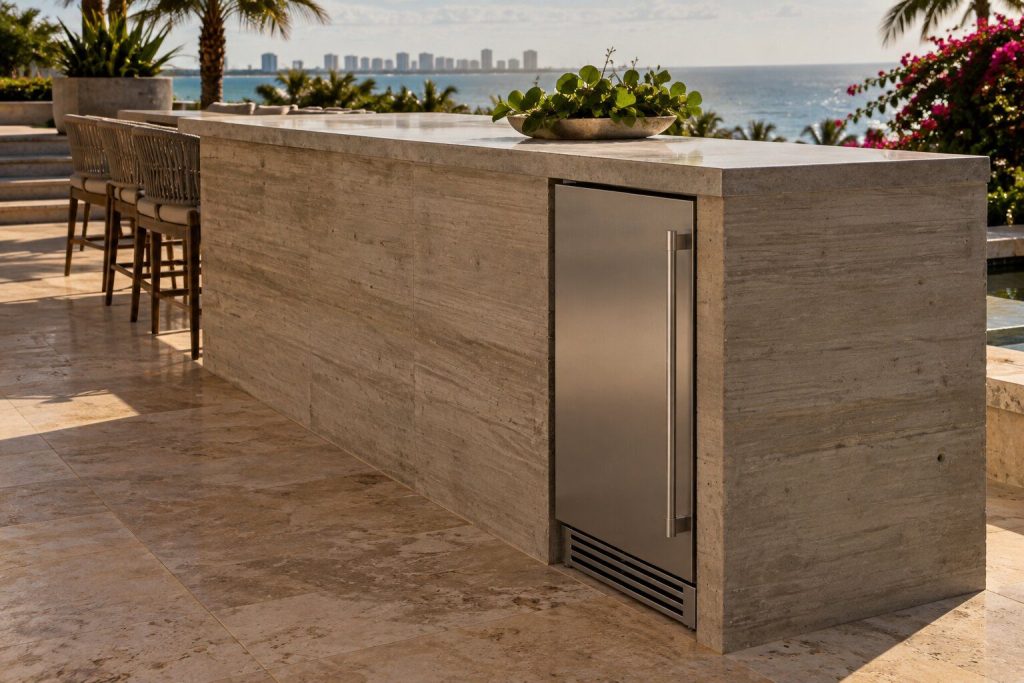
Beverage center RF15IR3 repair
DCS RF15IR3 repair in Miami: what owners of this beverage center search for, what those symptoms usually point at, and what the work involves. Diagnostic from $95, credited toward the repair.
What goes wrong on this one

Questions people ask about this
It makes ice but far less than it used to.
That is the classic loaded-condenser picture and it arrives gradually enough that nobody notices the day it started. The machine runs longer for less ice, which also means it is running hot for hours it was not designed to. Cleaning the coil properly returns performance people had written off.
The ice tastes of the island.
Usually the filter, sometimes the reservoir, occasionally what is stored in the cabinet with it. An ice machine is an open water system inside an outdoor box, and whatever is in the air around it has a route in. It is a cleaning and filter question rather than a refrigeration one.
Should we turn it off over the summer we are away?
If you do, drain it and leave the door ajar. An ice machine switched off with water in it and the door shut becomes something nobody wants to open in October, and the cleaning that follows costs more than the electricity saved.
Common Problems
More guides like this one
-
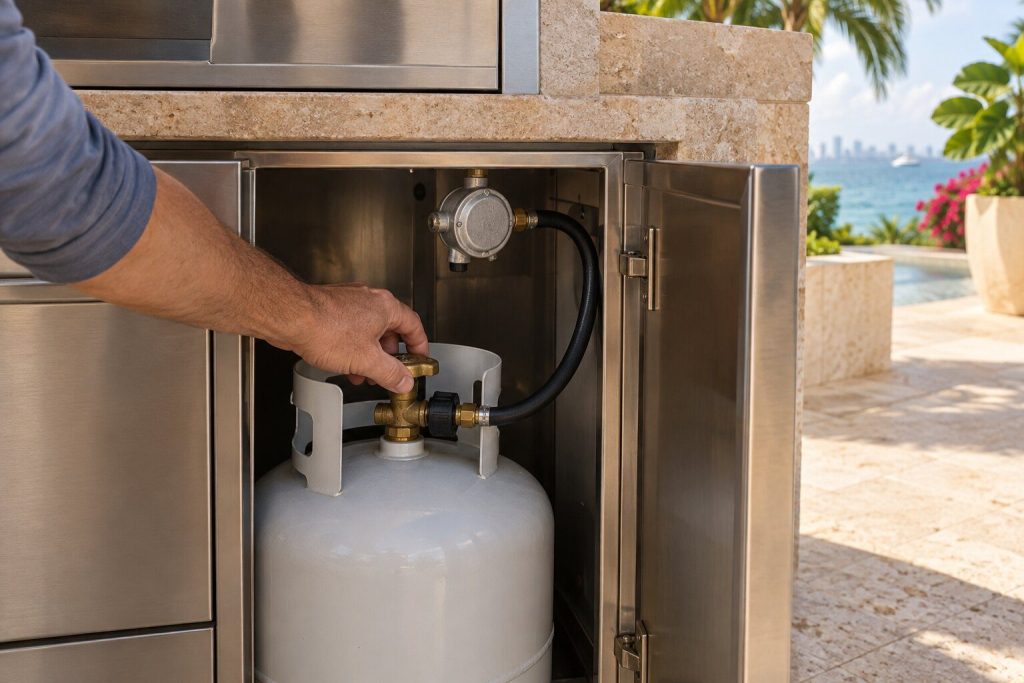
Lighting a DCS Grill in the Right Order, and Why the Order Matters
Most of the calls we take about a grill that will not light are about somebody working the problem in the wrong direction. Start at the cylinder, not at the ignitor — and open the valve slowly.
Read more -
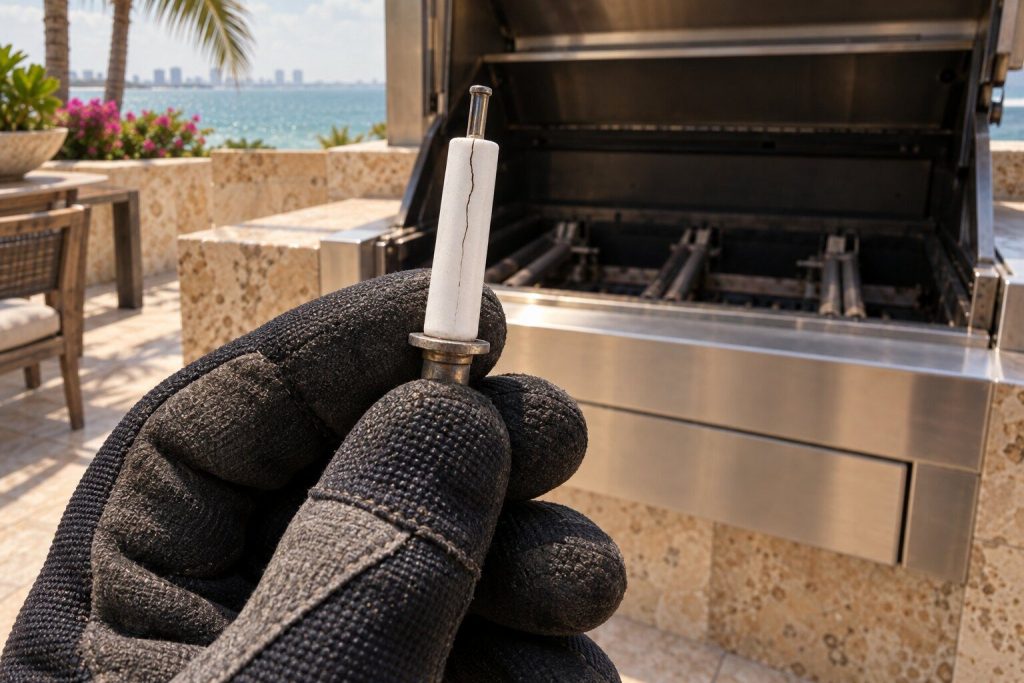
A DCS Grill Igniter That Clicks and Never Lights
The clicking means the module is working. No flame means the spark is arriving somewhere that is not the burner — and on a terrace that is almost always a cracked ceramic rather than a dead electrode.
Read more -
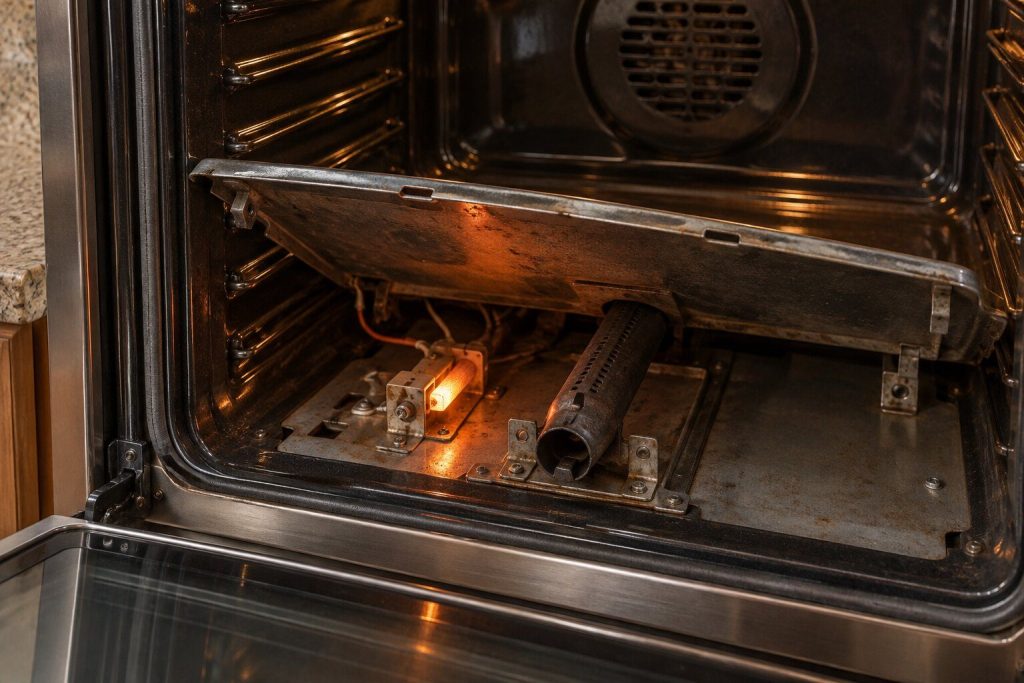
A DCS Gas Oven That Will Not Heat: the Ignitor Test Nobody Does
A gas oven ignitor rarely dies. It gets weak — glowing a convincing orange while drawing too little current to open the safety valve — and that is invisible without a meter.
Read more
Tell us the model number and what it is doing.
This article is based on:
- Official manufacturer documentation
- Internal repair procedures
- Technician repair history
- Company quality standards