Common Problems
A DCS Grill Igniter That Clicks and Never Lights
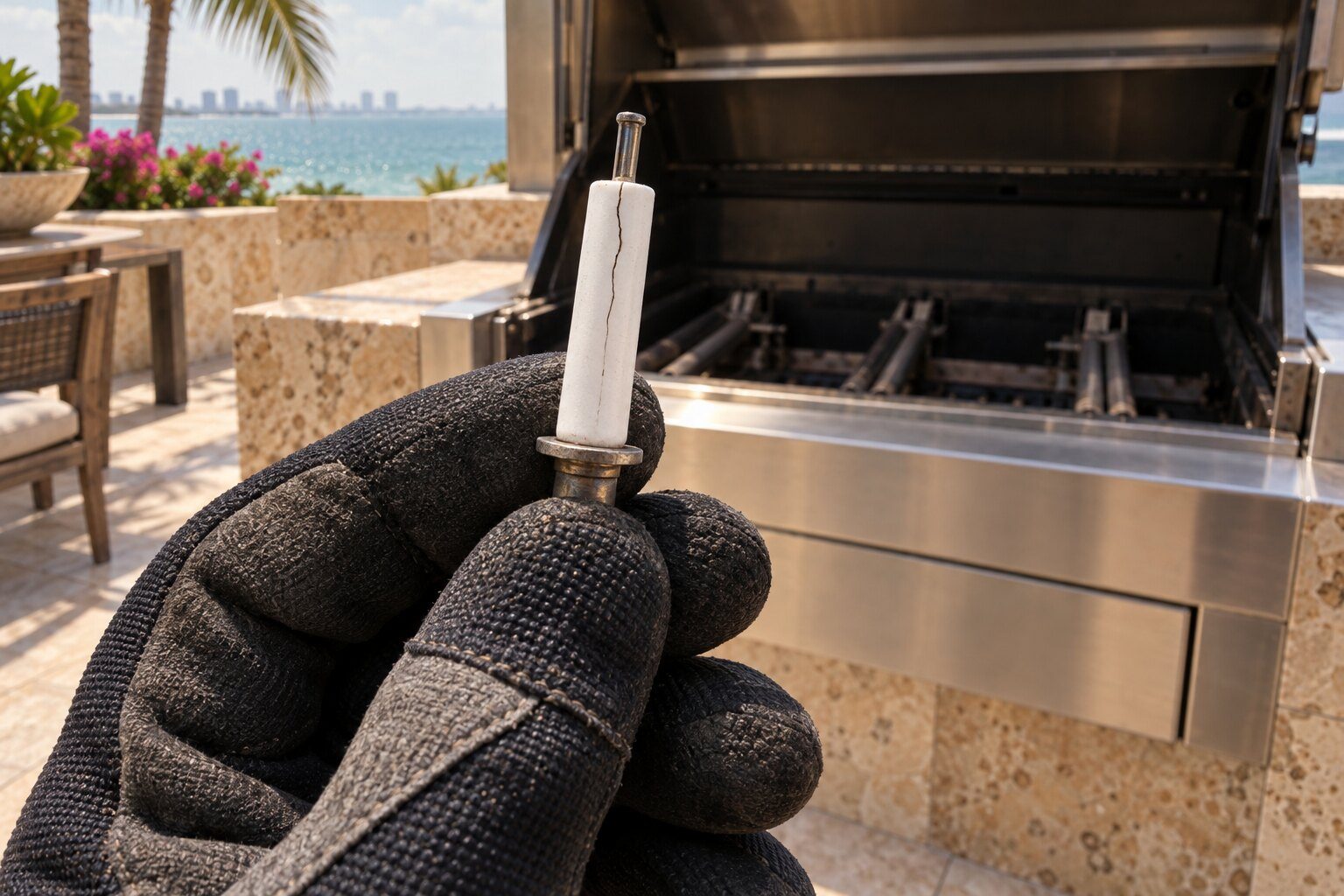
When a DCS grill igniter clicks without lighting, the ignition module is almost always healthy and the spark is going somewhere useless. Three things send it there, and on the South Florida coast they arrive in a predictable order. A ceramic insulator with a hairline craze lets the spark jump to the firebox instead of across the gap, which looks and sounds completely normal from the control panel. A corroded earth connection raises the resistance of the return path until the spark weakens or wanders. And an electrode whose gap has moved — knocked during a cleaning, or bent by a grate being dropped back in — sparks somewhere the gas is not. None of the three is visible while the grill is assembled, which is why testing the path in shadow is the whole job. The exception worth ruling out first costs nothing: if a burner will not light from a match either, the problem is gas rather than spark and this is the wrong page.
The full guide
The clicking is the good news. It means the module is generating a spark, which rules out the battery, the button and the electronics in one sound.
DCS grill igniter not working: where the spark is actually going
A grill ignitor is a circuit with a deliberate weak point. Voltage builds, jumps a set gap between the electrode tip and the burner, and lights the gas passing through it. Everything about that depends on the gap being the only easy route.
Give the spark an easier one and it takes it. It will happily jump to the firebox wall, to a bracket, to anywhere the insulation has stopped insulating — and from three feet away, standing at the control panel, that sounds identical to a spark doing its job.
The three causes, in the order this climate produces them
A crazed ceramic. The white insulator around the electrode is there to force the spark out of the tip rather than out of the side. Salt air works into hairline cracks, and once there is a conductive path through the ceramic the spark leaves early. This is the commonest single finding on waterfront grills and it is invisible unless you look at the insulator against the light.
A corroded earth. The spark has to return somewhere, usually through a bolt into the firebox. That joint sits in the same air as everything else out here, and nobody has opened it since the grill was installed. Resistance climbs, the spark weakens, and the symptom is an ignition that has been unreliable for a year.
A moved gap. Electrodes get knocked. A grate dropped back into place, a burner refitted at an angle, a brush pushed hard during cleaning. The gap widens and the spark either weakens or starts jumping somewhere else entirely.
How to see it rather than guess
Shadow is the trick. With the grill cold, the gas off at the source and the grates out, press the ignitor while watching the electrode from the side with as little light on it as you can manage. A healthy spark is a single blue jump from tip to burner. A failing one is visible as a spark leaving from the wrong place, or as several weak ones scattering.
That thirty seconds separates the three causes above better than any amount of part swapping.
The one thing to rule out first
If the burner does not light from a match either, none of this applies. Gas is not arriving, and the place to start is the cylinder valve, the regulator, or an obstruction in the burner. A grill that lights from a match and not from the spark has told you the gas is fine — which is the single most useful sentence an owner can offer on this machine.
Why we replace the path rather than the part
An ignition system on an outdoor grill is a consumable, and out here it ages as a system. A ceramic that has crazed is usually sitting on an earth that is corroding, beside leads whose insulation has hardened in six summers of ultraviolet. Replacing the one component that failed today returns you here next season.
Where the rest of the path is genuinely sound we say so and change the one part. Where it is not, doing it together is cheaper than the visits it saves.
If it turns out to be a repair
What this leads to, and what it costs
Every job on this site is priced the same way: an on-site diagnostic first, the figure agreed in writing before anybody starts.
-
Grill will not light
DCS grill will not light. Nothing here displays anything, so the work is done from four things an owner already knows: how many burners are affected, what has happened at the cylinder lately, whether a match succeeds where the spark does not, and whether there is any smell of gas. That last one ends the process on the spot. The other three separate a supply problem from an ignition problem from a burner problem, and in this market the first is far commoner than people expect.
- How many burners are affected cuts the search in half before anyone arrives
- Lights from a match but not from the ignitor: the gas is fine, the spark is not
- A cylinder valve opened too quickly trips a limiter and starves the whole grill
-
Ignition and electrode service
Everything between the button and the flame. On the coast this is the fastest-ageing system on an outdoor kitchen: ceramic insulators absorb salt and crack, electrode gaps move, earth paths corrode where they are bolted to a firebox, and battery modules sit in a damp compartment for years. The symptom is almost always the same — clicking with no light, or lighting on the fourth press instead of the first — and the cause is almost never the same twice. We service the path rather than swapping the part that is easiest to reach.
- Ceramic, electrode, wire, earth and module — a path, not a part
- Lighting on the fourth press is a problem, not a personality
- The same service covers the island's side and power burners
-
Grill signal The grill will not light
DCS grill · no code is displayed — work backwards from the supply. Three separate systems can produce this and they are checked from the far end inwards: the supply, the ignition, then the burner.
What the lights are telling you
Questions people ask about this
Should I just replace the electrode?
It is the obvious move and it fixes this perhaps half the time. The other half the electrode was sound and the earth or the ceramic was the problem, so the new part sparks exactly as badly as the old one did. Testing the path takes minutes and decides which you have.
Why does it light on the fourth press and not the first?
Because the spark is weak rather than absent, and it is finding its way across a gap it should be crossing immediately. That is a real problem with a cause, not a grill with a personality, and it gets worse rather than settling down.
Can I keep lighting it with a match in the meantime?
On a grill, carefully — bring the flame to the burner first and open the gas after, never the other way round. What we would stop doing is pressing the ignitor repeatedly with gas flowing, because the whole firebox fills before something eventually catches it.
Common Problems
More guides like this one
-
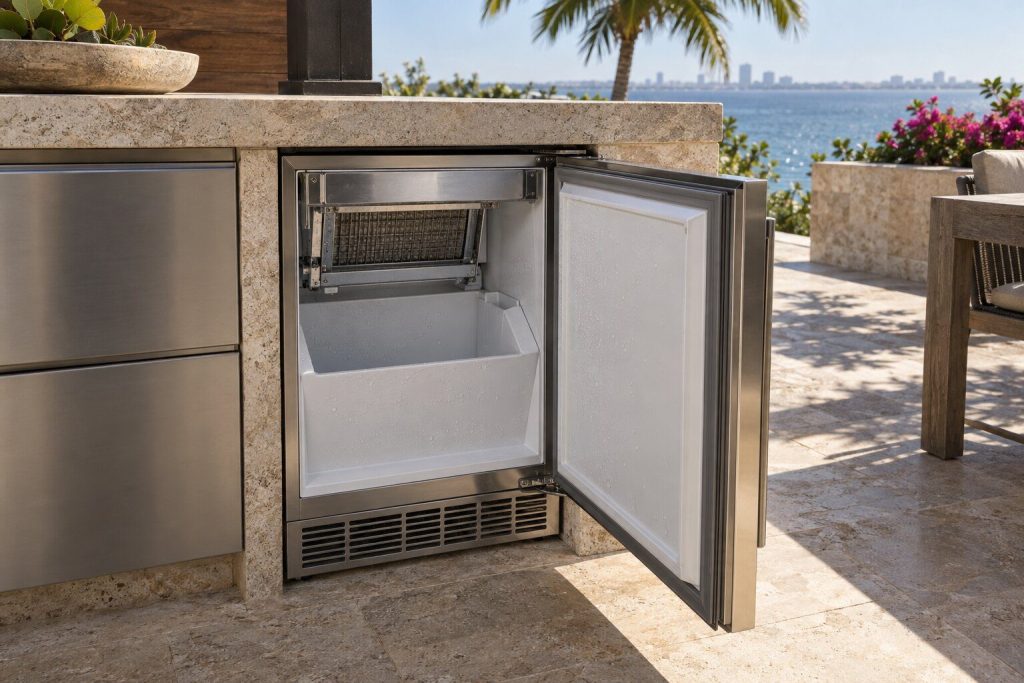
A DCS Outdoor Ice Machine That Has Stopped Making Ice
An ice machine in an island has three inputs a refrigerator does not: water, a drain, and an August it has to reject heat into. Two of the three are not appliance repairs.
Read more -
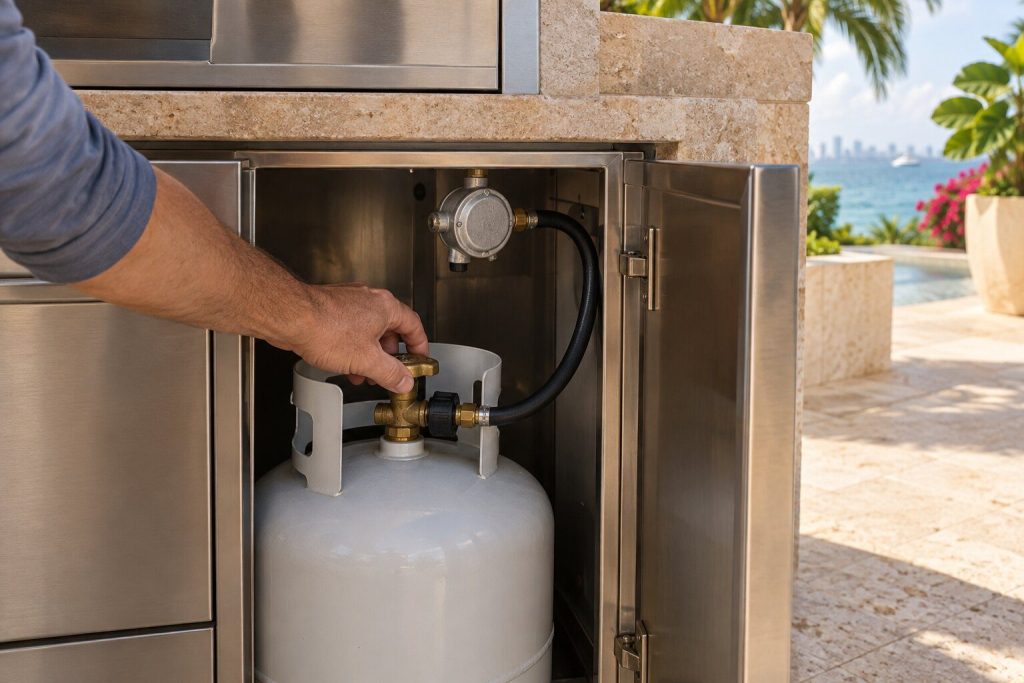
Lighting a DCS Grill in the Right Order, and Why the Order Matters
Most of the calls we take about a grill that will not light are about somebody working the problem in the wrong direction. Start at the cylinder, not at the ignitor — and open the valve slowly.
Read more -
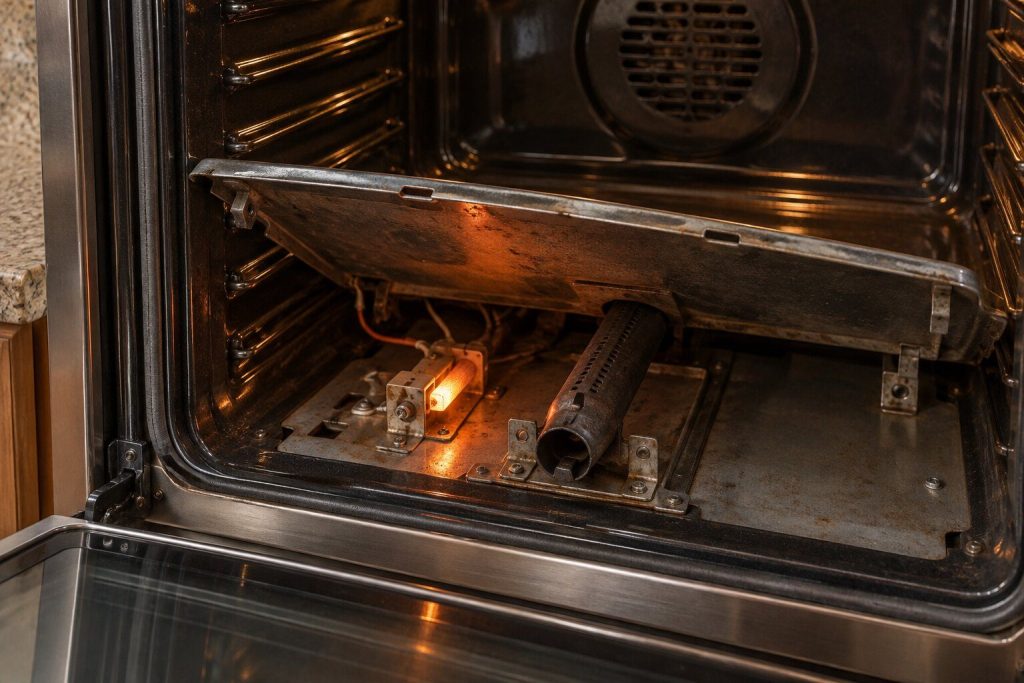
A DCS Gas Oven That Will Not Heat: the Ignitor Test Nobody Does
A gas oven ignitor rarely dies. It gets weak — glowing a convincing orange while drawing too little current to open the safety valve — and that is invisible without a meter.
Read more
Tell us the model number and what it is doing.
This article is based on:
- Official manufacturer documentation
- Internal repair procedures
- Technician repair history
- Company quality standards