Service
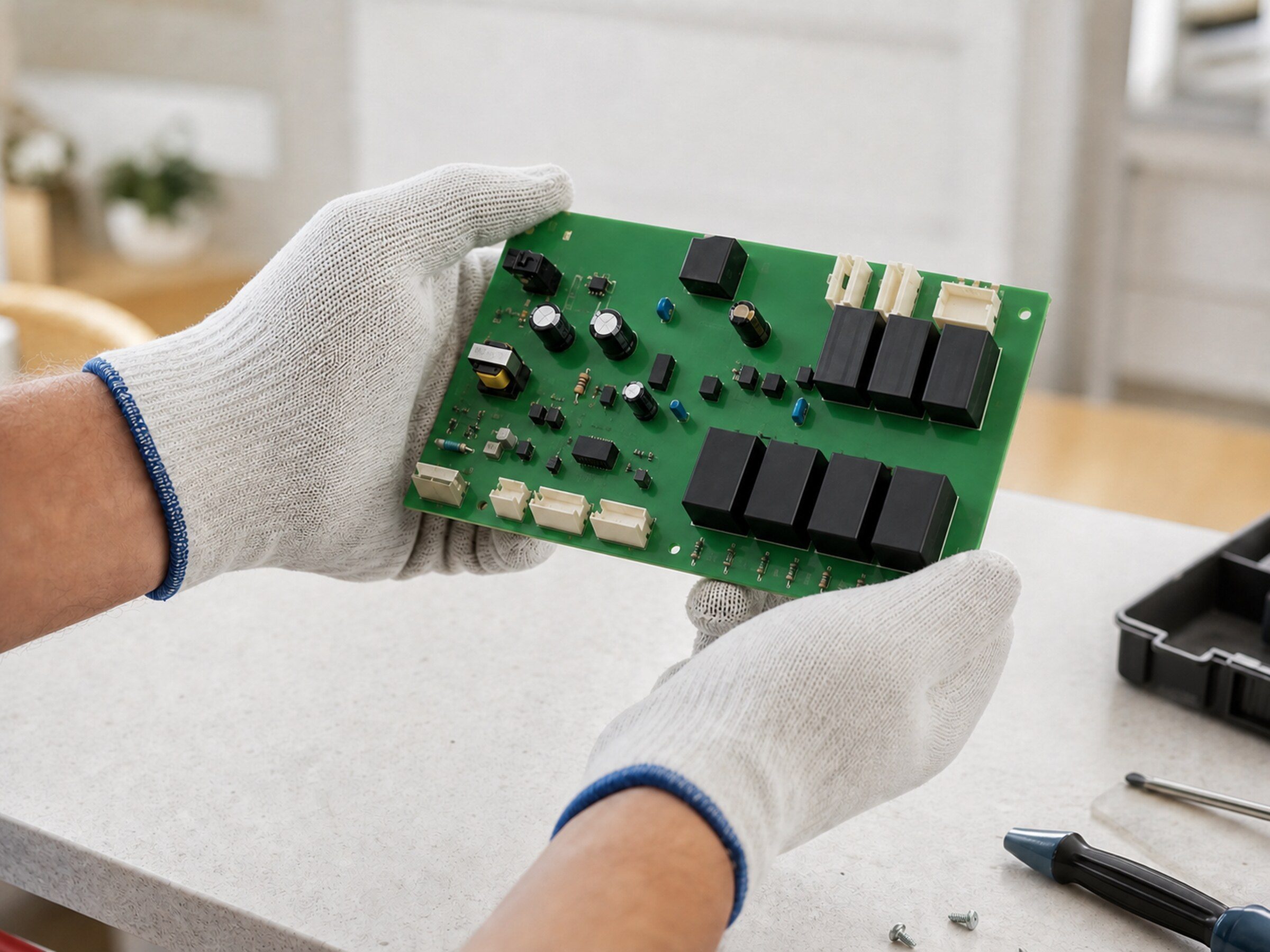
DCS control board repair
When the electronics rather than the mechanics are the problem. Indoors this brand publishes an error table that names board errors directly — a missing master or slave power board, a software error, a communication failure between boards, and one code that fires when the control does not recognize which model it is fitted to. That last one is the interesting one: it usually appears after a part has been replaced with the wrong variant, and no amount of further replacing will settle it until the model identity matches. We diagnose before we order, because a board is the most expensive thing on most of these machines and the second most commonly replaced without need.
- From $95 diagnostic, credited to the repair
- 59 cities and neighborhoods covered
- OEM parts available on order
- In writing the price, before anything is opened
Before you read on
What this job costs and how it is agreed
A starting figure, not a quote. What moves it is the model, how the unit is built in and which part it needs — settled after the on-site diagnostic.
Starts at
from $295
After a diagnostic from $95, which comes off the bill when you go ahead.
or call (305) 526-4714
Diagnostic
From $95, credited to the repair
The price
In writing, before anything is opened
Warranty
On the labor we performed
On the visit
How this visit actually goes
The same order every time, so nothing is opened and nothing is charged before you have seen the figure and said yes.
-
01
Read the whole code and take it seriously
The letter alone narrows nothing; the digits after it are the message. Five of the published sub-errors point at different components, and one points at an earlier repair rather than at a failure.
-
02
Rule out the things that imitate a dead board
A supply problem, a failed sensor reporting nonsense, a connector that has corroded — on outdoor-adjacent equipment especially — and a touch panel that has taken water. Each of these presents as a control failure and none of them is one.
-
03
Fit the right variant and confirm the identity
Boards within a family are not interchangeable, and the model identity set on the replacement has to match the machine. We confirm that on the bench and again in the kitchen before the job is called finished.
Applies to
The DCS units we carry this work out on
-
Commercial-style, dual fuel and all gas DCS range repair in Miami
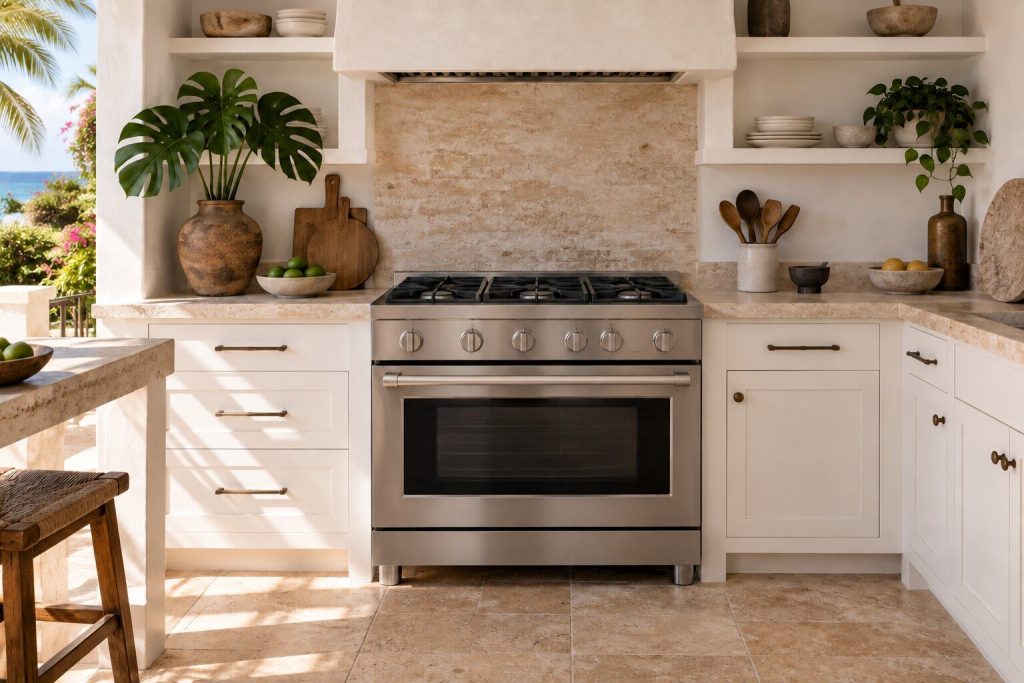
Indoors the badge means a commercial-looking range: heavy grates, high-output sealed burners, a single deep oven or a pair, and often a griddle or a grill section in place of two burners. It is built to be cooked on hard, and the calls reflect that — ignition on one burner, an oven that will not hold the temperature it is set to, a door that has stopped sealing, a fan that has become loud. Dual fuel and all-gas versions fail in different places, so the first thing we establish is which one is in the kitchen. Unlike the outdoor half of this brand, a range can tell us what is wrong: the indoor line publishes decoded error tables, and an F-code with its sub-error narrows the visit before we arrive.
- Dual fuel and all gas — the same cabinet, two different service stories
- A griddle or grill section instead of burners changes what the top is asked to do
- This half of the brand does publish codes, and they are decoded rather than numbered
-
Gas and induction · drop-in, with the range top's burners DCS cooktop repair in Miami
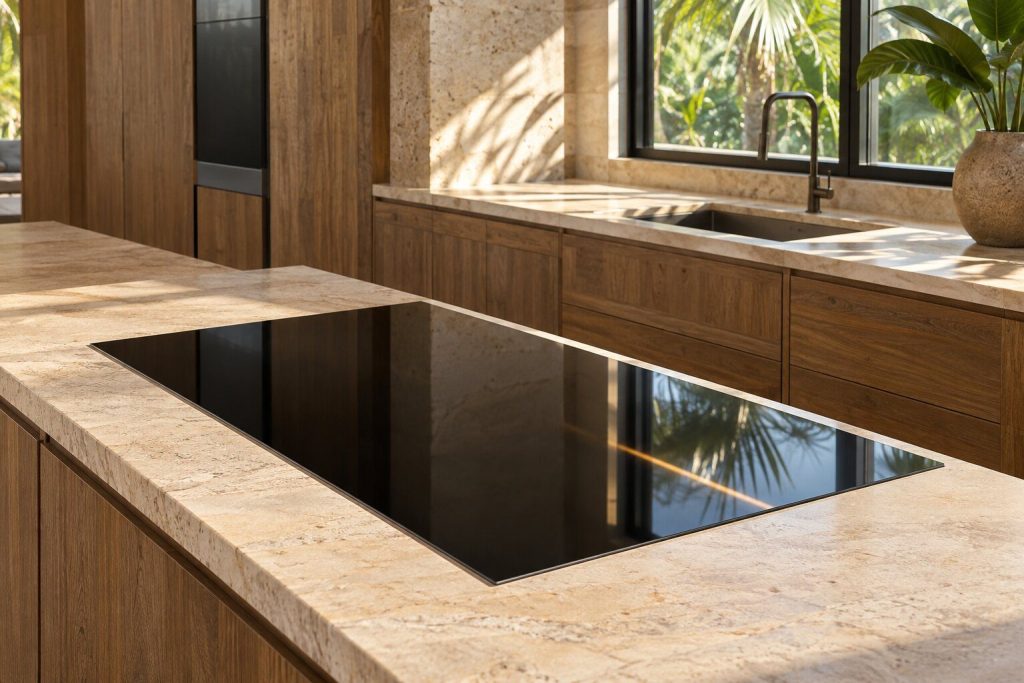
Two quite separate machines share this page because they share a cutout. A gas cooktop is the range's top without the oven under it, and it fails the way that top fails — ignition, seating, a blocked port, a switch. An induction cooktop is an electronics problem wearing a glass lid, and it announces itself in code: this make publishes a short, decoded list, and one of those codes is a voltage complaint rather than a problem in the machine at all. What is in the stone decides the whole visit — down to whether the person who finally solves it works for us or for the power company.
- Gas: ignition, caps, ports and switches — the same story as the range top
- Induction: a decoded code list, and one entry is about the supply rather than the cooktop
- The cutout and the worktop decide whether anything can come out at all
-
Single and double, built into a tall run DCS wall oven repair in Miami
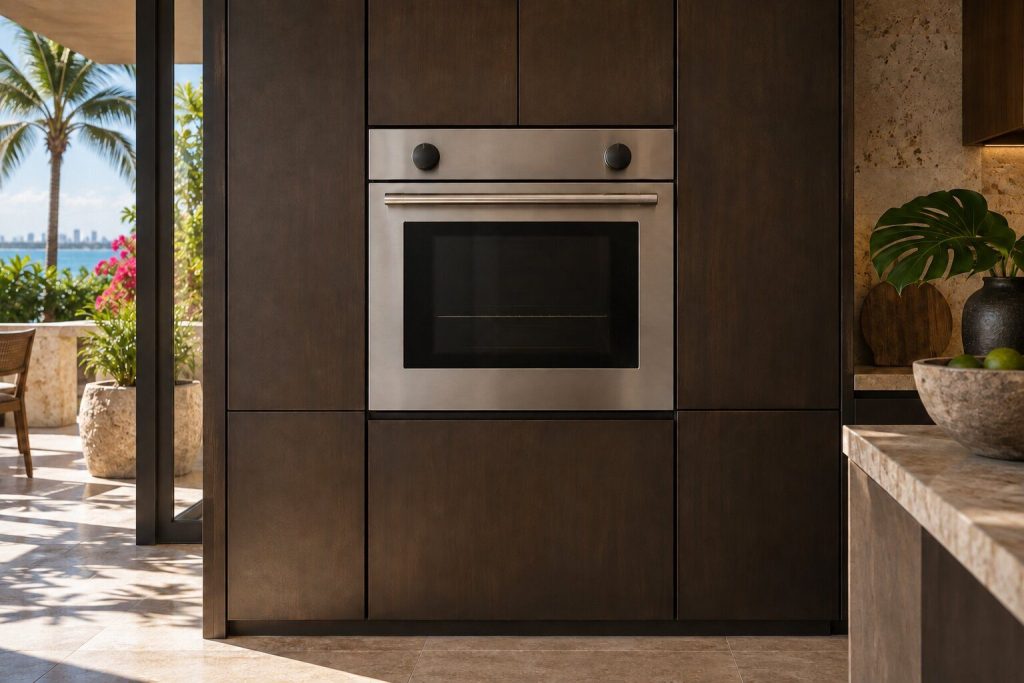
A wall oven is a cavity in a cabinet, and everything about the repair follows from that. It is heavy, it is screwed to the joinery, it sits above waist height, and behind it is a space somebody sized once and nobody has looked at since. The problems are the ordinary ones — heat that is not what the dial says, a door that has lost its seal or its hinge tension, a fan that has become loud, a control that has stopped responding — but the access is not ordinary, which is why we ask about the cabinet before the symptom. This make's wall ovens publish a decoded error table, and the sub-error after the F is where the real information is.
- Built in above waist height — the cabinet decides the visit before the problem does
- The published table decodes F1 into separate board, software and communication errors
- A double oven is two cavities and frequently one control — which one is wrong matters
-
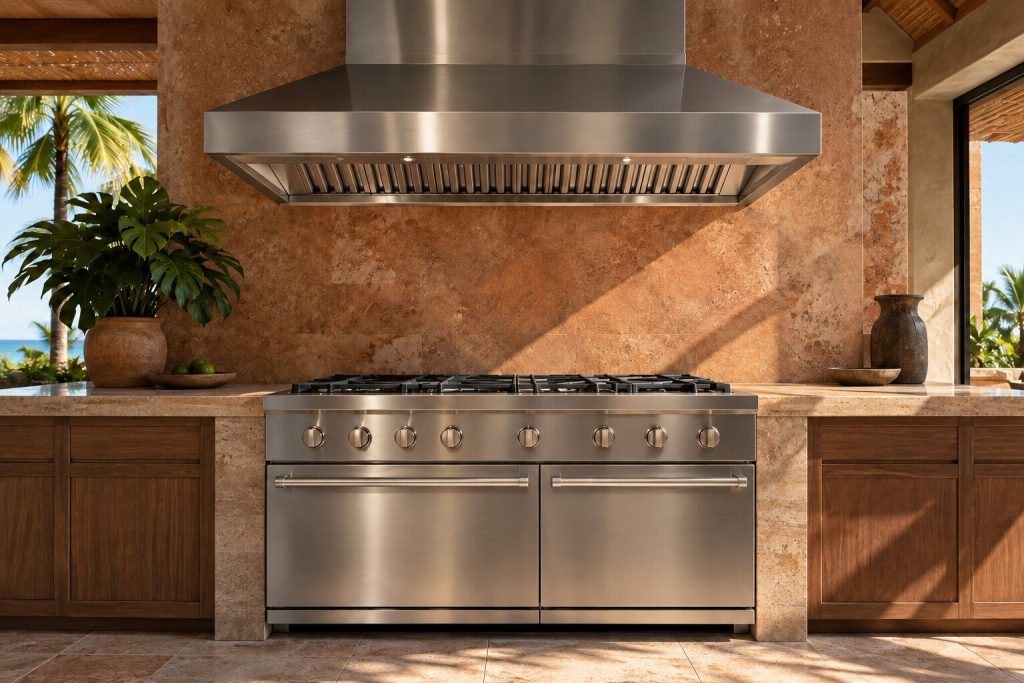
Over the range indoors, over the grill outside DCS range hood repair in Miami
A hood is the machine nobody thinks about until the kitchen stops clearing, and on this badge there are two of them living quite different lives. Indoors it sits over a high-output range and is asked to move a great deal of air quietly; outdoors it sits over a grill in the weather and is asked to survive. The problems divide the same way — indoor hoods bring blowers, speed controls, lights and baffle filters that nobody has washed; outdoor hoods bring corrosion, water where the electrics are, and a duct that has become a home for something. Whether the hood actually vents outside or recirculates through a filter is the first thing we establish, because half the complaints we hear about smoke are a hood doing exactly what it was installed to do.
- Indoor and outdoor hoods on one badge, and they fail for opposite reasons
- Vented or recirculating decides whether the complaint is a problem at all
- Baffle filters are the maintenance nobody was told about
-
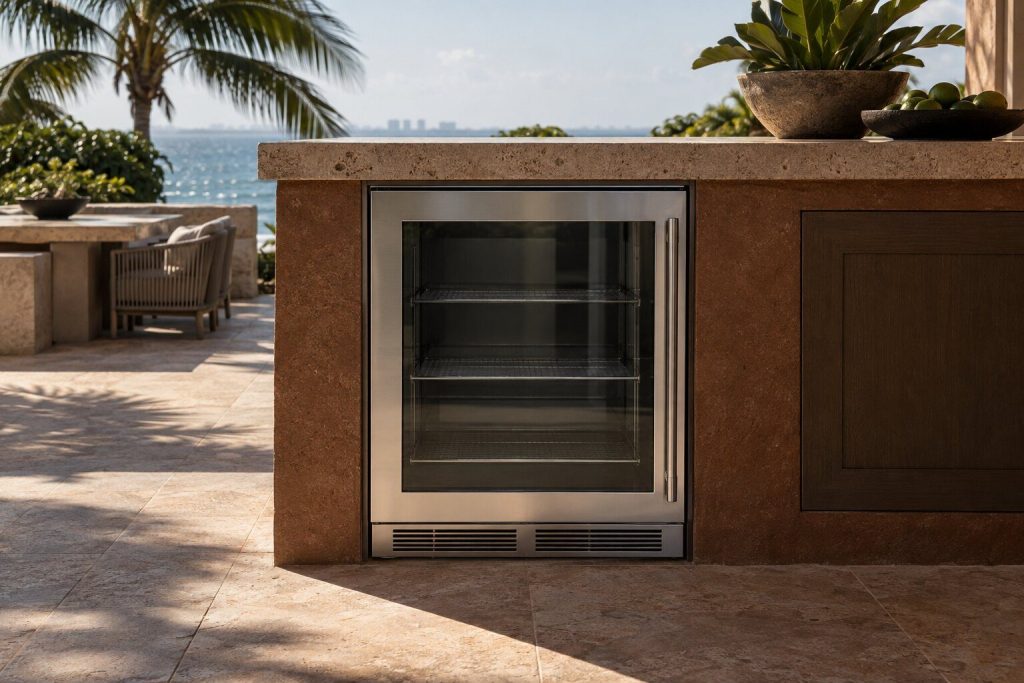
Outdoor-rated, under the counter of the island DCS beverage center repair in Miami
The one cold machine on a hot brand, and it earns its place by living outside. An outdoor-rated beverage center sits under the counter of the island, a meter from a grill, in ambient temperatures the indoor version of the same cabinet is not built for. That changes what fails and how it presents: a unit running constantly and never reaching temperature in August is often doing everything right in conditions it cannot win, and the fix is ventilation or shade rather than a compressor. The genuine problems are the ordinary refrigeration ones — a seal, a fan, a drain, a condenser packed with dust and salt — plus one this climate adds, which is condensation where an indoor machine would have had none.
- Outdoor-rated, and the rating is the whole story in a Miami August
- A condenser in an island collects salt and dust faster than any indoor cabinet
- Running constantly is not automatically a problem — the ambient may be the answer
In more detail
About DCS control board repair
Blamed more than anything else, guilty less than anything else
A board is the most expensive item on most of these machines and the second most commonly replaced without need, so most of this work is the elimination that rules it in. Voltage drooping under load, insulation worn through where a loom crosses a hot edge, green creeping into a plug, a probe feeding the control impossible numbers — every one of those presents as an expired board and costs very much less to put right. Peculiar to this badge is the published sub-error raised when the control does not recognize the model it is fitted to. That is not a failure at all. It is a mismatch left behind by an earlier repair, and no amount of further replacing clears it until the identity matches the machine.
This article is based on:
- Official manufacturer documentation
- Internal repair procedures
- Technician repair history
- Company quality standards
Before you book
Questions about DCS control board repair
Is board-level repair an option?
It turns on which component died. Relays and supply-side parts can be dealt with on a bench; a processor cannot. Which of those we face is established before either route is priced, since a bench repair that gives out three months later leaves everyone worse off.
Why do you ask whether anybody has worked on it?
Because one of the published codes on this make is caused by a previous repair rather than by a failure. A replacement fitted from the wrong variant, or fitted without its model identity set, produces exactly that code — and a second board arrives with the same disagreement.
Where we do it
Across Miami-Dade, Broward, and Palm Beach
Same terms everywhere we go: an on-site diagnostic first, the price agreed in writing, and the exact figure confirmed once we have seen the unit.
Neighborhoods people ask for by name