Service
DCS grease management service
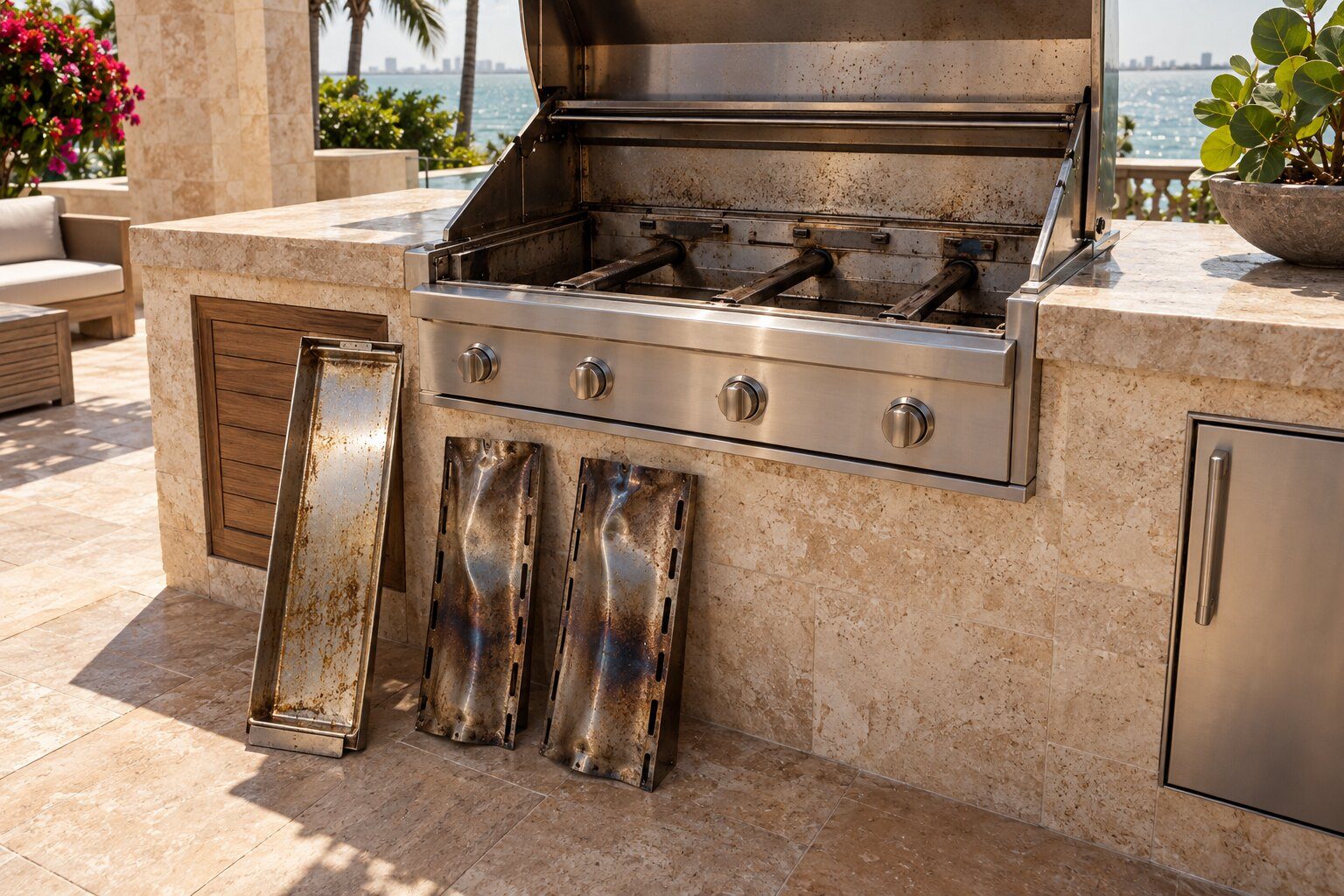
The service that is sold as cleaning and is really fire safety. A grill is designed to take rendered fat away from the flame — radiants spread the heat and shed the drippings, a tray collects what comes through, a channel takes it somewhere it can be emptied. When any part of that path is loaded, missing or refitted wrong, fat arrives on the burners instead, and the result is the flare-ups people describe as the grill 'getting angry'. In this market we see this most on grills that are spotless on the grates and untouched underneath. It is the cheapest work on an outdoor kitchen and the one with the highest consequence.
- From $95 diagnostic, credited to the repair
- 59 cities and neighborhoods covered
- OEM parts available on order
- In writing the price, before anything is opened
Before you read on
What this job costs and how it is agreed
A starting figure, not a quote. What moves it is the model, how the unit is built in and which part it needs — settled after the on-site diagnostic.
Starts at
from $165
After a diagnostic from $95, which comes off the bill when you go ahead.
or call (305) 526-4714
Diagnostic
From $95, credited to the repair
The price
In writing, before anything is opened
Warranty
On the labor we performed
On the visit
How this visit actually goes
The same order every time, so nothing is opened and nothing is charged before you have seen the figure and said yes.
-
01
Strip the path and show you what was in it
Grates, radiants, the tray and the channel. People are frequently shocked, and that is the point — the photograph is worth more than the explanation.
-
02
Clean, inspect and replace what has burned through
Radiants that have warped or holed no longer shed the way they should. A tray that has corroded through delivers fat to the cabinet beneath it rather than to the cup.
-
03
Refit it as a system and explain the interval
Orientation matters and is easy to get wrong. Before we leave we show you how the parts go back and roughly how often, for the way you actually cook, this needs doing again.
Applies to
The DCS units we carry this work out on
-
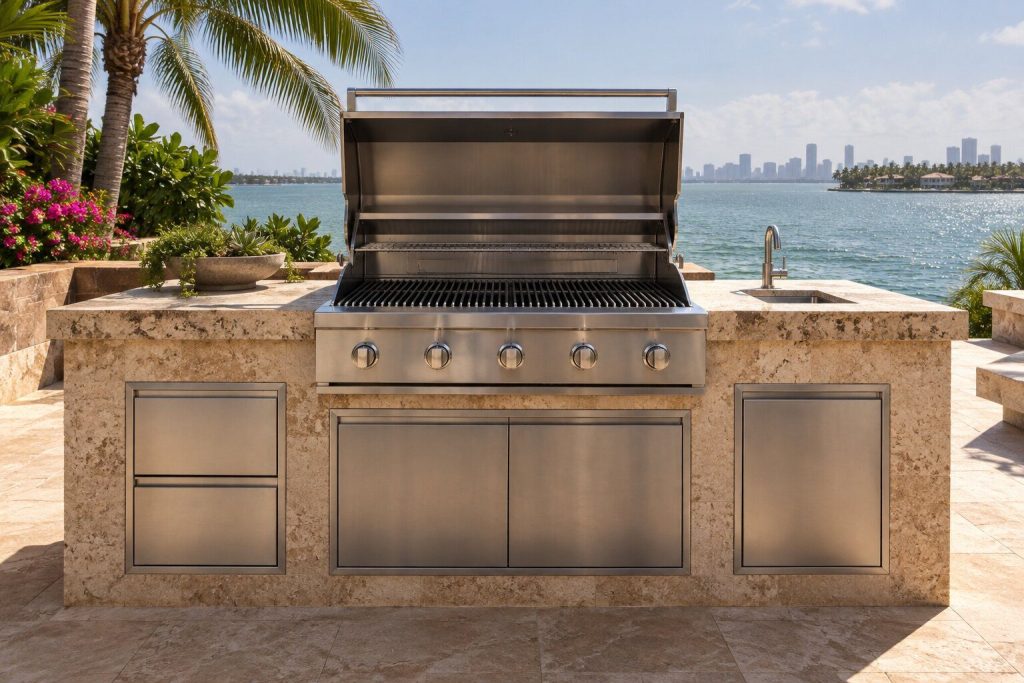
Built into the island, or on a cart · Series 7 and Series 9 DCS grill repair in Miami
This is the machine most people mean when they say DCS, and in South Florida it is the one that ages fastest. A grill dropped into a stone island is plumbed to gas, wired for its lights and rotisserie, and then left to face salt air for eleven months of the year with a cover on it. What fails is rarely the thing the owner expects: burners and ignitors are consumables here, the radiant trays and grease tray are part of the fire risk rather than part of the cleaning, and half the calls we take turn out to be a supply problem at the cylinder or the manifold rather than anything inside the hood. The ones built into an island are the slower visits — the surround decides what can come out and in which order.
- Built-in and cart versions of the same cooking platform — the surround decides the visit
- No error codes anywhere on this half of the brand: the grill tells you in flame, smell and sound
- Salt air is the second owner of every outdoor stainless part in this market
-
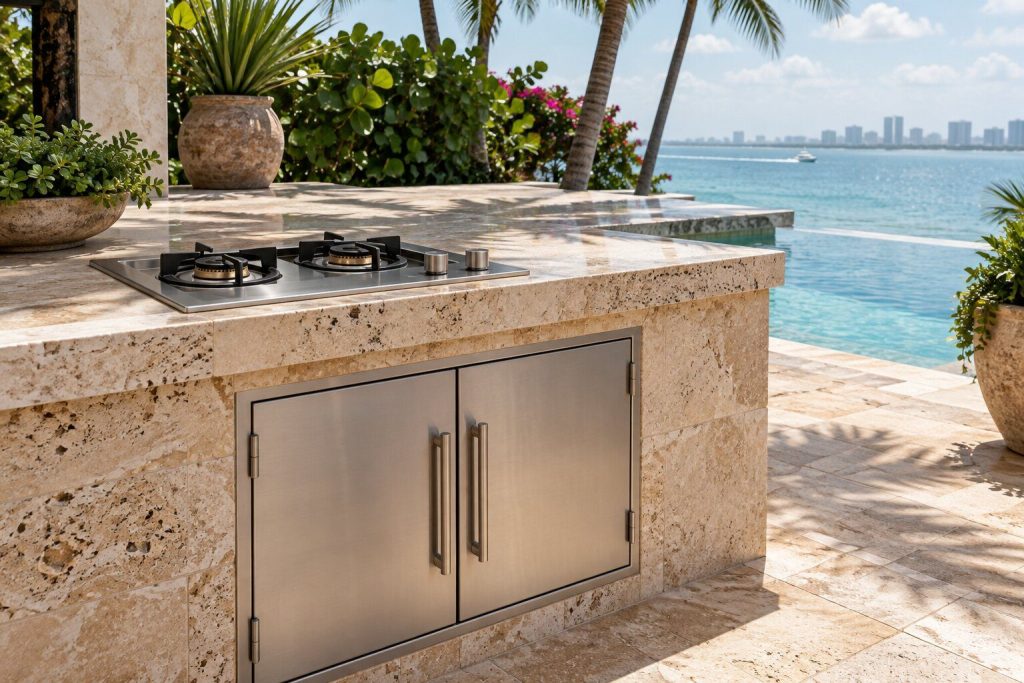
Side and power burners, warming drawers, doors and drawers DCS outdoor kitchen appliance repair in Miami
The grill is the part people photograph; the rest of the island is the part that generates the calls. A DCS outdoor kitchen is a run of separate machines sharing one gas manifold and one stone surround — side burners and power burners for a pot, a warming drawer, access doors and drawer stacks, sometimes a vent hood over the whole thing. Each has its own failure and its own access, and they fail in an order the climate sets rather than one the catalog does. Doors and drawers seize long before anything gas-fired stops working, because the hardware is what the rain and the salt reach first.
- Several machines, one manifold and one surround — a supply problem shows up on all of them at once
- Drawer runners, hinges and latches are the first casualties of an outdoor install
- The stone is the constraint: what can be removed was decided when the island was built
In more detail
About DCS grease management service
Sold elsewhere as cleaning; here it is fire safety
A grill is built to carry rendered fat away from the flame. Radiant trays spread the heat and shed what falls on them, a tray beneath collects it, a channel takes it to a cup that can be emptied. When any part of that is loaded, missing or refitted the wrong way round, the drippings arrive on the burners instead — and that is the flare-up people describe as the grill turning on them. We see it most on grills that are immaculate on the grates and untouched one layer below, and in this market it is the commonest cause of a grill fire. It is also the cheapest work on the island, which is the least comfortable part of the arithmetic.
This article is based on:
- Official manufacturer documentation
- Internal repair procedures
- Technician repair history
- Company quality standards

Before you book
Questions about DCS grease management service
How often does this need doing?
It depends entirely on what gets cooked. A grill used for fish and vegetables is a different machine from one that does a brisket most weekends. We show you the state of the path when we open it, which tells you more about your interval than any general figure.
Can I do it myself?
The clearing, yes, and it is worth doing between visits. What people get wrong is refitting: the radiants have an orientation, and upside down they defeat the whole design while looking perfectly fitted. We show you how they go back before we leave.
Where we do it
Across Miami-Dade, Broward, and Palm Beach
Same terms everywhere we go: an on-site diagnostic first, the price agreed in writing, and the exact figure confirmed once we have seen the unit.
Neighborhoods people ask for by name