Service
DCS salt air protection service
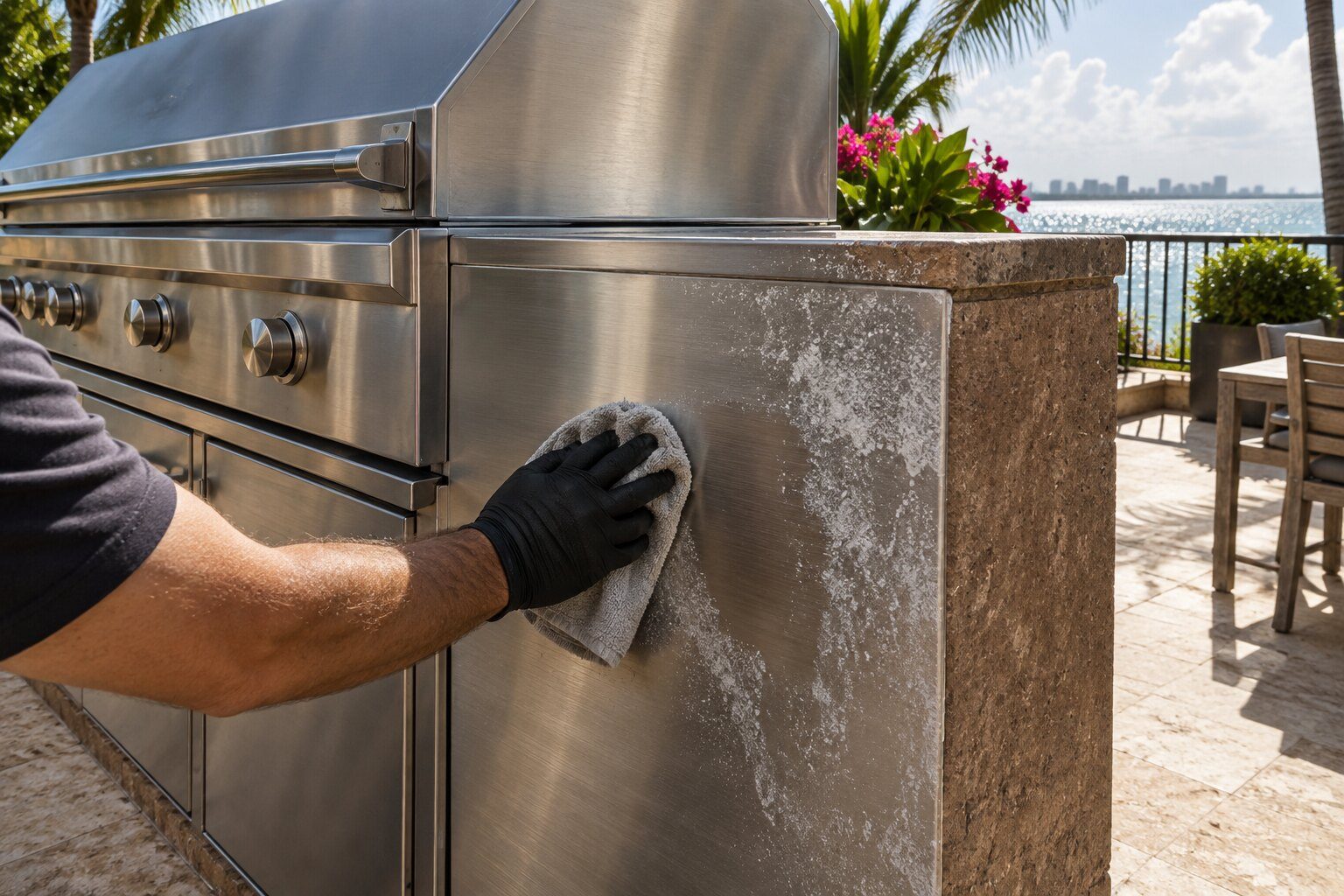
A visit that exists because of where this equipment lives. Four of the seven machines on this site stand outdoors in air that carries salt, and the difference between a kitchen four blocks from the water and one four miles inland is measured in years of service life. This is the planned, unglamorous work that changes that number: stainless cleaned and protected in the right direction, fixings inspected and replaced with the right grade before they seize, ignition components and electrical housings treated and re-sealed, hardware caught while it is stiff rather than after it is stuck. It is not a cosmetic service, although the kitchen does look better afterwards.
- From $95 diagnostic, credited to the repair
- 59 cities and neighborhoods covered
- OEM parts available on order
- In writing the price, before anything is opened
Before you read on
What this job costs and how it is agreed
A starting figure, not a quote. What moves it is the model, how the unit is built in and which part it needs — settled after the on-site diagnostic.
Starts at
from $195
After a diagnostic from $95, which comes off the bill when you go ahead.
or call (305) 526-4714
Diagnostic
From $95, credited to the repair
The price
In writing, before anything is opened
Warranty
On the labor we performed
On the visit
How this visit actually goes
The same order every time, so nothing is opened and nothing is charged before you have seen the figure and said yes.
-
01
Survey what the salt has already reached
Stainless surfaces, fixings, ignition components, electrical housings, hinges and runners, and the undersides where nobody looks. What we find sets what the visit is.
-
02
Clean and protect in the right order and direction
Grain direction matters on stainless, and so does what is used. Done wrong this accelerates the problem, which is why there is a service for it rather than a bottle.
-
03
Replace what is past treating and seal what is open
Seized or pitted fixings out and the correct grade in, housings resealed, connections remade. Then a note of what to watch before the next visit.
Applies to
The DCS units we carry this work out on
-
Built into the island, or on a cart · Series 7 and Series 9 DCS grill repair in Miami
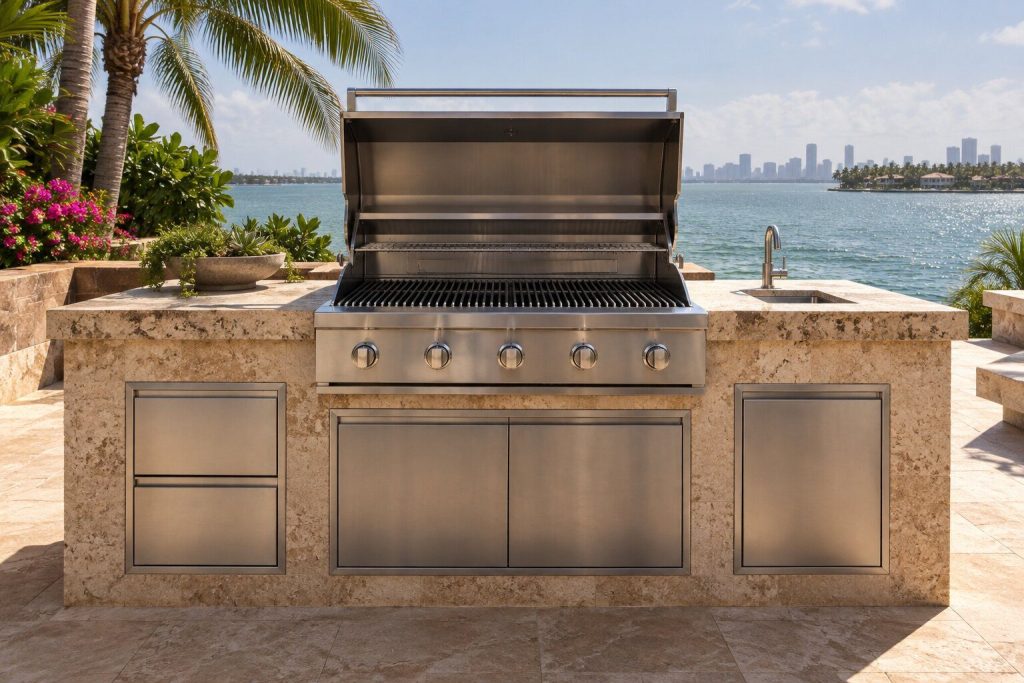
This is the machine most people mean when they say DCS, and in South Florida it is the one that ages fastest. A grill dropped into a stone island is plumbed to gas, wired for its lights and rotisserie, and then left to face salt air for eleven months of the year with a cover on it. What fails is rarely the thing the owner expects: burners and ignitors are consumables here, the radiant trays and grease tray are part of the fire risk rather than part of the cleaning, and half the calls we take turn out to be a supply problem at the cylinder or the manifold rather than anything inside the hood. The ones built into an island are the slower visits — the surround decides what can come out and in which order.
- Built-in and cart versions of the same cooking platform — the surround decides the visit
- No error codes anywhere on this half of the brand: the grill tells you in flame, smell and sound
- Salt air is the second owner of every outdoor stainless part in this market
-

Side and power burners, warming drawers, doors and drawers DCS outdoor kitchen appliance repair in Miami
The grill is the part people photograph; the rest of the island is the part that generates the calls. A DCS outdoor kitchen is a run of separate machines sharing one gas manifold and one stone surround — side burners and power burners for a pot, a warming drawer, access doors and drawer stacks, sometimes a vent hood over the whole thing. Each has its own failure and its own access, and they fail in an order the climate sets rather than one the catalog does. Doors and drawers seize long before anything gas-fired stops working, because the hardware is what the rain and the salt reach first.
- Several machines, one manifold and one surround — a supply problem shows up on all of them at once
- Drawer runners, hinges and latches are the first casualties of an outdoor install
- The stone is the constraint: what can be removed was decided when the island was built
-

Over the range indoors, over the grill outside DCS range hood repair in Miami
A hood is the machine nobody thinks about until the kitchen stops clearing, and on this badge there are two of them living quite different lives. Indoors it sits over a high-output range and is asked to move a great deal of air quietly; outdoors it sits over a grill in the weather and is asked to survive. The problems divide the same way — indoor hoods bring blowers, speed controls, lights and baffle filters that nobody has washed; outdoor hoods bring corrosion, water where the electrics are, and a duct that has become a home for something. Whether the hood actually vents outside or recirculates through a filter is the first thing we establish, because half the complaints we hear about smoke are a hood doing exactly what it was installed to do.
- Indoor and outdoor hoods on one badge, and they fail for opposite reasons
- Vented or recirculating decides whether the complaint is a problem at all
- Baffle filters are the maintenance nobody was told about
-
Outdoor-rated, under the counter of the island DCS beverage center repair in Miami
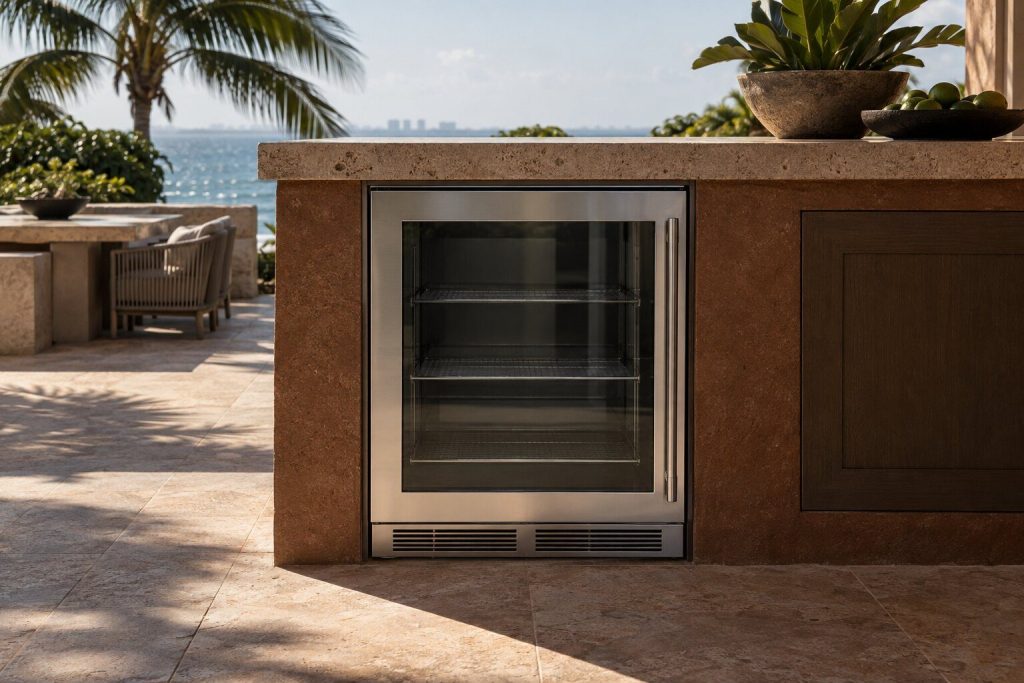
The one cold machine on a hot brand, and it earns its place by living outside. An outdoor-rated beverage center sits under the counter of the island, a meter from a grill, in ambient temperatures the indoor version of the same cabinet is not built for. That changes what fails and how it presents: a unit running constantly and never reaching temperature in August is often doing everything right in conditions it cannot win, and the fix is ventilation or shade rather than a compressor. The genuine problems are the ordinary refrigeration ones — a seal, a fan, a drain, a condenser packed with dust and salt — plus one this climate adds, which is condensation where an indoor machine would have had none.
- Outdoor-rated, and the rating is the whole story in a Miami August
- A condenser in an island collects salt and dust faster than any indoor cabinet
- Running constantly is not automatically a problem — the ambient may be the answer
In more detail
About DCS salt air protection service
A visit that exists because of where this equipment stands
Four of the seven machines on this badge live in air that carries salt, and the difference between a kitchen four blocks from the water and one four miles inland is measured in years of service life rather than in appearance. This is the planned work that changes that number, and none of it is polishing. Stainless is cleaned and protected with the grain and with something that does not strip the passive layer that makes it stainless in the first place. Fixings are inspected and replaced with the right grade before they seize rather than after. Ignition components and electrical housings are treated and resealed, and hardware is caught while it is still stiff.
This article is based on:
- Official manufacturer documentation
- Internal repair procedures
- Technician repair history
- Company quality standards

Before you book
Questions about DCS salt air protection service
Does cleaning it ourselves help?
A great deal, and it is the single most effective thing an owner can do: fresh water and drying removes the salt film that holds moisture against the steel. What hurts is abrasives, chlorine-based cleaners and scrubbing across the grain, all of which damage the layer that protects it.
Is pitting reversible?
Light surface speckling can often be improved. Actual pitting is metal that has gone, and aggressive polishing removes more of it along with more of the passive layer. Where it is structural — a hinge pin, a mount, a fixing — replacement is the honest answer.
Where we do it
Across Miami-Dade, Broward, and Palm Beach
Same terms everywhere we go: an on-site diagnostic first, the price agreed in writing, and the exact figure confirmed once we have seen the unit.
Neighborhoods people ask for by name