Common Problems
A DCS Cooktop That Clicks After the Burner Is Already Lit
A DCS cooktop that keeps clicking is two separate problems described in the same words, and which one you have is settled by a single observation: does the clicking stop once the flame catches? If it does, the ignition is behaving exactly as designed and whatever brought you here is elsewhere. If it carries on with the burner happily alight — or worse, if it clicks with every dial turned off — then the ignition module is being told to spark by a switch that has lost track of where its dial is. The usual cause is moisture, which is why this so often begins the day after a thorough clean or a serious boil-over. It generally dries out on its own in a warm kitchen within a day or two. Where it does not, the switch has failed and it is a modest part. What it is not, in either case, is the electrode or the module: those are doing what they are told.
The full guide
There are two complaints here and they sound identical when described over a telephone. Separating them takes one look at the burner.
DCS cooktop igniter keeps clicking: the question that splits it
Light the burner and watch. Does the clicking stop?
It stops. The ignition is doing precisely its job: spark until there is flame, then stop. Nothing about that needs fixing.
It carries on. The module is still being asked to spark by a burner that is already lit, which means something upstream has not noticed. That is the switch behind the dial.
It clicks with everything off. Same problem, further along. The module is being asked to spark by a cooktop nobody is using.
Why moisture does this
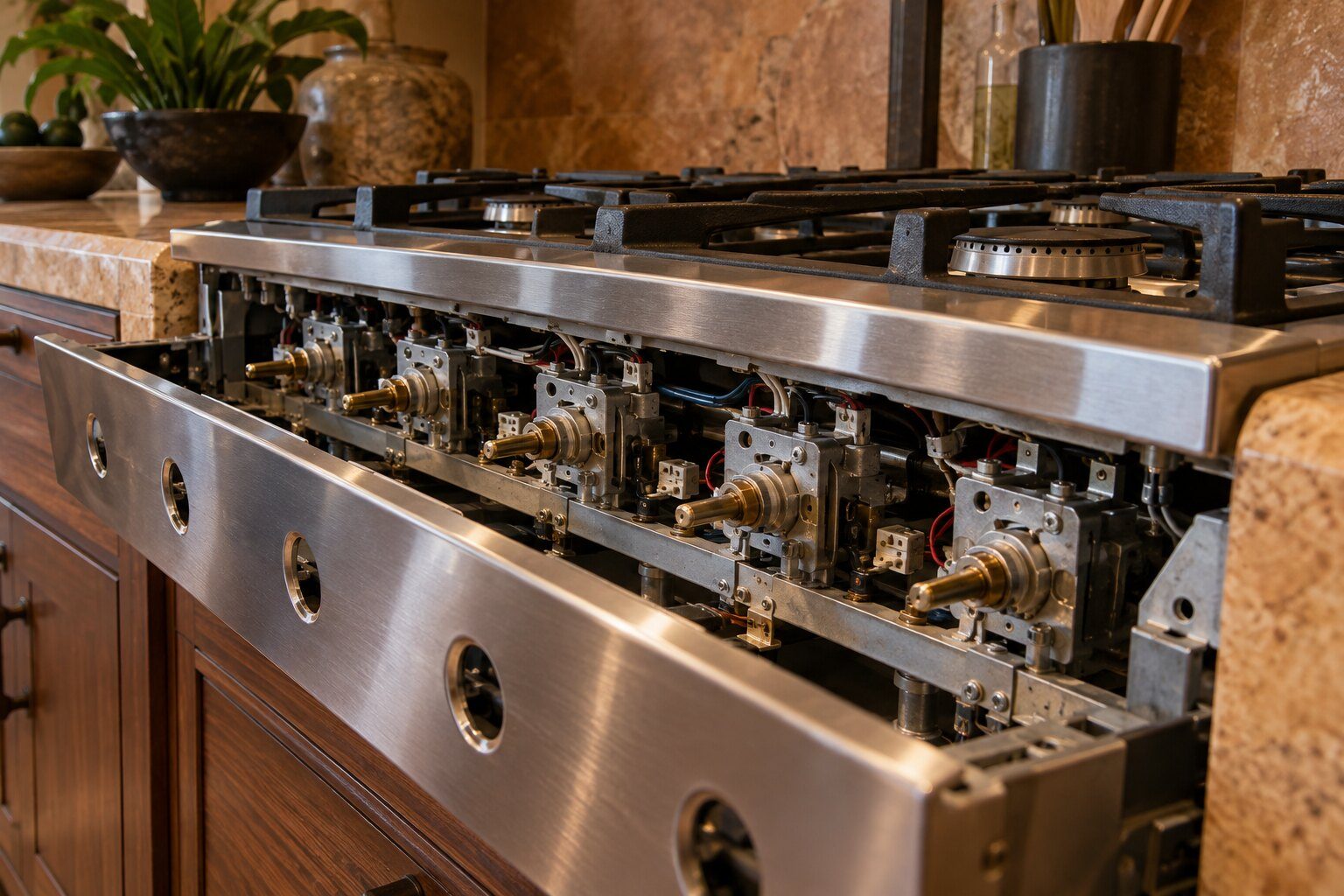
The switches sit behind the dials in a bank, and the electrodes sit in housings on the cooking surface. Both are places water can reach during an enthusiastic clean, and neither is designed to be wet.
A damp switch conducts where it should not. The control reads that as a dial being turned, starts the module, and keeps it running. From outside it looks like an electrical failure. It is a puddle.
This is why the honest first advice is to wait. A day or two in a warm kitchen and a good share of these stop on their own, and we would rather say so than charge for a visit that dries something out.
When it is not moisture
If it has been clicking for a week with no spill behind it, the switch has failed rather than got wet. That is a part and a modest one, and it is worth doing rather than living with — a module running continuously wears out, and it is the more expensive component of the two.
The thing worth checking while you are there
Lift each burner cap and set it down flat and square. A cap sitting slightly proud, or resting on a crumb, holds the flame away from the electrode. On controls that watch for flame this can keep the sparking going even though the burner is lit, and it costs nothing to rule out.
What this is not
It is not the electrode, and it is not the module. Both are working — that is what the clicking proves. Replacing either is the most common wasted part on this complaint, and the reason is simply that the clicking sounds like the ignition and the ignition is where people look.
If it turns out to be a repair
What this leads to, and what it costs
Every job on this site is priced the same way: an on-site diagnostic first, the figure agreed in writing before anybody starts.
-
Sparking away on one ring with no flame Range burner clicks and will not light
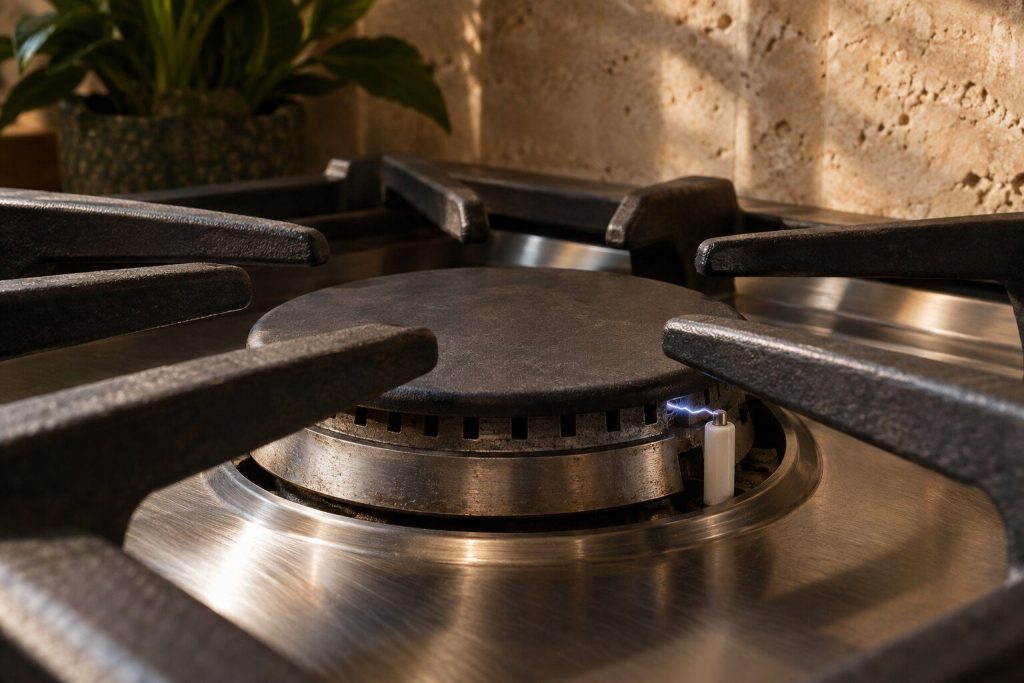
DCS range burner clicking and not lighting. On a sealed burner the list of causes is short and the first one is free: a cap set down rotated, or resting on a crumb, will spark all day and never light. After that it is a wet or cracked electrode, a port blocked by a boil-over, or the switch behind the dial. One detail separates two of those immediately — clicking that stops once the flame catches is normal, and clicking that continues afterwards is a switch.
- Lift and reseat the cap before calling anyone — it costs nothing and often ends it
- Clicking after the flame catches is a switch, not the ignition
- If it started after a clean or a boil-over, that is usually the whole story
-
from $145 Range burner ignition repair
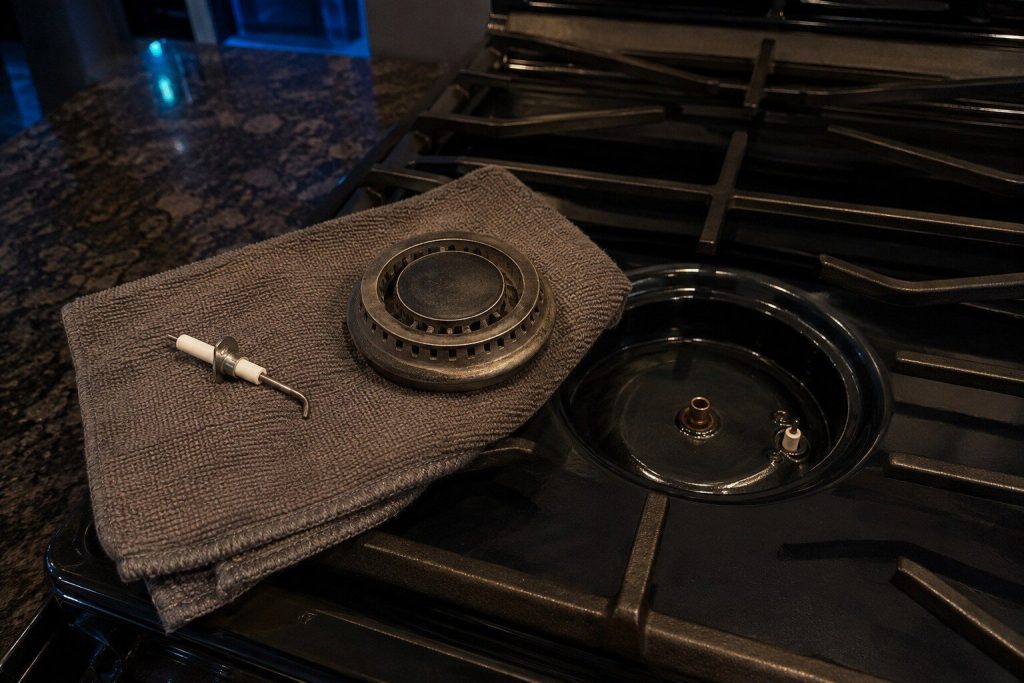
Clicking without lighting, lighting on the second attempt, or one burner that has given up while the others are perfect. On a sealed burner the causes sit in a short list and one of them is free: a cap set down rotated or on a crumb will spark all day and never light. After that it is a wet or cracked electrode, a port blocked by a boil-over, or the switch behind the dial. Clicking that continues after the burner has lit is a different problem from clicking that never lights, and telling us which one you have saves a step.
- Lift and re-seat the cap first: it costs nothing and settles a good share of these
- Clicking after lighting is a switch; clicking without lighting is the path
- Started after a clean or a boil-over? That is usually the whole diagnosis
-
from $135 Gas cooktop burner service
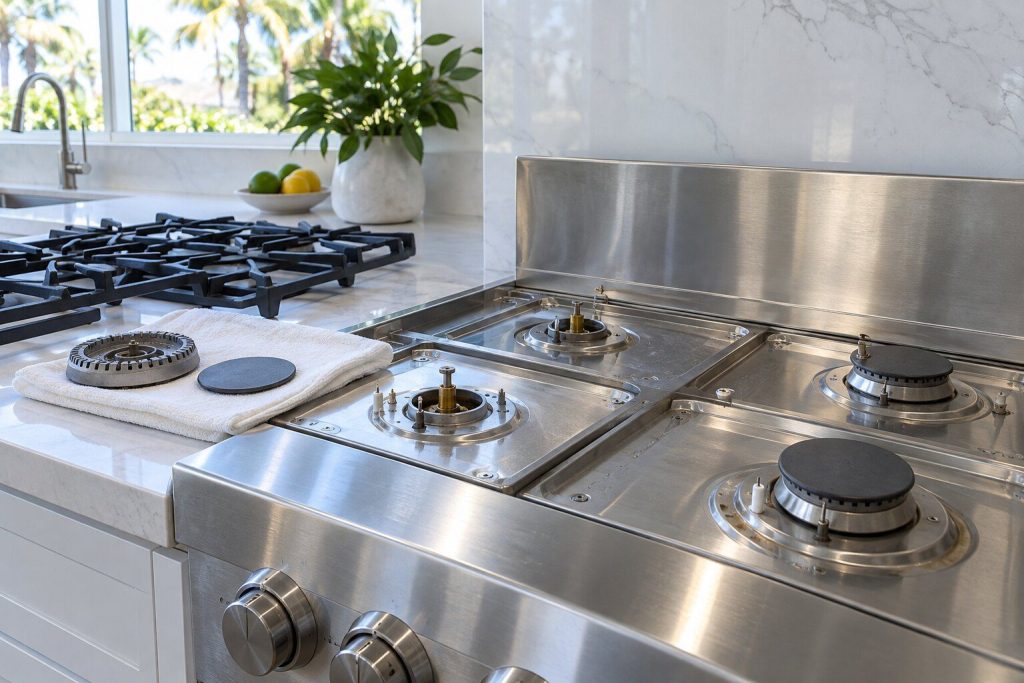
For flames that are uneven, lazy, or wrong on one burner out of five. On a drop-in gas top the diagnosis is the same as on the range top and the access is easier, which makes this one of the few genuinely quick visits on this site. Uneven around a single ring is nearly always the cap or the ports; uneven on every burner at once is the supply or the regulator and belongs to a different page. Burners that have been through a dishwasher — which is common and rarely helpful — get their own look, because a cap that has been stripped of its coating never behaves the same again.
- One ring wrong is the burner; every ring wrong is the supply
- Caps through a dishwasher are a recognisable and permanent change
- The quickest visit on this site when it is what it looks like
Questions people ask about this
Is it dangerous to leave it clicking?
It is not going to cause a fire, but the module is running continuously and it was not designed to. It also means gas may be being released at a burner whose dial reads off, which is worth taking seriously. If every dial is off and it is still clicking, cut the power at the breaker until somebody looks.
It started after we cleaned the hob.
Then moisture is almost certainly the cause and patience is the cure. Water works into the switch bank and the electrode housings and behaves exactly like a failure until it evaporates. Give it a day or two in a warm kitchen before anybody replaces anything.
Only one burner clicks constantly.
That narrows it to that burner's own switch rather than the bank, which is good news for the price. It is also worth checking that the cap is seated — a cap sitting slightly proud keeps the flame away from the electrode, and some controls keep sparking while they cannot sense it.
Common Problems
More guides like this one
-
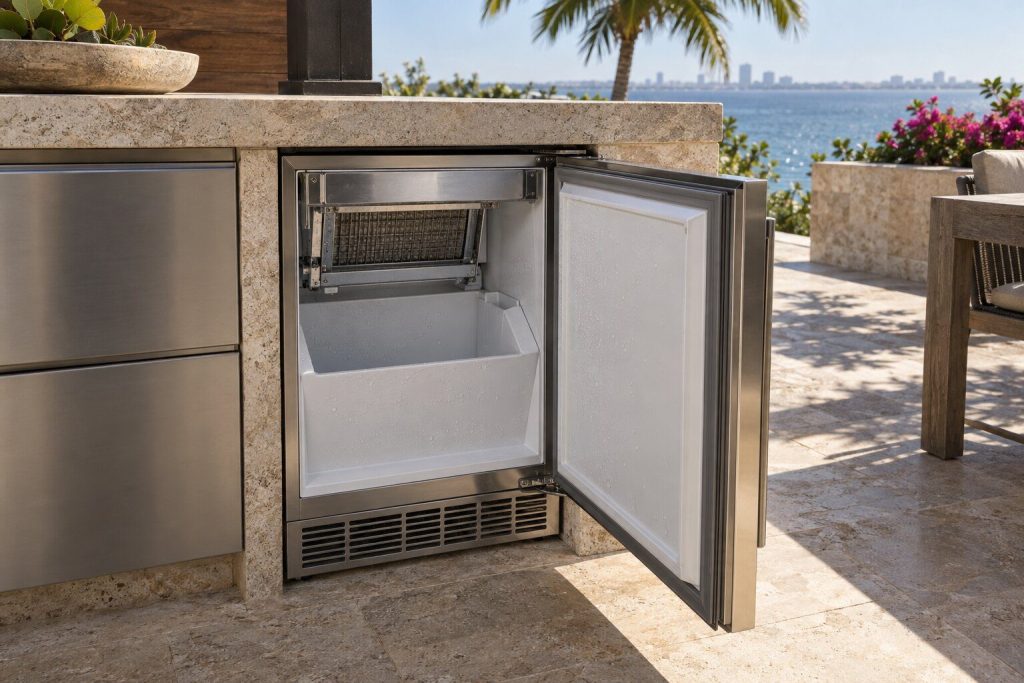
A DCS Outdoor Ice Machine That Has Stopped Making Ice
An ice machine in an island has three inputs a refrigerator does not: water, a drain, and an August it has to reject heat into. Two of the three are not appliance repairs.
Read more -
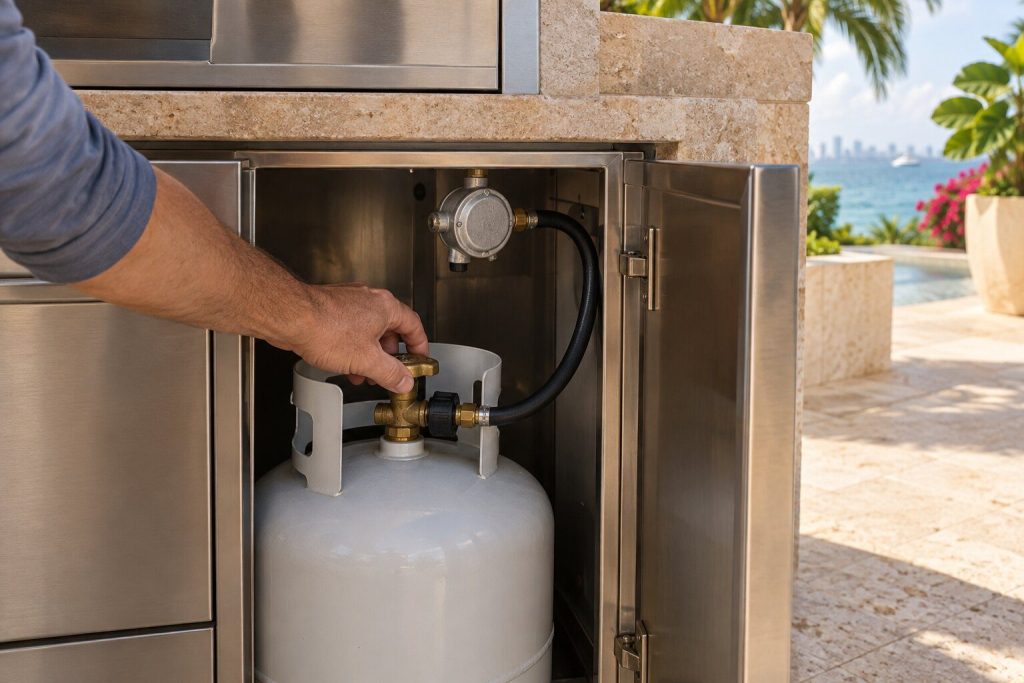
Lighting a DCS Grill in the Right Order, and Why the Order Matters
Most of the calls we take about a grill that will not light are about somebody working the problem in the wrong direction. Start at the cylinder, not at the ignitor — and open the valve slowly.
Read more -
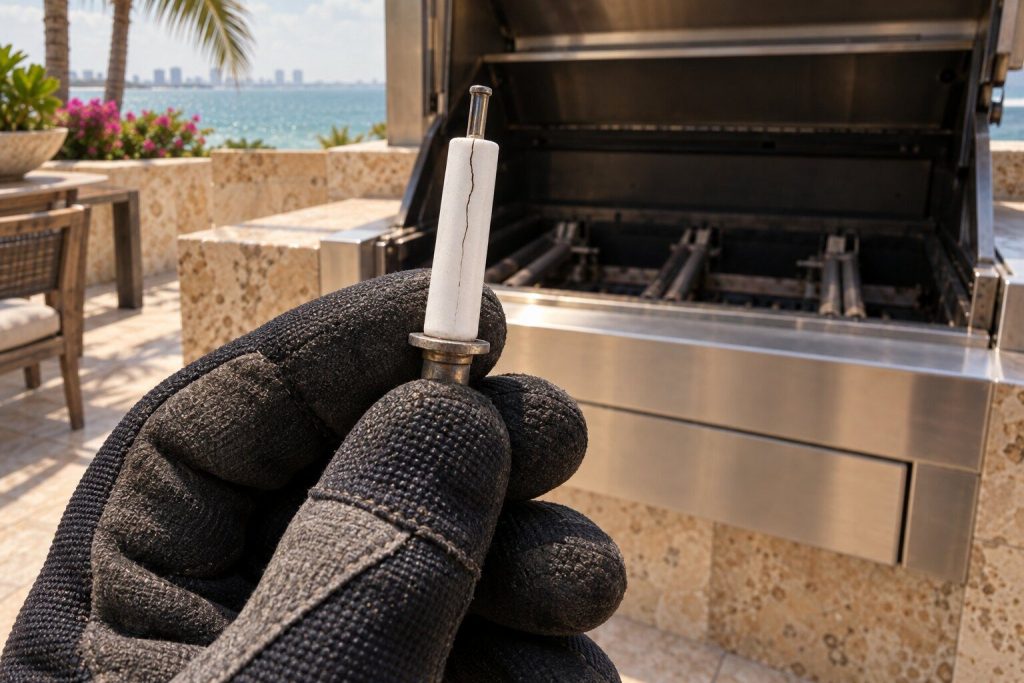
A DCS Grill Igniter That Clicks and Never Lights
The clicking means the module is working. No flame means the spark is arriving somewhere that is not the burner — and on a terrace that is almost always a cracked ceramic rather than a dead electrode.
Read more
Tell us the model number and what it is doing.
This article is based on:
- Official manufacturer documentation
- Internal repair procedures
- Technician repair history
- Company quality standards