Common Problems
A DCS Gas Oven That Will Not Heat: the Ignitor Test Nobody Does
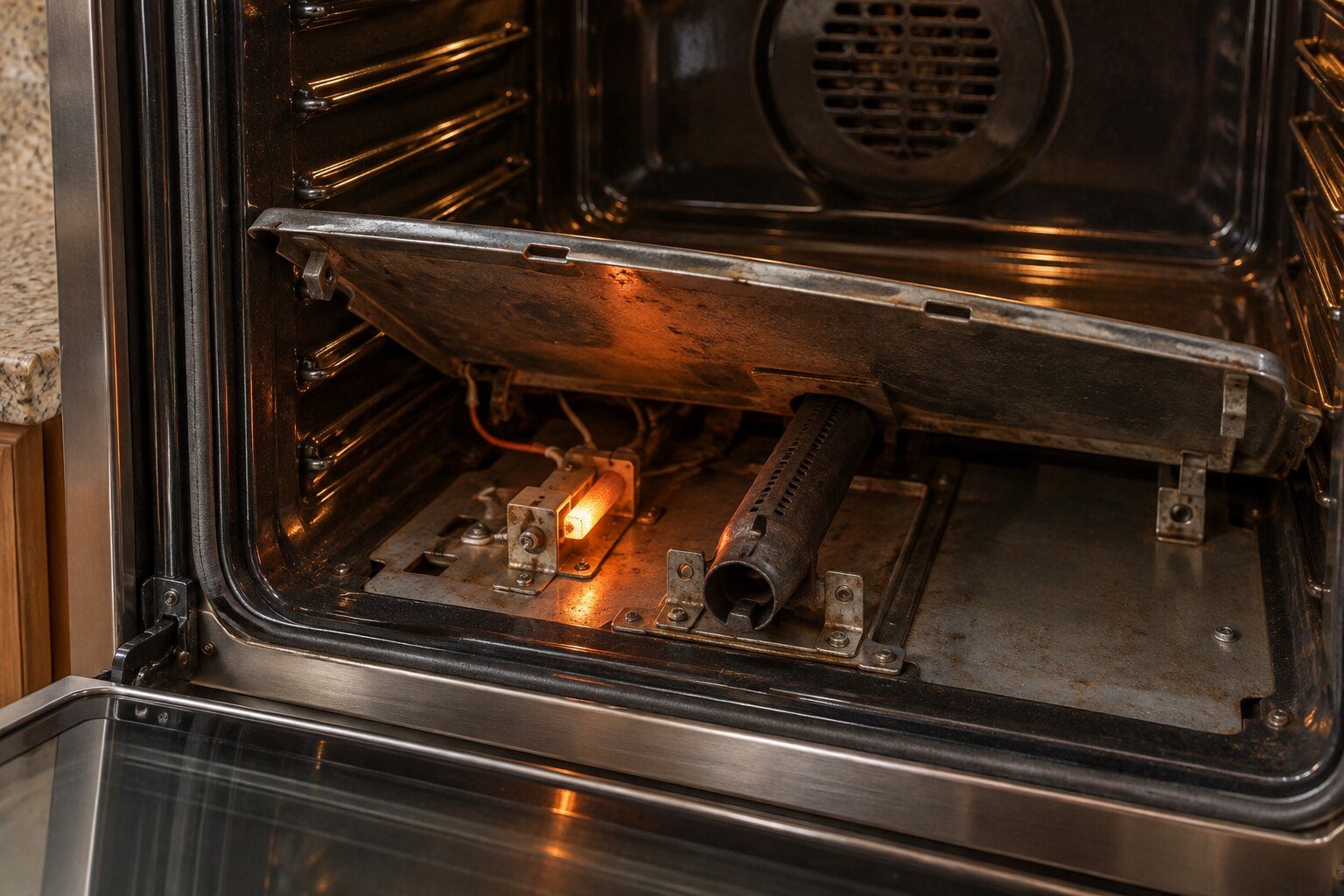
When a DCS gas oven will not heat, the ignitor is the first suspect and the way it fails is what makes this hard. It does not go dark. It weakens, glowing a bright and entirely convincing orange while drawing too little current to open the safety valve — so the oven looks like it is trying and no gas ever arrives. Owners see the glow, conclude the ignitor is fine, and replace the thermostat or the board instead. The chain is short and every link produces the same symptom: the ignitor draws current, the current opens the valve, the valve admits gas, the gas meets the glow. Which link has gone is settled with a meter in about ten minutes and cannot be settled by looking. The one thing worth establishing before any of that is whether the oven is gas at all: on a dual fuel range the top is gas and the oven is electric, and this whole page is then the wrong one.
The full guide
Almost nobody measures the ignitor, because it is glowing and glowing looks like working. It is the reason this repair gets done twice.
DCS gas oven not heating up: what the ignitor is actually for
On a gas oven the ignitor has two jobs and only one of them is visible. It gets hot enough to light the gas, which you can see. And it acts as a resistor in series with the safety valve, drawing current through it — which you cannot.
The valve is designed to open only when that current is high enough. It is a safety device: no glow, no current, no gas. What nobody expects is the middle state, where there is plenty of glow and not quite enough current.
Why a weak ignitor is worse than a dead one
A dead ignitor is obvious. Nothing glows, nothing lights, and the part that has failed is the part everybody suspects.
A weak one performs. It comes on, it glows orange, it sits there for two minutes looking exactly like an ignitor doing its job, and the valve never opens. From in front of the oven the machine is clearly trying and clearly failing, which sends people towards the control, the thermostat, the board — everything except the component that is visibly working.
The chain, and why every link looks the same
The ignitor draws current. Weak: no valve. Replace.
The current reaches the valve. A broken wire or a corroded connector between them produces a glowing ignitor and a closed valve, identically.
The valve opens. A failed valve with a perfectly healthy ignitor gives the same picture again.
The gas arrives. A supply problem upstream — rare on an indoor range but not impossible — closes the story the same way.
Four causes, one symptom, and no way to tell them apart by looking. Ten minutes with a meter separates them completely.
The measurement itself
Current draw through the ignitor circuit while it is heating, taken at the harness rather than guessed from the glow. There is a threshold below which the valve will not open, and an ignitor reading under it is finished regardless of how bright it looks.
This is not owner work — it means the oven's supply is live while the harness is accessible — but it is worth knowing it exists, because it is the difference between one part and three.
What we establish before any of it
Whether the oven is gas. On a dual fuel range the top is gas and the cavity is electric, and then the list is elements, sensor, thermal fuse and board rather than anything on this page.
It sounds like something an owner should obviously know, and in practice it is the detail people are least sure of — reasonably, because from the front of the range the two look identical.
And the thing that is not the ignitor
An oven that heats but heats badly — slow, short of temperature, uneven — is a different page. That points at the door, the seal or a drifted sensor, and replacing an ignitor will change nothing at all.
If yours gets warm but never gets there, say so when you call. It saves us both a step.
If it turns out to be a repair
What this leads to, and what it costs
Every job on this site is priced the same way: an on-site diagnostic first, the figure agreed in writing before anybody starts.
-
Runs hot, runs cold, or drifts during a bake Oven will not hold its temperature
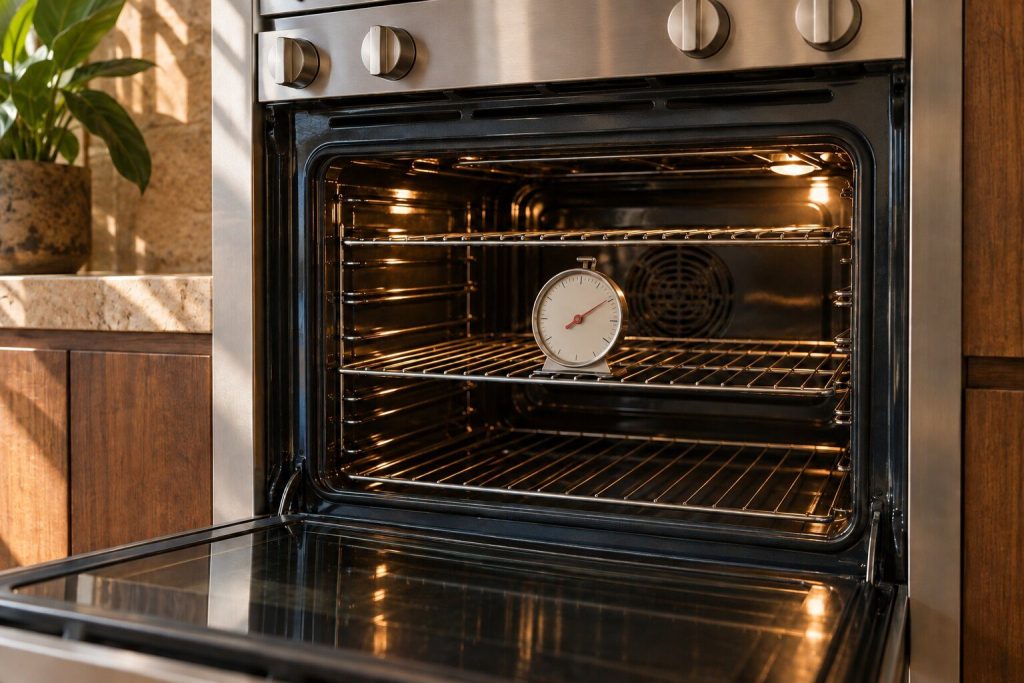
DCS oven not holding temperature. Running hot, running cold and failing to hold are one conversation, and it starts at the sensor rather than the element. Once a probe wanders, the control obeys it precisely and takes the cavity somewhere other than the dial says; on this much metal the error stays hidden until a cake disagrees. Doors deserve more suspicion than they get — a heavy one that has stopped pulling true bleeds heat from a corner, and that presents as a heating element on its way out.
- Probe before element: the sequence is most of the answer
- One cold corner indicts the door, never the element
- If the oven shows a code, the digits after the letter are the message
-
from $185 Range oven not heating
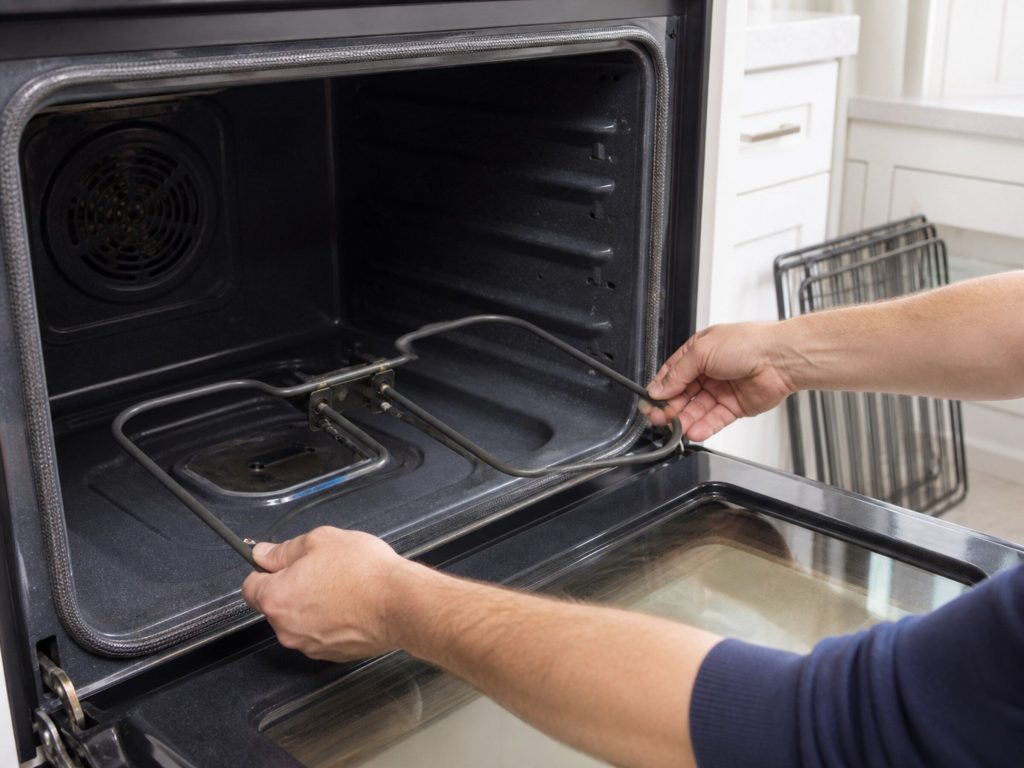
The oven under a commercial-style range, which is heavier, deeper and better insulated than the average, and therefore hides a developing failure for longer. Not heating at all and not heating properly are different calls: nothing at all usually points at an element, an ignitor, a safety valve or a thermal fuse; not properly points at the sensor, the door or the fan. Whether the range is dual fuel or all gas decides which list applies, and it is the detail owners most often do not know — we will work it out, but knowing it on the phone means the right part is on the van.
- Dual fuel and all gas fail in different places — we establish which first
- Nothing at all and not quite right are two different diagnoses
- A code with its sub-error narrows this before we arrive
-
from $185 Wall oven not heating
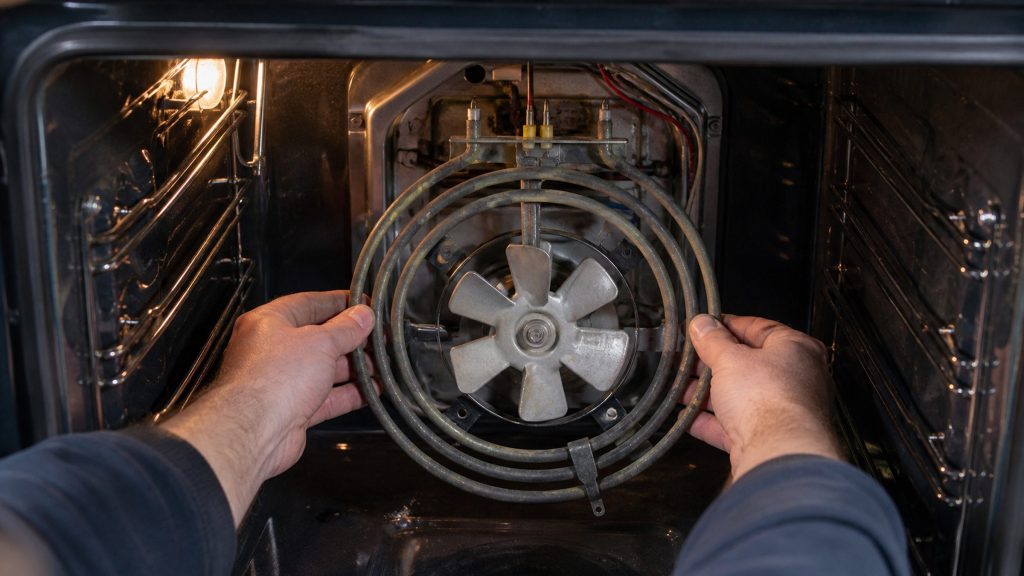
A built-in cavity that has stopped making heat, or has stopped making the heat it claims. The list of causes is ordinary — element, sensor, thermal fuse, board, door — and the access is not, because everything is at chest height in somebody's joinery. This make publishes a decoded error table for these ovens and the sub-error after the letter separates several quite different visits, including one that means the control does not recognize which model it is fitted to. Reading the whole string to us on the phone regularly saves an entire diagnostic visit.
- Read the whole code — the digits after the letter are the message
- A thermal fuse that has opened after a self-clean is a common and cheap finding
- The cabinet decides whether this is an hour or an afternoon
Questions people ask about this
The ignitor glows. Does that not mean it works?
It means it is passing enough current to get hot and not necessarily enough to open the valve, and those are different thresholds. A glowing ignitor that will not light an oven is the single most common gas oven call there is, and the glow is exactly why it goes misdiagnosed.
How do I tell whether ours is dual fuel?
The top is gas either way, so look underneath. A dual fuel oven has elements and a convection fan; an all-gas one has a burner and an ignitor you can usually see glow through the oven floor when it is heating. If you cannot tell, say so — it only means the right part travels out on the second visit rather than the first.
The broiler works but the oven does not.
Then the supply and the gas train are fine, which rules out a great deal. On most gas ranges the broiler has its own ignitor and its own valve, so a working broiler points firmly at the bake side's own chain rather than at anything shared.
Common Problems
More guides like this one
-
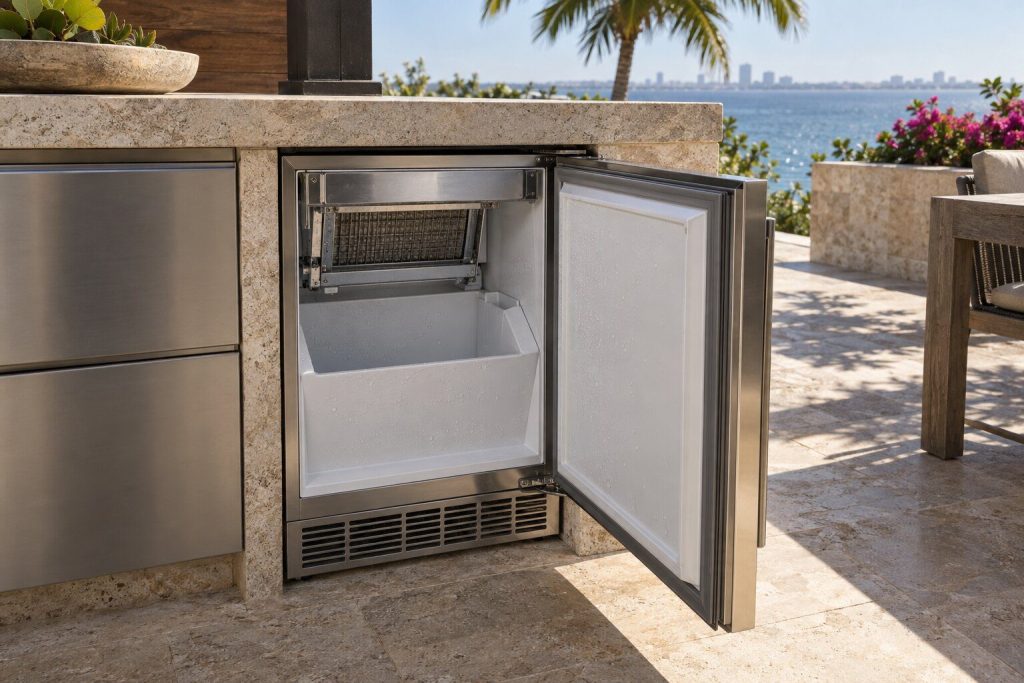
A DCS Outdoor Ice Machine That Has Stopped Making Ice
An ice machine in an island has three inputs a refrigerator does not: water, a drain, and an August it has to reject heat into. Two of the three are not appliance repairs.
Read more -
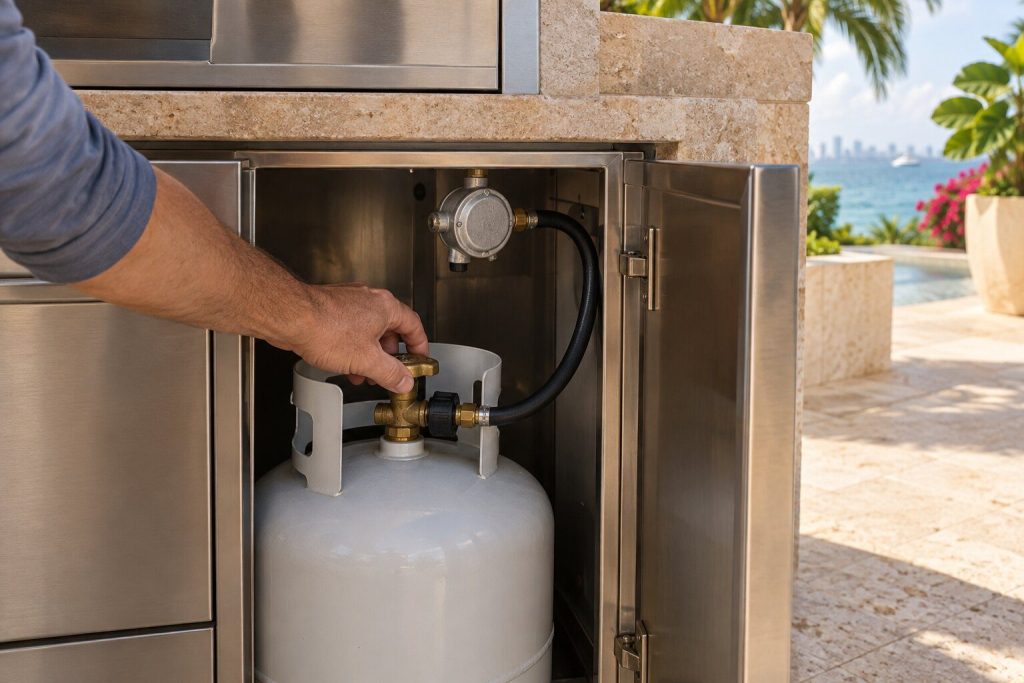
Lighting a DCS Grill in the Right Order, and Why the Order Matters
Most of the calls we take about a grill that will not light are about somebody working the problem in the wrong direction. Start at the cylinder, not at the ignitor — and open the valve slowly.
Read more -
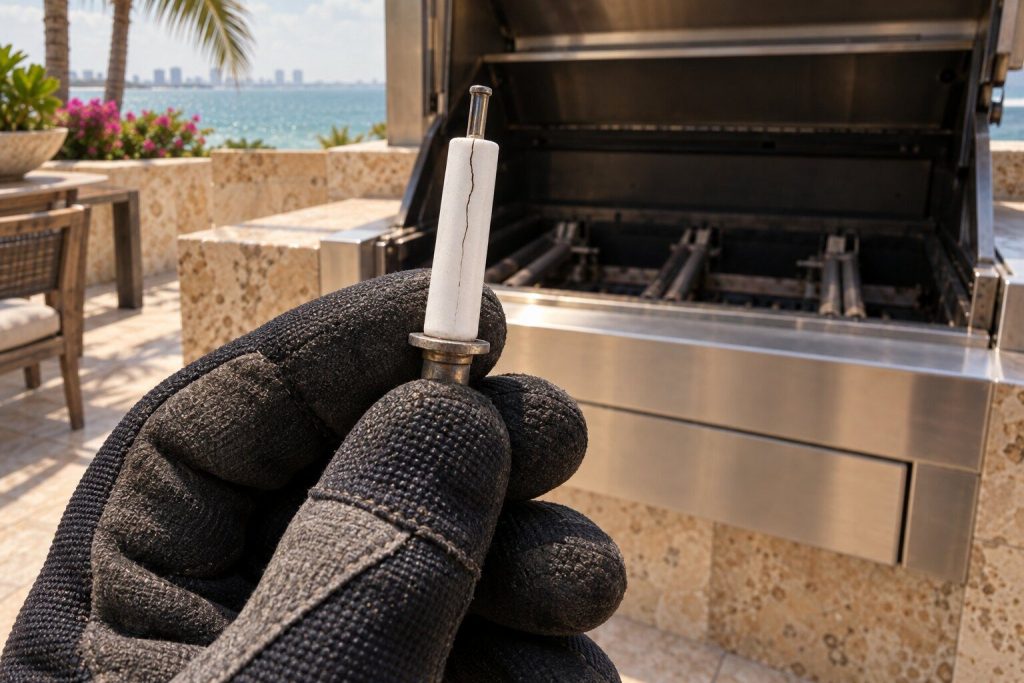
A DCS Grill Igniter That Clicks and Never Lights
The clicking means the module is working. No flame means the spark is arriving somewhere that is not the burner — and on a terrace that is almost always a cracked ceramic rather than a dead electrode.
Read more
Tell us the model number and what it is doing.
This article is based on:
- Official manufacturer documentation
- Internal repair procedures
- Technician repair history
- Company quality standards