Safety & Risks
Why a DCS Oven Smells of Burning, and Which Smells Are Not Normal
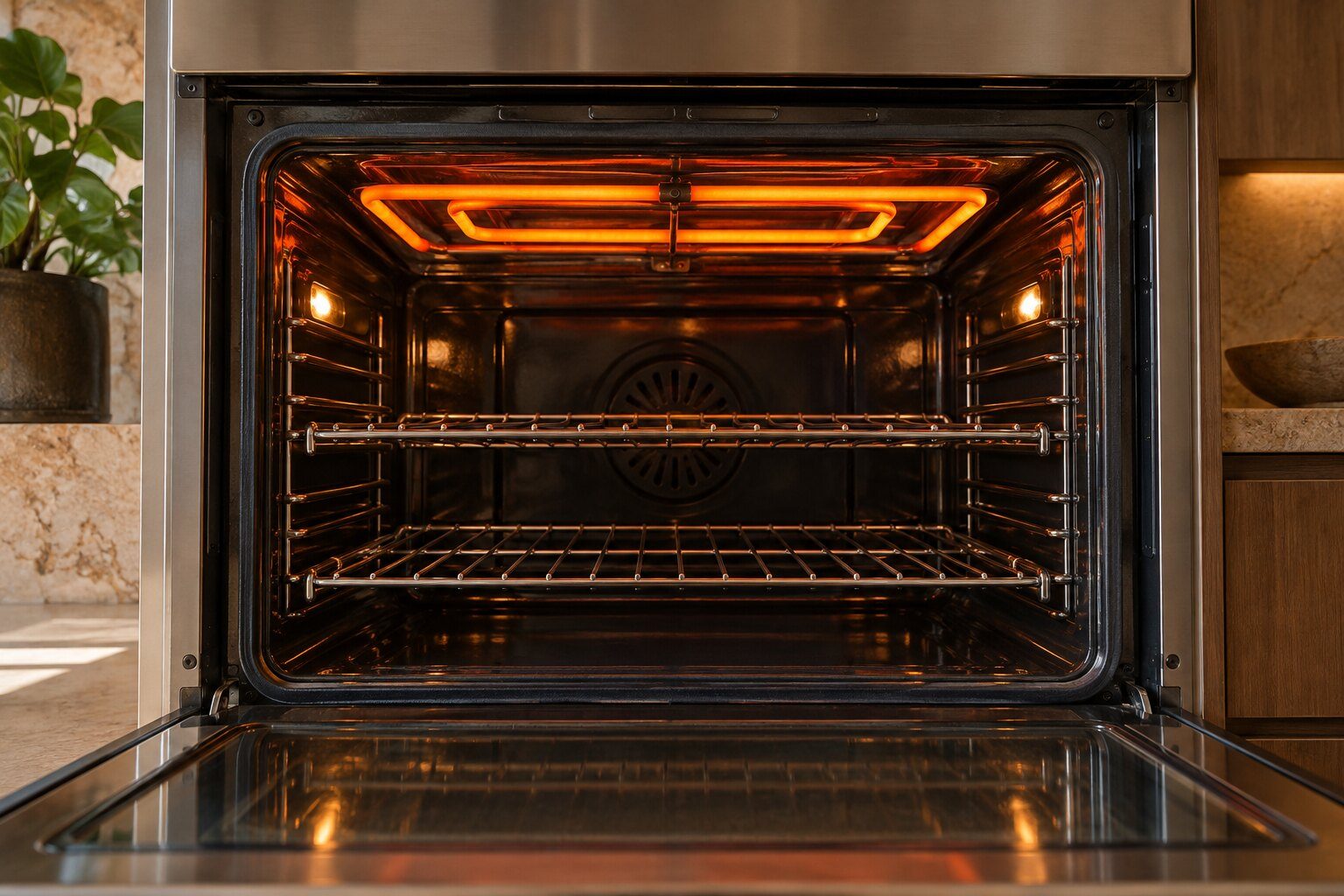
Most burning smells from an oven are ordinary and they announce themselves by their timing. A new cavity gives off manufacturing oils and packaging residue for the first few uses, strongest on the first high-temperature run. A spill left on the floor of the oven burns off whenever the oven next gets hot. A self-clean cycle produces the sharp, unmistakable smell of everything in the cavity being taken to a temperature it never otherwise sees, insulation included, and it can carry for hours afterward. None of those need a technician. Three smells are different. Burning plastic when there is nothing plastic in the oven means something that is not supposed to be hot is hot. A smell of hot wiring — acrid, electrical, sometimes described as fish — means an electrical connection is overheating. And any burning smell accompanied by a breaker that trips, a light that dims when the oven calls for heat, or visible scorching around a control is a reason to switch off at the breaker before establishing anything else. The distinction is not the strength of the smell. It is what it smells of, and whether anything electrical is behaving differently at the same time.
The full guide
The useful question is not how strong the smell is. It is what it smells of, and what else is happening at the same time.
Why does my oven smell like burning wires? The ordinary ones
A new oven, first few uses. Manufacturing oils on the cavity and on the elements, plus whatever protective residue survived the packaging. It is strongest on the first high-temperature run and it fades with each one. Run it hot and empty for an hour with the kitchen ventilated and it will largely be gone.
A spill. Anything that has run onto the floor of the cavity or onto an element burns off the next time the oven gets hot, and it will keep doing so until it is cleaned out. This is the most common answer by a wide margin.
After a self-clean. The cycle takes the entire cavity, the insulation and the door assembly to a temperature they see at no other time. The resulting smell is sharp and it can hang around for hours. That is the cycle working, not the oven failing.
The ones that are not ordinary
Burning plastic with nothing plastic inside. Every plastic part on an oven lives outside the cavity: handles, trim, wiring insulation, the back of a control. If you can smell one of them, something on that side is getting hot enough to affect it, and the cavity is not where to look.
Hot wiring. Acrid and electrical, not food-like at all. Some people describe it as fish. That smell is overheating insulation and it is a connection, a terminal or a switch, almost always at a joint rather than in the middle of a run.
Anything with electrical company. A breaker that trips when the oven calls for heat. Lights that dim at the same moment. Scorching or discoloration around a control or a vent. Any of those alongside a burning smell moves this out of the sorting exercise entirely.
What to do with the second list
Switch the oven off at the breaker, not at the control.
The control is a low-power circuit asking a relay to do something. If the concern is that a connection is overheating, the connection carrying the load is the one that needs to be de-energized, and that is the breaker.
Then leave it off. An oven that is overheating a terminal does not improve with further cooking, and the failures that follow are the ones nobody wants to be in the room for.
Where the heat usually is
On an electric oven, the terminal block where the supply lands and the element connections at the back of the cavity are where we find scorching, because they carry the most current through the fewest square millimeters of metal.
On a gas oven with electronic controls, it is more often the ignition circuit and the board that switches it.
Either way it is a specific joint rather than a general condition, and finding it means measuring under load rather than looking. Once found, it is usually a small part — which is the encouraging half of an otherwise unwelcome page.
If it turns out to be a repair
What this leads to, and what it costs
Every job on this site is priced the same way: an on-site diagnostic first, the figure agreed in writing before anybody starts.
-
An icon, a beep, and a letter with two digits Oven shows an error code
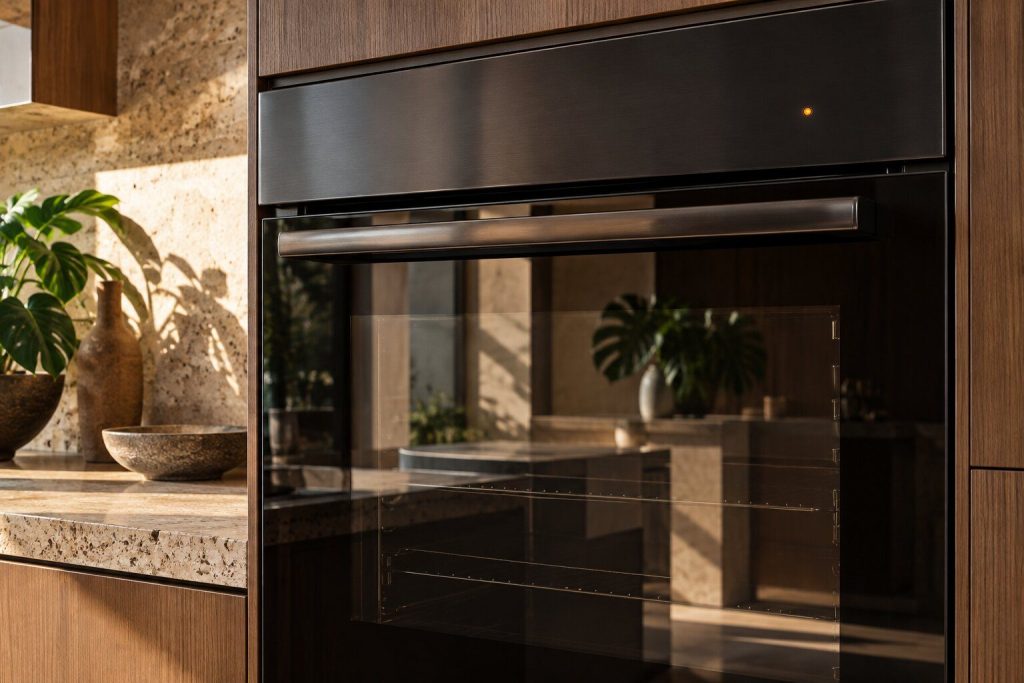
DCS oven error code. On the indoor half of this make the codes are decoded rather than bare — the manufacturer publishes what each one means, and the two digits after the letter separate a missing power board from a software error from two different communication errors from a model identity mismatch. That last one is the interesting case: it is not a failure at all but a mismatch, usually created by an earlier repair, and no further replacing will clear it. Write the whole string down before it goes.
- The letter alone narrows nothing — the digits after it are the message
- One of the published codes means an earlier repair fitted the wrong variant
- Power down at the breaker for a full minute before deciding anything
-
from $295 Control board repair
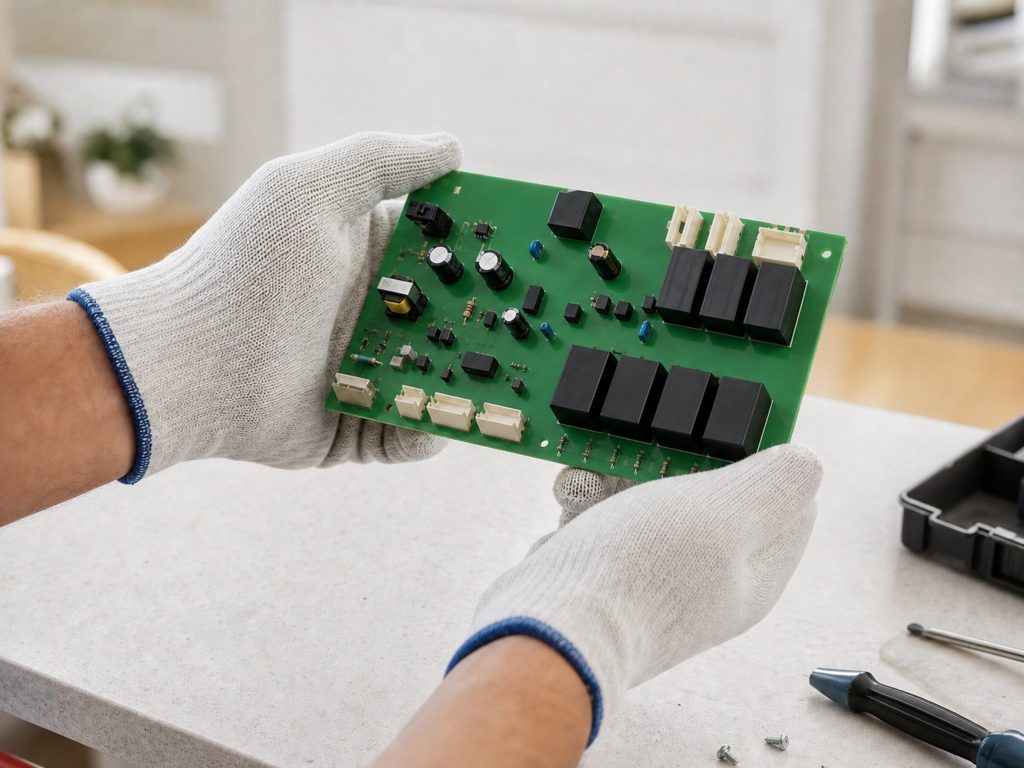
When the electronics rather than the mechanics are the problem. Indoors this brand publishes an error table that names board errors directly — a missing master or slave power board, a software error, a communication failure between boards, and one code that fires when the control does not recognize which model it is fitted to. That last one is the interesting one: it usually appears after a part has been replaced with the wrong variant, and no amount of further replacing will settle it until the model identity matches. We diagnose before we order, because a board is the most expensive thing on most of these machines and the second most commonly replaced without need.
- The published sub-error separates board, software and communication errors
- A code that means the control does not recognize the model is a fitting problem, not a dead board
- We prove the board is the problem before one is ordered
-
from $185 Wall oven not heating
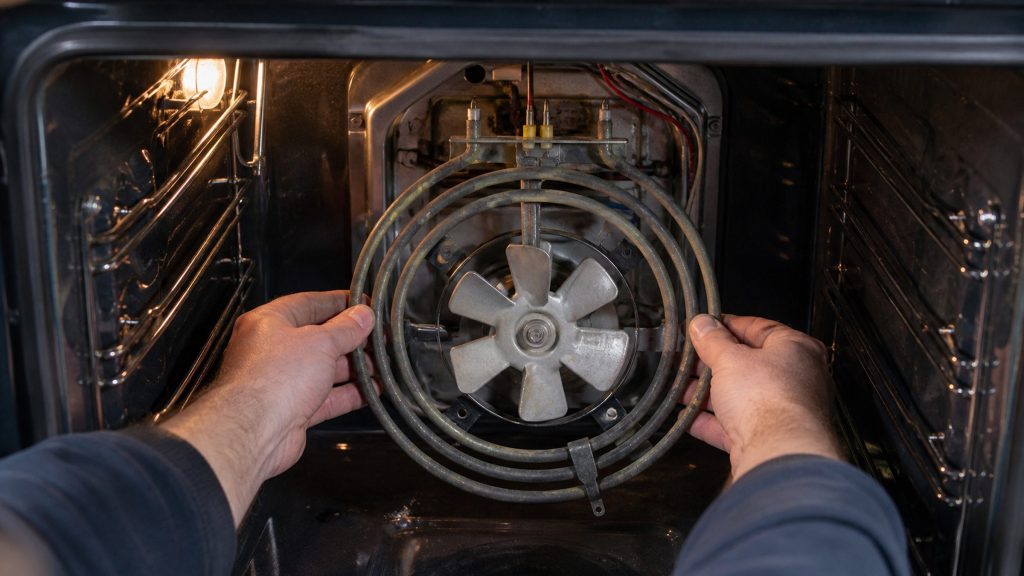
A built-in cavity that has stopped making heat, or has stopped making the heat it claims. The list of causes is ordinary — element, sensor, thermal fuse, board, door — and the access is not, because everything is at chest height in somebody's joinery. This make publishes a decoded error table for these ovens and the sub-error after the letter separates several quite different visits, including one that means the control does not recognize which model it is fitted to. Reading the whole string to us on the phone regularly saves an entire diagnostic visit.
- Read the whole code — the digits after the letter are the message
- A thermal fuse that has opened after a self-clean is a common and cheap finding
- The cabinet decides whether this is an hour or an afternoon

Questions people ask about this
It only smells when the broiler is on. Does that narrow it down?
Considerably. The broiler puts the most heat into the top of the cavity and the roof of the oven, so debris on the upper element and residue on the ceiling both show up there first. If it smells of food, that is what it is. If it smells electrical under broil specifically, the upper element circuit is worth measuring.
The smell started after a self-clean and has not gone.
A day or two of residual smell is normal. A smell that has not faded after several ordinary uses is worth looking at, because self-clean is the hardest cycle an oven ever runs and it is the cycle most likely to end a component that was already tired. A door seal, a sensor or a control can all be finished by one clean.
Is it safe to keep cooking until you get here?
If it smells of food or of a new appliance, yes. If it smells electrical, no — switch it off at the breaker and leave it off. That advice costs you the use of one oven for a few days, which is a straightforward trade against the alternative.
Safety & Risks
More guides like this one
-
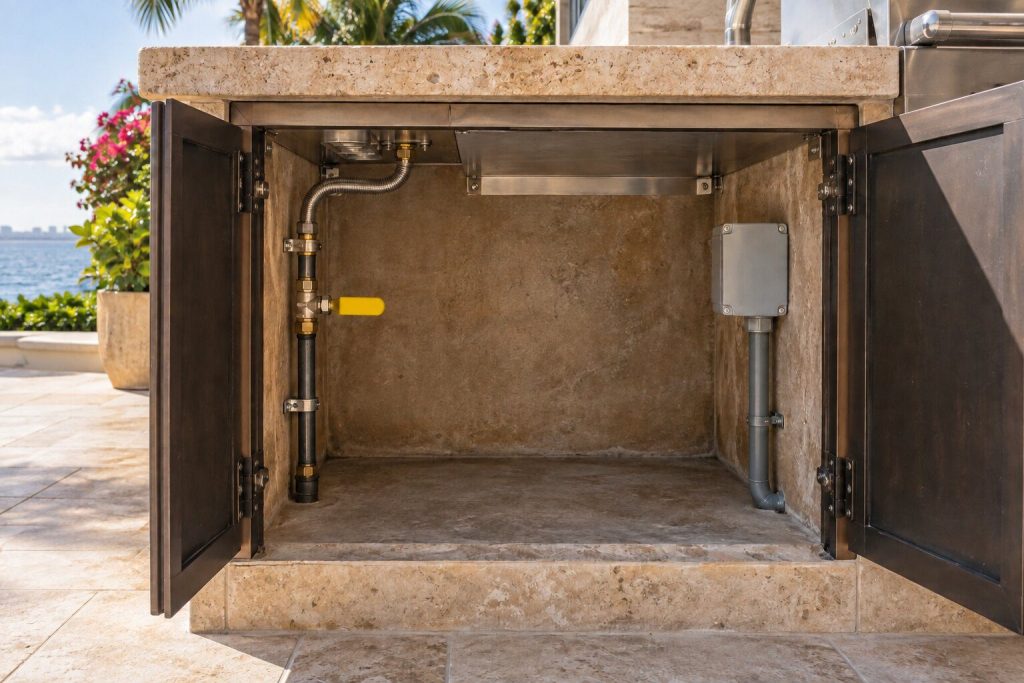
What Is Still Live on an Outdoor Kitchen After You Switch It Off
Turning a grill off turns the burners off. It does not close the gas at the manifold or cut power to the lights, the ignition module and the rotisserie — and on an island those are shared.
Read more -
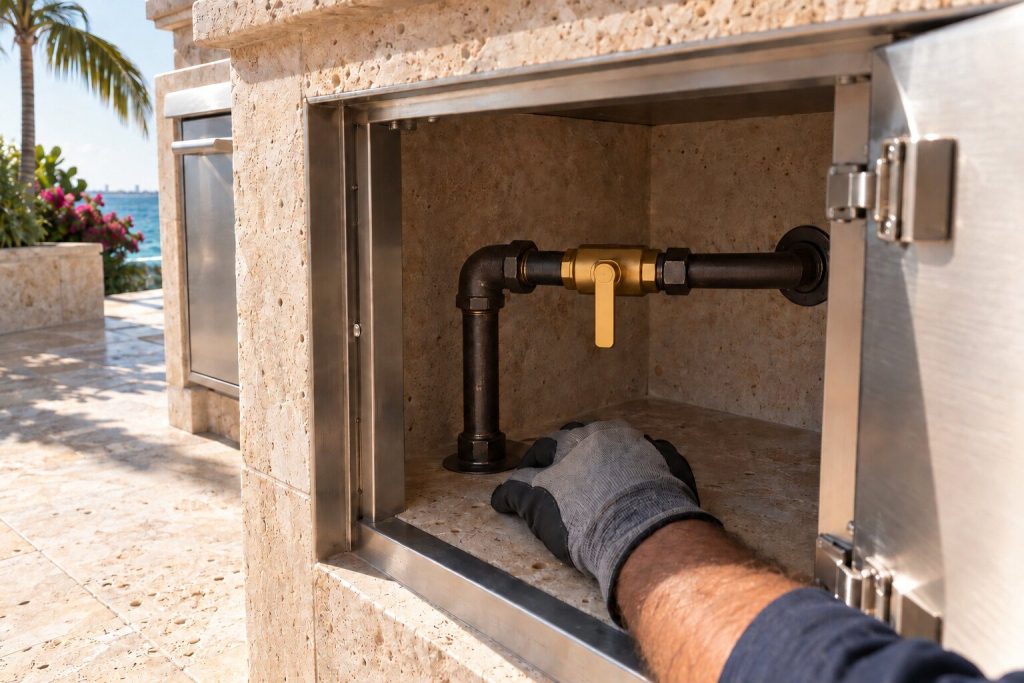
A Gas Smell With Everything Switched Off Is a Different Problem
Gas at a burner you were about to light is one thing. Gas with every control off is another, because it means something upstream of the controls is passing — and outdoors that run was sealed into masonry years ago.
Read more -
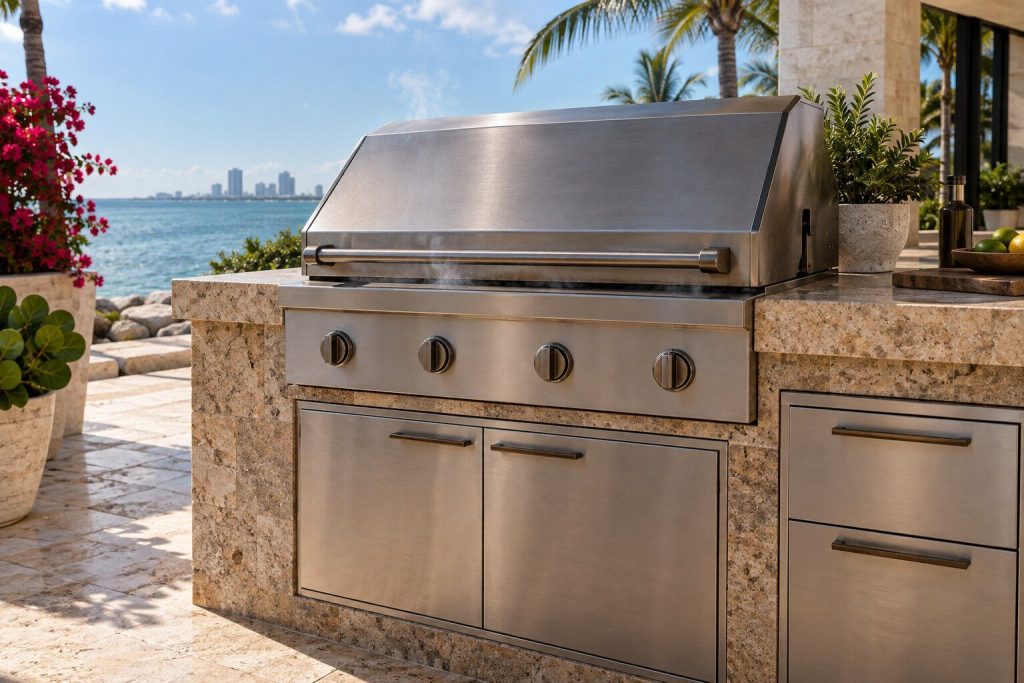
A Grease Fire on a Grill or a Range: What Actually Puts It Out
Water spreads burning fat. The response that works is starvation, and the one most people reach for first makes it larger — then there is the question of why the flare-ups started at all.
Read more
Tell us the model number and what it is doing.
This article is based on:
- Official manufacturer documentation
- Internal repair procedures
- Technician repair history
- Company quality standards