Troubleshooting
A DCS Oven That Will Not Turn On at All
An oven with a completely dark panel is a supply problem until proved otherwise, and that is worth taking seriously because the alternative — assuming the control has died — is the expensive assumption. A built-in oven usually has its own breaker rather than sharing the kitchen's, and on many installations there is also a switched spur hidden inside an adjacent cupboard, fitted so the appliance could be isolated and then forgotten by everybody including the people who live there. Check both before anything else. Beyond the supply the chain is short: power reaches the control's own supply section, which powers the display, and separately reaches the boards that switch the heat. Two of the published sub-errors on this line describe exactly that inner failure — the control is alive and cannot see one of the power boards — which is a different picture from a dark panel and a useful one to be able to distinguish. A dark oven that trips the breaker when it is restored is a third thing, and it stops being a troubleshooting exercise.
The full guide
An oven with nothing on the display is a supply question, and the temptation is to skip straight past that because a dead panel feels like a dead board.
DCS oven not turning on: the breaker that is not the kitchen's
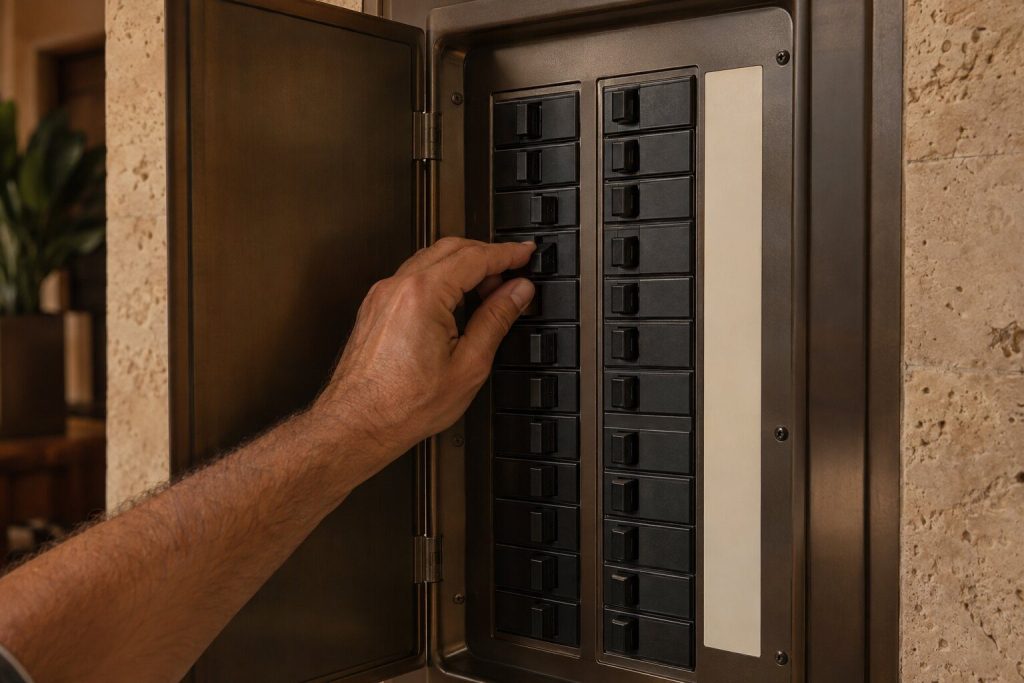
A built-in oven draws enough that it is generally given its own circuit. So a kitchen full of working appliances proves nothing about it, and the first thing to check is the panel — looking for the breaker labeled for the oven, and looking at it properly rather than glancing along the row.
A breaker that has tripped is not always visibly out of line. Switch it fully off and fully on again rather than nudging it.
The switch nobody remembers
This is the one worth knowing about, because it accounts for a surprising share of dark ovens.
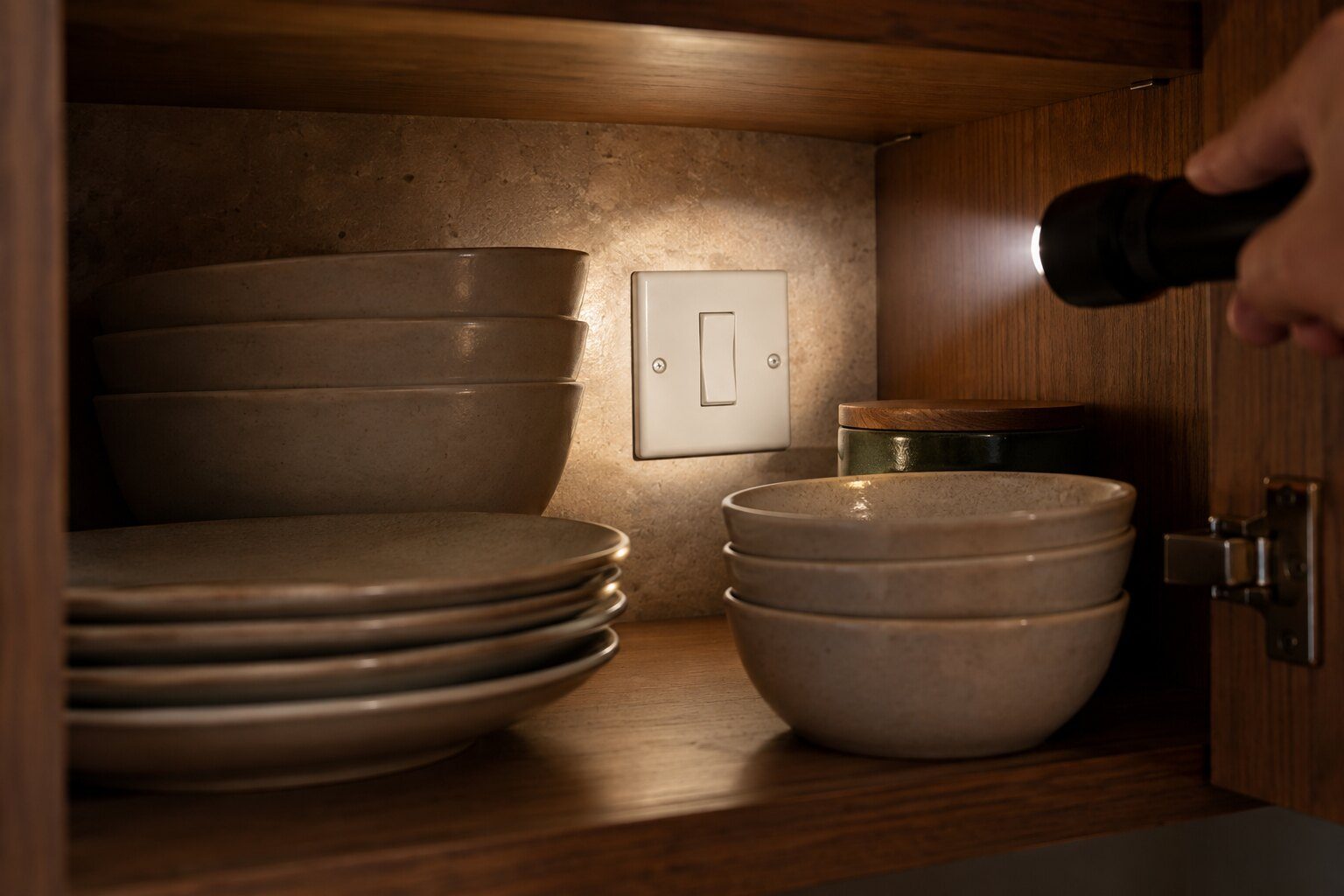
Many built-in installations include a switched fused spur mounted inside an adjacent cupboard, so the appliance can be isolated without a trip to the consumer unit. It is behind the crockery, or behind a drawer, or above the oven in the cabinet nobody opens.
It gets knocked. Somebody reaching for a stockpot catches it, and the oven is dead for reasons that have nothing to do with the oven.
Dark panel versus lit panel
These are two entirely different problems and it is worth being precise about which you have.
Nothing at all. No display, no clock, no beep. Supply, or the control's own power section.
Display alive, oven cold. The control has power and something further in has failed. On this make that frequently arrives with a code, and two of the published sub-errors say exactly this: the control is alive and cannot see one of the boards that switches the heat.
Telling us which of the two you are looking at changes what we bring.
Where it stops being troubleshooting
If the breaker trips the moment you restore it, stop. A circuit drawing current it should not usually means an element or its wiring has failed to earth, and repeatedly resetting a breaker into a short is the one thing worth not doing.
The same goes for any smell of hot insulation, or a panel that lit up once and went dark with a noise. Leave it isolated and let somebody look.
What to check before you call
The oven's breaker. The spur, if there is one. Whether anything else went off at the same time — which points at the supply rather than the appliance. And whether there was a storm, a cut or work being done in the house.
Four answers, no tools, and they decide between an electrician, a repair and nothing at all.
If it turns out to be a repair
What this leads to, and what it costs
Every job on this site is priced the same way: an on-site diagnostic first, the figure agreed in writing before anybody starts.
-
Oven shows an error code
DCS oven error code. On the indoor half of this make the codes are decoded rather than bare — the manufacturer publishes what each one means, and the two digits after the letter separate a missing power board from a software error from two different communication errors from a model identity mismatch. That last one is the interesting case: it is not a failure at all but a mismatch, usually created by an earlier repair, and no further replacing will clear it. Write the whole string down before it goes.
- The letter alone narrows nothing — the digits after it are the message
- One of the published codes means an earlier repair fitted the wrong variant
- Power down at the breaker for a full minute before deciding anything
-
Oven error code F1 01
DCS oven error code F1 01: There are two boards behind this oven and they talk to each other. Which machines can raise it, what the maker publishes about it, and what to do next.
What this one means -
Oven error code F1 02
DCS oven error code F1 02: The same absence as the code before it, reported about the second board rather than the first. Which machines can raise it, what the maker publishes about it, and what to do next.
What this one means
Questions people ask about this
The cooktop above it works, so the power must be fine.
Not on a built-in run. A cooktop and a wall oven are commonly on separate circuits, precisely because the oven draws more, so a working hob proves the kitchen has power and nothing about the oven's own supply.
Where would a switched spur be?
Inside the cabinet next to or above the oven, sometimes behind a drawer that has to come out. It was fitted so an electrician could isolate the appliance without going to the panel, and it is switched off by accident more often than anybody would guess — usually by somebody reaching into the cupboard.
It trips the breaker as soon as I switch it back on.
Leave it off and call. That is a circuit drawing current it should not, which on an oven usually means an element or an element's wiring has gone to earth. It is a repair rather than a mystery, but it is not something to keep testing by resetting.
Troubleshooting
More guides like this one
-
Resetting a DCS Oven Control, and What a Reset Actually Proves
A reset is a test, not a repair. If the error stays away, that was the whole story. If it comes back, the reset has just told you something valuable for nothing.
Read more -
Reading a DCS Oven Error Code: the Digits Are the Message
The letter narrows almost nothing. The two digits after it separate five components and one earlier repair — and one of them is not a failure at all.
Read more -
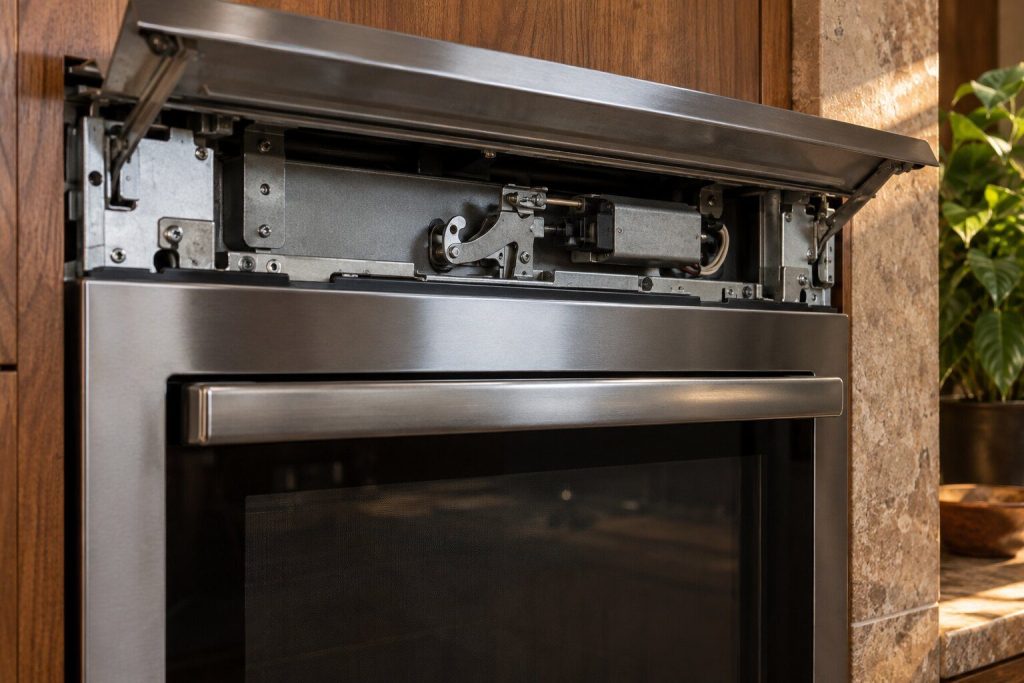
A DCS Oven Door That Has Locked Itself Shut
Three different situations wear this one symptom, and the wrong assumption costs either a latch motor or a door. One of them resolves itself if you leave it alone.
Read more
Tell us the model number and what it is doing.
This article is based on:
- Official manufacturer documentation
- Internal repair procedures
- Technician repair history
- Company quality standards