Troubleshooting
Reading a DCS Oven Error Code: the Digits Are the Message
DCS publishes its wall oven error table decoded, which is unusual and worth using properly. The letter on its own tells you an error has been logged and nothing more — every published sub-error on this line begins the same way. The two digits after it are the message. Two of them say the control cannot see one of the power boards at all, which points as often at a connector or a harness as at the board. Two more say the control can see a board and cannot talk to it, which points at the link between them rather than at either end. One is a general software error, and it is the one most worth clearing at the breaker before anything else. And one means the clock board does not support the model identity set on the power board — a disagreement rather than a breakage, which arrives after a repair rather than before one, and which no amount of further replacing will settle. Reading us the whole string regularly saves a diagnostic visit; reading us the letter tells us that something is wrong, which we knew.
The full guide
Most manufacturers publish a number and keep the meaning in service literature. This one publishes the meaning, and it changes what an owner can usefully do.
DCS oven control board: two boards, talking
Behind the oven there is a board that switches the heat and a board that runs the clock and the controls, and they hold a conversation. Almost everything in this table is about that conversation going wrong, and the digits say precisely how.
Cannot see it at all. The board is not answering. That is as often a connector that has worked loose in a hot cabinet, or a harness chafed where it runs past the cavity, as a failed board — which matters, because one of those costs an hour and the other costs a board.
Can see it, cannot talk to it. The board is there and the link is failing. Now the harness is the first suspect rather than the second.
Two codes for the first case and two for the second, one of each per board. That is not redundancy: it tells a technician which half of the oven to open, and on a built-in that is the difference between a morning and an afternoon.
The software one
One sub-error is a general software error, and it is the one where the free thing is worth doing first. Power off at the breaker, a full minute, back on. A control that got lost during a storm or a brownout comes back and stays back.
If it returns, it has stopped being a glitch. That is useful and it cost nothing.
The one that is not a failure
The most interesting entry in the table fires when the clock board does not support the model identity set on the power board. In plain terms: the two boards disagree about which oven they are in.
That happens when a replacement has gone in from the wrong variant, or when a board was fitted and its identity never set. It follows a repair rather than preceding one.
And the consequence is the part worth knowing: no further replacing clears it. Fit a second board and you have a second disagreement. The cure is configuration — matching the identity to the machine — and it is quick once somebody recognizes what they are looking at.
Why we ask who has worked on it
Because of that code. "Somebody replaced a board last month" is, on this make, as diagnostic a sentence as any string on the display, and it is not a question about blame. It is a question about which of six conditions we are standing in front of.
What to send us
The whole string, photographed. Whether it cleared on its own. What was happening when it appeared — a self-clean, a storm, an ordinary bake. And whether anybody has been inside the oven recently.
Four answers, and on a good day they replace the diagnostic visit entirely.
If it turns out to be a repair
What this leads to, and what it costs
Every job on this site is priced the same way: an on-site diagnostic first, the figure agreed in writing before anybody starts.
-
Oven error code F1 04
DCS oven error code F1 04: Not the same thing as not seeing the board at all. Which machines can raise it, what the maker publishes about it, and what to do next.
What this one means -
Oven error code F1 06
DCS oven error code F1 06: The most useful entry in the whole table, because it is almost never a failure — it is a mismatch. Which machines can raise it, what the maker publishes about it, and what to do next.
What this one means -
Control board repair
When the electronics rather than the mechanics are the problem. Indoors this brand publishes an error table that names board errors directly — a missing master or slave power board, a software error, a communication failure between boards, and one code that fires when the control does not recognize which model it is fitted to. That last one is the interesting one: it usually appears after a part has been replaced with the wrong variant, and no amount of further replacing will settle it until the model identity matches. We diagnose before we order, because a board is the most expensive thing on most of these machines and the second most commonly replaced without need.
- The published sub-error separates board, software and communication errors
- A code that means the control does not recognize the model is a fitting problem, not a dead board
- We prove the board is the problem before one is ordered
Questions people ask about this
Why does the maker decode these when others do not?
We do not know why, and we are glad of it. On every other badge we work, decoding a bare number is where our value is; here the manufacturer has published what each condition means, so the honest thing is to use their decoding rather than repackage it as ours.
The code appeared right after somebody serviced the oven.
Then say so first, because one of the published sub-errors is caused by exactly that. A board fitted from the wrong variant, or fitted without its model identity being set, produces a control and a power board that disagree about which oven they are in. Another board does not help.
Should I write the code down or photograph it?
Photograph it if you can, and include anything else on the display. Codes clear, sometimes on their own, and there is no way to ask the oven what it said an hour ago. A photograph also removes the risk of a zero being read as an O.
Troubleshooting
More guides like this one
-
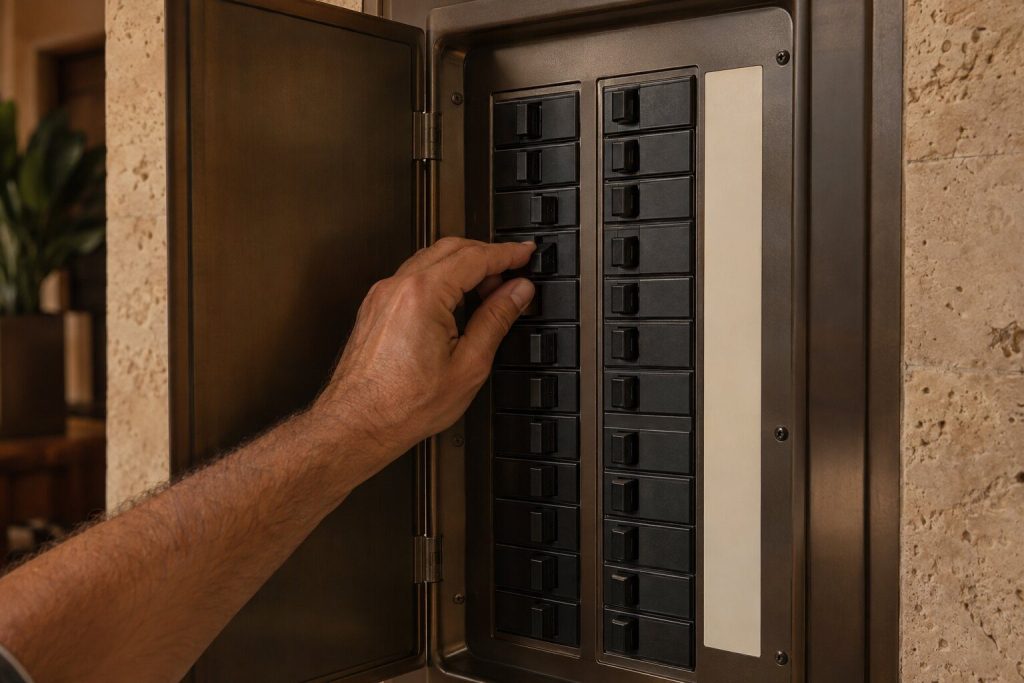
Resetting a DCS Oven Control, and What a Reset Actually Proves
A reset is a test, not a repair. If the error stays away, that was the whole story. If it comes back, the reset has just told you something valuable for nothing.
Read more -
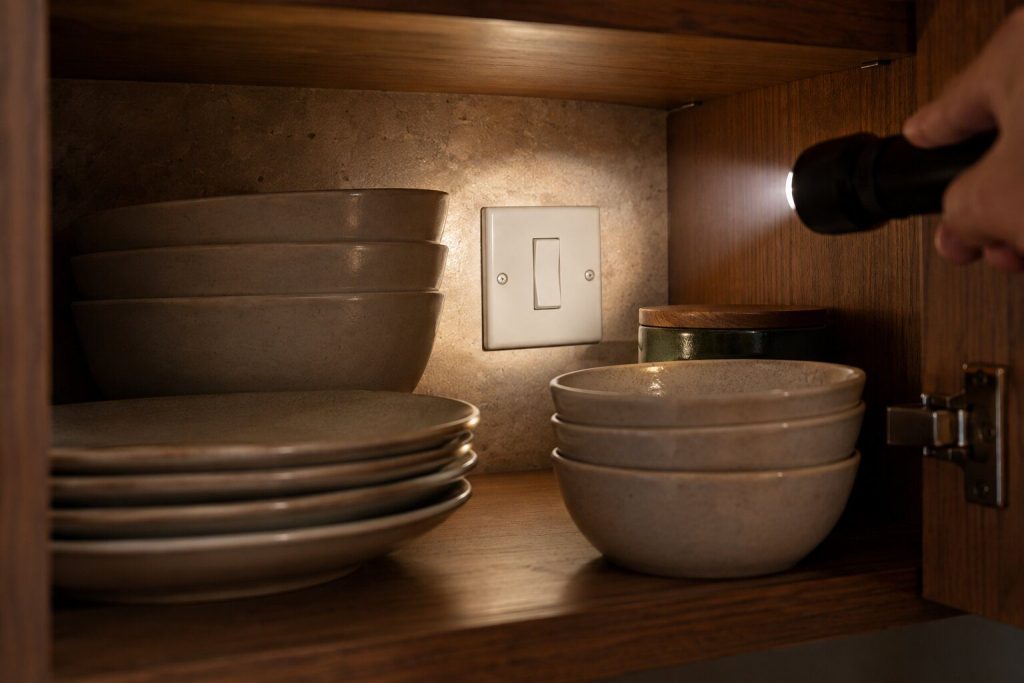
A DCS Oven That Will Not Turn On at All
Nothing on the panel is a different problem from an oven that lights up and will not heat. Start further back than the oven — frequently further back than the kitchen.
Read more -
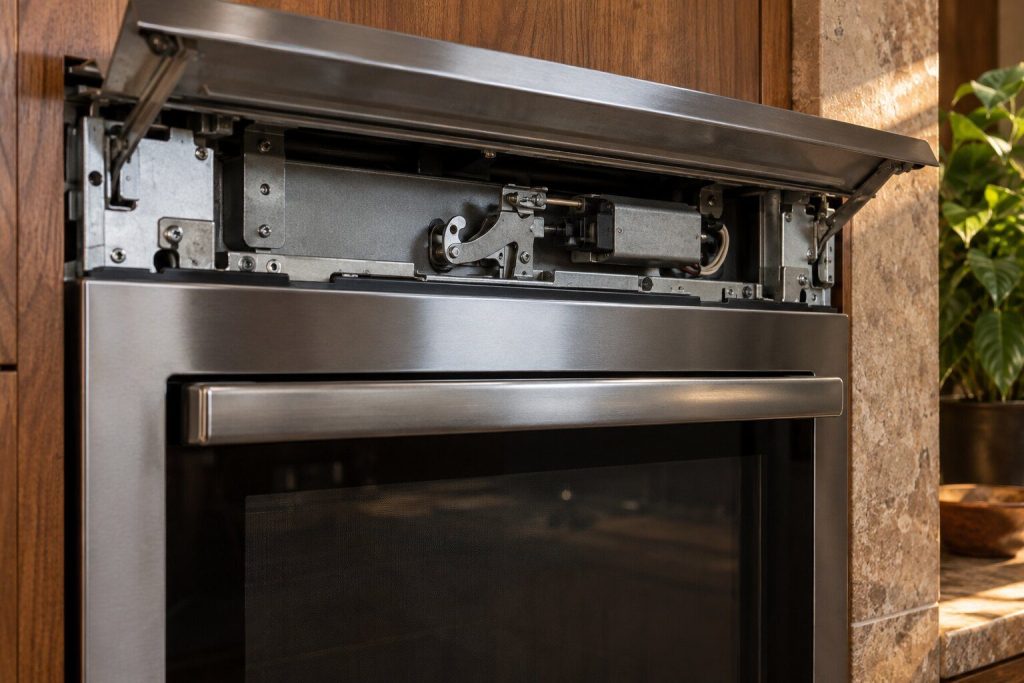
A DCS Oven Door That Has Locked Itself Shut
Three different situations wear this one symptom, and the wrong assumption costs either a latch motor or a door. One of them resolves itself if you leave it alone.
Read more
Tell us the model number and what it is doing.
This article is based on:
- Official manufacturer documentation
- Internal repair procedures
- Technician repair history
- Company quality standards