Appliance
DCS wall ovens
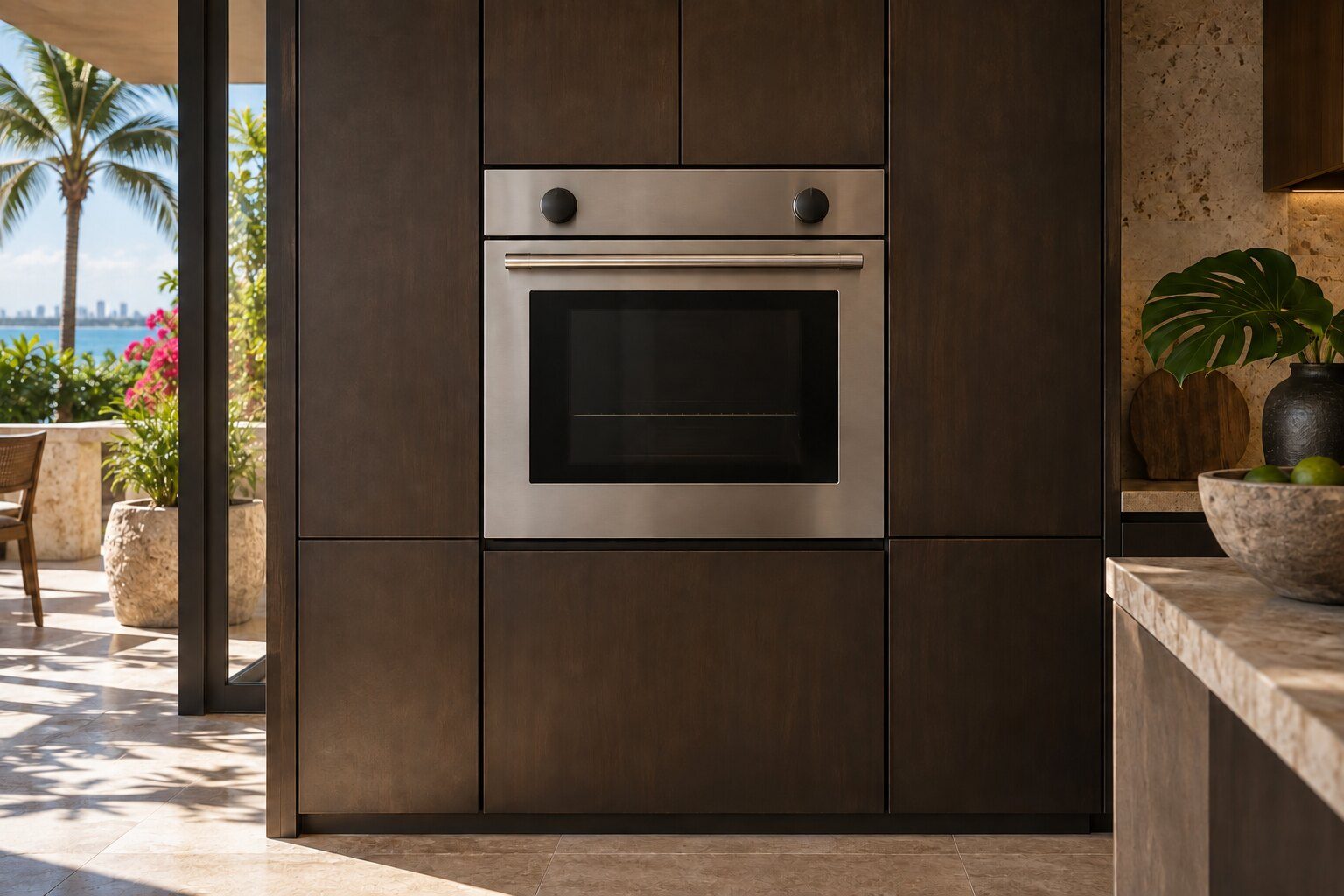
A wall oven is a cavity in a cabinet, and everything about the repair follows from that. It is heavy, it is screwed to the joinery, it sits above waist height, and behind it is a space somebody sized once and nobody has looked at since. The problems are the ordinary ones — heat that is not what the dial says, a door that has lost its seal or its hinge tension, a fan that has become loud, a control that has stopped responding — but the access is not ordinary, which is why we ask about the cabinet before the symptom. This make's wall ovens publish a decoded error table, and the sub-error after the F is where the real information is.
- 2 symptoms we are called out to
- From $95 diagnostic, credited to the repair
- 59 cities and neighborhoods covered
- OEM parts available on order
The short version
What this equipment is, for a repair
Configurations
Single and double, built into a tall run
Access
Planned before the visit, not discovered on arrival
Parts
OEM, available on order
Diagnostic
From $95, credited to the repair
What goes wrong with it
Symptoms we are called out to on DCS wall ovens
Each one covers the likely causes in the order they are worth checking, and what to do in five minutes before booking anything.
-
Runs hot, runs cold, or drifts during a bake Oven will not hold its temperature
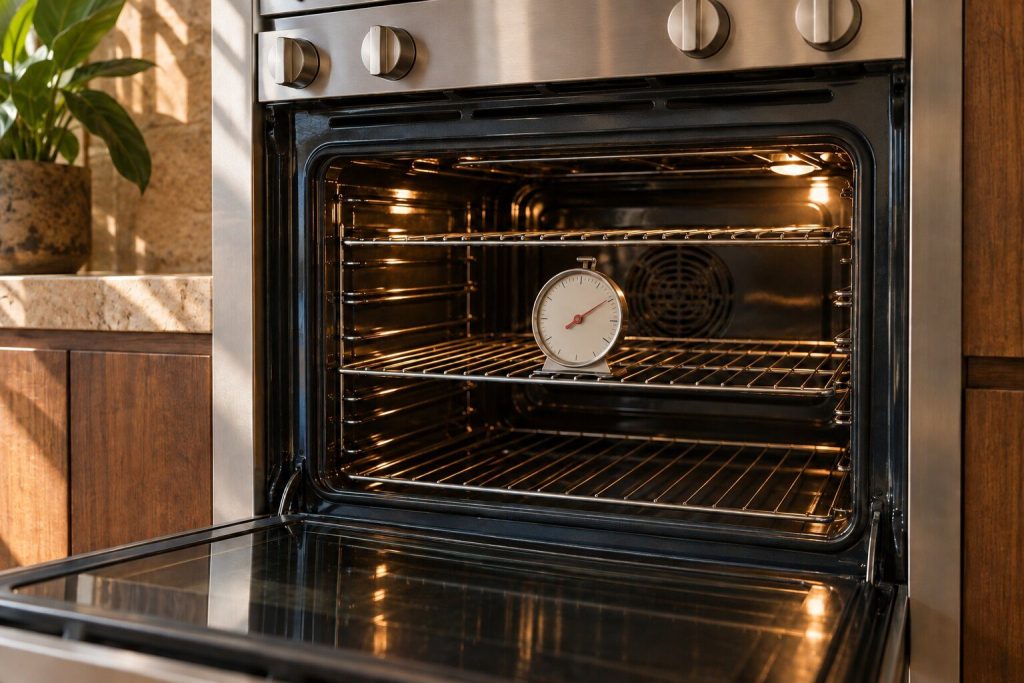
DCS oven not holding temperature. Running hot, running cold and failing to hold are one conversation, and it starts at the sensor rather than the element. Once a probe wanders, the control obeys it precisely and takes the cavity somewhere other than the dial says; on this much metal the error stays hidden until a cake disagrees. Doors deserve more suspicion than they get — a heavy one that has stopped pulling true bleeds heat from a corner, and that presents as a heating element on its way out.
- Probe before element: the sequence is most of the answer
- One cold corner indicts the door, never the element
- If the oven shows a code, the digits after the letter are the message
-
An icon, a beep, and a letter with two digits Oven shows an error code
DCS oven error code. On the indoor half of this make the codes are decoded rather than bare — the manufacturer publishes what each one means, and the two digits after the letter separate a missing power board from a software error from two different communication errors from a model identity mismatch. That last one is the interesting case: it is not a failure at all but a mismatch, usually created by an earlier repair, and no further replacing will clear it. Write the whole string down before it goes.
- The letter alone narrows nothing — the digits after it are the message
- One of the published codes means an earlier repair fitted the wrong variant
- Power down at the breaker for a full minute before deciding anything
What we do on it
Repairs we carry out on DCS wall ovens
Starting figures for this equipment in South Florida. The exact cost is confirmed after an on-site diagnostic — and this is not the whole list of what can go wrong, so call if your problem is not here.
-
from $95 Diagnostic visit
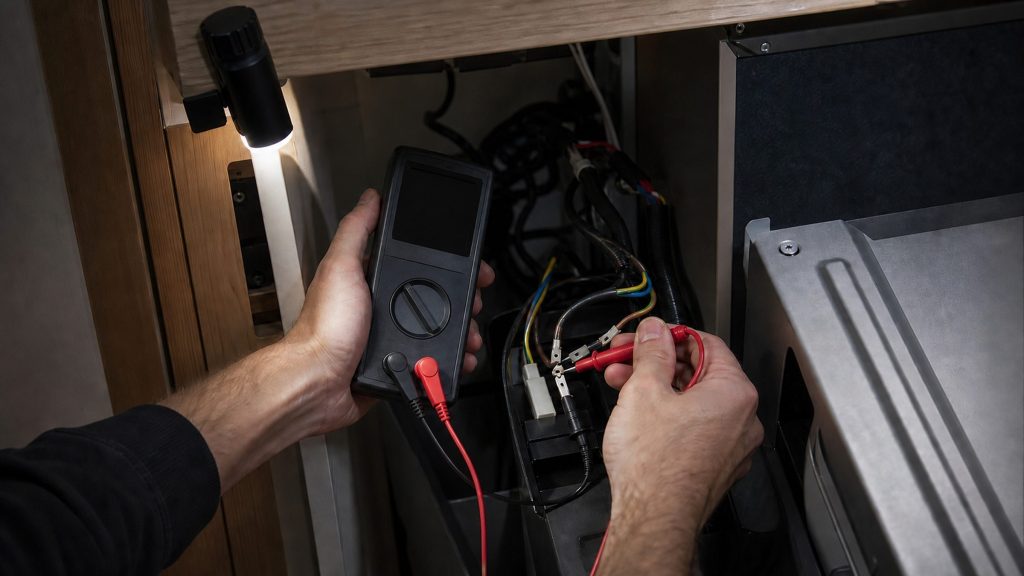
Establishing the problem itself, with nothing quoted until it is established. Two questions come before the symptom on this badge. Is the machine indoors or outdoors — because the indoor line answers in a decoded code and the outdoor line has no codes whatsoever, so the whole method changes. And what is it sitting in — masonry, joinery or a cart — because that, not the problem, sets the length of the visit. Whatever we find is written down with a figure beside it before a spanner is picked up. The charge comes off the repair when you go ahead; when our recommendation is to stop spending money on the machine, you get that recommendation and pay the same.
- Indoors or outdoors decides the method: a code to decode, or flame and smell to read
- Nothing quoted until the problem is established, and the charge comes off the repair
- Told plainly when the machine has stopped being worth the money
-
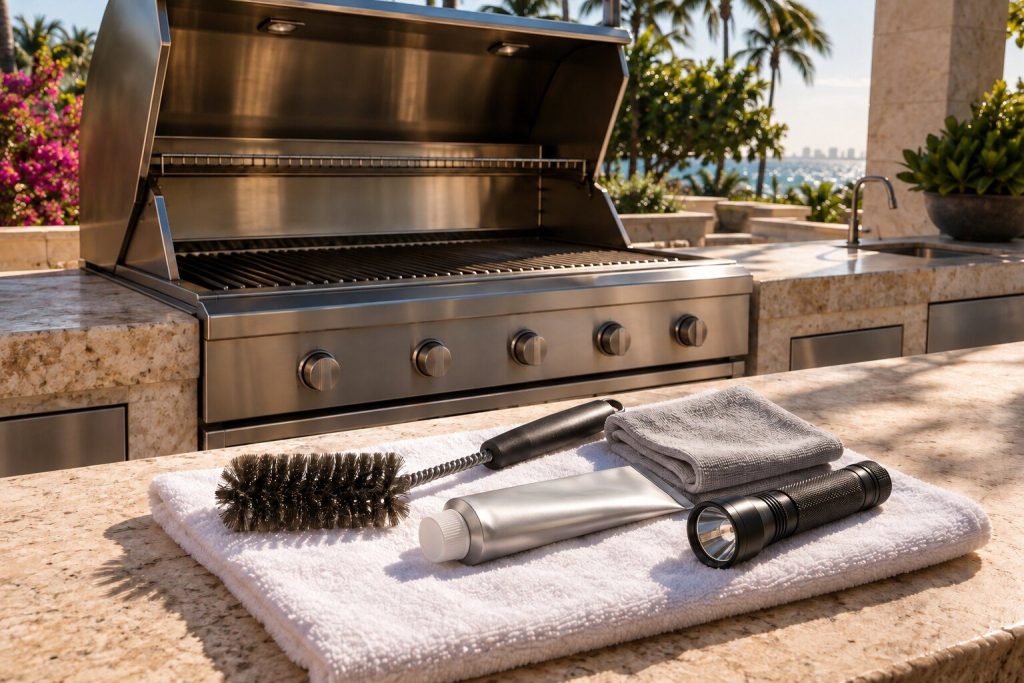
from $175 Appliance maintenance
The visit that is booked rather than called in. Outdoor cooking equipment in this market does not fail on a schedule set by hours of use — it fails on one set by salt, rain and the months it spends under a cover with humidity trapped underneath. A maintenance visit is where burners come out and get looked at before they are the reason dinner stopped, where the grease path is cleared before it is a fire, where drawer runners are treated before they pit, and where an undercounter refrigerator's condenser is cleaned before August asks it for everything. Indoors it is the ordinary and useful work: seals, hinges, sensor accuracy, filters, and the parts of a high-output range that quietly drift.
- Built around salt and season rather than around hours of use
- The grease path is treated as a fire question, because that is what it is
- Findings written down, so next year's visit starts from evidence
-
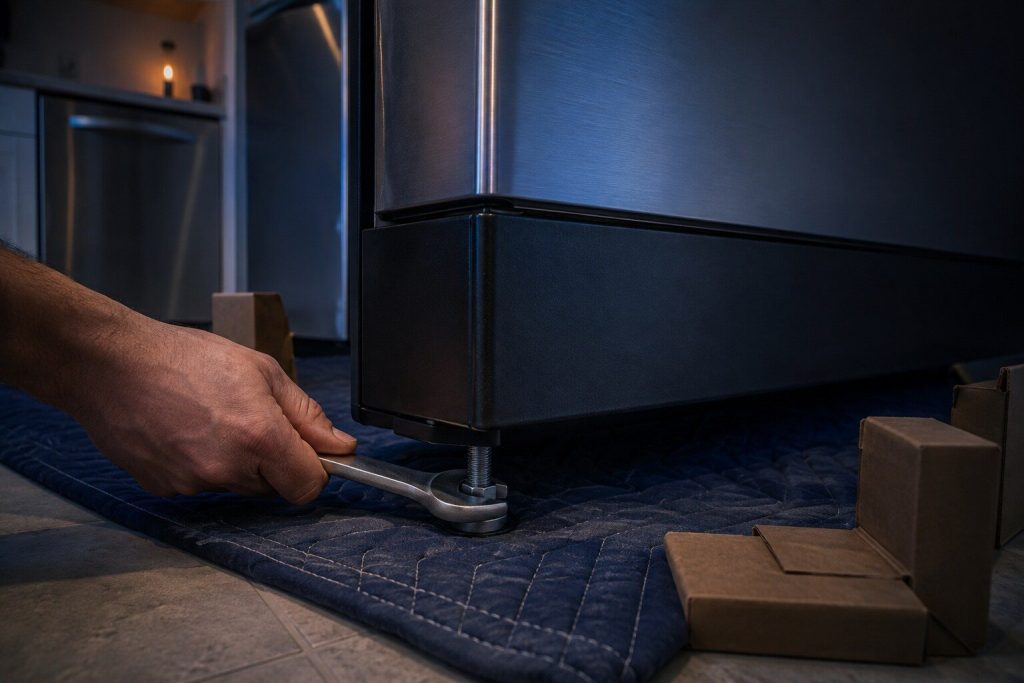
from $245 Appliance installation
Putting a machine into a space somebody else built. On this brand that is rarely a delivery and usually a fit: a grill head into a masonry cutout, a beverage center into an island with a ventilation path that has to actually work, a wall oven into a tall run, a cooktop into stone that does not forgive a second attempt. The measuring happens before anything is ordered, not after it arrives. Where an existing cutout is wrong for the machine that is meant to go into it, we say so while it is still a drawing — that conversation is cheap and the alternative is a slab with a hole in the wrong place.
- Measured against the cutout that exists, not the one in the brochure
- Ventilation and clearance treated as part of the install, because they decide whether it works
- Gas connection and leak check done properly and documented
-
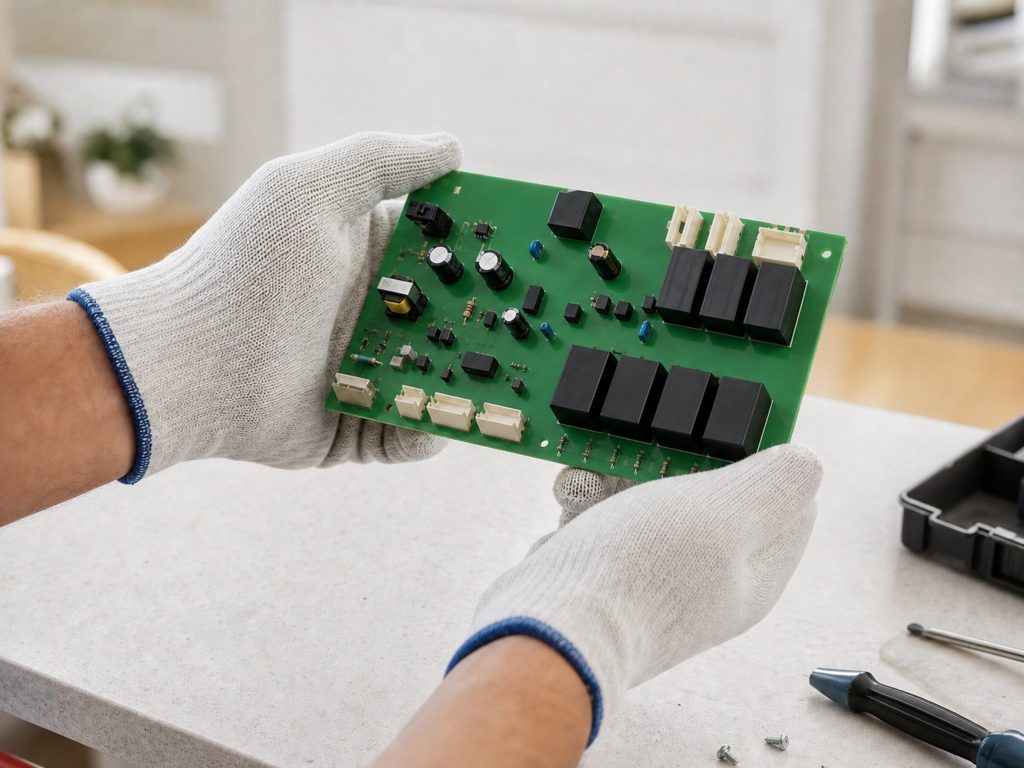
from $295 Control board repair
When the electronics rather than the mechanics are the problem. Indoors this brand publishes an error table that names board errors directly — a missing master or slave power board, a software error, a communication failure between boards, and one code that fires when the control does not recognize which model it is fitted to. That last one is the interesting one: it usually appears after a part has been replaced with the wrong variant, and no amount of further replacing will settle it until the model identity matches. We diagnose before we order, because a board is the most expensive thing on most of these machines and the second most commonly replaced without need.
- The published sub-error separates board, software and communication errors
- A code that means the control does not recognize the model is a fitting problem, not a dead board
- We prove the board is the problem before one is ordered
-
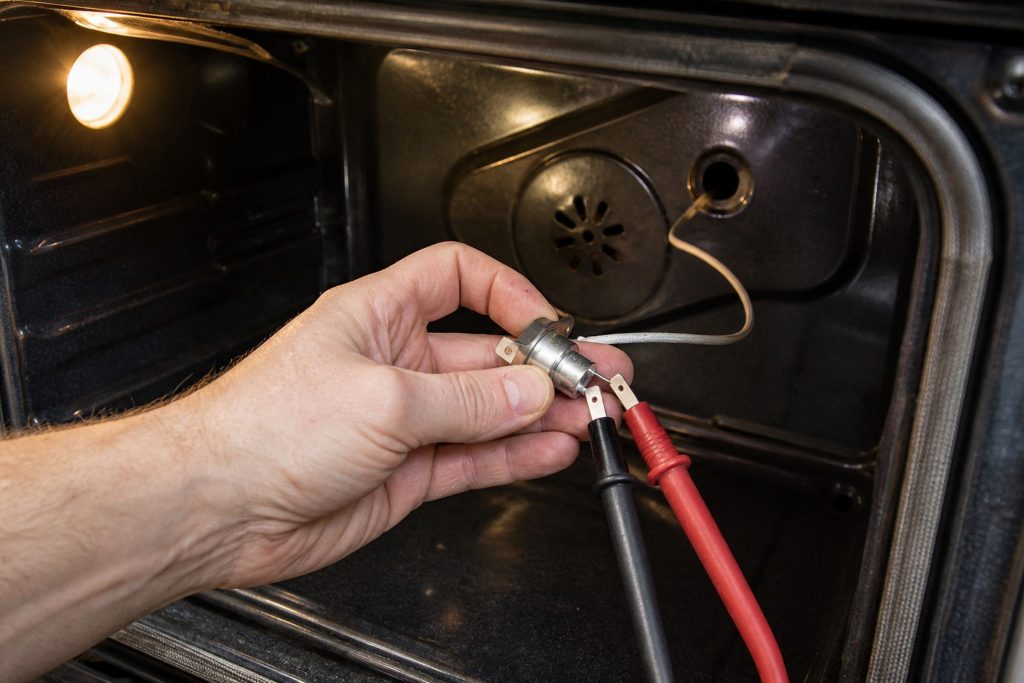
from $135 Oven temperature calibration
For the oven that works but lies. A cavity that runs twenty degrees hot bakes acceptably until it does not, and on a heavy range the mass hides the drift until something that used to be reliable comes out wrong. Calibration is measurement first: we log what the cavity actually does across a cycle at temperature rather than taking one reading at the peak, because the shape of the curve separates a drifted sensor from a door problem from a control that is cycling badly. Then we correct it, and re-measure rather than trusting the adjustment.
- Measured across a cycle, not once at the top
- The shape of the curve separates sensor drift from a leaking door
- Re-measured after adjustment, because an adjustment is not a result
-
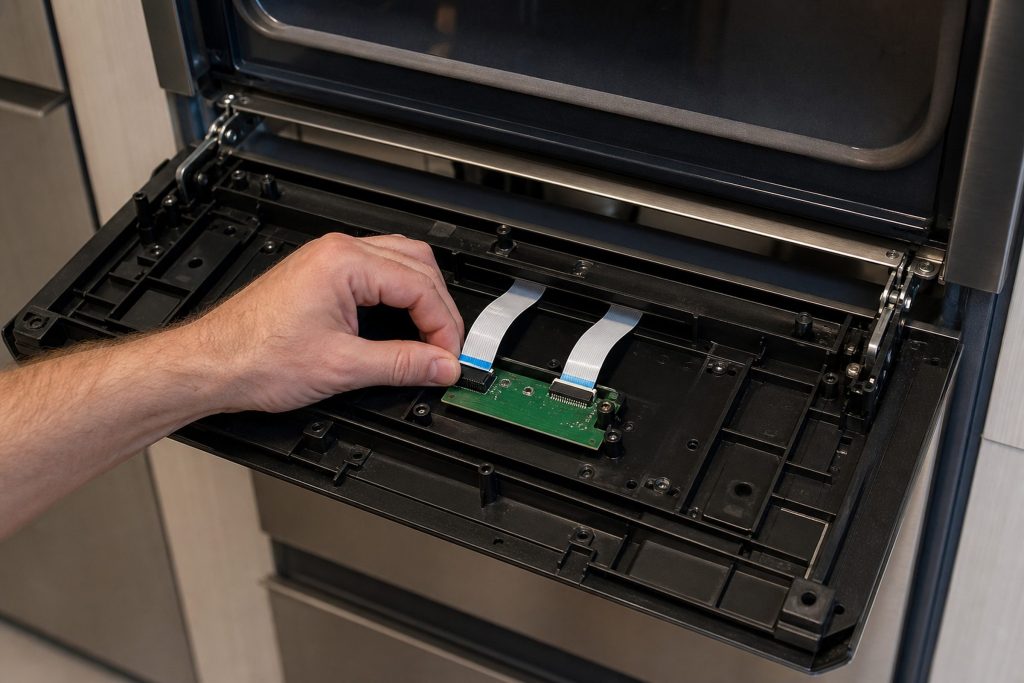
from $155 Range door and hinge service
A heavy door that has stopped closing square costs heat, costs even baking, and eventually costs the seal and the hinges themselves. On this class of range the door is genuinely heavy, which is why it is worth doing properly rather than adjusting by eye: springs and hinges under tension are the part of an oven most likely to hurt somebody who is improvising. The symptoms people describe — a cool corner, a door that stands a few millimeters proud, a hinge that thuds on the last inch — are all one conversation.
- A cool corner is usually the door, not the element
- Hinges under tension are not an improvise-with-a-screwdriver job
- Seal and hinges are checked together, because they fail together
-
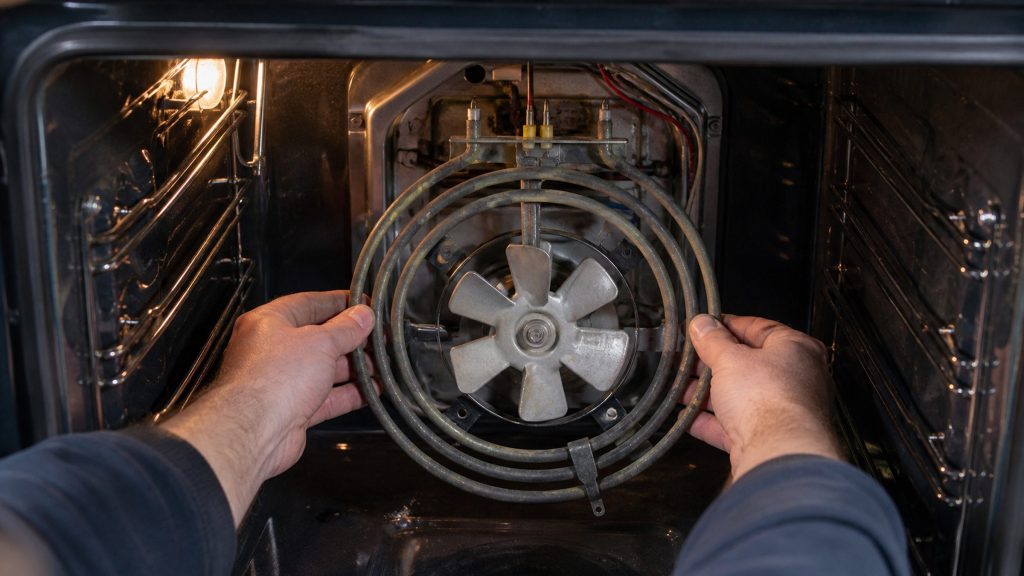
from $185 Wall oven not heating
A built-in cavity that has stopped making heat, or has stopped making the heat it claims. The list of causes is ordinary — element, sensor, thermal fuse, board, door — and the access is not, because everything is at chest height in somebody's joinery. This make publishes a decoded error table for these ovens and the sub-error after the letter separates several quite different visits, including one that means the control does not recognize which model it is fitted to. Reading the whole string to us on the phone regularly saves an entire diagnostic visit.
- Read the whole code — the digits after the letter are the message
- A thermal fuse that has opened after a self-clean is a common and cheap finding
- The cabinet decides whether this is an hour or an afternoon
-
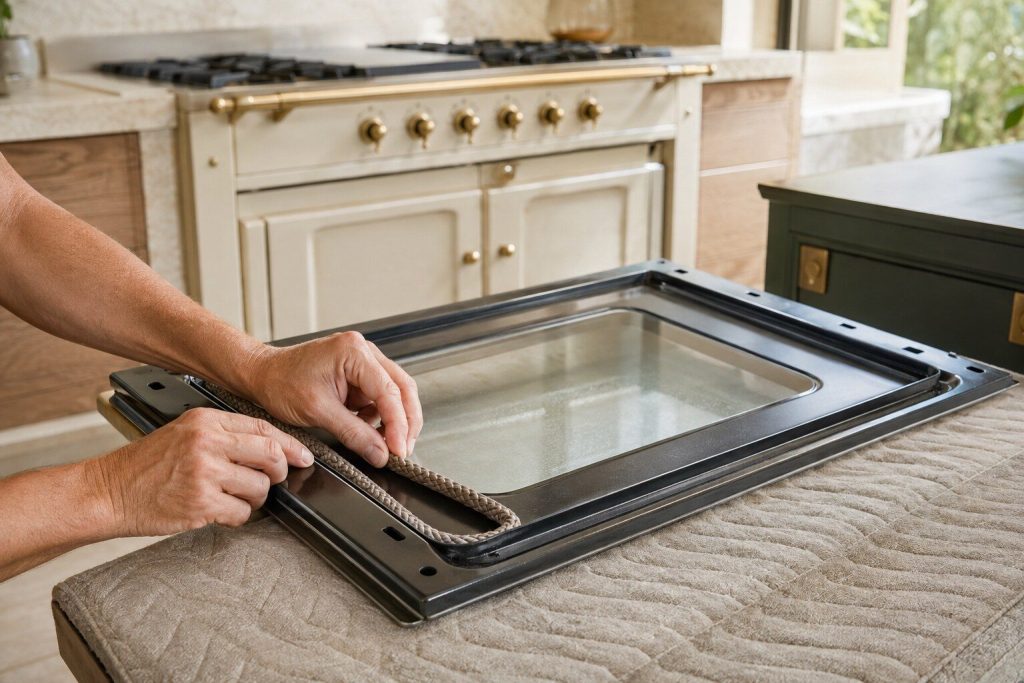
from $145 Wall oven door seal replacement
A seal that has hardened, shrunk or come away at a corner costs more than heat — it changes how the whole cavity behaves and it hides behind other symptoms. Owners describe uneven baking, a long preheat, a cool corner, or a kitchen that gets warm when the oven is on, and any of those can be a seal. It is also the classic casualty of the self-clean cycle: the hottest hours the seal will ever see, taken once a year, and it is the year after one of them that it fails. We check the hinges at the same time, because a door that no longer pulls square will destroy a new seal as quickly as it did the last one.
- Long preheats and a warm kitchen are seal symptoms people rarely connect
- Self-clean is the cycle that finishes a tired seal
- Fitted without checking the hinges, a new seal fails the same way
-
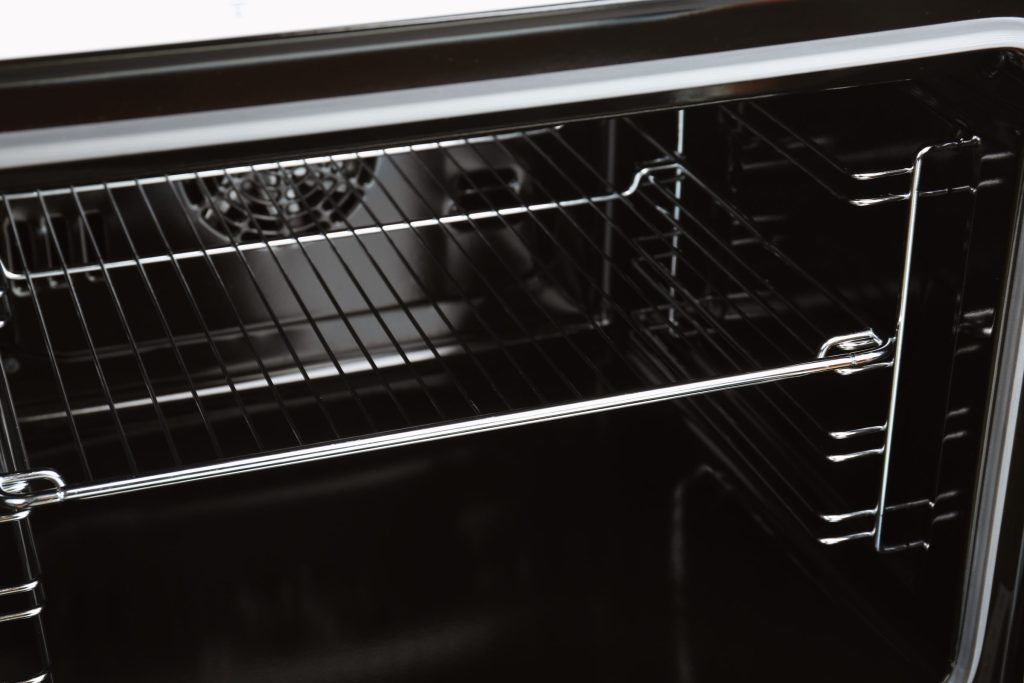
from $165 Convection fan repair
The sound arrives long before the symptom. A convection fan that has grown loud is generally a bearing going, or a blade catching its housing, and the window between noise and damage is the cheap part of this repair — an unbalanced wheel machines away the housing it spins in, and housings cost several times what motors do. The performance half of this is subtler: a fan that has stopped moving air properly turns a convection oven into an ordinary one, and the owner usually adapts to it over months without ever describing it as a problem. If your convection results changed and nothing else did, this is the page.
- The noise is a warning with months of notice in it
- A fan can fail into 'ordinary oven' without ever announcing itself
- An unbalanced fan damages the housing, which is the expensive part
In more detail
About DCS wall ovens
The cabinet is half the repair
Nothing about a wall oven failure is unusual; everything about reaching it is. It is heavy, it is fixed to joinery at chest height, and the space behind it was sized once and never revisited. That is why the first questions on this page are about the run, the trim and what is above and below — the answers decide whether a visit is an hour or an afternoon.
Codes here are decoded, and the digits are the message
This make's wall oven table does not publish bare numbers. It separates power board errors from software errors from board-to-board communication errors, and includes one that fires when the control does not recognize the model it is fitted to — a problem that appears after the wrong replacement part has gone in. Reading the full string to us saves a diagnostic visit.
After the self-clean is a season of its own
The high-temperature cycle is the annual stress test of a cavity, its seal, its hinges and its sensor. A wall oven that comes out of one behaving differently is not a coincidence and it is not misuse. We look at the whole door and the sensor together, because repairing one and leaving the other is how a customer sees us twice.
This article is based on:
- Official manufacturer documentation
- Internal repair procedures
- Technician repair history
- Company quality standards
Before you book
Questions about DCS wall ovens
It shows F1 and a pair of digits.
Read us the digits, because they are the problem. On this line the sub-errors separate a missing master power board from a missing slave board, a general software error, two different communication failures between the boards, and one that means the clock board does not support the model identity set on the power board — which is a thing that happens after a part has been replaced with the wrong one. Those are five different visits and several different parts. The letter alone tells us almost nothing.
Top cavity fine, bottom one dead — or the reverse.
That division is worth a great deal to us. Two cavities often share one control assembly and one supply, so a problem in either of those normally takes both down; one cavity alone usually means its own element, sensor, fan or door. It is not a rule — a communication error between boards can present as a single dead cavity — but it is the right place to start, and it decides which part we bring. Say which cavity and whether the working one is behaving perfectly.
Everything bakes unevenly since the self-clean.
Self-clean puts a cavity through the hottest hours of its life, and things that were marginal beforehand often do not survive it — a sensor drifts, a door seal hardens and shrinks, a hinge loses tension, occasionally a thermal fuse opens and the oven simply stops. None of that means the cycle was misused. It means the cycle is the test the oven takes once a year, and this is the season it failed. We check the seal, the hinges and the sensor together for exactly this reason.
Does the oven have to come out of the cabinet?
For the control, the door and the seal, usually not. For an element, a fan or anything at the back, usually yes — and on a built-in that means clearing the run, taking the weight safely at chest height and knowing what the trim is hiding. Two people and a plan, not one person and optimism. Where a run has been tiled or scribed up to the oven trim, we would rather see a photograph first than find out in your kitchen.
Where we do it
Across Miami-Dade, Broward, and Palm Beach
Same terms everywhere we go: an on-site diagnostic first, the price agreed in writing, and the exact figure confirmed once we have seen the unit.
Neighborhoods people ask for by name