Troubleshooting
Where the Model Number Hides on a DCS, Indoors and Out
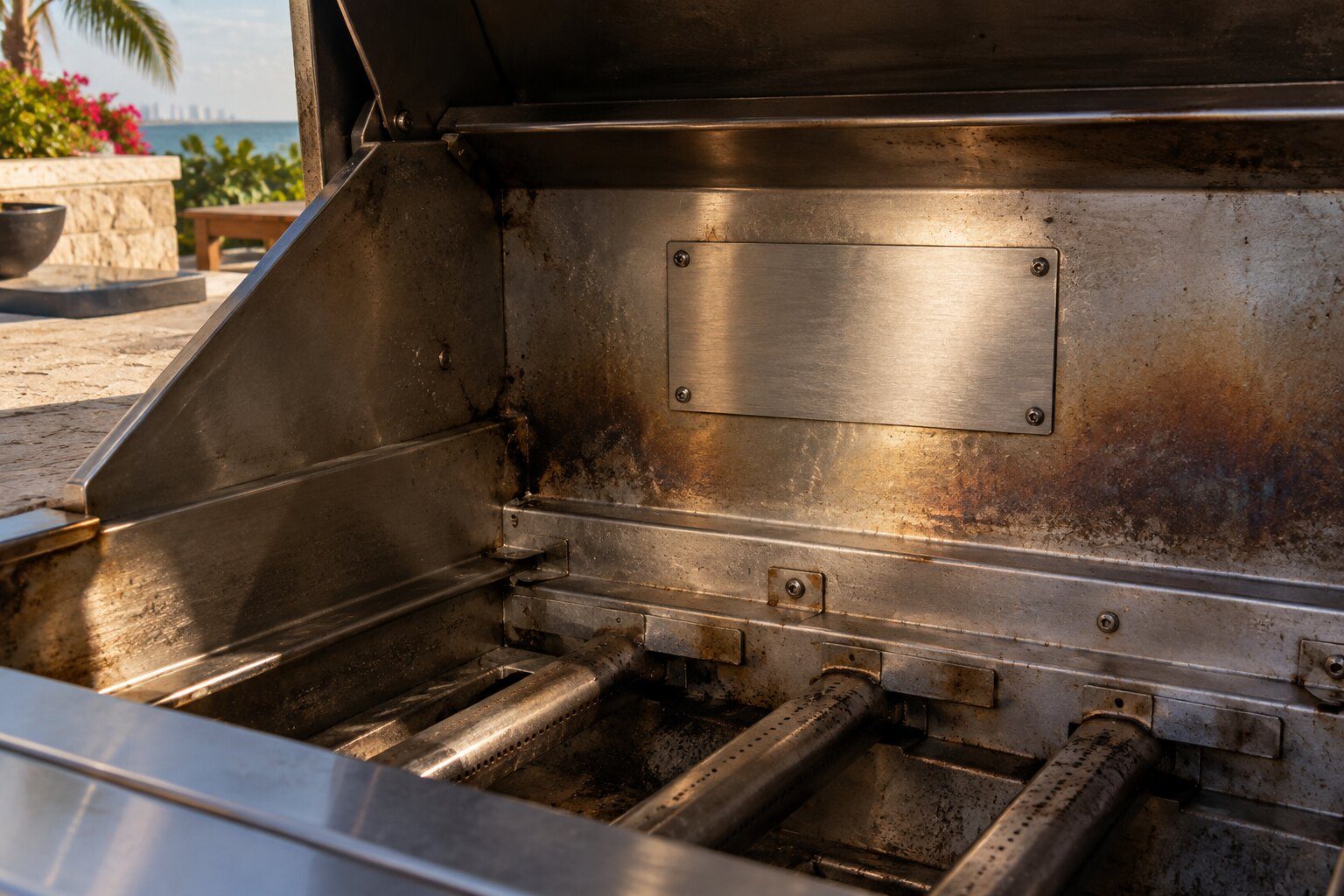
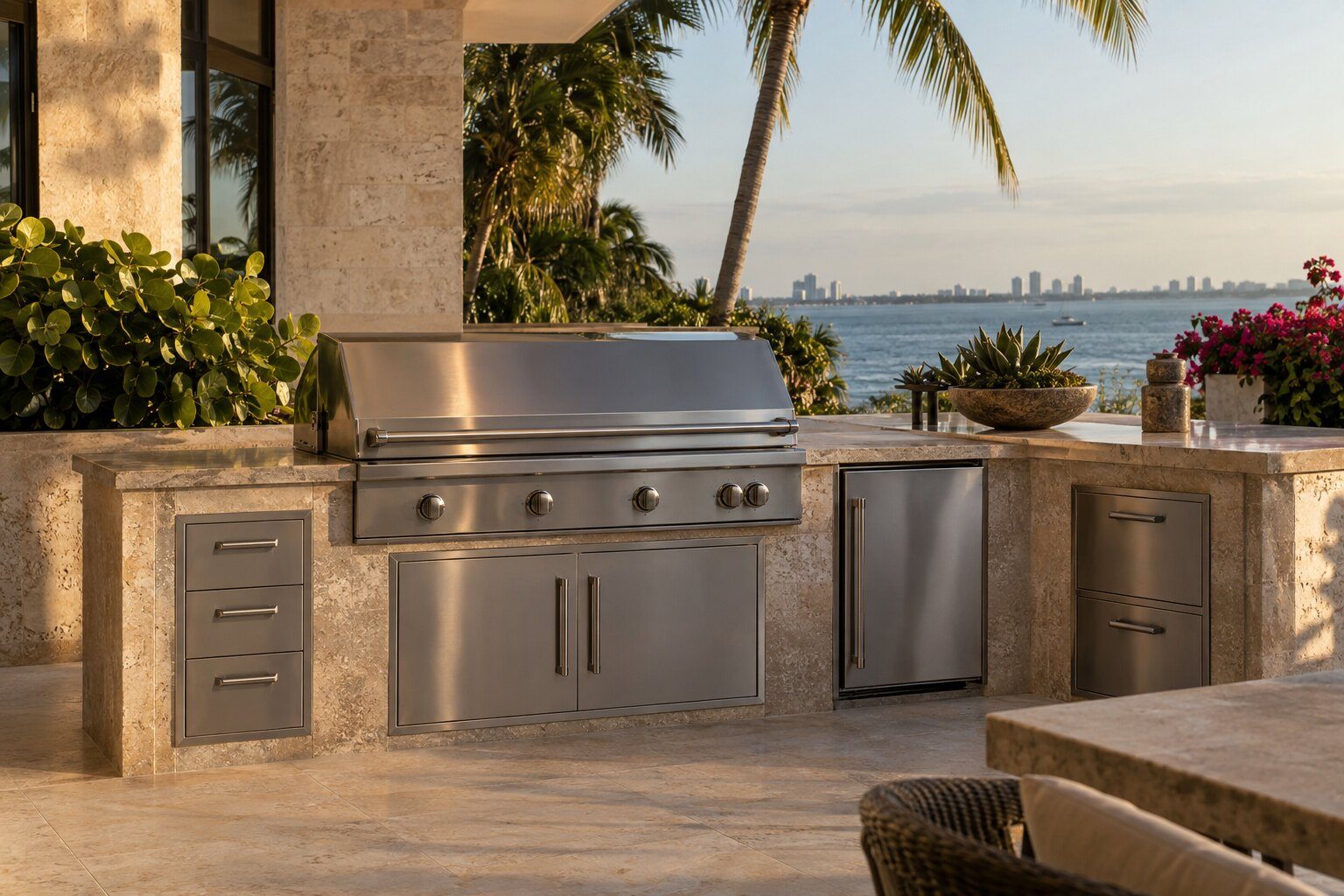
On a DCS the rating plate is in a different place on almost every machine, and it is worth finding before you call rather than during. Under a grill hood it is generally on the firebox wall or behind the control panel, reachable once the grates and radiants are out. On an island module — a side burner, a griddle, a warming drawer — it is usually on the underside of the front rail or inside the cabinet below. On built-in indoor equipment it is on the frame revealed when the door is opened, or behind the kick strip at the bottom of the run. On outdoor refrigeration it is inside the door, often on the sidewall near the top. What the number settles is which parts physically fit, and outdoors it settles a second thing: whether the unit was configured for natural gas or LP, since the SKU carries that as its last letter. Photograph the plate rather than reading it out — a decade of salt air makes characters ambiguous, and a photograph carries the serial as well.
The full guide
Every machine on this badge hides its plate somewhere different, and none of them is where you would look first.
DCS oven model number location: on a grill
Lift the hood, take out the grates and the radiant trays, and look at the firebox wall — usually toward one end, sometimes on the back. On some builds it sits behind the control panel instead, which means the fascia has to come off and is a job for us rather than for a Saturday.
Grease is the obstacle more often than corrosion. A plate under twelve years of cooking is legible again after a wipe with something degreasing.
On an island module
Side burners, griddles, power burners and warming drawers generally carry the plate on the underside of the front rail or inside the cabinet beneath. Open the access door below and look up: it is frequently facing down, which is why people miss it.
On built-in indoor equipment
Open the door and look at the frame it closes against — most often along one side, sometimes across the top. On a wall oven it can also be behind the lower trim, which comes away with the kick strip.
You should not have to pull the machine out of the run to find its number. If it looks as though you do, stop and let us do it.
On outdoor refrigeration
Inside the door, high on a sidewall. On drawer units it may be on the side of the drawer housing, visible with the drawer fully out.
Why the last letter matters out here
Outdoor gas equipment is built for one fuel or the other, and the SKU says which. The orifices differ, and a machine running on the wrong one is subtly wrong from its first day — lazy flame, poor searing, soot — in a way that looks like a service problem for years.
Owners' memories of which they have are wrong often enough that we treat it as something to verify rather than something to ask. But if the plate says it, you have saved us the step.
Photograph it, do not read it
Three reasons, all practical. A decade of salt makes eights look like sixes and Bs look like 8s. The photograph carries the serial as well, which narrows the production period. And a photograph attached to a booking is read by whoever loads the van, rather than by whoever answered the phone and wrote it down.
What to do when there is genuinely no plate
It happens — plates fall off, get painted over during a renovation, or corrode past reading. Tell us the machine, its size, roughly when it was installed and what it is built into, and send a photograph of the front. On equipment this distinctive, that is usually enough to identify it.
If it turns out to be a repair
What this leads to, and what it costs
Every job on this site is priced the same way: an on-site diagnostic first, the figure agreed in writing before anybody starts.
-
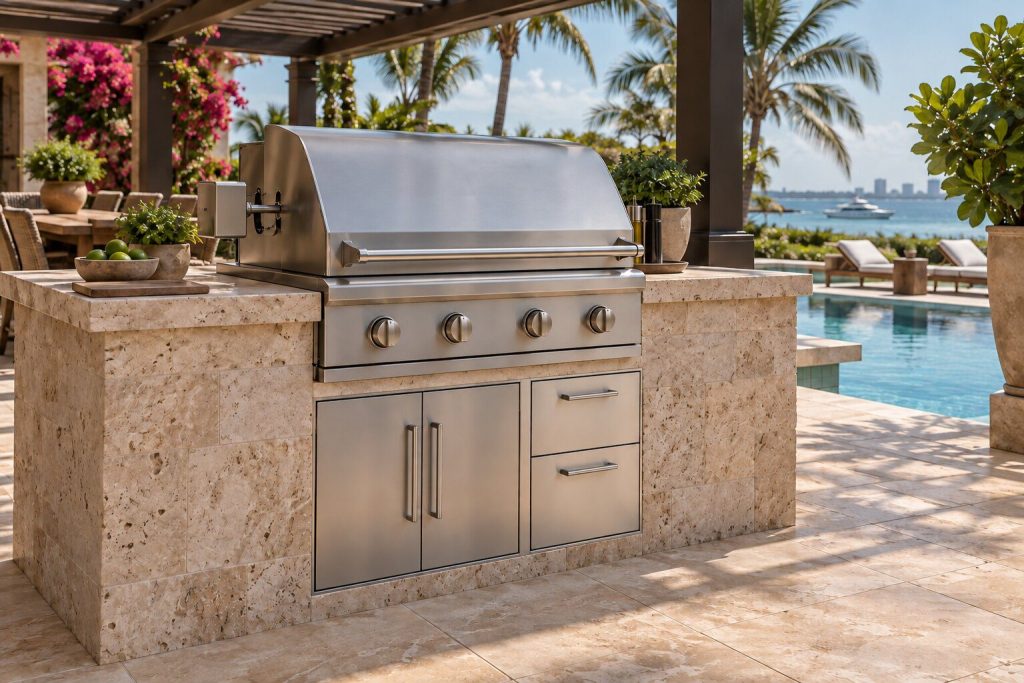
Series 9 BE1-36RC repair
DCS BE1-36RC repair in Miami: what owners of this Series 9 unit search for, what those symptoms usually point at, and what the work involves. Diagnostic from $95, credited toward the repair.
- Be1-36rc
- Be1-36rc repair
- Be1-36rc parts
-
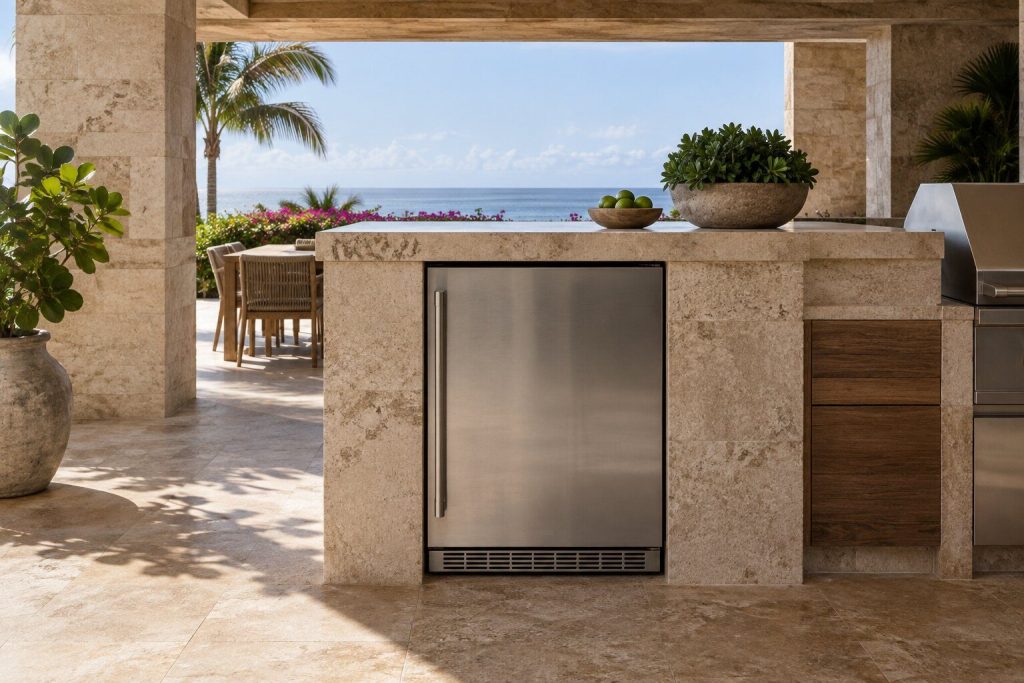
Beverage center RF24RE4 repair
DCS RF24RE4 repair in Miami: what owners of this beverage center search for, what those symptoms usually point at, and what the work involves. Diagnostic from $95, credited toward the repair.
What goes wrong on this one -
from $95 Diagnostic visit
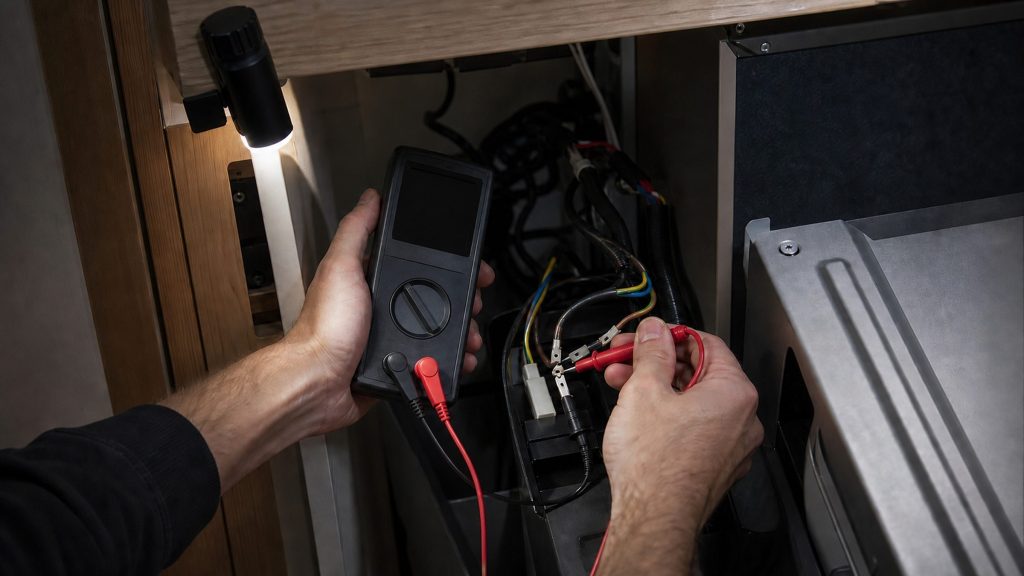
Establishing the problem itself, with nothing quoted until it is established. Two questions come before the symptom on this badge. Is the machine indoors or outdoors — because the indoor line answers in a decoded code and the outdoor line has no codes whatsoever, so the whole method changes. And what is it sitting in — masonry, joinery or a cart — because that, not the problem, sets the length of the visit. Whatever we find is written down with a figure beside it before a spanner is picked up. The charge comes off the repair when you go ahead; when our recommendation is to stop spending money on the machine, you get that recommendation and pay the same.
- Indoors or outdoors decides the method: a code to decode, or flame and smell to read
- Nothing quoted until the problem is established, and the charge comes off the repair
- Told plainly when the machine has stopped being worth the money
Questions people ask about this
The plate is corroded and half of it is unreadable.
Common on a waterfront terrace after ten years, and not fatal. Photograph what is left, including the serial, and tell us where the machine is and roughly when it was installed. Between the partial number, the configuration and the age we can usually get to the right parts list.
Does the last letter of the number really matter?
On outdoor gas equipment, yes — it separates the natural gas build from the LP one, and the orifices differ. A machine converted at some point in its life may carry a sticker saying so rather than a different plate, which is exactly why we verify rather than take it on trust.
Is the serial number worth having too?
Yes, and it costs nothing since it is on the same plate. It narrows the production period, which matters when a part changed mid-run — and on equipment no longer sold here, knowing the period is sometimes the difference between a part being available and not.
Troubleshooting
More guides like this one
-
Resetting a DCS Oven Control, and What a Reset Actually Proves
A reset is a test, not a repair. If the error stays away, that was the whole story. If it comes back, the reset has just told you something valuable for nothing.
Read more -
Reading a DCS Oven Error Code: the Digits Are the Message
The letter narrows almost nothing. The two digits after it separate five components and one earlier repair — and one of them is not a failure at all.
Read more -
A DCS Oven That Will Not Turn On at All
Nothing on the panel is a different problem from an oven that lights up and will not heat. Start further back than the oven — frequently further back than the kitchen.
Read more
Tell us the model number and what it is doing.
This article is based on:
- Official manufacturer documentation
- Internal repair procedures
- Technician repair history
- Company quality standards