
Broward · South Florida
DCS repair in Parkland
Newer, larger houses well inland, with big kitchens and utility space beyond them. More appliances per house than average, and more of them out of sight until something goes wrong.
We cover Parkland and the rest of Broward: an on-site diagnostic first, the price agreed in writing before anything is opened, and the exact figure confirmed once we have seen the unit.
By unit
What we repair in Parkland, by DCS unit
Start with whichever matches yours. How an appliance is installed shapes the visit as much as the repair does, which is why we ask about it when you book.
-
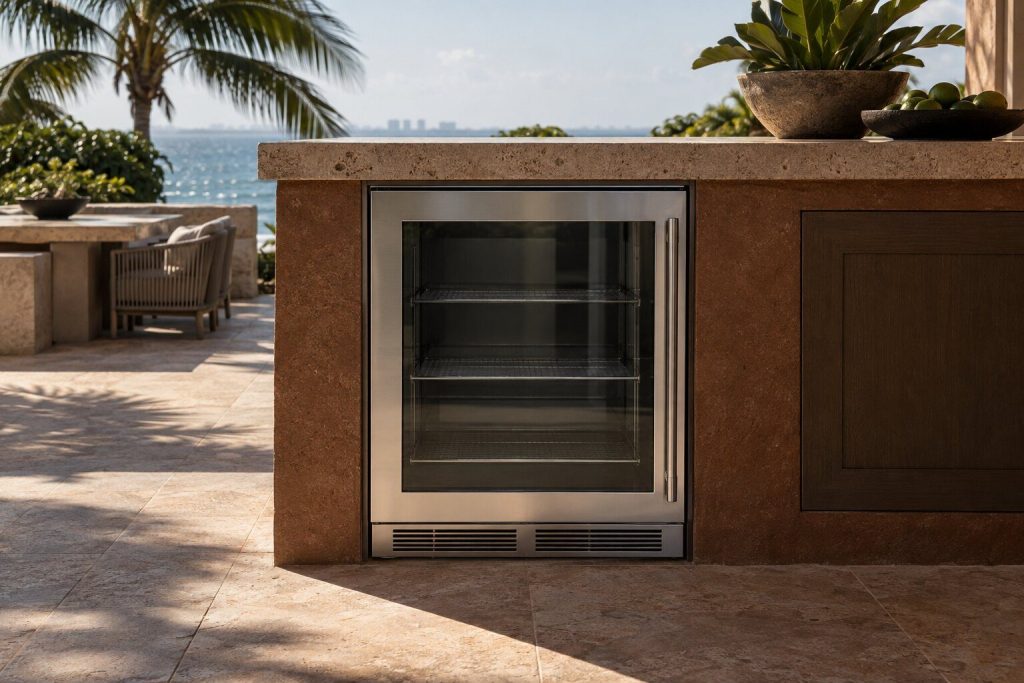
Outdoor-rated, under the counter of the island DCS beverage center repair in Parkland
The one cold machine on a hot brand, and it earns its place by living outside. An outdoor-rated beverage center sits under the counter of the island, a meter from a grill, in ambient temperatures the indoor version of the same cabinet is not built for. That changes what fails and how it presents: a unit running constantly and never reaching temperature in August is often doing everything right in conditions it cannot win, and the fix is ventilation or shade rather than a compressor. The genuine problems are the ordinary refrigeration ones — a seal, a fan, a drain, a condenser packed with dust and salt — plus one this climate adds, which is condensation where an indoor machine would have had none.
- Outdoor-rated, and the rating is the whole story in a Miami August
- A condenser in an island collects salt and dust faster than any indoor cabinet
- Running constantly is not automatically a problem — the ambient may be the answer
-

Commercial-style, dual fuel and all gas DCS range repair in Parkland
Indoors the badge means a commercial-looking range: heavy grates, high-output sealed burners, a single deep oven or a pair, and often a griddle or a grill section in place of two burners. It is built to be cooked on hard, and the calls reflect that — ignition on one burner, an oven that will not hold the temperature it is set to, a door that has stopped sealing, a fan that has become loud. Dual fuel and all-gas versions fail in different places, so the first thing we establish is which one is in the kitchen. Unlike the outdoor half of this brand, a range can tell us what is wrong: the indoor line publishes decoded error tables, and an F-code with its sub-error narrows the visit before we arrive.
- Dual fuel and all gas — the same cabinet, two different service stories
- A griddle or grill section instead of burners changes what the top is asked to do
- This half of the brand does publish codes, and they are decoded rather than numbered
-
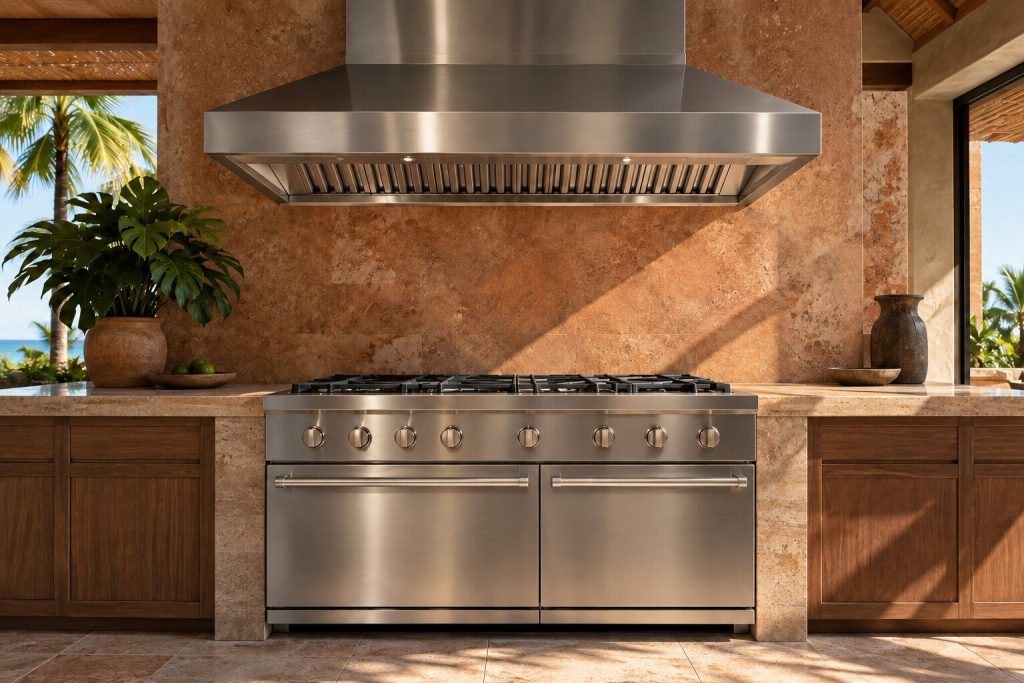
Over the range indoors, over the grill outside DCS range hood repair in Parkland
A hood is the machine nobody thinks about until the kitchen stops clearing, and on this badge there are two of them living quite different lives. Indoors it sits over a high-output range and is asked to move a great deal of air quietly; outdoors it sits over a grill in the weather and is asked to survive. The problems divide the same way — indoor hoods bring blowers, speed controls, lights and baffle filters that nobody has washed; outdoor hoods bring corrosion, water where the electrics are, and a duct that has become a home for something. Whether the hood actually vents outside or recirculates through a filter is the first thing we establish, because half the complaints we hear about smoke are a hood doing exactly what it was installed to do.
- Indoor and outdoor hoods on one badge, and they fail for opposite reasons
- Vented or recirculating decides whether the complaint is a problem at all
- Baffle filters are the maintenance nobody was told about
-
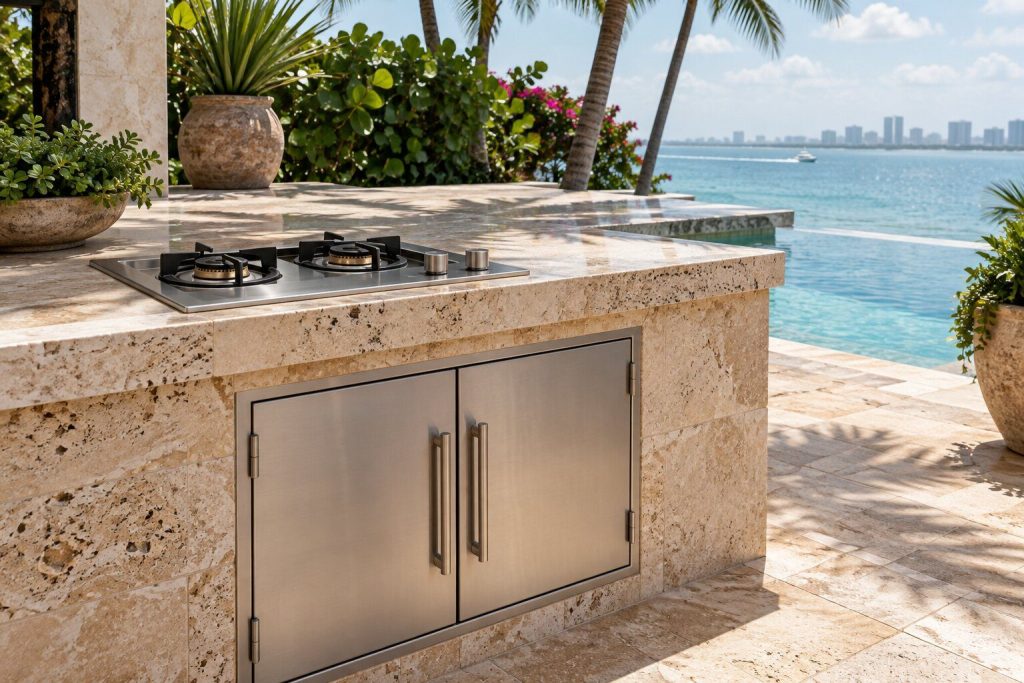
Side and power burners, warming drawers, doors and drawers DCS outdoor kitchen appliance repair in Parkland
The grill is the part people photograph; the rest of the island is the part that generates the calls. A DCS outdoor kitchen is a run of separate machines sharing one gas manifold and one stone surround — side burners and power burners for a pot, a warming drawer, access doors and drawer stacks, sometimes a vent hood over the whole thing. Each has its own failure and its own access, and they fail in an order the climate sets rather than one the catalog does. Doors and drawers seize long before anything gas-fired stops working, because the hardware is what the rain and the salt reach first.
- Several machines, one manifold and one surround — a supply problem shows up on all of them at once
- Drawer runners, hinges and latches are the first casualties of an outdoor install
- The stone is the constraint: what can be removed was decided when the island was built
-
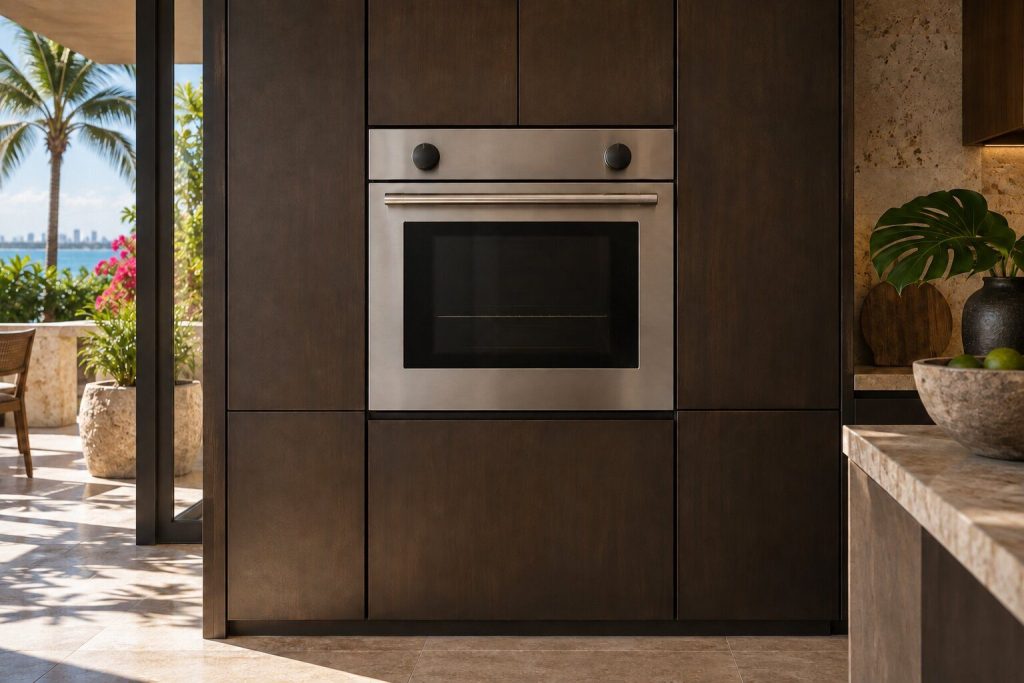
Single and double, built into a tall run DCS wall oven repair in Parkland
A wall oven is a cavity in a cabinet, and everything about the repair follows from that. It is heavy, it is screwed to the joinery, it sits above waist height, and behind it is a space somebody sized once and nobody has looked at since. The problems are the ordinary ones — heat that is not what the dial says, a door that has lost its seal or its hinge tension, a fan that has become loud, a control that has stopped responding — but the access is not ordinary, which is why we ask about the cabinet before the symptom. This make's wall ovens publish a decoded error table, and the sub-error after the F is where the real information is.
- Built in above waist height — the cabinet decides the visit before the problem does
- The published table decodes F1 into separate board, software and communication errors
- A double oven is two cavities and frequently one control — which one is wrong matters
-
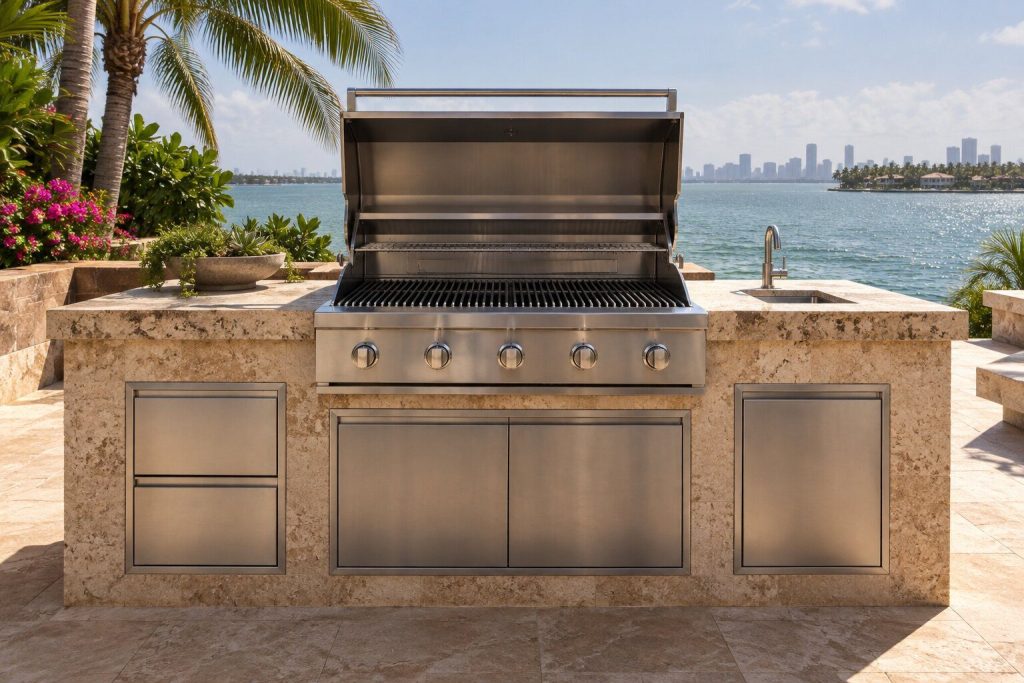
Built into the island, or on a cart · Series 7 and Series 9 DCS grill repair in Parkland
This is the machine most people mean when they say DCS, and in South Florida it is the one that ages fastest. A grill dropped into a stone island is plumbed to gas, wired for its lights and rotisserie, and then left to face salt air for eleven months of the year with a cover on it. What fails is rarely the thing the owner expects: burners and ignitors are consumables here, the radiant trays and grease tray are part of the fire risk rather than part of the cleaning, and half the calls we take turn out to be a supply problem at the cylinder or the manifold rather than anything inside the hood. The ones built into an island are the slower visits — the surround decides what can come out and in which order.
- Built-in and cart versions of the same cooking platform — the surround decides the visit
- No error codes anywhere on this half of the brand: the grill tells you in flame, smell and sound
- Salt air is the second owner of every outdoor stainless part in this market
By job
The repairs we are called out for in Parkland
Starting figures for this equipment in South Florida. What moves them is the model, the access and the part — the exact cost is confirmed after the on-site diagnostic.
-
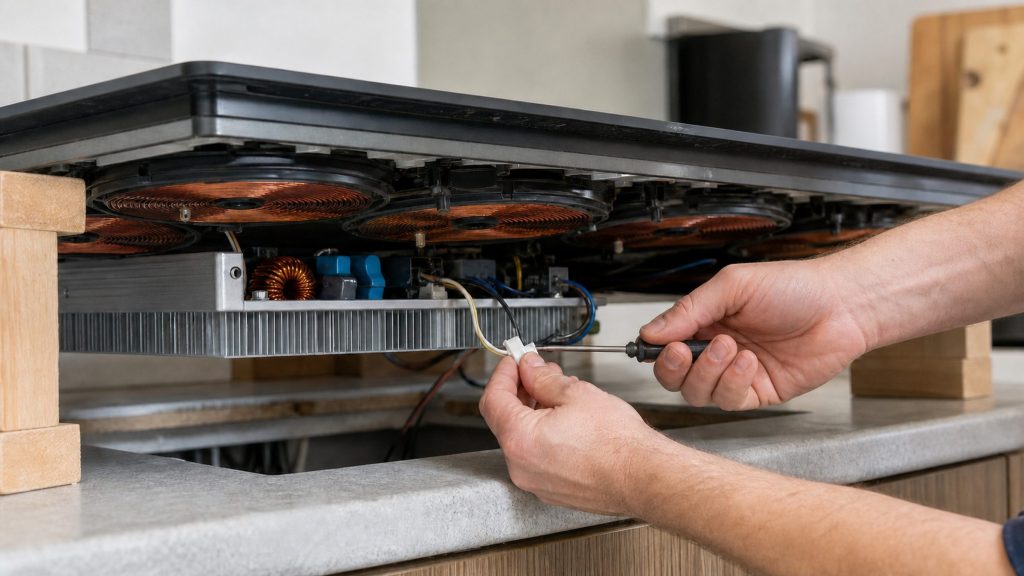
from $215 Induction zone and coil repair
One zone dead while the others work perfectly. That is the useful version of an induction problem, because it takes the supply and the main board mostly out of the picture and puts the zone's own coil, its power stage and its cooling in front of us. Before any of that is opened there is a free check worth doing: a pan whose base is not magnetic, or has warped so it no longer sits flat, will fail on any zone and fail most obviously on the smallest. If every pan fails on one zone and all of them work on the others, that is the zone, and that is this page.
- One zone dead, the rest fine — the problem is in that zone's own chain
- Test with a pan you know works before an appointment is booked
- Cooling failures present as zone failures and are cheaper to fix
-
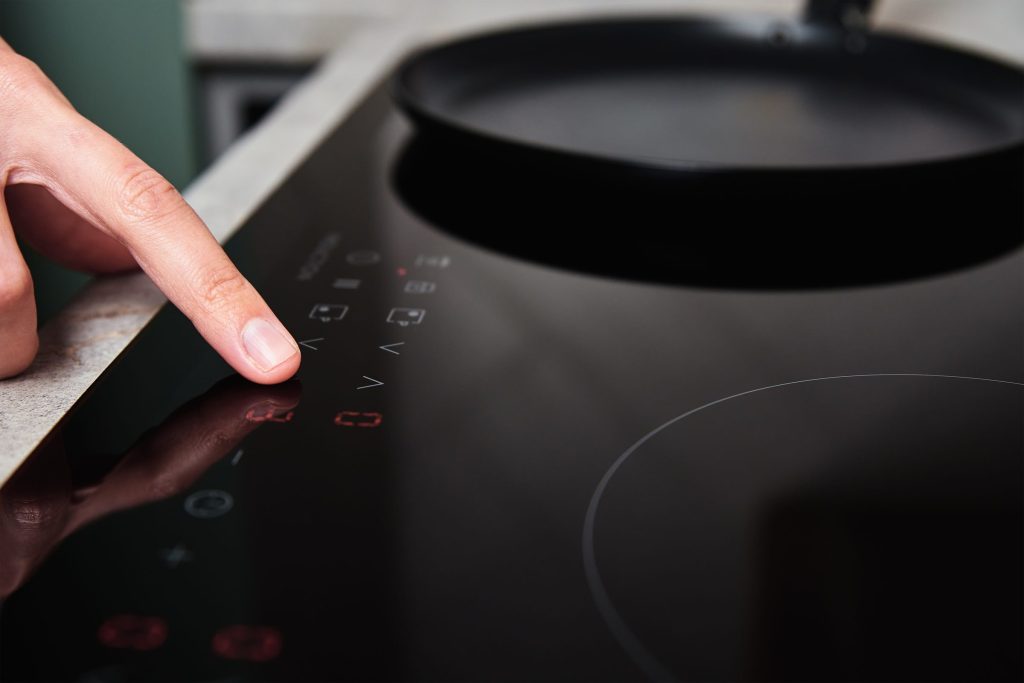
from $175 Cooktop touch control repair
For the top that lights up and will not listen, or listens when nobody has touched it. On a glass top the control surface is also the cooking surface, and everything that gets spilled, wiped or rested on it is part of the story: the published code list includes continual key activation precisely because a cloth left over the controls is a routine cause. Where it is not that, it is usually moisture that has got under the glass at an edge, a connection to the control board, or the board itself. The order matters, because the last of those is the expensive one and the first two are not.
- A cloth over the controls is a published code, not a joke
- Moisture under the glass edge imitates a failed panel exactly
- The board is the last suspect, not the first
-
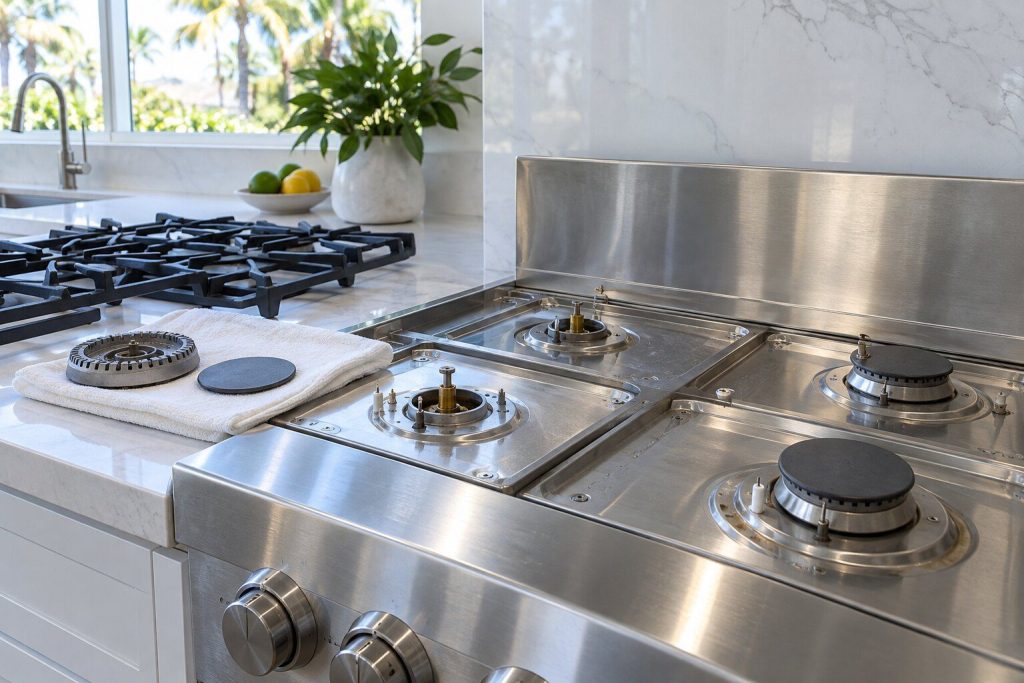
from $135 Gas cooktop burner service
For flames that are uneven, lazy, or wrong on one burner out of five. On a drop-in gas top the diagnosis is the same as on the range top and the access is easier, which makes this one of the few genuinely quick visits on this site. Uneven around a single ring is nearly always the cap or the ports; uneven on every burner at once is the supply or the regulator and belongs to a different page. Burners that have been through a dishwasher — which is common and rarely helpful — get their own look, because a cap that has been stripped of its coating never behaves the same again.
- One ring wrong is the burner; every ring wrong is the supply
- Caps through a dishwasher are a recognisable and permanent change
- The quickest visit on this site when it is what it looks like
-
from $185 Wall oven not heating
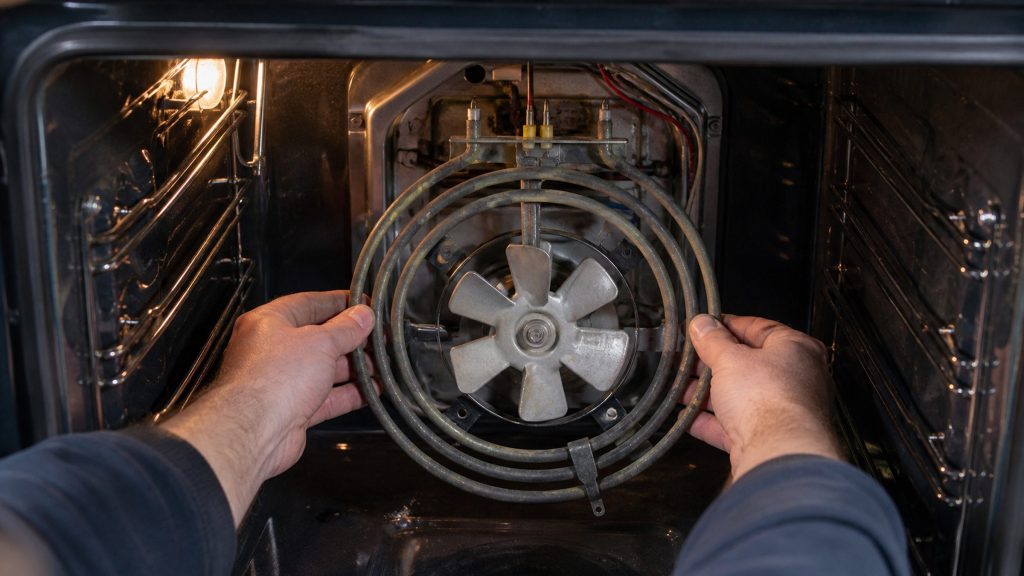
A built-in cavity that has stopped making heat, or has stopped making the heat it claims. The list of causes is ordinary — element, sensor, thermal fuse, board, door — and the access is not, because everything is at chest height in somebody's joinery. This make publishes a decoded error table for these ovens and the sub-error after the letter separates several quite different visits, including one that means the control does not recognize which model it is fitted to. Reading the whole string to us on the phone regularly saves an entire diagnostic visit.
- Read the whole code — the digits after the letter are the message
- A thermal fuse that has opened after a self-clean is a common and cheap finding
- The cabinet decides whether this is an hour or an afternoon
-
from $145 Wall oven door seal replacement
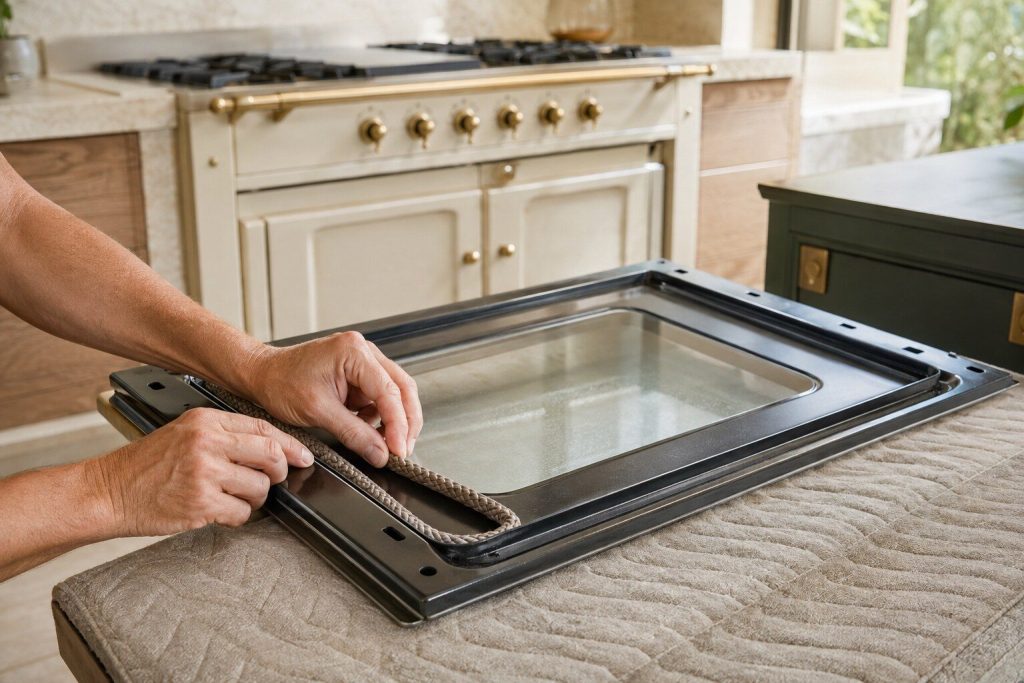
A seal that has hardened, shrunk or come away at a corner costs more than heat — it changes how the whole cavity behaves and it hides behind other symptoms. Owners describe uneven baking, a long preheat, a cool corner, or a kitchen that gets warm when the oven is on, and any of those can be a seal. It is also the classic casualty of the self-clean cycle: the hottest hours the seal will ever see, taken once a year, and it is the year after one of them that it fails. We check the hinges at the same time, because a door that no longer pulls square will destroy a new seal as quickly as it did the last one.
- Long preheats and a warm kitchen are seal symptoms people rarely connect
- Self-clean is the cycle that finishes a tired seal
- Fitted without checking the hinges, a new seal fails the same way
-
from $165 Convection fan repair
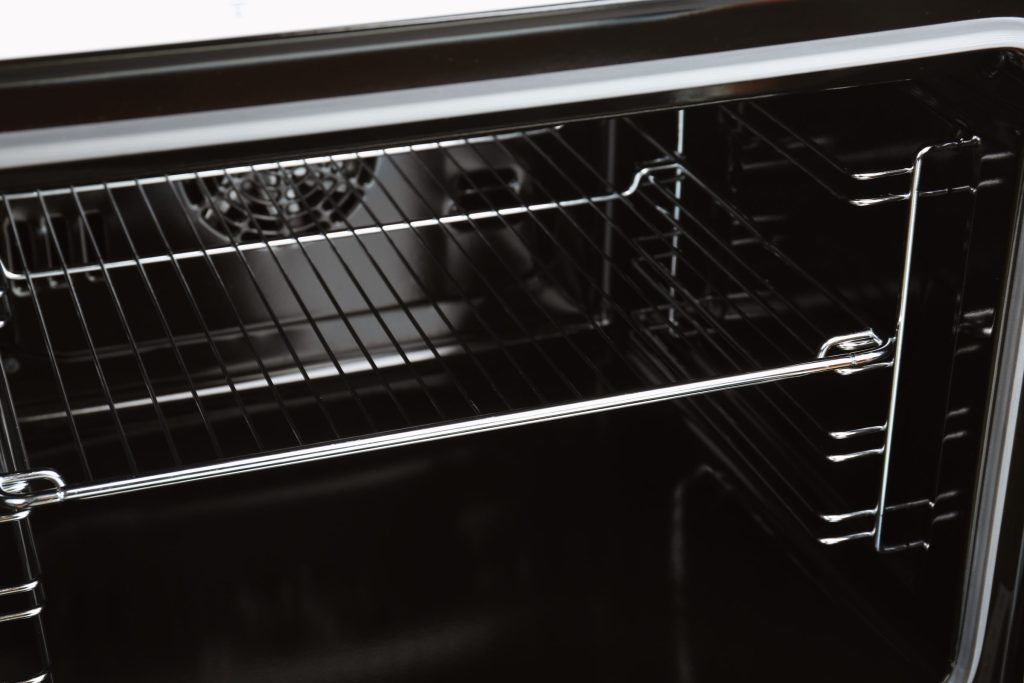
The sound arrives long before the symptom. A convection fan that has grown loud is generally a bearing going, or a blade catching its housing, and the window between noise and damage is the cheap part of this repair — an unbalanced wheel machines away the housing it spins in, and housings cost several times what motors do. The performance half of this is subtler: a fan that has stopped moving air properly turns a convection oven into an ordinary one, and the owner usually adapts to it over months without ever describing it as a problem. If your convection results changed and nothing else did, this is the page.
- The noise is a warning with months of notice in it
- A fan can fail into 'ordinary oven' without ever announcing itself
- An unbalanced fan damages the housing, which is the expensive part
Nearby
Where else we work near Parkland
Every place below has its own page, with what the equipment and the access are like there.
Elsewhere in Broward
In more detail
DCS repair in Parkland, in more detail
What DCS equipment is like in Parkland
Newer, larger houses well inland, with big kitchens and utility space beyond them. More appliances per house than average, and more of them out of sight until something goes wrong.
Parkland sits in Broward County, and the equipment here follows the housing: older kitchens with appliances fitted into openings that were cut for something else, and newer ones where they were specified with the cabinetry. Both are DCS work — bbq-grill, beverage centers, cooktop — and both are diagnosed on site before anything is priced.
Heat, dust and power cuts — what they do to a kitchen full of appliances
Inland the enemy is heat, dust and grease rather than salt. Condensers run hard for more months of the year here than almost anywhere else in the country, and grease that condenses in a hood liner instead of leaving through it comes back as a fan that labors. In Parkland the appliances we are called out to are usually working exactly as designed — in conditions nobody designed them for.
What that means for the appliances in Parkland
- Ranges — A family range is used harder than any other appliance in the house, and the parts that go are the ones handled every day — igniters, knobs, door hinges.
- Houses here often run more than one of the same appliance, and the second one is the one that goes unnoticed longest. If there is a second at the address, say so when you book — seeing both on one visit costs less than two visits.
- Oven will not hold its temperature
- Induction cooktop shuts off mid-cook
- Hood blower has become loud
- Outdoor stainless is pitting and rusting
- Grill flare-ups
How a visit in Parkland is arranged
We ask for the model number from the plate inside the door and a line about what the appliance is doing. That decides which parts ride in the van, and it is the difference between one appointment and two.
- How the appliance is built in, and whether it has ever been pulled out before
- Whether there is a second one — a bar, a pantry, a garage or an outdoor kitchen
- Whether the doors are paneled to match the cabinetry, which changes how they come off and go back
- The diagnosis first, then the scope and the price in writing, and your approval before anything is opened
What it costs, and what moves the figure
Prices in Parkland are the same as everywhere else we cover: a diagnostic from $95 that is credited toward the repair, and starting figures per job rather than one number for "a repair". What moves it is the model, how the appliance is built into the cabinetry, which part it needs and how quickly that part can be sourced — none of which can be judged over the phone. The repairs we carry out lists what each job involves and the figure it starts at, and the unit pages covers what tends to go wrong on each type.
The exact cost is confirmed after the on-site diagnostic and agreed with you before any work begins. We are an independent repair company — not affiliated with, authorized by, or endorsed by any manufacturer — and our warranty covers the labor we performed.
Before you book
Questions about a visit in Parkland
Do you cover Parkland?
Yes. Parkland is in Broward County and inside the area we work every week. Give us the address when you book, and say how the DCS is installed — what has to come apart to reach it matters as much as where it is.
How soon can you get to Parkland?
We will tell you the earliest slot we can genuinely keep rather than the earliest one that sounds good. Tell us the model number and what the unit is doing when you book: whether we can finish the same day depends on the part far more than on the drive.
Does it cost more because the job is in Parkland?
No. The diagnostic and the work are priced the same across Miami-Dade, Broward and Palm Beach. What moves the figure is the model, how the unit is built in and which part it needs — never the address. Where access takes longer, we say so before anything is agreed rather than after.
What do you need from me before the visit in Parkland?
The model number from the data plate, a photograph of the display if anything is showing on it, and a line about what the unit is doing. Those three decide which parts a technician brings, and they are the difference between one visit and two.
Booking a visit in Parkland
Tell us the model number and what the unit is doing. We will bring the parts that problem usually needs, and you will have a firm price before we start.
This article is based on:
- Official manufacturer documentation
- Internal repair procedures
- Technician repair history
- Company quality standards