Maintenance & Prevention
Cleaning DCS Grill Burners Without Ruining Them
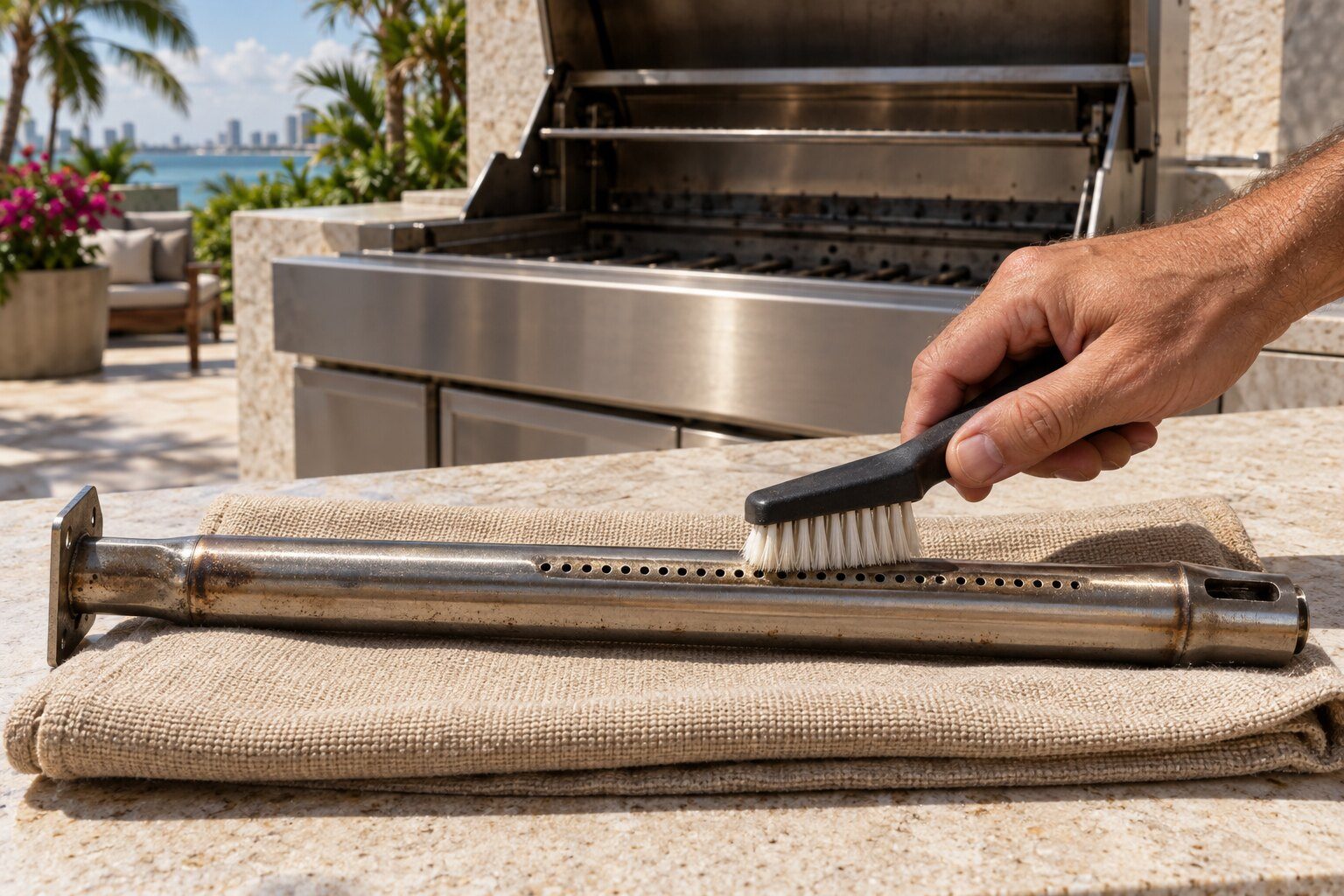
Cleaning DCS grill burners properly means taking them out, and the one rule that matters is what you clear the ports with. A soft brush, a wooden skewer or a nylon bristle removes carbon and leaves the hole the size it was made. A pin, a paperclip or a wire brush bristle enlarges it permanently, and an oversized port passes more gas than its neighbors forever after — which produces a hot spot, uneven cooking and a flame pattern nobody can clean back to normal. With the gas off at the source and everything cold, lift the grates and the radiant trays, release the burner from its fixing and slide it back off its orifice. Clean along the length, inside and out. While it is out, look down the venturi tube with a torch: in this climate an obstruction there is a seasonal finding rather than an exotic one, and it is the commonest cause of a yellow flame. Refitting is the step people get wrong — the burner has to seat squarely over its orifice, or it will light and run badly forever.
The full guide
There is one way to ruin a burner while cleaning it, and it is the method that feels most effective.
How to clean DCS grill burners: the rule about ports
A burner port is a hole sized by the manufacturer to pass a particular amount of gas at a particular pressure. Every port on the burner is the same size for a reason: that is what makes the flame even along its length.
Clear one with a pin and it is now bigger than its neighbors. It passes more gas. It burns harder. And nothing will ever make it smaller again.
So: a soft brush, a wooden skewer, a nylon bristle. Anything that removes deposit without removing metal. It takes longer and it is the difference between a clean burner and a compromised one.
Getting it out
Gas off at the source. Everything cold — properly cold, not warm.
Grates off, radiant trays out, and then find the burner's fixing: usually a screw or a clip at the far end from the valve. Released, the burner slides back off its orifice, which is the little brass jet it sits over.
Take it somewhere with light. Inside a firebox everything looks either fine or ruined, and neither is usually true.
While it is out, look down the tube
The venturi is the tube at the valve end that the burner slides onto, and it is where the air gets mixed with the gas. It is also, in this market, where things live.
Insects find a venturi tube an excellent place to spend a quiet season, and a grill that has been covered from June to November is exactly the invitation. An obstruction there starves the air side, which is the most common cause of a yellow flame that arrives at the start of a season.
A torch and thirty seconds. If there is anything in there, a flexible brush clears it.
Putting it back
This is the step that produces the calls.
The burner has to seat squarely over the orifice — the jet has to be inside the venturi, centered, not sitting against its edge. A burner refitted at a slight angle will light. It will also run badly for the rest of its life, and it will look perfectly installed from above.
Seat it, fit the fixing, and then light it and watch the whole ring settle before you put the grates back. A blue, even flame along the length means it is on properly. Anything else means take it out and do it again.
The other thing to look at, since it is open
The radiant trays above the burners. They are what sheds drippings sideways rather than down, and warped or holed ones stop doing that — which puts fat on the burner you have just cleaned.
If you are going to this trouble once a year, look at those in the same hour. They fail together, they are cheap, and one of them without the other is half a job.
If it turns out to be a repair
What this leads to, and what it costs
Every job on this site is priced the same way: an on-site diagnostic first, the figure agreed in writing before anybody starts.
-
from $185 Grill burner replacement
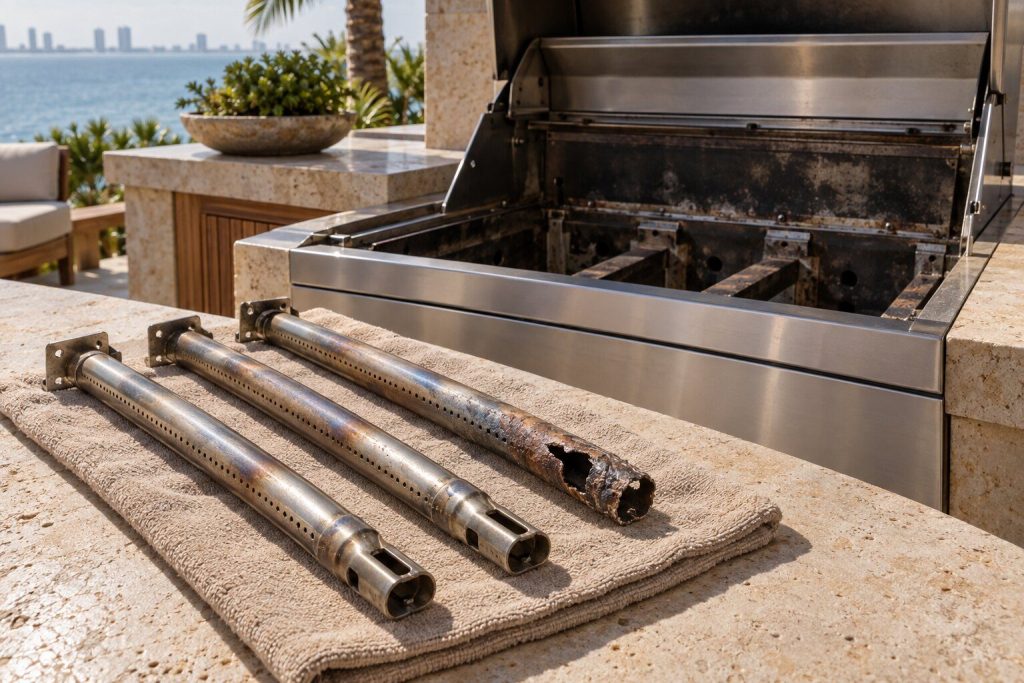
Burners are consumables on an outdoor grill in South Florida, and the question is rarely whether one has gone but whether it has gone far enough to matter. A burner that has burned through at the ends puts flame where the design did not intend it, cooks unevenly down its length, and eventually damages the radiants and the firebox around it. We would rather replace a set at the point where the first one has failed than come back three times, and we will say when a burner still has a season in it rather than selling a set on principle.
- Burn-through at the ends is the failure to look for, not the obvious hole
- Replaced as a set when the set is the same age, one at a time when it is not
- The radiants above them are checked at the same time, because they fail together
-
Blue flame gone lazy and yellow-tipped Grill flame is yellow or orange
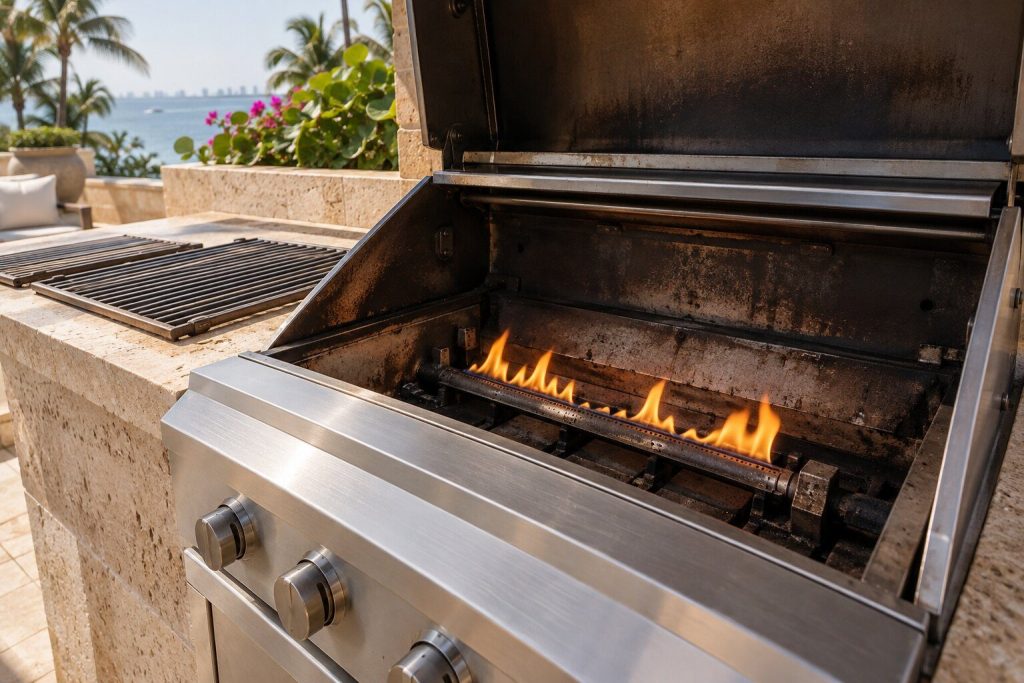
DCS grill flame yellow instead of blue. Blue is what a correctly proportioned mixture looks like; yellow says the ratio has drifted. It is worth taking seriously rather than cooking through: a badly mixing flame deposits soot on food and on the inside of the hood, and the cause is usually something obstructing the air side. In South Florida the obstruction is very often alive — insects find a venturi tube an excellent place to spend a season.
- Nine times in ten the air side is starved, not the gas side
- A lone offender is local; the whole set accuses the regulator
- A grill left under a cover all summer is an invitation to a nest
-
Clicking, or nothing at all, and no flame Grill will not light
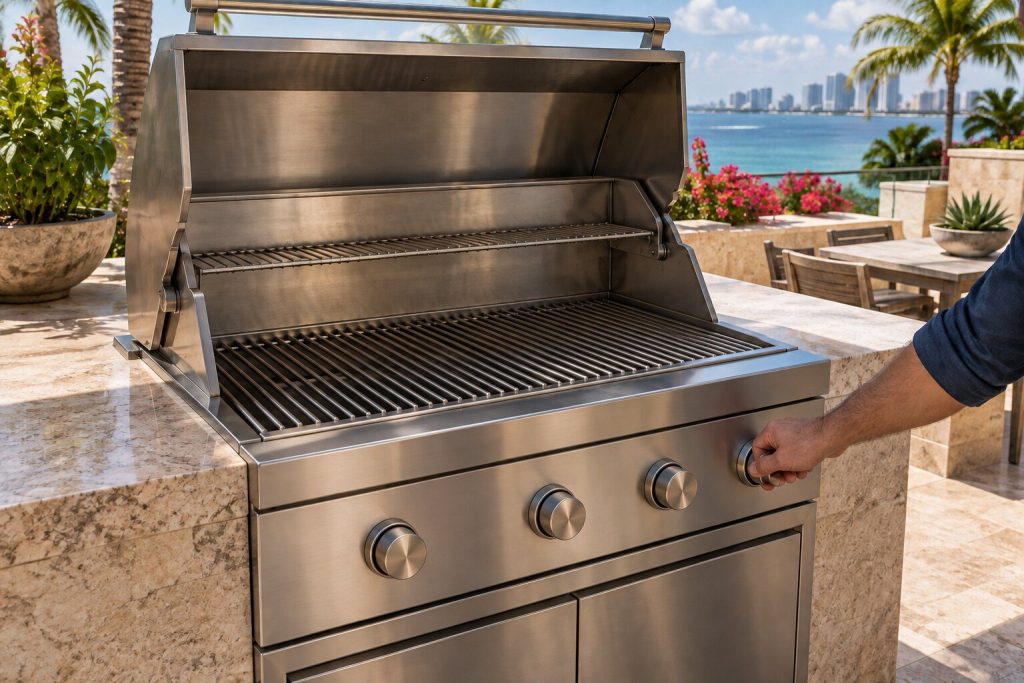
DCS grill will not light. Nothing here displays anything, so the work is done from four things an owner already knows: how many burners are affected, what has happened at the cylinder lately, whether a match succeeds where the spark does not, and whether there is any smell of gas. That last one ends the process on the spot. The other three separate a supply problem from an ignition problem from a burner problem, and in this market the first is far commoner than people expect.
- How many burners are affected cuts the search in half before anyone arrives
- Lights from a match but not from the ignitor: the gas is fine, the spark is not
- A cylinder valve opened too quickly trips a limiter and starves the whole grill

Questions people ask about this
Can the burners go in the dishwasher?
No, and it is worth being firm. Detergent strips the finish that keeps a burner behaving consistently, and the burner never quite returns to what it was. It is not a disaster — they are a modest part — but it explains a grill that has never been right since a very thorough clean.
How often does this need doing?
Once a season here, and at the start of it rather than the end. A grill coming out of five covered months is where the nests and the corrosion are, and finding one in October before the first dinner is a great deal better than finding it during.
One port is clearly bigger than the rest already.
Then somebody has been at it with a pin, and that burner will always run hot at that point. It is not dangerous and it is not cleanable. When the flame pattern bothers you enough, the burner is replaced — and that is the cheapest part on the grill.
Maintenance & Prevention
More guides like this one
-
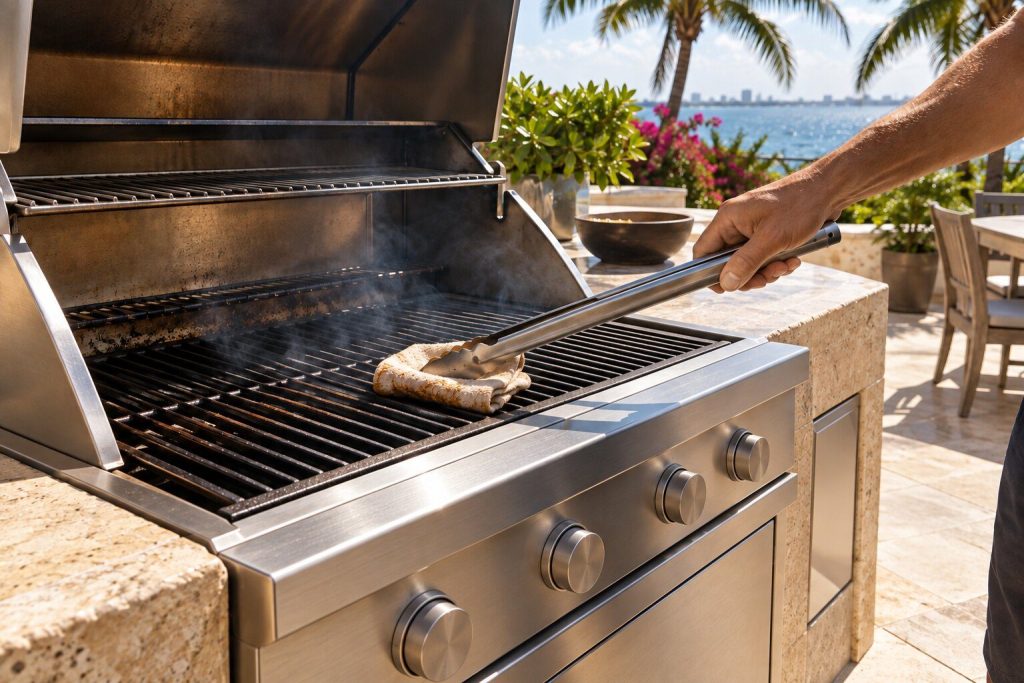
Seasoning DCS Grill Grates, and the Months Nobody Cooks
Seasoning is corrosion protection as much as cooking practice, and four blocks from salt water that changes the arithmetic. A grate scrubbed back to bare metal has nothing left defending it.
Read more -
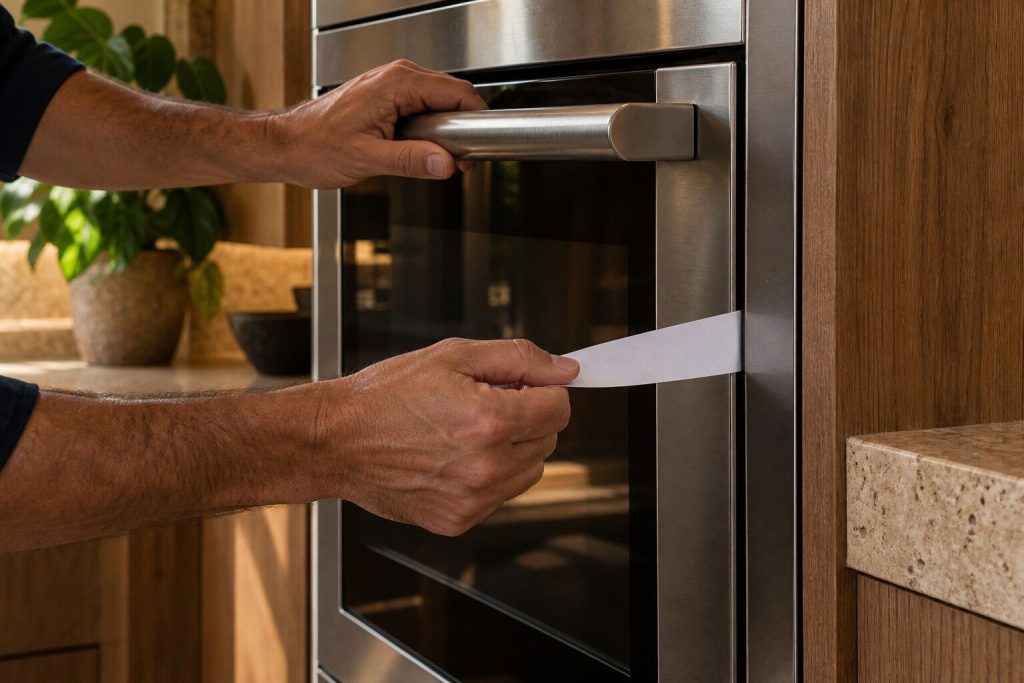
What a Self-Clean Cycle Does to a DCS Oven, and What to Check After
The cycle is the hottest hours of the oven's year. Things that were marginal beforehand frequently do not survive it — and they show up in the week after, not during.
Read more -
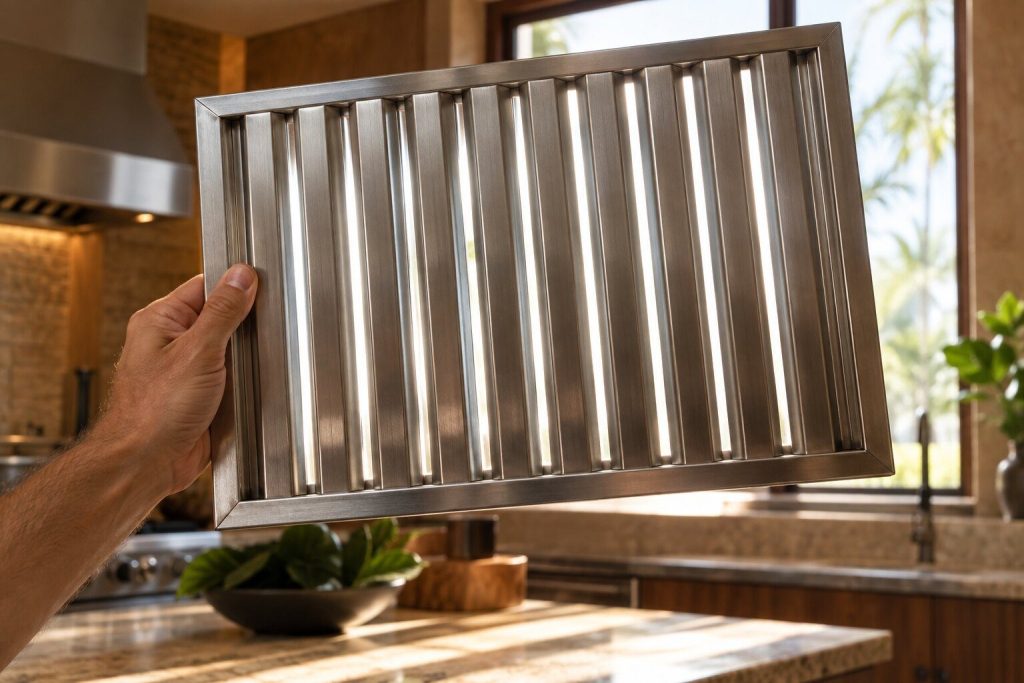
How Often Range Hood Filters Actually Need Washing
More often than almost anybody does them. Over high-output burners or a griddle a saturated baffle is two things at once: most of your airflow gone, and fuel sitting over open flame.
Read more
Tell us the model number and what it is doing.
This article is based on:
- Official manufacturer documentation
- Internal repair procedures
- Technician repair history
- Company quality standards