Common Problems
Lighting a DCS Grill in the Right Order, and Why the Order Matters
Lighting a DCS grill is a sequence, and the order is what makes it diagnostic rather than hopeful. Open the gas supply slowly — on LP, a valve opened briskly trips the excess flow device inside the cylinder, which then delivers a trickle that will light one burner feebly and never sear anything. Give it a moment to settle. Push and turn one dial, and listen for the click; the burner should catch within a few seconds. If it does not, stop rather than pressing again: each attempt puts more unburnt gas into the firebox. Turn everything off, lift the lid, give it a minute, and start over. Working this direction means each step rules something out — a supply that will not deliver, a spark that is not reaching the burner, a burner that cannot pass gas evenly — instead of leaving all three possible at once.
The full guide
There is a right order, and almost every call we take about a grill that will not light is somebody working it backwards — starting at the ignitor, which is the last thing in the chain rather than the first.
How to light DCS grill: supply first, and slowly
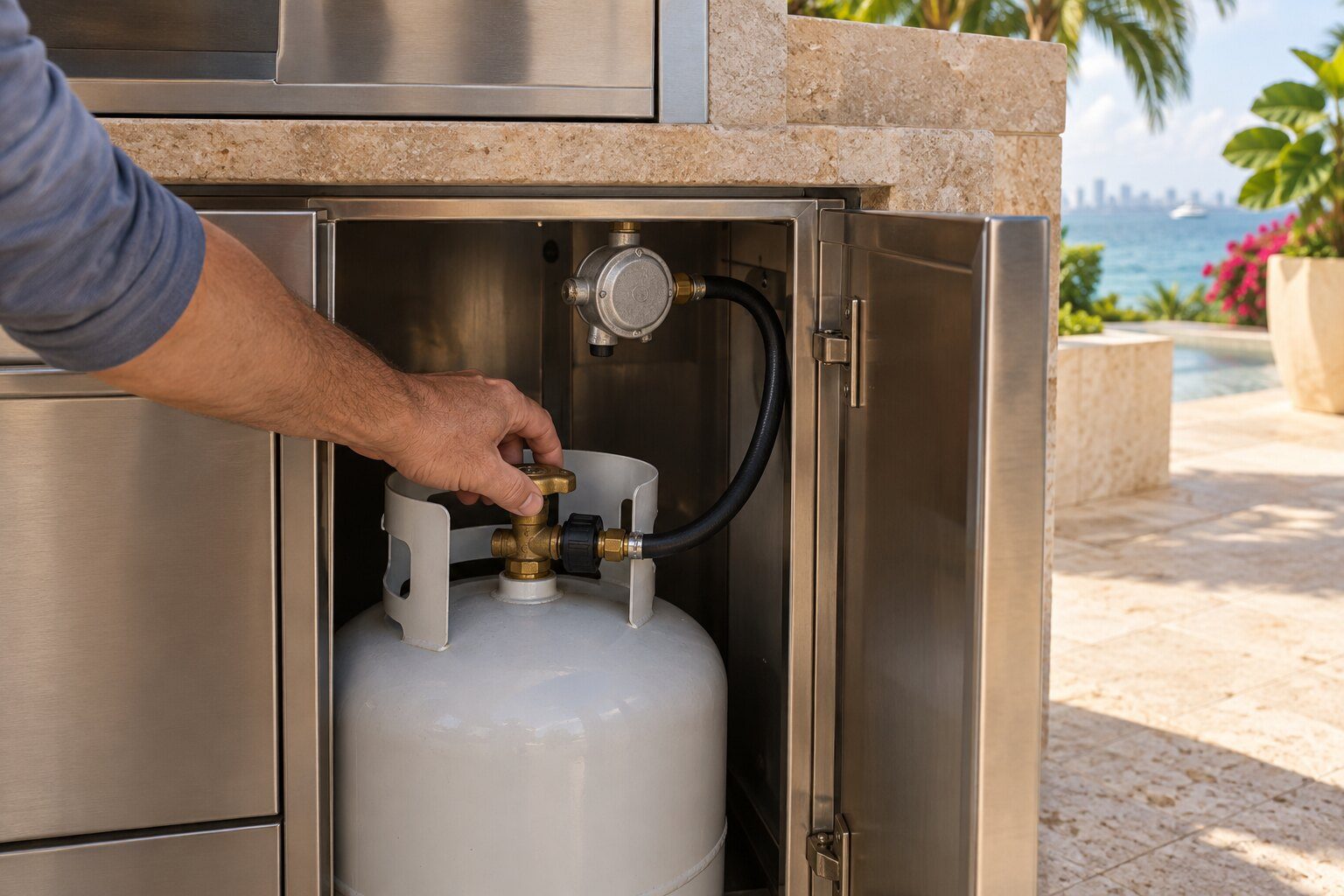
On LP, the valve on the cylinder contains an excess flow device. It exists to shut things down if a hose is cut, and it cannot tell the difference between a severed line and a valve yanked fully open in one movement. Once it has closed down it does not announce itself: it simply passes a fraction of the gas it should.
That is why a grill can light, run gently, and refuse to sear — and why people replace burners over it.
Open it over two or three seconds. On natural gas, check the wall valve is fully open rather than nearly.
Then the spark, one burner at a time
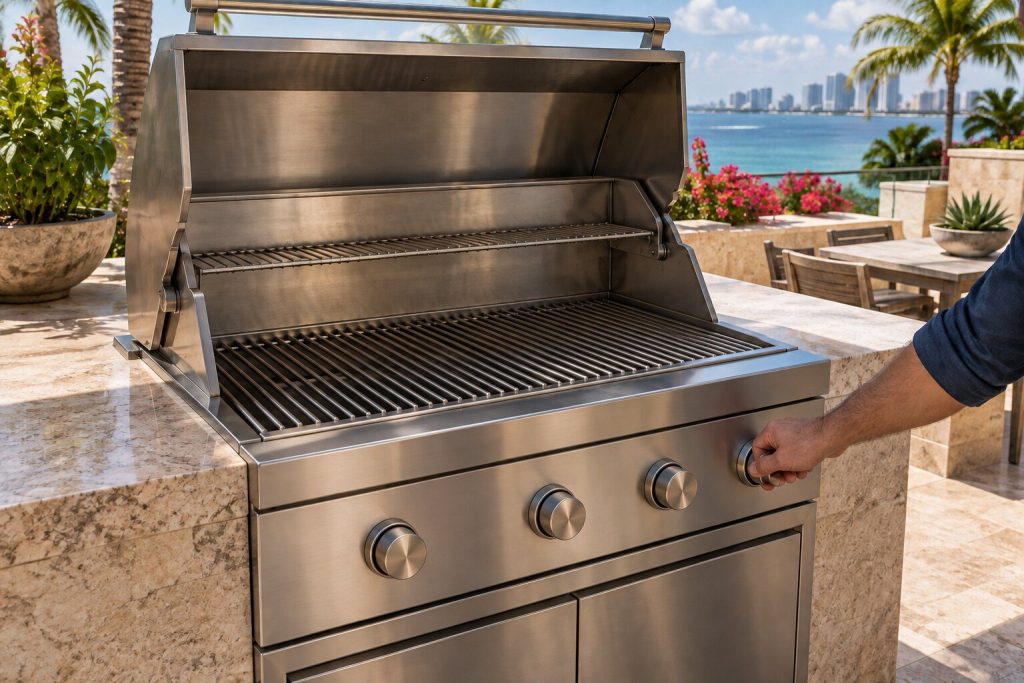
Push and turn one dial. You should hear the module click and the burner should catch within a few seconds.
If it does not: turn that dial off, lift the hood, and wait a minute before trying again. This is the step people skip, and skipping it is how a firebox accumulates gas that lights all at once on the fifth attempt.
What each step has told you
By the time you have done this once, three things are separated that were tangled before:
It lights properly. The supply delivers, the spark reaches, the burner passes gas. Nothing is wrong.
It lights from a match but not from the spark. Gas is arriving and the ignition path is the problem — an electrode, a ceramic, an earth. That is a different page and a modest repair.
It will not light from a match either. Gas is not arriving at that burner. Now the questions are the supply, the regulator, or an obstruction in the burner and its venturi — and in this climate, at the start of a season, an obstruction very often means something built a nest in it.
The preheat nobody gives it
A grill this size has a great deal of metal in it — grates, radiants, a heavy firebox — and all of it has to come up before the cooking surface is at temperature. Judging the grill after five minutes is judging it while it is still heating itself.
Fifteen minutes with the hood down and every burner on high is the honest number. On an exposed terrace in a winter breeze it can be longer, and that is the wind rather than the grill.
When the sequence stops being an owner's job
Two points, and we would rather be plain about both.
If you can smell gas at any stage, the sequence ends. Close the supply, leave the ignitor alone, and let somebody look at it before it is used again.
And if a burner lights but will not hold a low flame, that is a separate problem that only shows at the bottom of the range. It is easy to miss because the grill appears to work, and it is worth mentioning when you call.
If it turns out to be a repair
What this leads to, and what it costs
Every job on this site is priced the same way: an on-site diagnostic first, the figure agreed in writing before anybody starts.
-
Clicking, or nothing at all, and no flame Grill will not light
DCS grill will not light. Nothing here displays anything, so the work is done from four things an owner already knows: how many burners are affected, what has happened at the cylinder lately, whether a match succeeds where the spark does not, and whether there is any smell of gas. That last one ends the process on the spot. The other three separate a supply problem from an ignition problem from a burner problem, and in this market the first is far commoner than people expect.
- How many burners are affected cuts the search in half before anyone arrives
- Lights from a match but not from the ignitor: the gas is fine, the spark is not
- A cylinder valve opened too quickly trips a limiter and starves the whole grill
-
from $155 Gas supply and regulator service
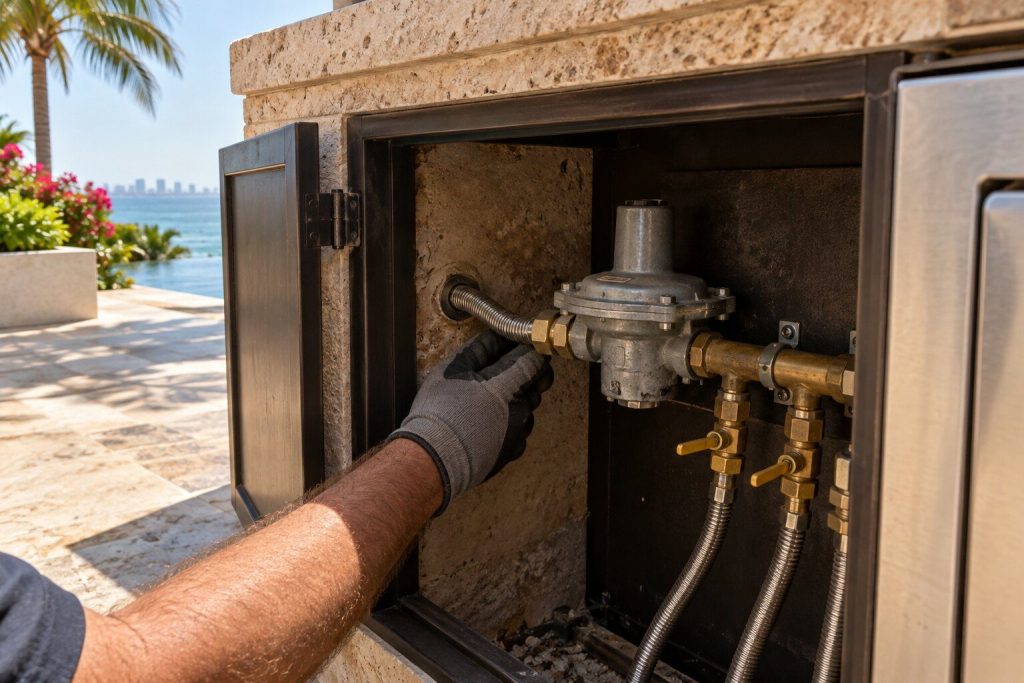
Everything upstream of the burner, which is where a large share of outdoor problems actually live. Weak flame on every burner at once, a grill that will not reach temperature, a cylinder that empties faster than it should, a limiting device that trips every time the valve is opened quickly — none of those are the grill. Under an island the fittings, the flexible connector and the manifold live in a space nobody has looked at since the mason closed it, in air that corrodes. We test rather than guess, and where the answer belongs to a gas contractor rather than to us, we say that.
- All burners weak at once is a supply question, not a burner question
- The fittings under an island are the ones nobody has ever seen
- Where it belongs to a gas contractor, we say so instead of improvising
-
Series 9 BE1-36RC repair
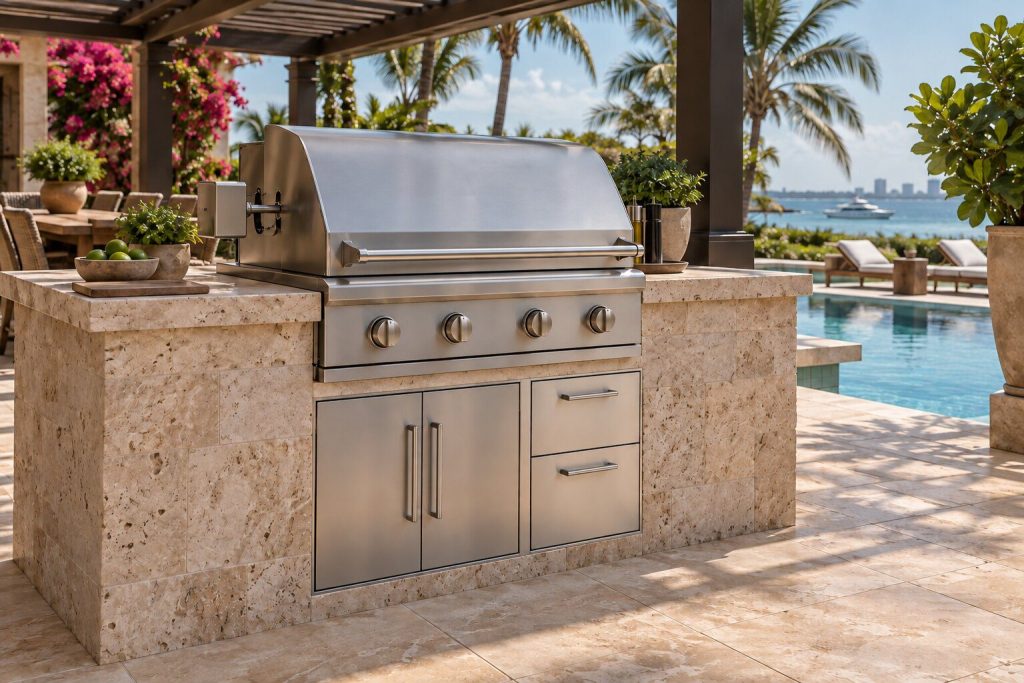
DCS BE1-36RC repair in Miami: what owners of this Series 9 unit search for, what those symptoms usually point at, and what the work involves. Diagnostic from $95, credited toward the repair.
- Be1-36rc
- Be1-36rc repair
- Be1-36rc parts
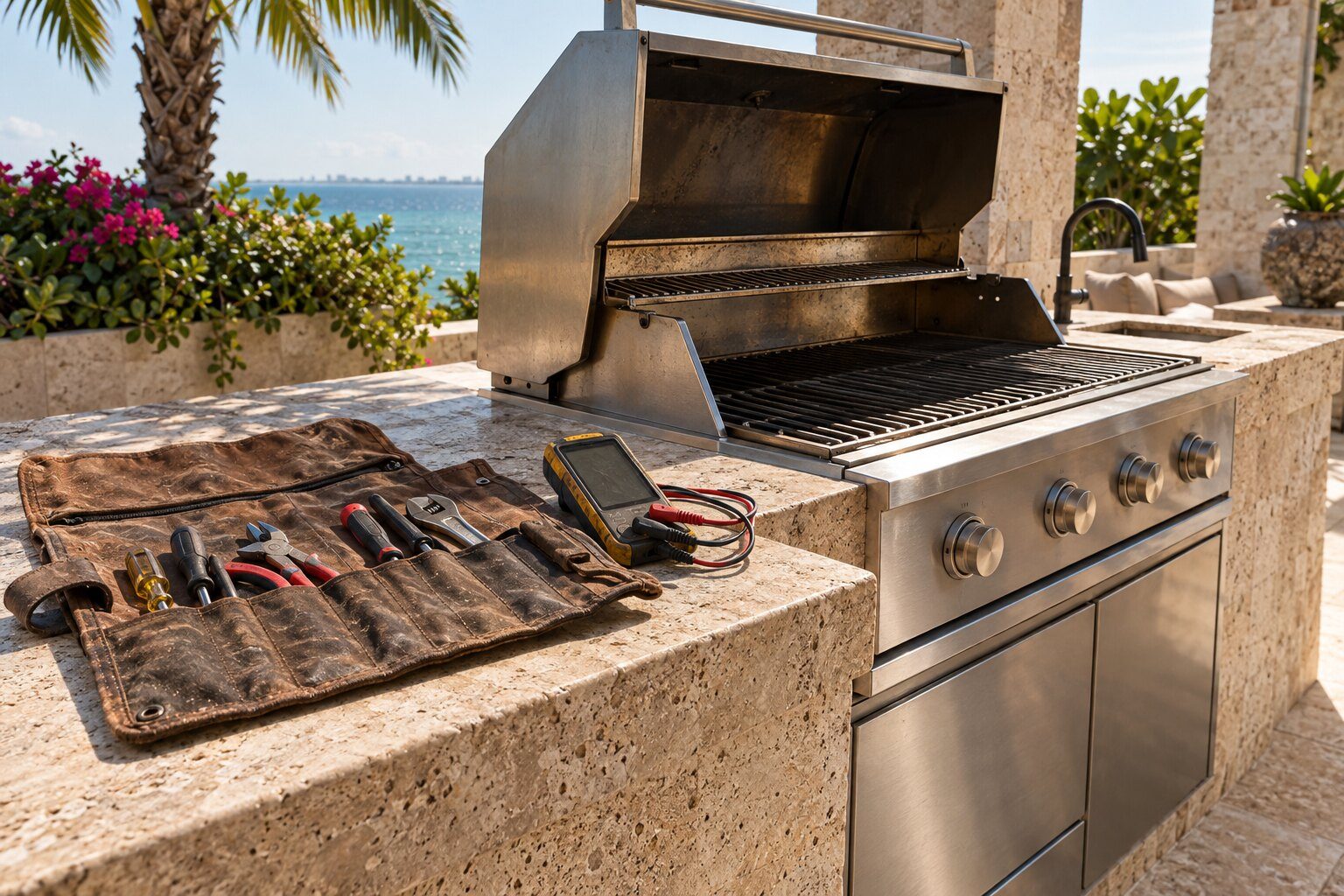
Questions people ask about this
How do I reset the limiter on an LP cylinder?
Close the cylinder valve fully, turn every grill dial off, wait a minute, then open the cylinder valve slowly — a couple of seconds, not a flick. Then light as normal. It costs nothing and it is the single most common fix for a grill that lights weakly and will not get hot.
The first burner lights and the others do not.
That points at the crossover between burners rather than at the supply. Many grills light one burner from the spark and the rest from a flame carried across a channel, and when that channel is blocked with grease or carbon the flame stops traveling. It is cleared rather than replaced.
Is it safe to light with the lid closed?
No. Gas collects under a closed hood and lights all at once when it finds the spark. The lid stays up for lighting on any grill, and it is worth being firm about it because the consequence is not a slow burn — it is a bang and a lost eyebrow.
Common Problems
More guides like this one
-
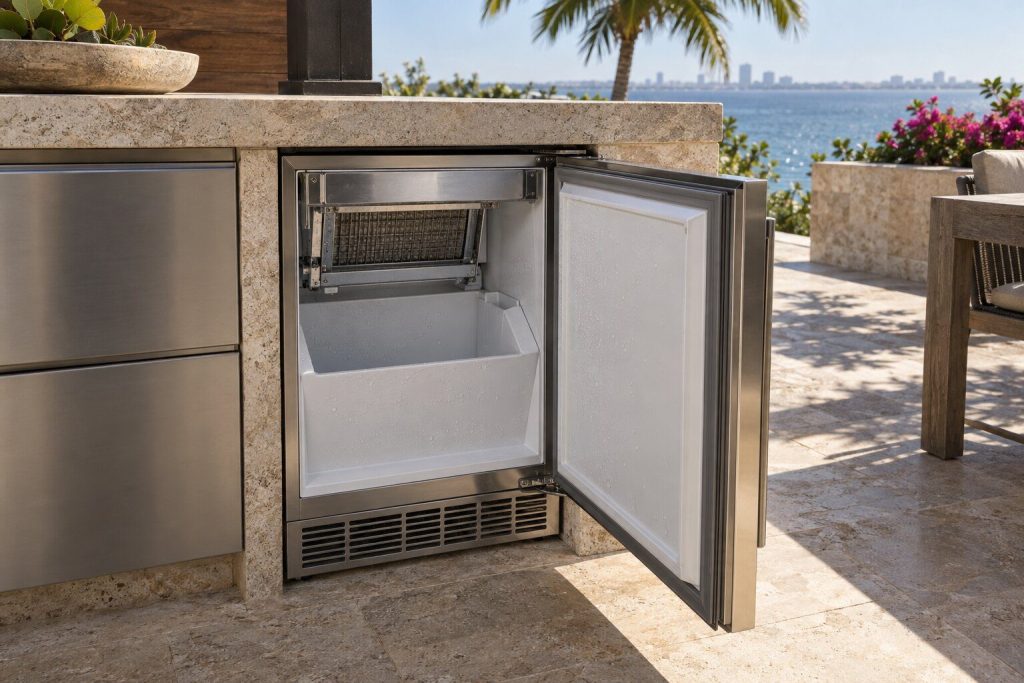
A DCS Outdoor Ice Machine That Has Stopped Making Ice
An ice machine in an island has three inputs a refrigerator does not: water, a drain, and an August it has to reject heat into. Two of the three are not appliance repairs.
Read more -
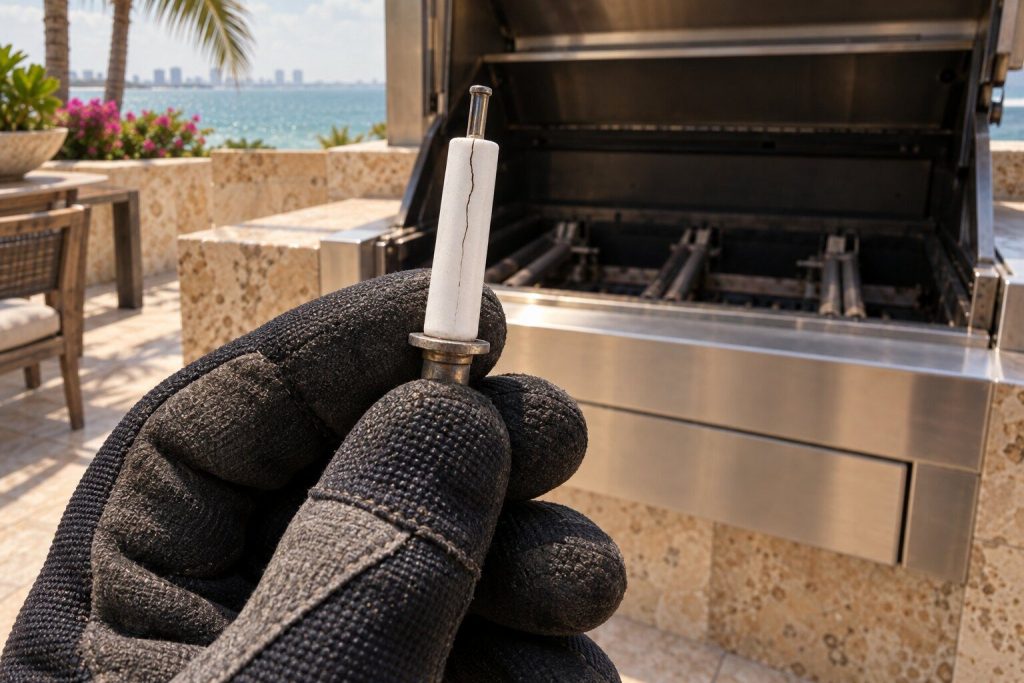
A DCS Grill Igniter That Clicks and Never Lights
The clicking means the module is working. No flame means the spark is arriving somewhere that is not the burner — and on a terrace that is almost always a cracked ceramic rather than a dead electrode.
Read more -
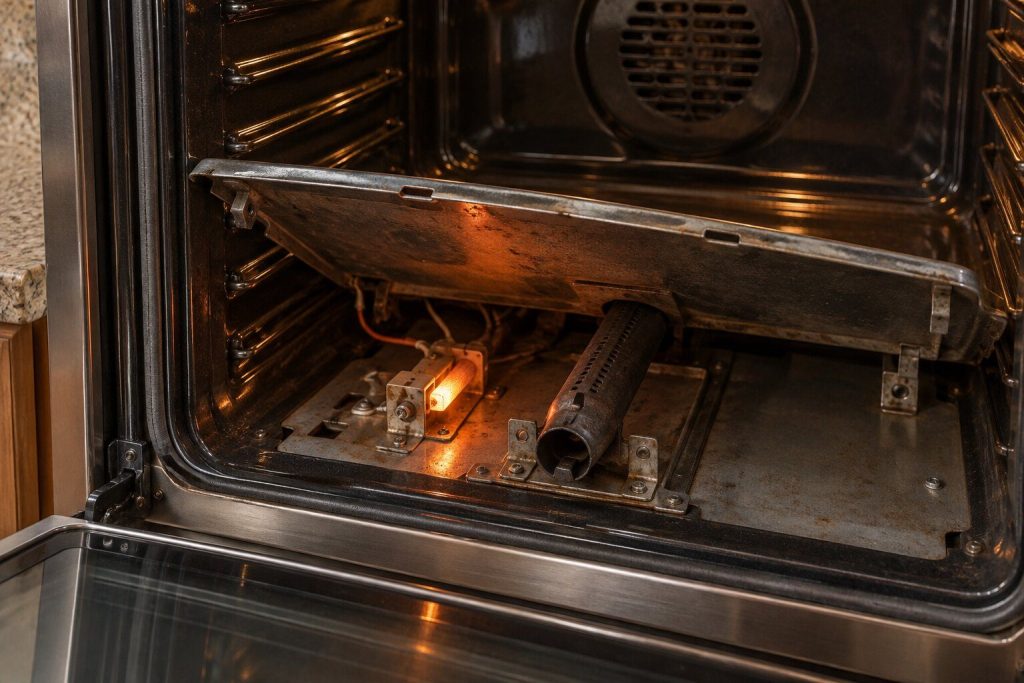
A DCS Gas Oven That Will Not Heat: the Ignitor Test Nobody Does
A gas oven ignitor rarely dies. It gets weak — glowing a convincing orange while drawing too little current to open the safety valve — and that is invisible without a meter.
Read more
Tell us the model number and what it is doing.
This article is based on:
- Official manufacturer documentation
- Internal repair procedures
- Technician repair history
- Company quality standards