Maintenance & Prevention
Do DCS Grill Covers Help in South Florida? Sometimes the Opposite
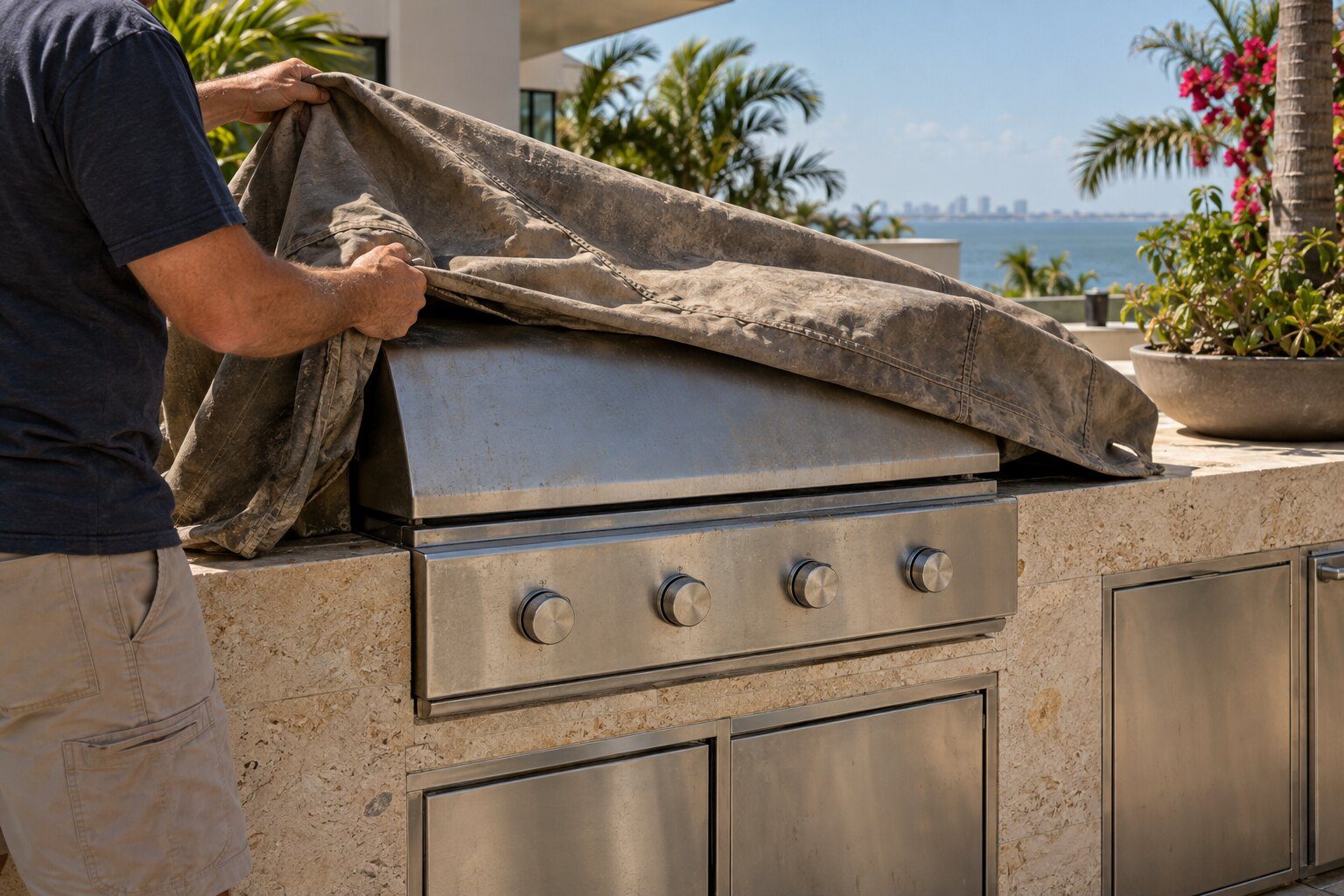
A cover on an outdoor grill in South Florida does two opposite things and which one wins depends entirely on how it is used. It keeps direct rain and salt spray off the machine, which genuinely extends the life of the finish and the fixings. It also creates a still, dark, humid enclosure around several hundred pounds of metal, and if the grill was warm or wet when it went on, that humidity has nowhere to go for as long as the cover stays put. The result is the thing owners find every autumn: surface rust on parts that were clean in May, seized fixings, corroded ignition ceramics, and something living in a venturi tube. None of that is an argument for leaving the grill uncovered. It is an argument for covering it cold and dry, never warm and never wet, letting it breathe periodically, and running the burners for twenty minutes once a month through the quiet season so the machine dries itself out.
The full guide
Almost every grill we open at the start of a season has been covered all summer, and almost everything we find in it arrived during those months.
DCS grill covers: the two things a cover does
It excludes rain and spray. On a deck within sight of the water that matters a great deal. Direct salt spray on stainless, repeatedly, wet and drying, is the fastest way to pit a finish.
It excludes air. Which is the problem. Metal that is not moving air over it does not dry, and in a market where the summer air is close to saturated for months, a covered grill is a small, sealed, humid room with a lot of steel in it.
Neither of those is theoretical. They are why two identical grills four houses apart are in different condition after five years.
The mistake that matters most
Putting a cover on a grill that is still warm.
Warm metal under a cover produces condensation as it cools, and the cover then keeps that water against the machine. It is the same reason a warm dish under cling film goes wet on the underside.
Do it once and nothing happens. Do it every weekend for a season and you have been irrigating the inside of your grill.
The same applies to covering it wet after rain, and to covering it after washing it down.
What five sealed months produce
This is not a list of possibilities. It is what we find, most autumns, on grills that were fine in May:
Something in a venturi tube. A still, dark, protected cavity is an excellent place for an insect to build. It is the commonest cause of a yellow flame at the start of a season.
Seized fixings. Screws and bolts that turned easily in spring and now round off. Humidity held against a fastener for months does that.
Crazed ignition ceramics. Salt and moisture work into hairline cracks, and the spark then finds a shorter path to the firebox.
Surface rust where the seasoning was cleaned off. Usually on grates that were scrubbed back to bright metal in a final deep clean before the cover went on.
The habit that avoids most of it
Three things, none of them onerous.
Cover it cold and dry. Not warm. Not wet. If in doubt, leave it until morning.
Air it periodically. A dry afternoon every few weeks with the cover off does more good than anything else on this page.
Run it. Twenty minutes on high, once a month, through the months nobody is cooking. It dries the firebox, burns off what has settled, and keeps the tubes uninteresting to anything looking for a home.
That last one sounds like a waste of gas. It is about a dollar a month against a grill that comes back in October in the condition it went away in.
If it turns out to be a repair
What this leads to, and what it costs
Every job on this site is priced the same way: an on-site diagnostic first, the figure agreed in writing before anybody starts.
-
from $195 Salt air protection service
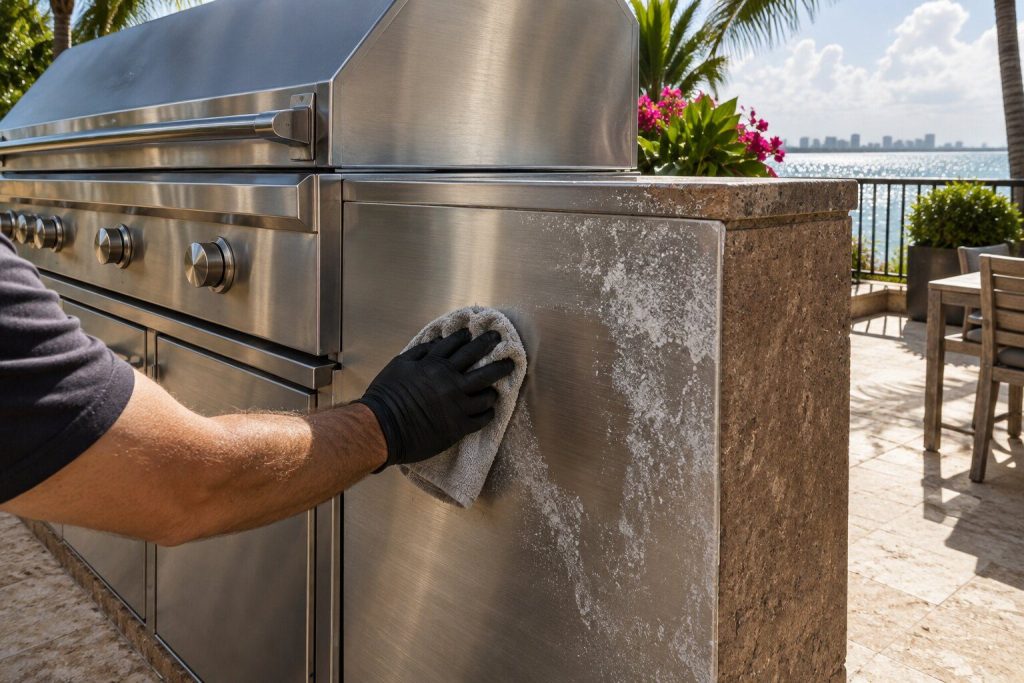
A visit that exists because of where this equipment lives. Four of the seven machines on this site stand outdoors in air that carries salt, and the difference between a kitchen four blocks from the water and one four miles inland is measured in years of service life. This is the planned, unglamorous work that changes that number: stainless cleaned and protected in the right direction, fixings inspected and replaced with the right grade before they seize, ignition components and electrical housings treated and re-sealed, hardware caught while it is stiff rather than after it is stuck. It is not a cosmetic service, although the kitchen does look better afterwards.
- Distance from the water is the real service interval on this coast
- Fixings replaced with the right grade before they seize, not after
- Not a polish — the point is the fixings, the housings and the hardware
-
Brown speckling on doors, handles and fixings Outdoor stainless is pitting and rusting
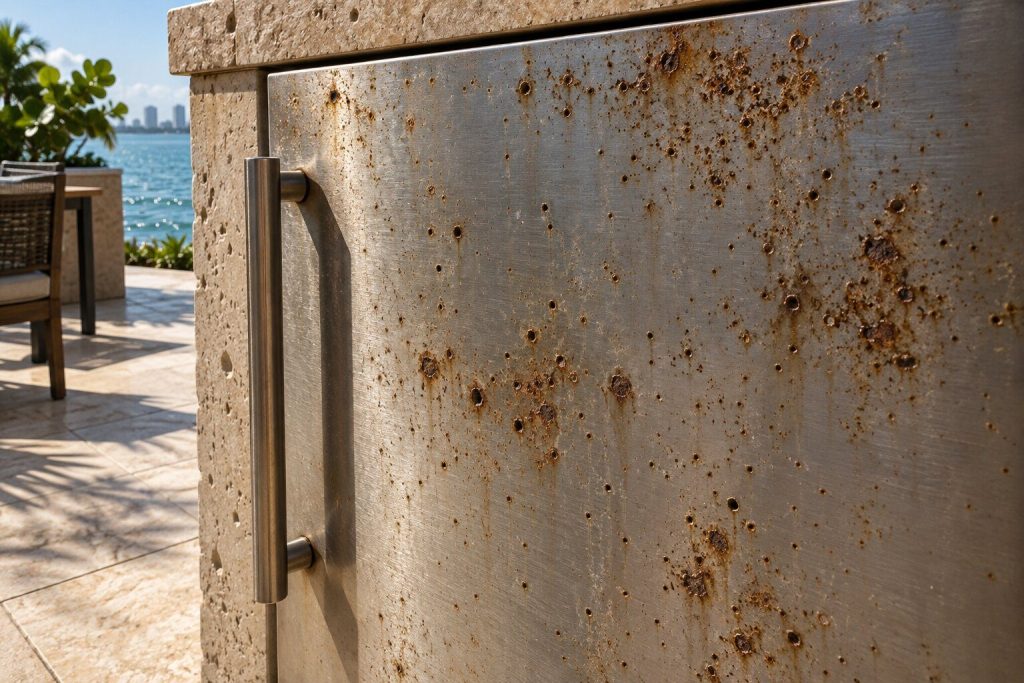
DCS outdoor stainless rusting. Outdoor-rated stainless resists salt; it does not ignore it. Brown speckling on a door or a handle is cosmetic and is slowed a great deal by rinsing with fresh water and drying, and there is no shame in a waterfront grill showing it. What is not cosmetic is corrosion around the vents, the hinges, the mounts and the fixings — those are the parts holding cabinets square and seals true, and they are the ones worth acting on.
- Speckling on a face is cosmetic; corrosion at a fixing is structural
- Fresh water and drying does more than any polish
- Distance from the water is the real interval — four blocks is not four miles
-
from $175 Appliance maintenance
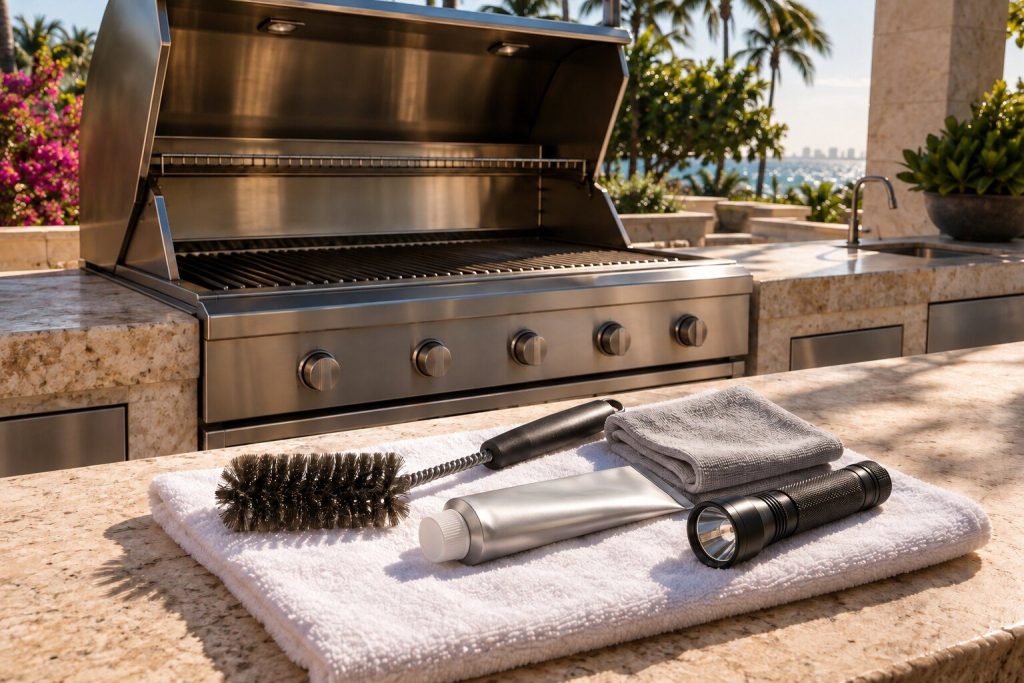
The visit that is booked rather than called in. Outdoor cooking equipment in this market does not fail on a schedule set by hours of use — it fails on one set by salt, rain and the months it spends under a cover with humidity trapped underneath. A maintenance visit is where burners come out and get looked at before they are the reason dinner stopped, where the grease path is cleared before it is a fire, where drawer runners are treated before they pit, and where an undercounter refrigerator's condenser is cleaned before August asks it for everything. Indoors it is the ordinary and useful work: seals, hinges, sensor accuracy, filters, and the parts of a high-output range that quietly drift.
- Built around salt and season rather than around hours of use
- The grease path is treated as a fire question, because that is what it is
- Findings written down, so next year's visit starts from evidence

Questions people ask about this
Would leaving it uncovered be better?
On a covered terrace, sometimes — genuinely. Air moving around the machine does more good than people expect, and constant airflow beats a sealed cover on a grill that never gets rained on. On an exposed deck taking salt spray, cover it, but cover it properly.
How long can it stay covered?
There is no fixed figure, but five unbroken months is where we start finding things. If the grill is going to sit, take the cover off for a day every few weeks on a dry afternoon and let it air, and run the burners while you are there.
The cover itself has gone moldy inside.
Then it has been doing the harmful half of its job and it is telling you so. Wash it, dry it fully, and change the habit that put it on wet. A moldy cover has also been holding that against your stainless, which is worth looking at while you are there.
Maintenance & Prevention
More guides like this one
-
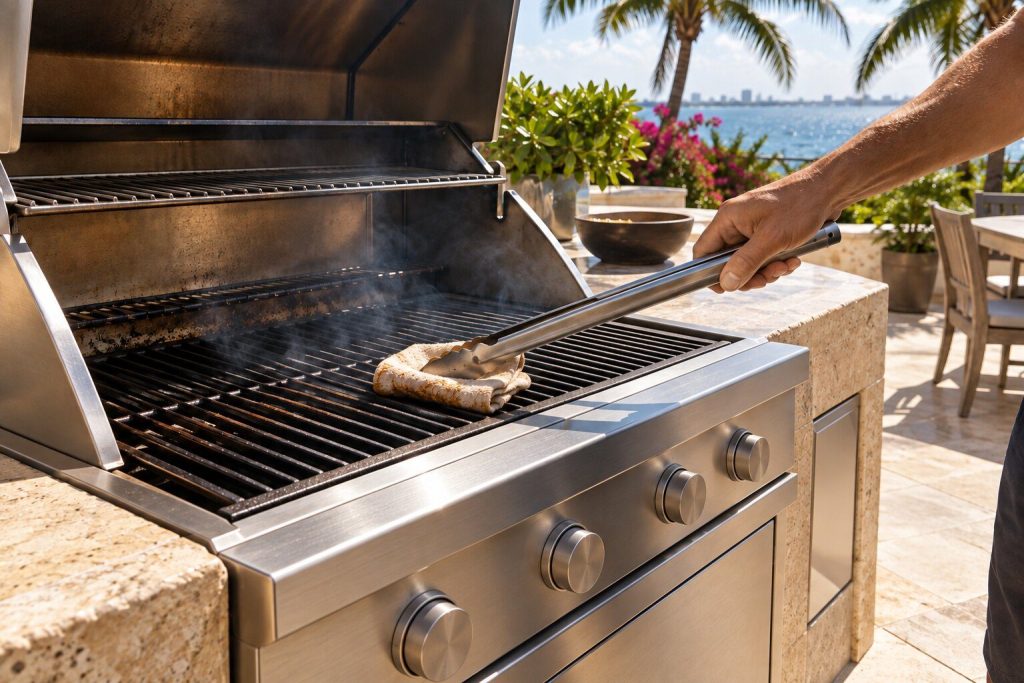
Seasoning DCS Grill Grates, and the Months Nobody Cooks
Seasoning is corrosion protection as much as cooking practice, and four blocks from salt water that changes the arithmetic. A grate scrubbed back to bare metal has nothing left defending it.
Read more -
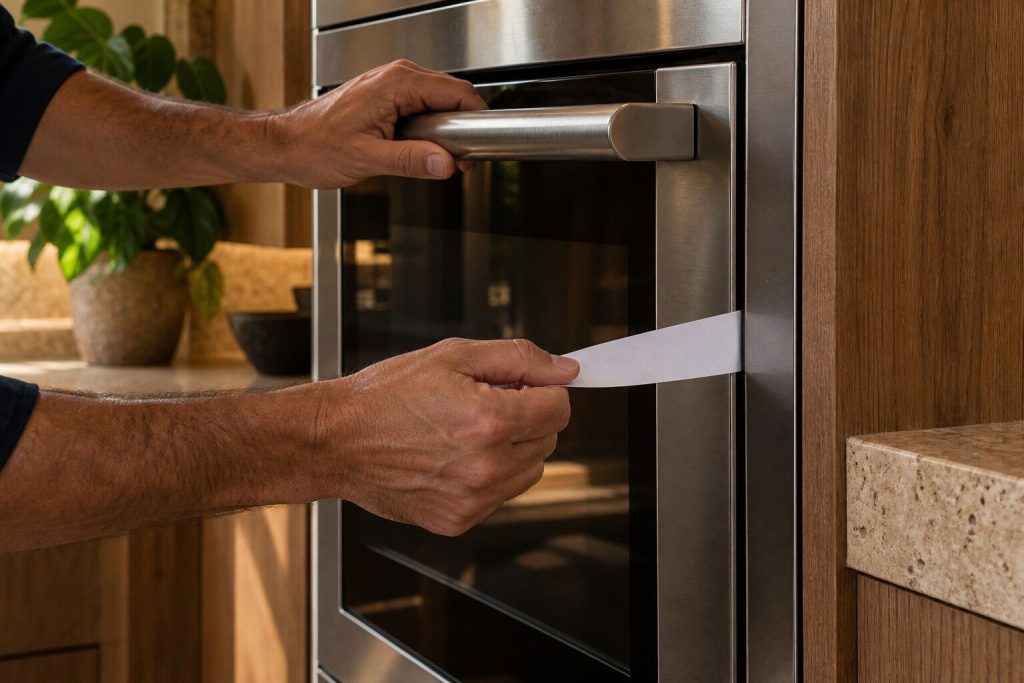
What a Self-Clean Cycle Does to a DCS Oven, and What to Check After
The cycle is the hottest hours of the oven's year. Things that were marginal beforehand frequently do not survive it — and they show up in the week after, not during.
Read more -
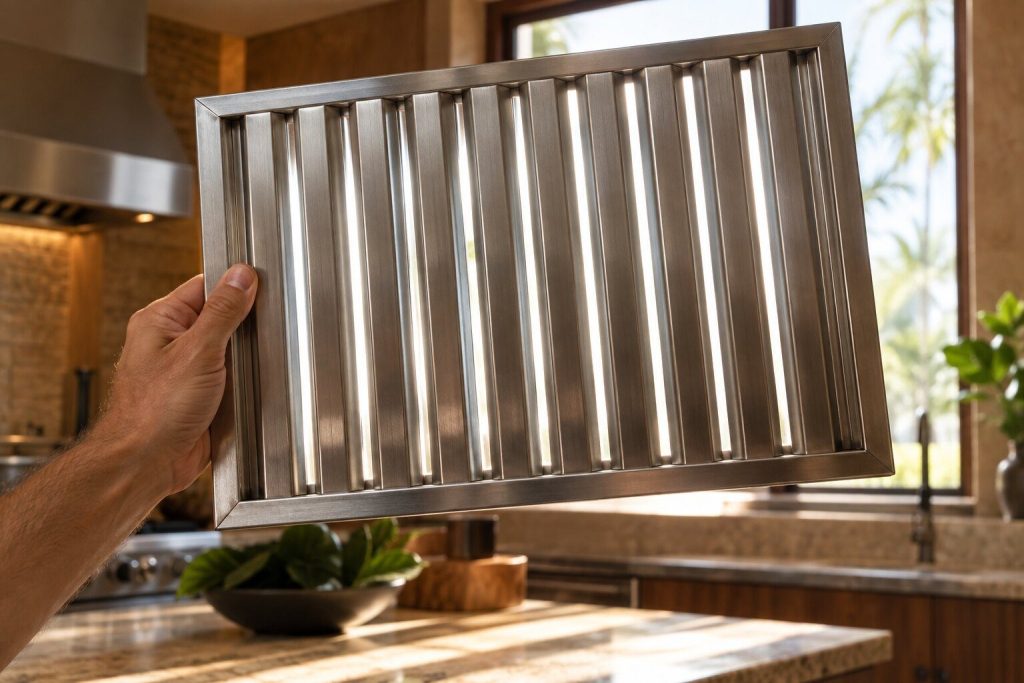
How Often Range Hood Filters Actually Need Washing
More often than almost anybody does them. Over high-output burners or a griddle a saturated baffle is two things at once: most of your airflow gone, and fuel sitting over open flame.
Read more
Tell us the model number and what it is doing.
This article is based on:
- Official manufacturer documentation
- Internal repair procedures
- Technician repair history
- Company quality standards